Weird Santa Barbara: More Weird Zoology

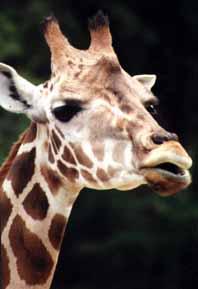
Before the New Year, Weird Santa Barbara took a look at some of the most interesting and downright strange animals resident at the Santa Barbara Zoo. All animals, including humans, adapt to their environments over long periods of time – eventually, evolution catches up with various needs. Giraffes have tongues an average of eighteen inches long, for stripping leaves from high branches. Blue and gold macaws, the large birds across from the otter enclosure near the entrance to the zoo, have unusually large beaks, allowing them to eat the massive seeds common to plants in their native habitat.
It’s pretty amazing, actually, how the fauna of the world manages to live in whatever type of environment is handy. However, animals both in zoos and in natural environments which are near human population centers have other challenges to face. All accredited zoos take great pride in caring for each species properly, of course, but simply being transplanted to a limited space can adversely affect an animal.
When Western lowland gorillas were first kept in zoos, zookeepers didn’t entirely understand the relationship between how the gorillas ate and how certain health problems would develop. Our largest relative, it turns out, is as prone to heart disease as we are – and for the same reasons. The limited exercise available in a zoo enclosure, combined with a diet rich in fat, can shorten a gorilla’s lifespan. Now gorillas are given a new diet more tailored to their metabolisms, and are also provided with some pretty high-tech medical care such as cardiac ultrasounds to check for heart disease. I’m quite sure that a hospital wouldn’t give me a cardiac ultrasound without running my insurance first – I’m thinking of moving to the zoo.
Certainly, given the standards of care implemented at the Santa Barbara Zoo, some species are actually better off in captivity. Gorillas in the wild are currently listed as a critically endangered species, meaning that they are at an extreme risk of extinction in the very near future. The Ebola virus, which affects gorillas as well as other species such as humans, is actually a leading cause of this new classification. Human incursions into wild areas are being partially blamed for this outbreak among the gorilla population.
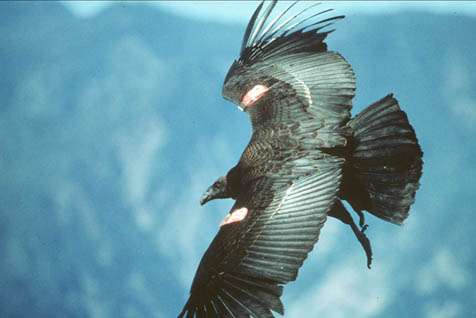
While species native to California aren’t threatened by the Ebola virus, we have quite a few endangered species in our own back yard, some of which will soon be represented at the Santa Barbara Zoo. The California condor, one of the weirdest-looking creatures on the face of the Earth, is one of these. Alan Varsik of the Santa Barbara Zoo said that the new exhibit will be aimed not only at exposing visitors to one of their endangered neighbors but also at “teaching people how to behave in condor country.” There is, he points out, a “greater disconnect between youth and nature” than ever before; if young and impressionable zoo visitors leave with a greater respect for California wildlife, Varsik will feel that he’s accomplished his goal.
As with many other conservations projects, the zoo is partnered with other organizations in its efforts to make a positive impact on local ecology. The condors aren’t the only species being targeted by the zoo’s efforts; both the Channel Island fox and the red-legged frog, native to the Los Padres forest, are also receiving assistance.
Check out the Santa Barbara Zoo’s website for more information on when the condor exhibit will open; zoo officials say it will be soon. The zoo is also a great resource for finding out how to volunteer your time or sponsor an animal. Every single species is uniquely weird people like the staff of our zoo are working hard to ensure that each will survive to be weird another day. It’s a goal worth assisting.