On the Gaviota Coast this past Saturday morning, a crew of stand-up paddleboarders and kayakers could be seen far off on the horizon, making their way against the current toward Naples Reef, an underwater treasure they believe is worth holding onto. Comprised of people committed to preserving offshore hotspots that harbor significant levels of biodiversity and recreational opportunities, the team included members of Below the Surface, Santa Barbara Channelkeeper, The Ocean Conservancy, Surfers Without Borders, the Natural Resources Defense Council, and Ocean Futures.
John Rose/Brooks Institute
Paddlers gather off the Gaviota Coast on Saturday to raise awareness about the Naples Reef.
“The importance of Naples Reef — from both a biological and cultural perspective — can’t be overstated,” said Michael Sheehy of Channelkeeper. “Naples Reef is one of the most biologically productive and diverse marine habitats in all of Southern California and offers Channel Islands-caliber diving and snorkeling just offshore from Santa Barbara. This paddle-out was designed to raise awareness about the once-in-a-lifetime chance we have to protect local treasures like this forever.”
Saturday’s paddle from El Capitan Beach to Naples was prompted by Below the Surface, a nonprofit that is teaming up with organizations to highlight critical offshore habitats. Their statewide tour is hitting nine such spots from La Jolla to the Humboldt Bay, which are in line to be considered for the next round of Marine Protected Area designations. That process — which is designed to stop or limit fishing in areas so that often overfished marine life has a chance to rebound — begins in October.
John Rose/Brooks Institute
Channelkeeper’s Mike Sheehy (left) and The Ocean Conservancy’s Greg Helms get ready to check out the Naples Reef on Saturday.
Below the Surface cofounders Kristian Gustavson and Jared Criscuolo explained: “We wanted to come out, and travel to these areas and show the importance of people, and their role in improving the quality of ocean life, and provide future recreational experiences for paddlers and surfers. We will go across the nation to team up with similar organizations such as the ones you see today, and get these areas protected.”
According to those involved Saturday, the biggest threats to Naples Reef are habitat destruction, climate change, and overfishing. They say that the scientific data shows that the preservation of this area will not only increase overall population growth within the reef and preserve fish nurseries, but will provide a refuge for larger pelagic fish and species threatened by overfishing. Naples is also in a unique transition location offshore, where a mix of organisms from both northern and southern regions of California live, and provides visitors with an incredibly rare experience to witness this merger of life underwater.
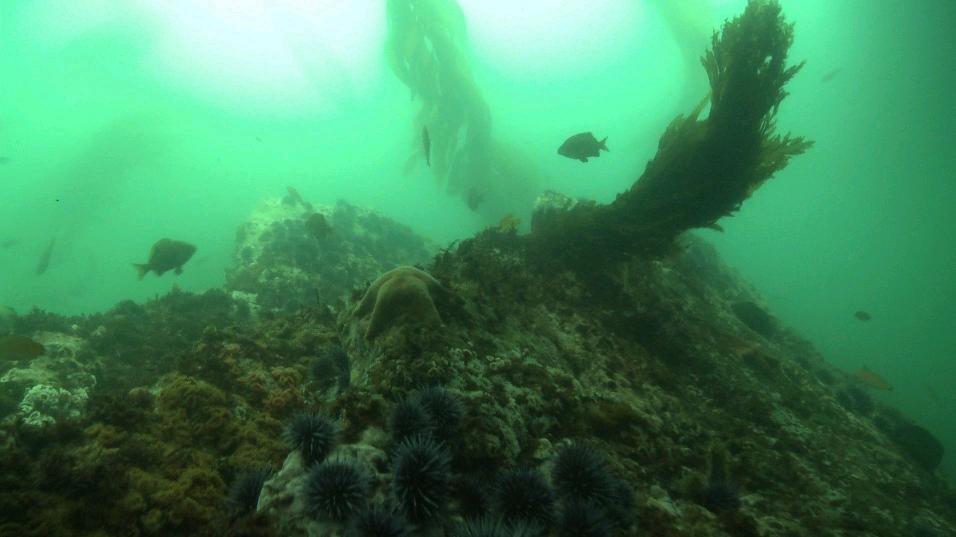
Brian Hall/Ocean Futures Society
An underwater view of the Naples Reef reveals a diverse ecosystem of sea stars, urchins, perch, and other marine life.
Explained Greg Helms of The Ocean Conservancy, “The most heavily studied and biologically prolific spot on our coast, Naples Reef is a true fish production powerhouse, housing more biodiversity and productivity than other areas — even compared to the rest of the globally significant Gaviota Coast.”
Those interested in helping advocate for protection of Naples Reef can visit the Save Naples Reef organization’s Web site at caloceans.org/savenaplesreef.

Print friendly
E-mail story
Tip Us Off
Comments
Share Article
Myspace


Previous Month


Comments
We're lucky here in Santa Barbara to have relatively pristine areas like the Gaviota Coast (which is pretty unspoiled both above and below the water), and protecting our few remaining wild places seems like a no-brainer. Especially biologically important areas like Naples Reef. We went through this process once for the Channel Islands, and I think most people would agree it was a good idea to create marine reserves there--kelp's flourishing, fish and other wildlife are recovering, and party boats seem to have come out in great shape as well. So it makes sense to build on that success and protect special areas on the mainland coast as well.
And if setting aside this tiny area will boost fish populations, it sounds like a win win!
Cruiser (anonymous profile)
June 21, 2010 at 4:14 p.m. (Suggest removal)
Awesome! Naples reef is truly a local jewel and I'm very glad we're being proactive with its protection. I enjoy Naples reef and look forward to doing so for many years to come. Kudos to the groups involved in this effort!
LaSirena (anonymous profile)
June 21, 2010 at 5:29 p.m. (Suggest removal)
It's too bad MLPA has been gutted of any real protection for our marine environment. Instead we get Cathy-Reheis Boyd, disregard for water quality and pollution, violations of Bagley-Keene Act, blow off Hillborn and Worm's findings, an overwhelming focus on the "overfishing" scam pushed by PEW, Packard and all the NGO grant sucking parasites who stand to benefit by more research allocation.
Big thanks to Deckers Outdoor Corp. and Seacoast Yacht Sales for lending an open ear and mind to some of us in our local fishing community and subsequently canceling donations to Channelkeeper.
Support Heal The Ocean, they didn't sell out our community for MLPA loot.
http://www.indybay.org/newsitems/2010...
Yours truly,
fisherman, former Channelkeeper donor, volunteer and advocate
corruptenviros (anonymous profile)
June 21, 2010 at 8:41 p.m. (Suggest removal)
Worm and Hillborn's paper specifically states that our oceans need a combination of fisheries management and marine protected areas to ensure healthy ecosystems and sustainable fisheries. Because we know so little about the populations of many of the fish being caught in southern California, we must take a precautionary approach and set aside some productive and diverse places as insurance against our uncertainty. We must have a long-term vision for using and conserving our marine resources. Protecting a few places along the coastline, like Naples Reef, while leaving the majority of fishing spots open in Santa Barbara County, seems to be an attempt to balance the long-term vision with the short-term needs of the fishing community. I only wish that there was MORE protection proposed for our beautiful coastline.
seacycle (anonymous profile)
June 22, 2010 at 10:09 a.m. (Suggest removal)
In Santa Barbara, we are not strangers to marine protected areas with our network of reserves around the Channel Islands. Five years of monitoring these MPAs shows that numbers of rockfish in the reserves are up by 50% and the size of fish has increased by 80%. And this is after less than ten years of protection! Other emerging research shows that MPAs provide long-term benefits to the sustainability of fisheries by creating a spillover effect; marine life within the protected areas grow larger, have more offspring, and then seed the fished areas outside of the protected areas. If we protect productive habitats, like Naples Reef, overall ocean health along with commercial and recreational fishing all stand to benefit.
ecosuave (anonymous profile)
June 22, 2010 at 10:55 a.m. (Suggest removal)
And what impact will a mansion or 6 on the bluff top at Naples have on the reef? Let's connect the dots while we are at it.
gaviotapowerranger (anonymous profile)
June 23, 2010 at 8:20 a.m. (Suggest removal)
Yuk, I'm so sick of hearing from bitter commercial fishermen like corruptenviros. Bashing on environmental groups for accepting grant money to work on environmental issues when all he cares about is his bottom line. These guys act like they own the ocean. Don't forget, they earn their living off exploiting public resources. I'm a recreational fisherman and diver myself, and I love the idea of a few places along our coast being set aside for preservation.
What is this MLPA conspiracy nonsense he spouts about? Watered down and doesn't focus on pollution? Isn't that what groups like Channelkeeper are actually doing every day? Tell your local cities, sewage treatment plants, and farmers that they aren't being regulated for pollution issues or that the environmental groups aren't focusing on them enough. I just went to Channelkeeper's website and it looks like they are working in just about every one of these ares. I say bravo for the environmental groups who have the guts to stand up to the commercial fishing industry. Keep up the good work, and boycott Decker's and Seacoast Yachts.
mgambertron (anonymous profile)
June 23, 2010 at 3:17 p.m. (Suggest removal)
I don't see the correlation between supposed "conspiracies" associated with the Marine Life Protection Act, and the organizations that defend it, because these organizations are really on their side. By protecting these breeding grounds, and centers for immense biodiversity -- fisherman may continue fishing in the future. If you look at each organization's website, you will notice that each project is aimed to conserve these areas in a holistic sense, and they need the collaboration and support from the local fisherman to achieve this goal. Below the Surface organization is a team of two guys who paddle across the coast to show people that by preserving these little pockets of ocean, people will have amazing areas for recreation in the future -- and this does not exclude fisherman.
Here is a list of websites of the organizations involved in Preservation Paddle-out:
Below the Surface:
http://www.belowthesurface.org/contac...
Santa Barbara Channelkeeper
http://www.sbck.org/
Ocean Conservancy http://www.oceanconservancy.org/site/...
Ocean Futures:
http://www.oceanfutures.org/
Natural Resources Defense Council:
http://www.nrdc.org/
Also, please go on the Save Naples website to sign your name in a pre made letter to the state addressing Naples Reef as the next marine protected area:
http://www.savenaples.org/
Thanks,
Sarah
SarahAmiri (anonymous profile)
June 25, 2010 at 11:29 a.m. (Suggest removal)