• CREATE AN ACCOUNT
  • LOG.IN
  • CONTENTS
  • CLASSIFIEDS
  • ARCHIVE
  • INFO | ADVERTISING | CONTACT US

  • Home
  • News
    • News Main Page
  • A&E
    • A&E Main Page
    • Movie Times
    • TV Listings
    • A&E Blog
    • Art Galleries
    • Best Bets
  • Opinion
    • Opinion Main Page
    • Blogs
    • Columns
    • Voices
    • Letters
    • In Memoriam
    • Obituaries
  • Events
    • Today
    • Search
    • Submit
    • Best Bets
  • Living
    • Living Main Page
    • Outdoors
    • Travel
    • Sports
    • Peeps
  • Food & Drink
    • Food & Drink Main Page
    • All Restaurants
    • Delivery
    • All Bars & Clubs
    • Drink Specials
    • Open Now
  • Sports
  • Outdoors
    • Outdoors Main Page
    • Outside Insider
    • Spotlight On
    • Features
  • Classifieds
    • Real Estate
    • Jobs
    • Autos
  • Obits
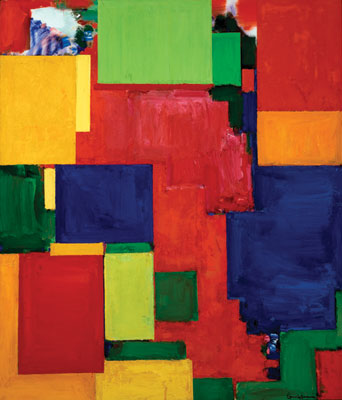
    Hans Hofmann’s "Simplex Munditis" (1962).

    Hans Hofmann’s "Simplex Munditis" (1962).


    Colorscope at the Santa Barbara Museum of Art

    Abstract Paintings from the 1960s and 1970s Hang Through August 15


    Wednesday, May 26, 2010
    By Charles Donelan
    Article Tools
    Print friendly
    E-mail story
    Tip Us Off
    iPod friendly
    Comments
    Share Article
    Facebook Facebook
    Twitter Twitter
    Google+1 Google+1
    del.icio.us. del.icio.us.
    Digg! Digg!
    Yahoo! Buzz Yahoo! Buzz
    diigo Diigo
    google google
    newsvine newsvine
    reddit reddit
    technorati technorati
    Yahoo! My Web 2.0 Yahoo!
    Share on Myspace Myspace

    Give an outstanding curator the right collection and she will surprise you, and maybe even move the world. That’s the happy impression with which one leaves Colorscope, an exhibit put together by Julie Joyce and on view through August 15 at the Santa Barbara Museum of Art. It’s a survey of abstract painting over the course of two decades that produces wonder at the depth and range of the museum’s permanent collection and delight at the integrity of the paintings that followed the initial popularity of abstract expressionism. Mixing California artists with East Coasters, the show includes everything from hard-edged abstraction to airbrush techniques and traditional gesture-based oil painting. The unifying quality of these works—besides their extravagant use of strong colors—is dedication to Josef Albers’s dictum that the source of art is “the discrepancy between physical fact and psychic effect.”

    The show’s first optical assault comes from Richard Anuszkiewicz, whose “Centered Green” (1979) occupies the far wall of the first gallery. With its vibrant use of complementary colors, the picture actually appears to be emitting light, and looking at it literally tickles the optic nerve.

    Elsewhere in the same room, June Harwood’s “Loop (Target)” from 1965 shows how effectively this relatively unknown California painter adapted the “hard-edge” style. Next to the Harwood is another truly outstanding California painting by Lorser Feitelson, “Untitled, April 21, 1971.” The picture’s all-over black surface is interrupted only once by a single swooping zip of red that cuts the canvas vertically. Feitelson playfully transforms Barnett Newman’s iconic gesture of transcendence into something sexy and new with this elegant, intelligent work.

    SBMA owns some extraordinary and important large canvases, and this show has the virtue of pulling several of them out of storage. There’s a great Hans Hofmann, “Simplex Munditis” (1962), that’s every bit as good as the ones hanging in MOMA. In the second room, there’s a giant painting by Larry Poons that is among the late 20th century’s most important and underrated masterpieces. “Yangtze” (1969), genuinely heroic in scale, explains so much about the transition of painting from Jackson Pollock’s “Blue Poles” of 1952 to the advent of Julian Schnabel’s notorious “plate paintings” of 1979 that it is worth going to see several times just to take in its measure. Created out of raw pigment and what looks like wax, the painting references the Chinese river of its title, both as an exercise in fluid shifts between surface and depth and as an approximation of an aerial view of the geologic makeup of the earth over time. This is a superstar of a painting, and, like the rest of Colorscope, is sure to provoke a powerful response in the eyes and minds of its viewers.
    Related Links

    • More Visual Arts

    Comments

    Independent Discussion Guidelines

    Log in to comment

    Forgotten your password?

    Sign up

    EVENT CALENDAR

    Previous Month | Next Month

    Today's Events Best Bets Submit an Event

    Local Weather

    Click here for current conditions

    Surf Report
    • Specials
    • InPrint
    • Top Emails
    • Summer Adventure Guide 2011
    • Wedding Guide 2011
    • Best Of 2011
    • 2010 Election Coverage
    • Blue Green Guide 2011
    • Local Heroes 2011
    • 2011 Calendar of Fundraisers
    • Local Bands
    • 2011 Foodie Awards
    • Stupid, Inept, or Corrupt?
    • It's My Life
    • Helicopters United
    • What Was Bacara’s Dworman Thinking?
    • White Denim Hits the Road with Wilco
    • Summit for a Cure
    1. S.B. Filmmaker Mike DeGruy Killed in Helicopter Crash
    2. Stupid, Inept, or Corrupt?
    3. New Hospital Helipad Sees Heavy Action
    4. Bye Bye, Redevelopment Agency
    5. Home Is Where the Hurt Is
    6. S.B. Symphony to Perform Tribute to Ansel Adams
    • CREATE AN ACCOUNT
    • LOG.IN
    • CONTENTS
    • CLASSIFIEDS
    • ARCHIVE
    • INFO | ADVERTISING | CONTACT US
    Google
     
    Independent.com Web
    Copyright ©2012 Santa Barbara Independent, Inc. Reproduction of material from any Independent.com pages without written permission is strictly prohibited. If you believe an Independent.com user or any material appearing on Independent.com is copyrighted material used without proper permission, please click here.
    This is our Privacy Policy.