Invasion of the Squid
Long-Running Undersea Mystery Plays Out in Santa Barbara Channel

The latest chapter in a long-unsolved undersea mystery is currently playing out in the waters of the Santa Barbara Channel. Reviving their curious channel invasion from 2009, untold scores of Humboldt squid have made their way north from their traditional, warmer waters off the coast of Mexico and points south to the waters around the Channel Islands in recent weeks, thrilling sport fishermen and providing a bizarre visual spectacle for boaters in the area. “They are present right now in enormous numbers in the channel,” said Santa Barbara Natural History Museum curator and squid expert Dr. Eric Hochberg, “but we are still trying to figure out why. … There are just so many questions that we haven’t been able to resolve.”
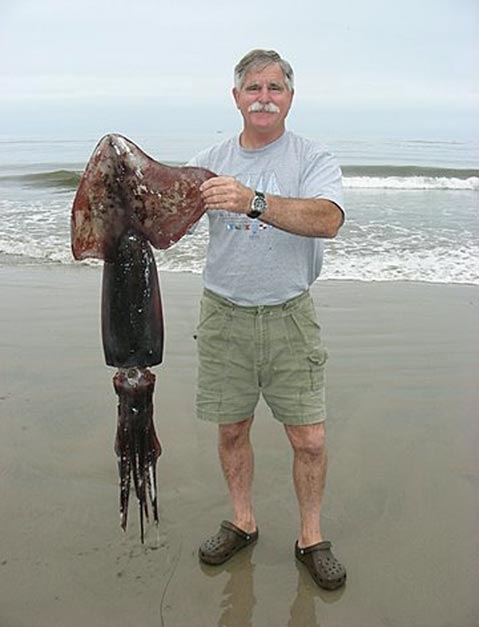
Popularly known as the jumbo squid, the pointy, predatory, and famously intelligent invertebrates — which range in size from one to two feet during their youth but can get as large as six feet or even bigger in adulthood — typically call the Pacific’s Humboldt Current off South America home, but, according to Hochberg, dating back as far as the mid-19th century they have been making unexplained and periodic pilgrimages to the Santa Barbara Channel in mind-boggling numbers. Adding to the mystery is the fact that the creatures often vanish seemingly overnight from the unfamiliar waters. (In fact, as of press time, reports coming out of Long Beach Harbor and other ports to our immediate south suggest that the squid may have already moved on.) Prior to the past week, the wayward squid made headlines in this area when they washed ashore dead in big numbers during visits in 2007, 2008, and 2009.
According to Hochberg, theories about what exactly is motivating the invasions includes food — that is to say, the squid are simply following food sources such as small shrimp, grunions, sardines, and, as they mature, rock fish and hank fish. Other theories being investigated are the roles that the fluctuating water temperatures associated with El Niño/La Niña events may have in motivating the migration, as well as the possibility that during particularly robust breeding years off the coast of Mexico, the surplus of newbie squid have to take to new waters to survive. Hochberg asks anyone who finds a Humboldt squid washed ashore to call the S.B. Museum of Natural History at 682-4711.