Urban Carnivores
Photos Depict the Bobcats of Goleta

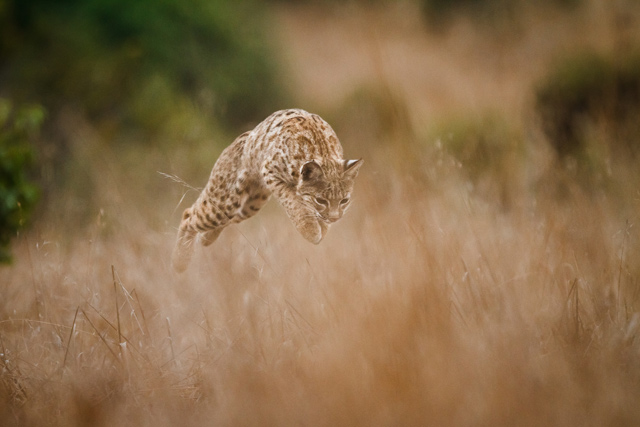
INTO THE WILD: With its trendy restaurants, pricey coffee shops, and high-end food trucks, Abbot Kinney Boulevard in Venice supports a vibrant ecosystem dominated by yoga mat–toting hipsters. Yet just a few steps above the impressive street scene, in the G2 Gallery at 1503 Abbot Kinney Boulevard, another set of urban carnivores are on the prowl, but these animals are not looking to party. Through the stunning wildlife photos of Barry Rowan, on view through September 16, a family of bobcats living in Goleta is making a powerful appearance. These large-format images bring the usually invisible denizens of our complex network of local wildlife and broken habitats into the light, and, in the gallery at least, they are irresistible.
Rowan’s Urban Carnivores exhibition was initiated in consultation with UCLA’s bobcat expert Laurel Klein Serieys, and it exemplifies two aspects of the gallery’s mission. G2 Gallery was founded in 2008 by Daniel and Susan Gottlieb, the Beverly Hills-based eco-philanthropists who are also responsible for the Gottlieb Native Garden, a National Wildlife Federation “Certified Wildlife Habitat” adjacent to their home. The gallery is a nonprofit that uses the proceeds from the sale of outstanding wildlife photographs to help fund ecological activism. The gallery also operates as a way of informing the public about pressing issues affecting the environment, and there is a pressing issue with regard to bobcats: notoedric mange. This mange, which is caused by parasitic mites and may be in part conditioned by the introduction of anticoagulant rat poisons into the bobcat’s food chain, has already had a strong negative impact on Southern California’s bobcat population. To learn more about bobcats and notoedric mange (and see more images of bobcats and mountain lions), visit urbancarnivores.com.
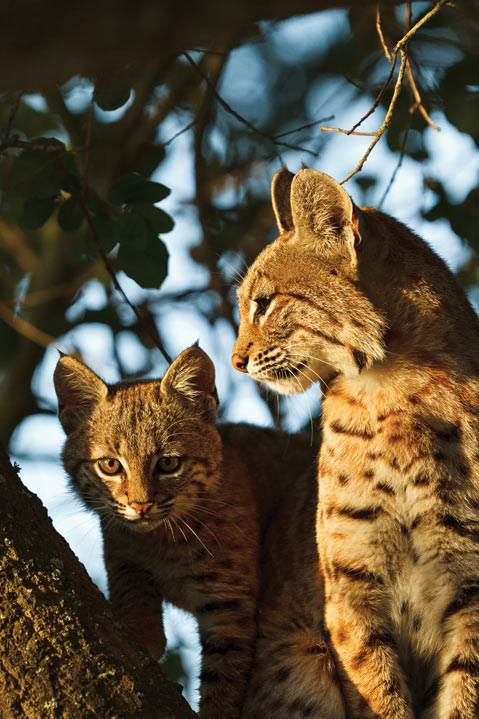
Rowan’s shots, especially those that capture bobkittens at play, are striking. Bobcats are big, beautiful animals, and apart from their distinctively bobbed tails, they resemble ordinary housecats to a remarkable degree. In these images, a female bobcat living in the hills of Goleta can be seen leading her two kittens around their habitat and watching as they learn the stalking and pouncing behaviors that will allow them to survive on their diet of small rodents. As detailed in the story we ran last December, “Where Do All the Bobcats Go?”, ecologists and ordinary residents have been aware of the bobcat presence for years now, although recent efforts by the scientists at UCSB’s Cheadle Center for Biodiversity and Ecological Restoration (CCBER) represent an unprecedented level of commitment to making their lives possible despite our ever-expanding urban presence in their territories.
The longstanding connection between art and ecological awareness in photography, and in fine art more generally, seems to have intensified in the last few years. Shows like Urban Carnivores use the photographic image to transmit an experience that’s already happening in our environment, but that usually exists at the fringes of our field of vision. By bringing these animals closer, and by describing their lives in terms of their kitten-rearing behavior, Rowan has bridged that gap in perception and made what’s already here easier to see and more available to appreciate.