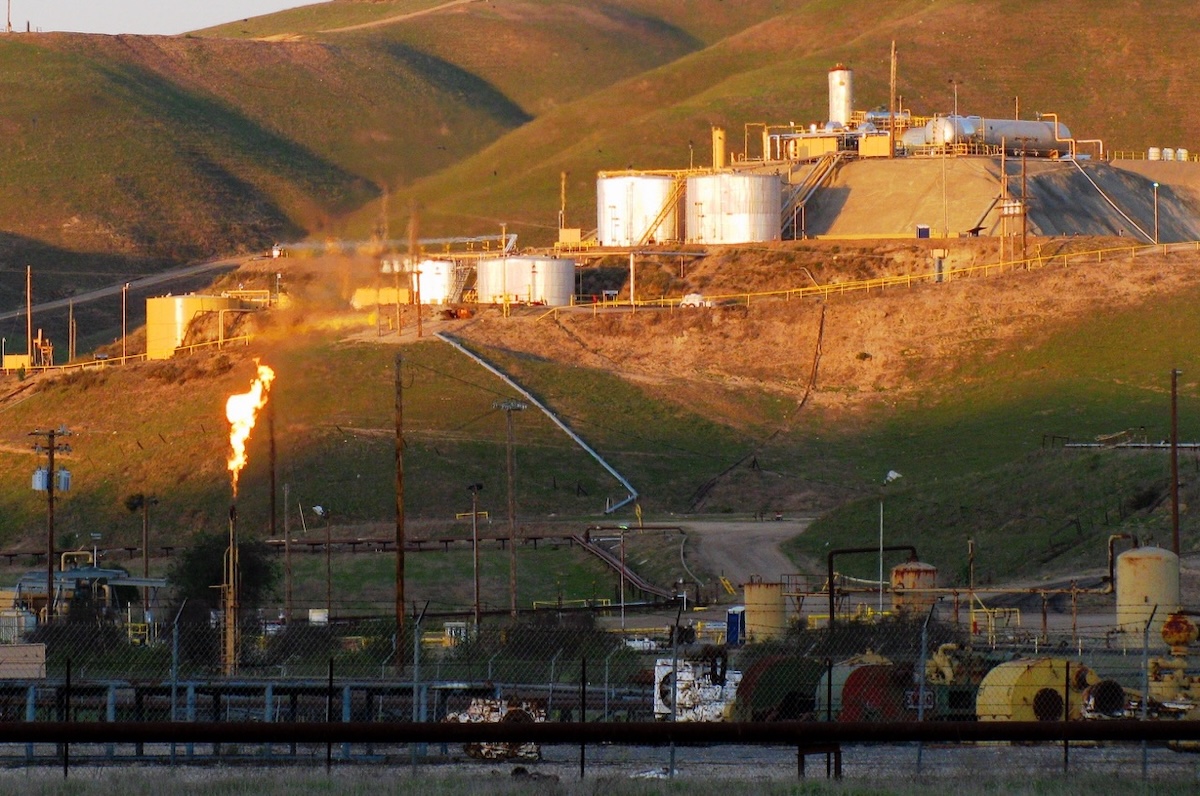
After a genuinely epic meeting overflowing with heartfelt testimony and even more heartfelt emotion from all sides of the oil issue, the Santa Barbara County supervisors voted 3-2 to start the process of pulling the plug on onshore oil industry, an industry with roots in Santa Barbara dating back close to 150 years.
On one side was the issue of climate change, expressed with naked existential urgency by many speakers but perhaps most sweepingly by Supervisor Joan Hartmann. On the other side, were the scores of oil company workers and their families, giving a human face to an industry otherwise represented in government meetings by attorneys paid $700 an hour or more.
Matching Hartmann’s ferocious passion was Supervisor Bob Nelson, who recounted growing up the child of a single mom who worked in the oil industry. The oil industry was not his donor base, Nelson stressed; its workers were his constituents and friends, and he was going to fight as hard for them as supervisors Hartmann, Laura Capps, and Roy Lee were going to fight to phase them out of business.
For all meeting’s emotional intensity, the testimony and the deliberations were markedly civil, though at times the questions got pointed. In a nutshell, the supervisors voted 3-2 to ban the issuance of any new well permits for onshore oil operations in Santa Barbara County. That ordinance will take at least a year to wind its way through the county’s process, but that’s just the easy part.
The hard part — maybe an impossible part — is to phase out all the existing oil operations. That will take three years at the very soonest and will require the expenditure of what might be $2 million the cash-strapped county — now looking at laying off more than 100 full-time employee positions — does not now have.
The most critical study will attempt to determine how many additional years existing operators will be allowed to stay in business so they can recoup their investment costs, their operating costs, their shutdown expenses, and a reasonable rate of return. In addition, the study will make the same reckoning for private landowners who’ve leased their land to such oil operations and stand to see their cash flow dry up when the drilling eventually stops, which would likely be in the neighborhood of 20 years.
That is if the supervisors can successfully defend themselves against the blizzard of lawsuits they were warned Tuesday would be coming their way.
To turn the tide of history is an exceptionally heavy lift and one county planning staff let the supervisors know could easily induce the professional equivalent of a hernia on the county’s limited resources. The magic word bantered around by both sides was that of “transitional.”
With or without the county’s action, gas consumption in the state of California has been dwindling steadily for nearly 20 years. With the arrival of electric cars, that pace has accelerated. Yes, Governor Gavin Newsom has been warning the state about an impending refinery capacity crisis and gas prices of $8 to $10 a gallon. But Santa Barbara’s oil, said to be thicker than peanut butter and infused with a high sulfur content, accounts of only 1.6 percent of the state’s total oil supply. If that goes gradually away, the supervisors were told, that won’t make or break California’s refinery capacity one way or the other. But for the 56 people who testified — for and against oil — it meant everything.