

Last Wednesday evening at a small public gathering in Santa Maria, Santa Barbara County Public Health chief Dr. Mouhanad Hammami quietly announced a major policy about-face and how 7,000 undocumented patients now receiving care at one of the county’s five Public Health clinics would not have to be transferred to other health care providers after all.
At least, for the time being.
The wholesale transfer was first publicly discussed and reluctantly embraced by the county supervisors October 7. Hammami argued forcefully at that meeting that the transfer was necessary to make sure the patients in question could be provided medical care because the Trump White House had issued an edict that no federal health care dollars could be spent on people without proof of citizenship. Agencies not in compliance with this order, Hammami warned the supervisors, were in jeopardy of losing all of their federal funding.
Immigration rights advocates ― as well as the labor union representing dozens of public health employees who had to be laid off because of the $8 million drop in revenues the loss of 7,000 patients would trigger ― vigorously opposed the plan, calling it a premature capitulation to the Trump agenda. They expressed outrage at the lack of prior public outreach — supervisors heard about the plan only three days before the October 7 hearing — and the term “betrayal” was thrown around with some frequency. At that meeting, the supervisors responded by agreeing to postpone authorizing the layoff notices until November 18.
Persuading the supervisors ― and, by extension, Hammami ― to change course so dramatically last week was a coalition of labor unions and immigrant rights advocates who lobbied not just the supervisors themselves but who also managed to enlist California Attorney General Rob Bonta into the matter. Bonta reportedly questioned Supervisor Laura Capps about the proposed patient transfer at a recent fundraising dinner hosted by the Santa Barbara Democratic Party.
While Bonta’s line of questioning has been described as gentle and curious rather than accusatory, he also made it clear that he questioned the wisdom of the supervisors’ direction. After all, he had filed a lawsuit against the White House over this very policy; there’s an injunction currently in place barring the proof of citizenship rule from taking effect. Had the supervisors not changed direction, Santa Barbara would have been the first county in the state to have ordered the transfer of their undocumented patients.
In addition, Jeremy Goldberg, executive director of the Central Coast Labor Council, said a coalition of progressive organizations — the Fund for Santa Barbara, 805 UndocuFund, CAUSE, MICOP, and SBCAN — had bombarded the supervisors with expert legal opinions indicating that the injunction blocking Trump’s proof of citizenship requirements was considerably stronger than the supervisors initially surmised.
Even the attorneys representing the federal government, Goldberg stated, had acknowledged that much of the necessary administrative spadework for passing such complicated new rules had not been done yet. Even if the injunction were to fall, he said, the county’s public health clinics would have some advance notification to prepare their patients for transfer.
For the County of Santa Barbara and Santa Barbara’s broader universe of health care providers both big and small, this is just one of many shoes poised to fall as a result of Trump’s sudden shift when it comes to health care and insurance. But it’s one that Dr. Hammami and his counterpart, Marina Owen with CenCal, the public nonprofit insurance entity providing insurance for low-income individuals who qualify for Medi-Cal, are following closely.
Owen and CenCal secured written commitments from 31 health care operations — with many more primary care providers — to accept all 7,000 of the county’s undocumented patients. Hammami had argued that such transfers can often require up to three months, there being so many cracks for patients to fall through. Many of the immigration rights advocates expressed skepticism that the county and CenCal could pull off such a delicate move, especially given the high state of alarm patients have lived with during the past eight months of high-profile immigration enforcement actions.
Although the supervisors have yet to take any official action, all five have reportedly signed off on the agreement. The shift will be officially codified on November 18.
Related Posts



Premier Events

Wed, Dec 10
5:00 PM
Santa Barbara
Purnell Holiday Trunk Show
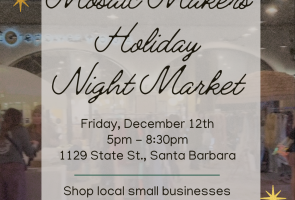
Fri, Dec 12
5:00 PM
Santa Barbara
Mosaic Makers Night Market

Fri, Dec 12
7:00 PM
Santa Barbara
SB Master Chorale presents “The Light So Shines”
Sun, Dec 21
9:00 AM
Santa Barbara
Free Eye Exams and Eyeglasses For Kids!

Sun, Dec 07
12:00 PM
Santa Barbara
Chocolate & Art Workshop (Holiday Themed)

Sun, Dec 07
4:00 PM
Santa Barbara
Paws For A Cause
Fri, Dec 12
2:00 PM
Santa Barbara
Chocolate & Art Workshop (Holiday Themed)
Sat, Dec 13
2:00 PM
Santa Barbara
Chocolate & Art Workshop (Holiday Themed)
Sun, Dec 14
12:30 PM
Solvang
CalNAM (California Nature Art Museum) Art Workshop – Block Print Holiday Cards

Fri, Dec 19
6:00 PM
Santa Barbara
State Street Ballet – “The Nutcracker “
Fri, Dec 19
7:00 PM
Santa Barbara
SBHS Annual Fall Dance Recital 2025
Thu, Jan 22
6:30 PM
Santa Barbara
Boogie for our Bodies
Wed, Dec 10 5:00 PM
Santa Barbara
Purnell Holiday Trunk Show
Fri, Dec 12 5:00 PM
Santa Barbara
Mosaic Makers Night Market
Fri, Dec 12 7:00 PM
Santa Barbara
SB Master Chorale presents “The Light So Shines”
Sun, Dec 21 9:00 AM
Santa Barbara
Free Eye Exams and Eyeglasses For Kids!
Sun, Dec 07 12:00 PM
Santa Barbara
Chocolate & Art Workshop (Holiday Themed)
Sun, Dec 07 4:00 PM
Santa Barbara
Paws For A Cause
Fri, Dec 12 2:00 PM
Santa Barbara
Chocolate & Art Workshop (Holiday Themed)
Sat, Dec 13 2:00 PM
Santa Barbara
Chocolate & Art Workshop (Holiday Themed)
Sun, Dec 14 12:30 PM
Solvang
CalNAM (California Nature Art Museum) Art Workshop – Block Print Holiday Cards
Fri, Dec 19 6:00 PM
Santa Barbara
State Street Ballet – “The Nutcracker “
Fri, Dec 19 7:00 PM
Santa Barbara
SBHS Annual Fall Dance Recital 2025
Thu, Jan 22 6:30 PM
Santa Barbara

