
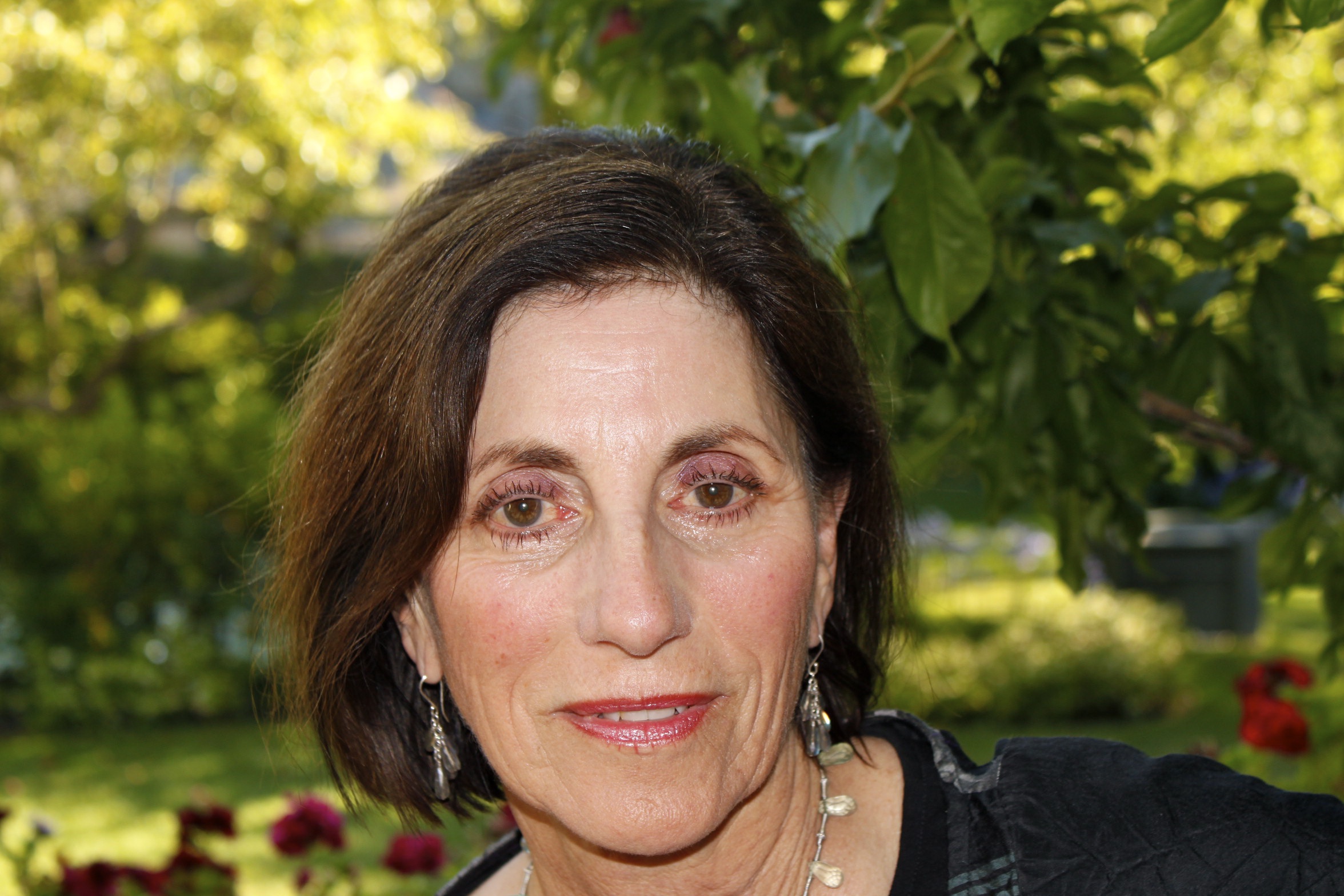
Phyllis de Picciotto’s motto was “Imagine the possibilities. Dare to do the impossible.”
I say — “visionary.” Oh, and sexy, astute, dogged, brave, independent, beautiful, and more.
Chicago Childhood
Her maternal grandparents, who escaped the pogroms in Russia, were early influencers. Phyllis was proud that her grandmother had innovated free milk distribution for public school students in Chicago.
Phyllis’s father died when she was 10, and her mother faced challenges raising three girls. Phyllis chose Chicago’s Von Stueben High School, one of Chicago’s best, which required three transfers on the “L” trains.
Her family moved to Los Angeles. Phyllis enrolled at Fairfax High and was told she had already taken every class needed to graduate. She graduated early and attended Northwestern, majoring in English literature, and later UCLA.
One of Phyllis’s relatives helped create the Brandeis Camp Institute, a Jewish summer retreat. Phyllis’s experiences there profoundly changed her. She became a committed, proud Jew and a deeply “spiritual” one.
At camp, she met her lifelong friend, Robert Laemmle, whose family owned the Laemmle Theatres chain, which exhibited foreign and U.S.-produced independent films.
Phyllis married and had three children. A neighbor suffering from cancer asked if Phyllis would drive him to his oncologist. Phyllis agreed and helped him adjust to his illness. Her “palliative care” attracted the attention of the oncologists, who asked Phyllis if she would help other patients. When asked why the doctors requested her help, Phyllis said, “I was honest with them.”
Phyllis was the first director of the new nursery school at Temple Israel of Hollywood. With no formal teaching or administration training, Phyllis pioneered a progressive, creative, holistic approach that continues today.
At this time, Phyllis was divorced and had three kids to support. She needed a better-paying job. She talked to the Laemmles, who asked, “What do you know about the film exhibition business?” “Nothing,” she responded. But, “I love film and am good at business.” She got a three-month tryout.
The Laemmles acknowledged that Phyllis had talent. Art films require a specialized audience open to unconventional storytelling and subtitles. Phyllis designed flyers and posters targeting art film audiences in Los Angeles. She attended private screenings and mingled with L.A. film critics, such as the L.A. Times’ Charles Champlin, Variety’s Leonard Maltin, and many others. She met many of the iconic filmmakers of the 1970s, including Akira Kurosawa, Francois Truffaut, Federico Fellini, and Agnes Varda.
Phyllis pitched a unique idea to the Laemmles. She would pick a theme and show a series of films over multiple weeks with guest speakers afterward. She believed the L.A. art film audience thirsted for a deeper relationship to cinema.
Though initially resistant, the Laemmles agreed if the profits were split 90 percent in their favor. Phyllis wanted a 50-50 split. The Laemmles pleaded: running the theater, paying for promotions, and losing income from schedule conflicts was expensive. Phyllis explained her plan. The Laemmles gasped, “You’ll work around our schedule, you will pay for all the hard costs, and we still get 50 percent of the profits?” Voilà! Phyllis de Picciotto Presents was born. At that time, there were 30-40 art film exhibitors in the U.S.; Phyllis was the only woman.
Her film series themes included psychology, women filmmakers, civil rights, opera, ballet, samurai, and older films. She drew a large following, and it was expanded to more Laemmle theaters and others on the coast. Separately, distributors hired her to promote the opening of art films, such as John Sayles’s films (Return of the Secaucus 7, etc.), Bye Bye Brazil, and Cutter’s Way. She also worked at film festivals, including Cannes, Toronto, Vancouver, Seattle, Sundance, and Telluride.
Santa Barbara
As Phyllis’s reputation grew in the art film industry, Bruce Corwin, who met her at Temple Israel, asked if she could help Metropolitan Theatres improve attendance at the underutilized Riviera Theatre. Phyllis’s programming resonated with Santa Barbara audiences.
On Cinco de Mayo 1979, I met Phyllis through mutual friends. I was the county’s district attorney at the time. Phyllis was driving when I told her the DA was part of law enforcement. She quickly pulled to the curb. “Tell me you are not carrying a gun.” A three-year commuter romance later, Phyllis moved to Santa Barbara in 1983.
Not long after, she held a meeting in our living room to pitch the idea of a Santa Barbara–based film festival. Phyllis shared her “vision” — a festival offering world and U.S. premieres, along with celebrities, panels, klieg lights, vintage cars, red carpet, long lines fostering conversation, lavish parties, a large dedicated group of volunteers, free programs, artist retrospectives, and awards.
Bruce Corwin immediately offered Metropolitan’s theaters and cash. He helped persuade the City Council that a film fest could attract tourists to Santa Barbara during the winter. A grant was awarded, and the Santa Barbara International Film Festival (SBIFF) was launched. Renowned actor Robert Mitchum was the first tribute, introduced by Dame Judith Anderson (Medea). This was followed by a late-night gala party at Montecito Bank & Trust, thanks to Mike Towbes.
Although there were clashes with “experts” over her vision, Phyllis never wavered. She watched every film submitted for consideration; no detail was too small. SBIFF soon shifted from a four-day format to the current 11-day format. Over the years, Lawrence Miller and other savvy board members kept the festival in the black. The first Modern Master Award was presented to Michael Douglas in 1995.
Joe Woodard, critic and journalist for the S.B. Independent, wrote, “Through her pioneering work as SBIFF’s founding force, Phyllis was a passionate advocate for the arts and the cause of making Santa Barbara a more cinema-literate place to live…. Phyllis may be gone physically, but not forgotten.”
Family and Civic Life
Phyllis grew up with many cousins, with whom she stayed close. She adored her daughters and her grandchildren. We were married in 1987 and traveled to the earth’s four corners, including six months in China, where I taught law and Phyllis lectured on film appreciation and production. She co-taught a popular S.B. City College Adult Ed film appreciation class.
Phyllis participated in the city’s first Leadership Santa Barbara program and served on the County Grand Jury. Passionate about women’s health, she helped arrange a major Planned Parenthood fundraising event on Charles T. Munger’s then-brand-new catamaran.
Phyllis made significant contributions to local art. She chaired the City Arts Advisory Committee, was an executive board member of the Santa Barbara Arts Collaborative, the State of the Art Committee, Art Walk Ventura, and the organization that helped refurbish The Granada Theatre. She was a juror for film awards, including the Fund for Santa Barbara’s Social Justice Award and Green Shorts Film Festival.
She joined the Community Environmental Council’s Partnership Council and Lights Out Santa Barbara. As a community mentor, she served with Leadership Santa Barbara County and Women’s Economic Ventures, and consulted with scores of founders and promoters of other film festivals around the world.
Phyllis was executive producer for an animated short, The Incredible Journey of Berta Benz (2012). She and Stan formed baba2films and created social justice short films featuring the Independent’s annual heroes and other events.
Phyllis is survived by husband, Stan Roden; daughters, Leonie de Picciotto and Natalie de Picciotto; stepsons, Grant Roden and BJ Roden; sister, Linda Goldsman; grandchildren, Sarah Rose, Jack Rose, Isabella Hardy, Jet Hardy, Lucas Roden, Griffin Roden, and Giselle Roden; and her much-beloved 3-year-old Aussie, Linus.
In honor of Phyllis, please consider donating to Planned Parenthood, S.B. Foodbank, S.B. Jewish Federation, or S.B. Arts Collaborative.

