
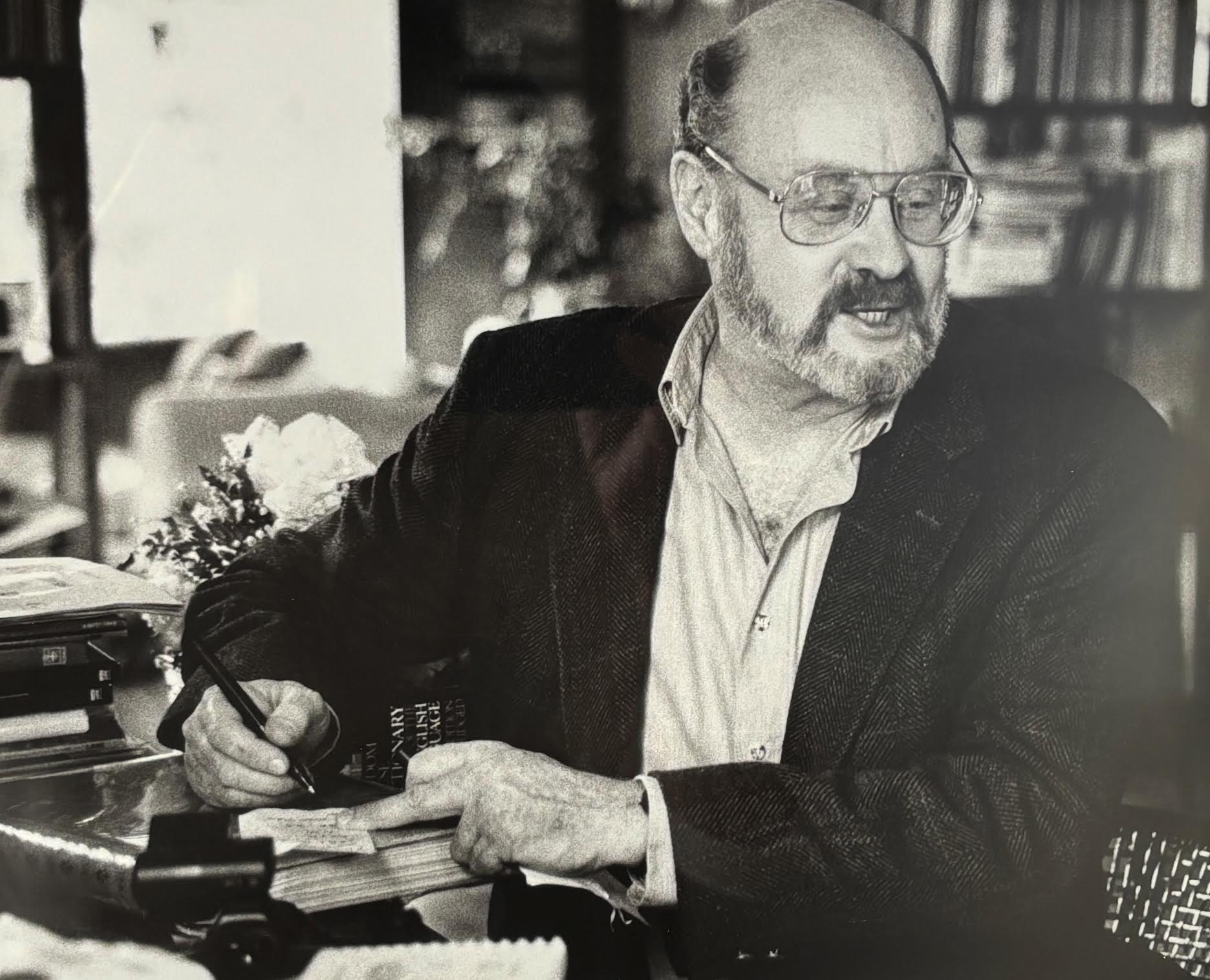
John Martin is no longer with us. He was my friend for 50 years and a sage teacher in more ways than one might imagine. What brought us together initially, of course, was books. He was an aspiring publisher in Los Angeles while I had just begun issuing rare-book catalogues in the Bay Area. We were both highly ambitious (and woefully undercapitalized).
John was born with a collector’s DNA in his genes. As a young man, he prowled the used bookstores of L.A. in a quest of first editions of authors whose work he admired. One of those authors was Charles Bukowski, who was eking out a hardscrabble living toiling as a postal service worker by day and writing poems and stories at night that were being published in obscure little magazines and alternative newspapers. John was earning $500 a month in his day job as the manager of an office supply company. He sought out Bukowski and made him an offer that was not refused. Bukowski would quit his job and write fulltime for the publishing company that John wanted to establish. And he would be paid $100 monthly by his profligate patron. The rest, as they say, is history. What began as an iffy partnership would turn out to be a runaway success for two unlikely collaborators.
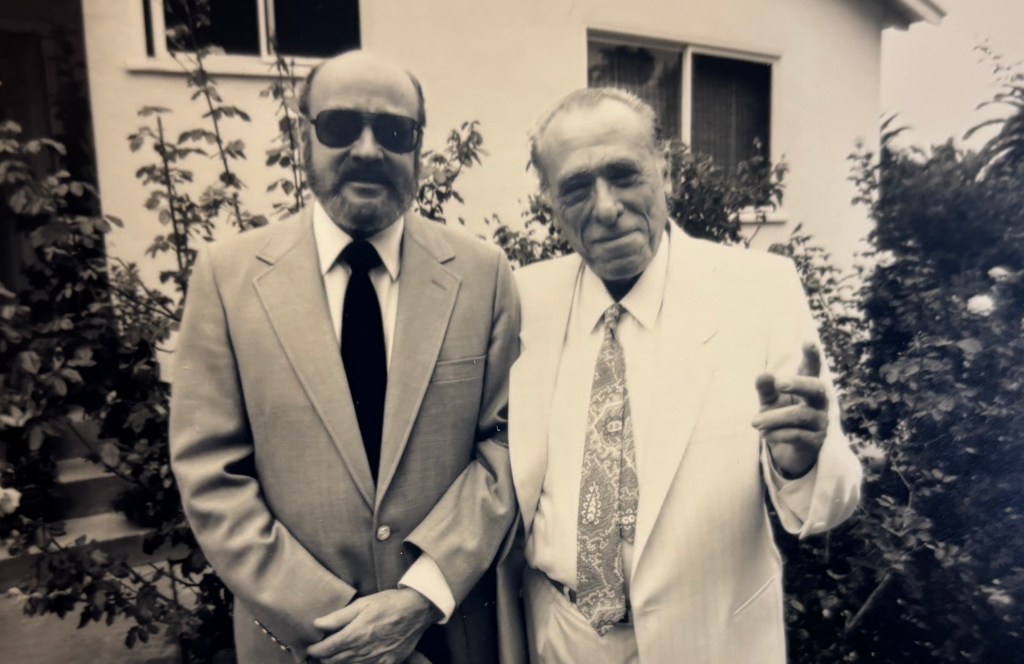
John found the seed money to establish his today-legendary Black Sparrow Press by selling his rare-book collection to the UCSB Library for $50,000. Years later Bukowski’s letters to John — hundreds of them — were added through our offices to that same local research institution.
The mid-1970s turned out to be the watershed years of our friendship with John and his wife Barbara. In what I regard as a blissful confluence, my wife Carol and I and our young daughter had relocated to Santa Barbara shortly before they left the City of Angels for these balmy parts. Black Sparrow books, all of which were innovatively designed by Barbara, would now be printed here by a master craftsman, the late Graham Mackintosh, who also supervised the production of our catalogues. We discovered odd affinities that had taken place years before we met. For example, both of our only children were named for literary heroines — theirs for Theodore Dreiser’s Sister Carrie, ours for Shakespeare’s Cordelia.
I see those days as a literary Golden Age for Santa Barbara — an energetic book hub in a pre-Internet time that disproportionately attracted book collectors, authors, librarians, literary critics, and booksellers from all over to a city whose population was then below 100,000.

At the forefront of this renaissance was John, who maintained an unprepossessing profile despite the powerful magnetic field his aura generated. The Martins now lived in a spacious house in the Samarkand area. John worked out of a small, glass-sided office adjacent to a swimming pool that was enjoyed by others but not by its host — who in swim trunks patrolled its perimeter, long net in hand, rescuing floating bees or fishing out the occasional fallen leaf or dead insect that had dared to sully his domain.
Since I am a bookseller and John a book collector, one might think our business dealings were one-sided. It is true that, over the years, I sold him much. I did, however, buy much more literary material from him than one might suppose. John was an amateur in the etymological sense of the word — a lover whose ardor can become contagious. I observed how this enthusiasm often converted the infidels with whom he was transacting into true believers. What was a deeply felt passion had its flip side — a realistic approach to business that equipoised the Yin and Yang jousting within the confines of a complex being.
Mild-mannered as he was, John could assert himself when circumstances called for toughness. I remember a long-ago night at a poetry reading in Claire Rabe’s jazz club, Baudelaire’s, when John forcibly silenced a rowdy heckler who went limp in his outraged bear hug. But at heart, my friend was a softy. An example of his generosity: I once coveted a fairly valuable manuscript with a stiff asking price that he dangled before my eyes, only to see it abruptly gifted to me with this throwaway line: “Just take it, pal, it’s only paper.”
But nothing, as we know, is forever. A decade after their arrival, John and Barbara moved to Santa Rosa, from which location, Black Sparrow titles continued to be produced until 2002 when the rights to the books of Charles Bukowski, John Fante, and Paul Bowles were sold for mega bucks to a major New York publisher. The tent was now folding down — but not before John made sure that the contracts of his less popular authors would be taken on by another publishing house, ensuring that their books (and subsequent income) would be continued. The princely sum that John exacted for this secondary sale was $1. Oh, and to sweeten the deal, he threw in the entire 100,000 Black Sparrow Books inventory.
As an adjunct to this blockbuster deal, I, a picky dealer accustomed to buying books one by one, found myself acquiring the 2,500 volumes that were John’s own publisher’s copies — books inscribed to him by his authors. After all, to downsize is to be a realistic octogenarian. Not that I adhered to that wise advice.
Besides, saying no to John was never easy.


You must be logged in to post a comment.