

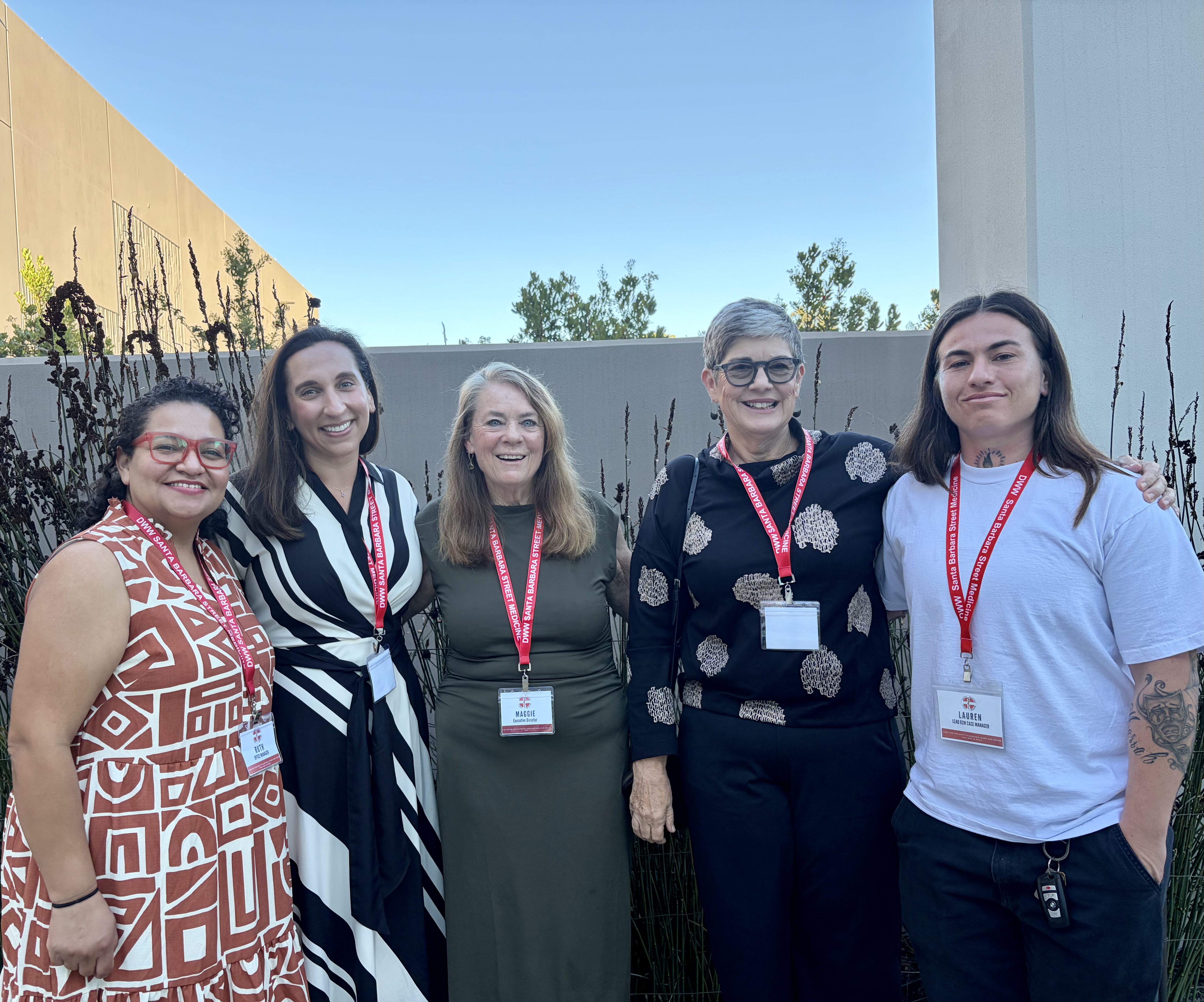
On October 10, Doctors Without Walls — Santa Barbara Street Medicine (DWW) held its annual donor appreciate event, where donors got to meet the incredibly talented and dedicated staff, board, and volunteers who are passionate about bringing healthcare to homeless individuals and getting them into stable housing.
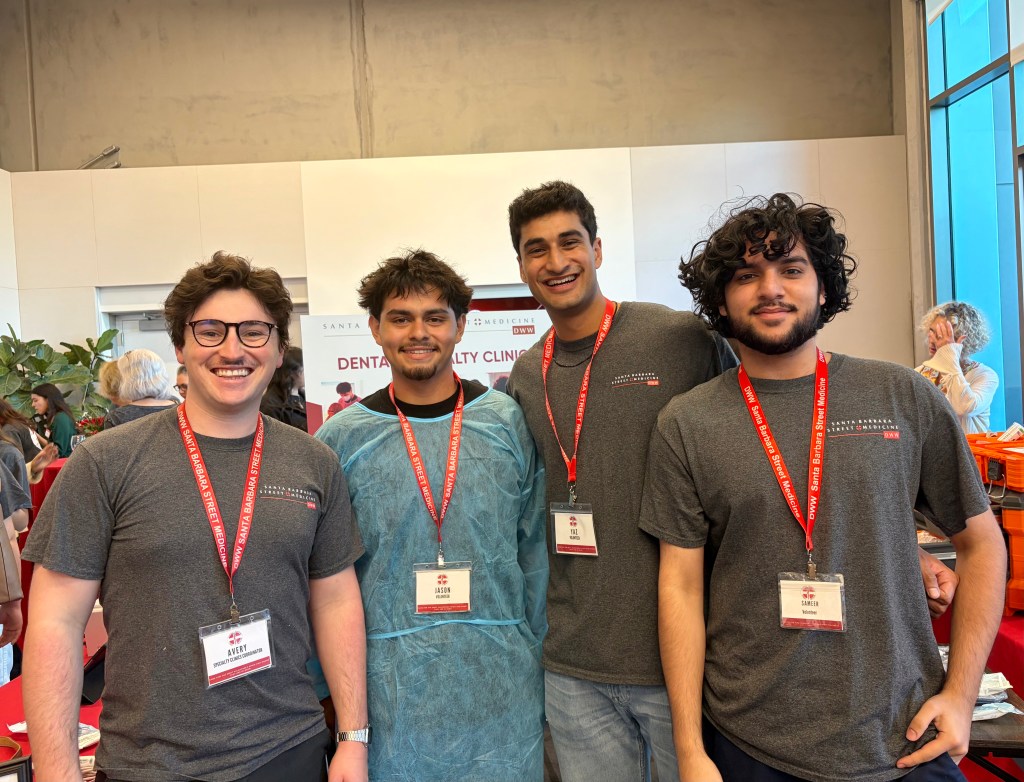
Held at Direct Relief, the reception featured booths where volunteers, largely pre-med students, other students, and healthcare professionals, explained the extensive healthcare and other programs DWW operates, bringing their services to parks, churches, nonprofits, and the streets, meeting people where they are.
In the program, Executive Director Marguerite Sanchez, an original boardmember who has tirelessly supported the organization throughout its 20-year history, including as its volunteer executive director for the past three years, welcomed guests. She explained that since 2022, DWW has been providing Enhanced Case Management (ECM) through a partnership with CenCal Health. With Medi-Cal funding of this program, DWW has provided clients with up to 18 months of intensive case management, enabling them to secure and maintain housing. For the chronically homeless demographic being served, this has been a remarkable achievement.
Sadly, Sanchez anticipates DWW losing its ECM funding, which would otherwise bring in $170,000 next year, thanks to the “Big Beautiful Bill.” Compounding matters, services by other safety net providers are being cut, resulting in a simultaneous increase in demand for DWW’s services. Most notably, the PATH shelter will close at the end of this year and S.B. County Public Health, pursuant to new federal rules, will no longer serve its 7,500 undocumented patients.
On a bright note, the California legislature recently passed AB 543, which will enable street medicine organizations such as DWW to qualify under Medi-Cal as primary care providers for the homeless patients it has been caring for all along. However, revenue is uncertain and at best off in the future because federal approval is required for any changes to Medicaid (the federal program to which Medi-Cal belongs) and if approval is granted, the implementation process, Sanchez anticipates, will take another five years.
Volunteer Data Coordinator and S.B. County EMT Majd Bakdounes explained how last year, DWW integrated its electronic medical records with CA’s Health Information Exchange (HIE). This year, it made the records compliant with the Homeless Management Information System (HMIS). This integration enables providers to coordinate services, track outcomes, and direct resources where they are most needed.
Bakdounes related that homeless individuals often mistrust healthcare systems and workers, which makes obtaining their health information difficult. With this integration, clients are asked to share their information only once, and to do it in a safe and supportive environment, and better treatment outcomes have ensued.
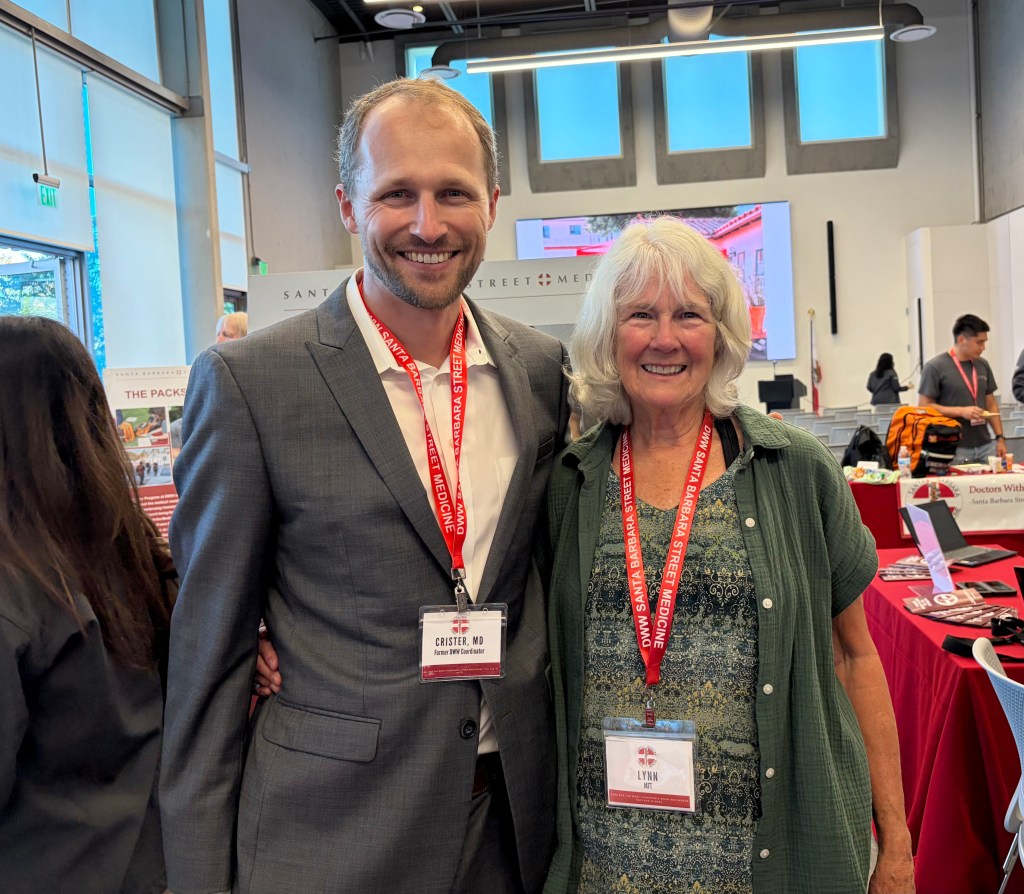
The keynote speaker was Dr. Crister Brady, who was DWW’s first student coordinator back in 2010 and is now a practicing physician and professor at University of North Carolina School of Medicine. He reflected on the key tenets of DWW that have remained constant over the years: the philosophy of going to the people and providing them with unconditional care; the mentorship of students (“future colleagues”), which provides huge benefits to them in their careers; and the collaboration of care, with patient conversations helping guide the organization.
Brady reflected too on the remarkable growth of DWW, which is the oldest nonprofit stand-alone street medicine program in the country. At street medicine conferences, Brady related, DWW is famous because of the work it is doing. A remarkable testament to DWW’s impact is that former DWW student volunteers now lead 18 programs across the country.
Another testament is the incredible vaccination success DWW achieved during COVID, with more than 18,000 vaccines given and an uptake rate of more than 85 percent. “You don’t see that in any setting, especially in the setting of people who have multiple traumas and have many reasons to distrust the healthcare system,” Crister noted. DWW achieved this, he added, because of the trust it had earned and the creative efforts of its leadership.
Crister declared that everyone who does this work should be celebrated, but he heaped special praise on Sanchez and volunteer First Line Supervisor Lynn Matis.
Medical Director Dr. Priti Gagneja, an internal medicine physician practicing here for 21 years, shared her gratitude for the opportunity to be a part of DWW’s work of providing compassionate care and getting to witness its profound impact. By treating chronic conditions, offering mental health support, and providing preventative care, Gagneja explained, DWW nurtures a sense of dignity among its patients.
Doctors Without Walls holds weekly clinics in Pershing Park and Alameda Park and goes on foot, with backpacks, to surrounding areas. It holds weekly events at the S.B. Rescue Mission and at St. Athanasius Orthodox Church and does van rounds in other parts of Santa Barbara and Goleta. Twice a month, it holds a clinic for women only at Transition House. Once a month, it does a dental clinic at the Veteran’s Memorial Building and holds other special clinics.



You must be logged in to post a comment.