
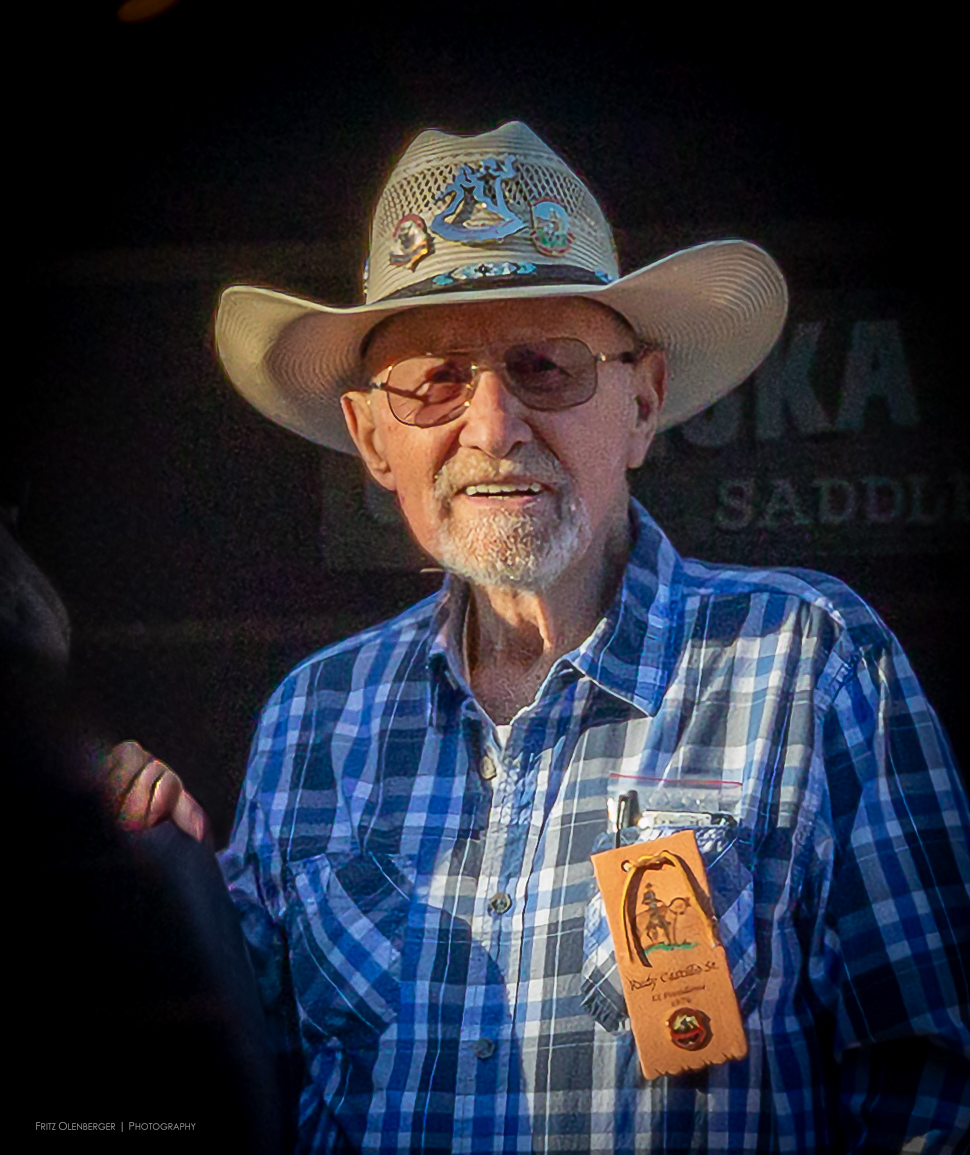
When he was named to be the Grand Marshal of the Old Spanish Days parade in 2024, Rudy Castillo was the oldest surviving El Presidente of an event that itself was turning 100 years old. Even before he became El Presidente in 1976, Rudy was known to be one who led by example, always working long hours alongside board members and volunteers.
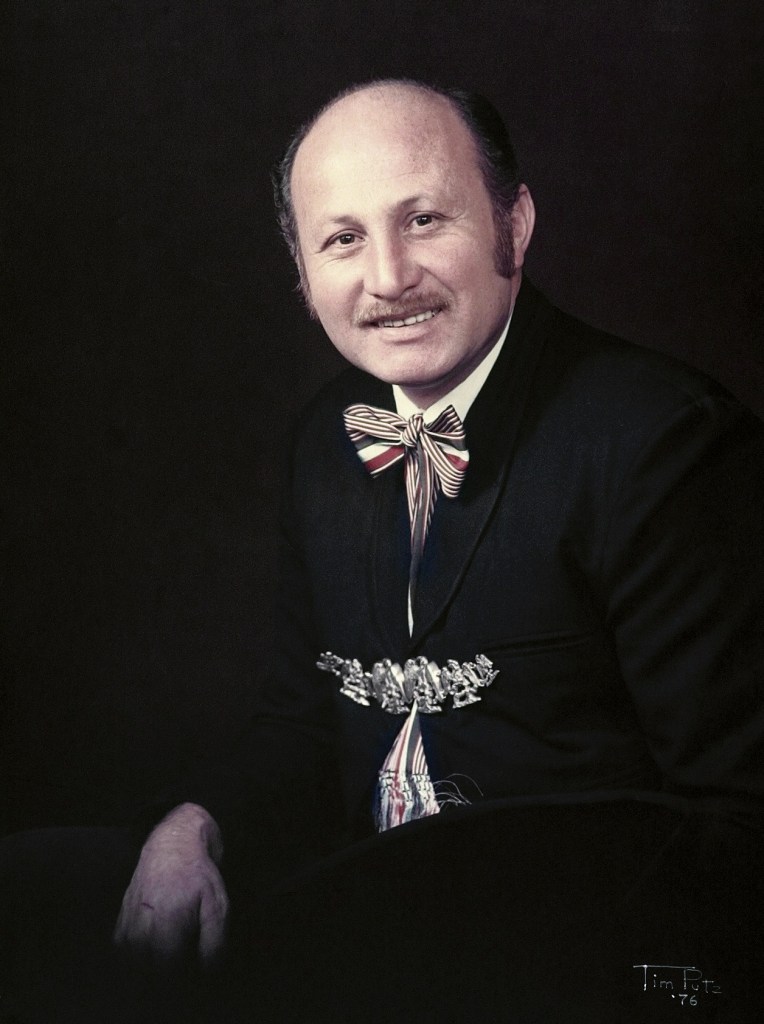
When Rudy was elected to the Old Spanish Days board back in 1962, he told the members, “I cannot bring status or financial assets to Old Spanish Days. I am not a doctor, lawyer, or businessman, but I can bring my back. If you still want me, I would be honored to become a board member.”
Rudy Castillo was born July 8, 1929, at home on Edison Avenue in Santa Barbara. He grew up during the Great Depression, his family, like so many others, struggling through the lean times with a large home garden where they grew all their fresh vegetables. During those years, his father, Isaiah Castillo, was a caddy at country clubs, working for 25 cents an hour plus tips. His mother, Isabella Ramirez, was a lemon sorter at Johnson Fruit Company in Santa Barbara.
Rudy attended Lincoln Elementary School, Santa Barbara Junior High, and Santa Barbara High School during the World War Two era. Around the age of 10, he became a serious baseball player. His position was catcher. He was a great defensive player and a solid batter, hitting around .300 his whole career.
Rudy’s high school baseball coach, Clarence Schutte, arranged for him to try out for the Dodgers in 1949 and 1950. Rudy was a contender to be on the team’s catcher roster, but when the Dodger organization offered to send him to play in the minor league, Rudy turned them down. Rudy kept playing baseball in local and regional leagues until the age of 55 with one exception. In 1951 he was drafted into the army.
Inducted into the Army on February 21, 1951, Rudy was sent to Camp Roberts for three months of intensive infantry training. After that, he went directly to Seoul, Korea, as part of Fox Company of the 7th Infantry Regiment of the 3rd Division. Rudy remembered the complete devastation of the city: “All that was left was half of one building. The rest was rubble.”
Honorably discharged in 1953, Rudy returned on a Saturday to Santa Barbara, where his old friend Jimmy Andros asked him to come to work with him the following Monday. Rudy had Sunday off and reported to work early Monday morning. Rudy was grateful to his old friend, and they remained close.
That same year, Rudy married Phyllis Kendrick. They had four children but eventually ended their marriage. Five years later, Rudy married Brenda Coffey, who brought her two daughters into the family.
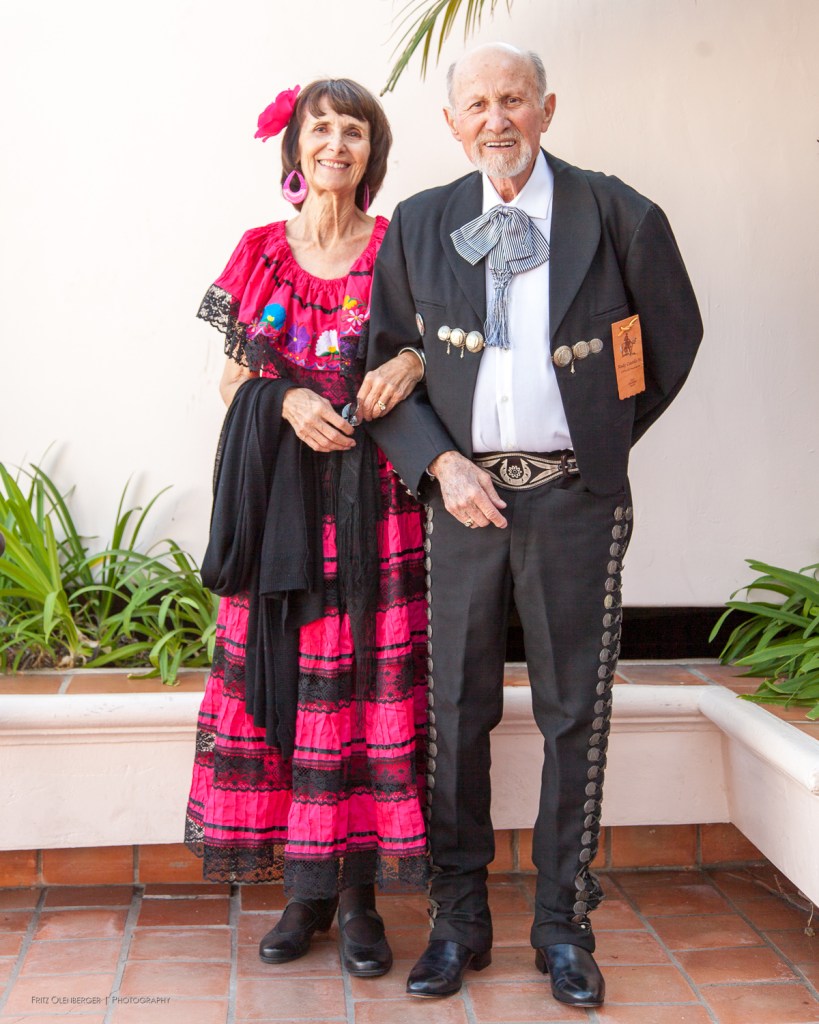
Rudy’s work with Old Spanish Days began when he joined OSD and the Native Sons of the Golden West in 1959. His cousin Richard Hidalgo asked him to volunteer at Mercado De la Guerra, where Rudy learned every aspect of the operation over the next five years. He became known as the problem solver for issues that inevitably arose. Security, vendor relations, porta potties, entertainment, electrical and safety concerns, and more had to be worked out with the city, county, Old Spanish Days, and the public.
“We had many issues to work out with the Health Department because we were serving food,” Rudy recalled. For more than 20 nonprofit vendors, Fiesta was their number one fundraiser each year. Mexican records playing on a phonograph filled the air at the mercado. Dance schools and the Fiesta Spirits performed to the delight of the crowd.
When Rudy was elected El Presidente for the 1976 celebration, “… it was the U.S. Bi-centennial year, [and] me and the board wanted to incorporate this important anniversary into our Fiesta poster,” said Rudy. Breaking with the tradition, the design featured the Liberty Bell, a Franciscan Padre, a Spanish explorer, and the courthouse archway: “The word ‘campos,’ which means camp, is carved into the stone. Campos was the married name of my great grandmother, and I wanted to honor her and the family in this personal way,” Rudy said.
When asked what the biggest challenge was, Rudy quickly replied: “money” was always the biggest hurdle of putting on Fiesta. In 1976, the celebration had no corporate sponsors. Instead, the biggest revenue came from ticket sales to events. Rudy sold close to 500 tickets himself. The other big difference, according to Rudy, was the volunteer board, their families, and friends did all the work decorating, setting up and breaking down of tables and chairs, and the meal preparation.
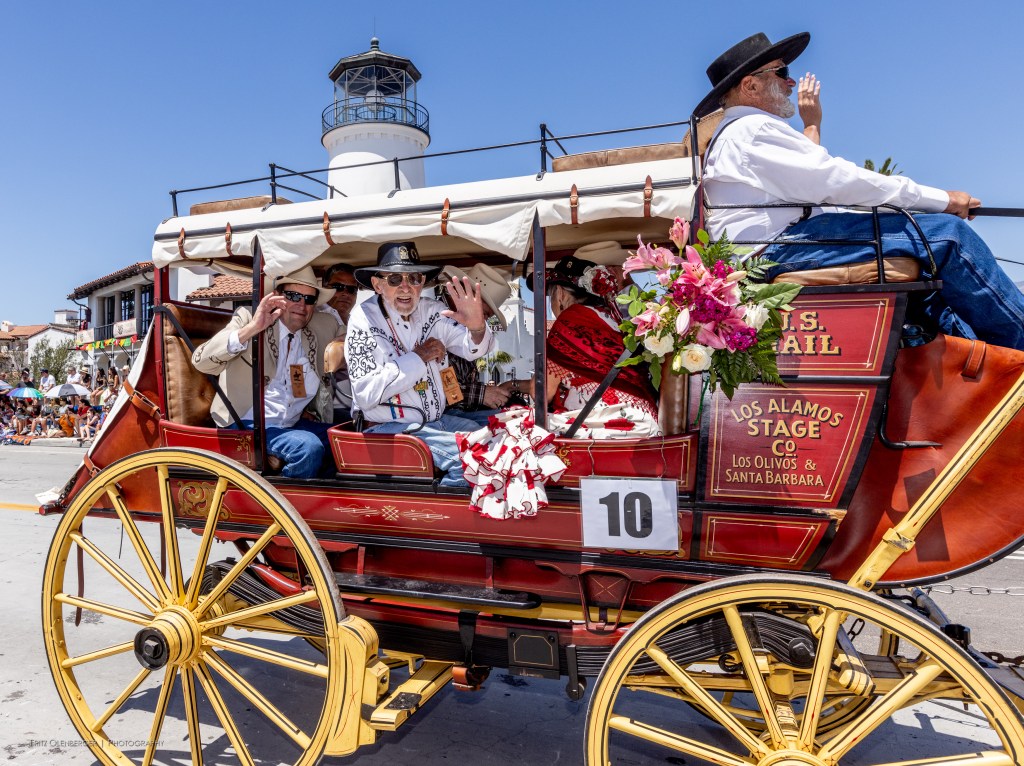
Rudy’s family continues his Old Spanish Days tradition. Rudy Castillo Jr. works at the Carriage and Western Art Museum, restoring and maintaining the carriages that are used in the Fiesta Parade. When Rudy rode in a carriage in 2022, his two granddaughters, Chloe and Angelina, joined him in the prettiest carriage of the parade. So many in the crowd called out to “Uncle Rudy,” cheering him on as he waved back, calling their names in appreciation and delight.


You must be logged in to post a comment.