
Muralist
on the Rise,
at Festivals and Santa Barbara’s Walls
Mexican-Born Interdisciplinary Artist Diego Melgoza, a k a Melgo, Expands Horizons into the Mural Tradition, in Untraditional Ways
By Josef Woodard | November 26, 2025
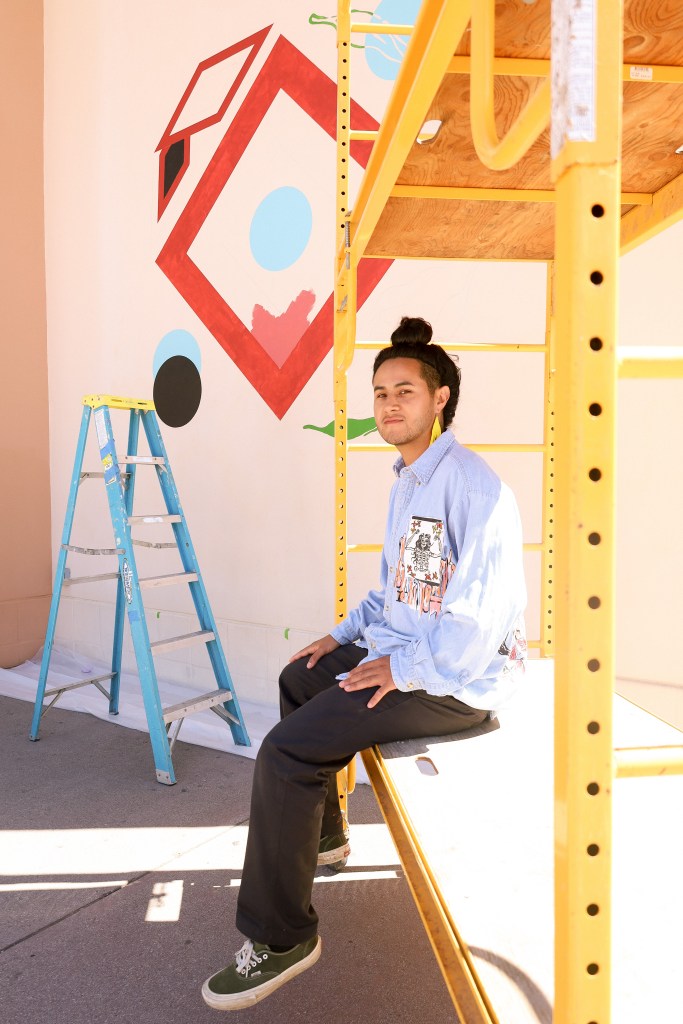
Art and activism can be symbiotic twin forces, as happens in the “transdisciplinary” work of Diego Melgoza Oceguera, who goes by the artistic portmanteau Melgo. Melgo was born in Mexico City in 1992 and has been a Santa Barbaran since his family moved here when he was 14 “in the classic search for better opportunities.” He earned his MFA at UCSB in 2024 and has worked in many modes and media, including as a graphic designer at the Independent.
But his fine artwork has also been seen in such venues as the respected Joshua Tree Festival for the past few years. “I express myself through sculpture, painting, installation, experimental video, sound, and two-dimensional visual artwork, and will continue to explore other mediums as they cross my path,” he says.
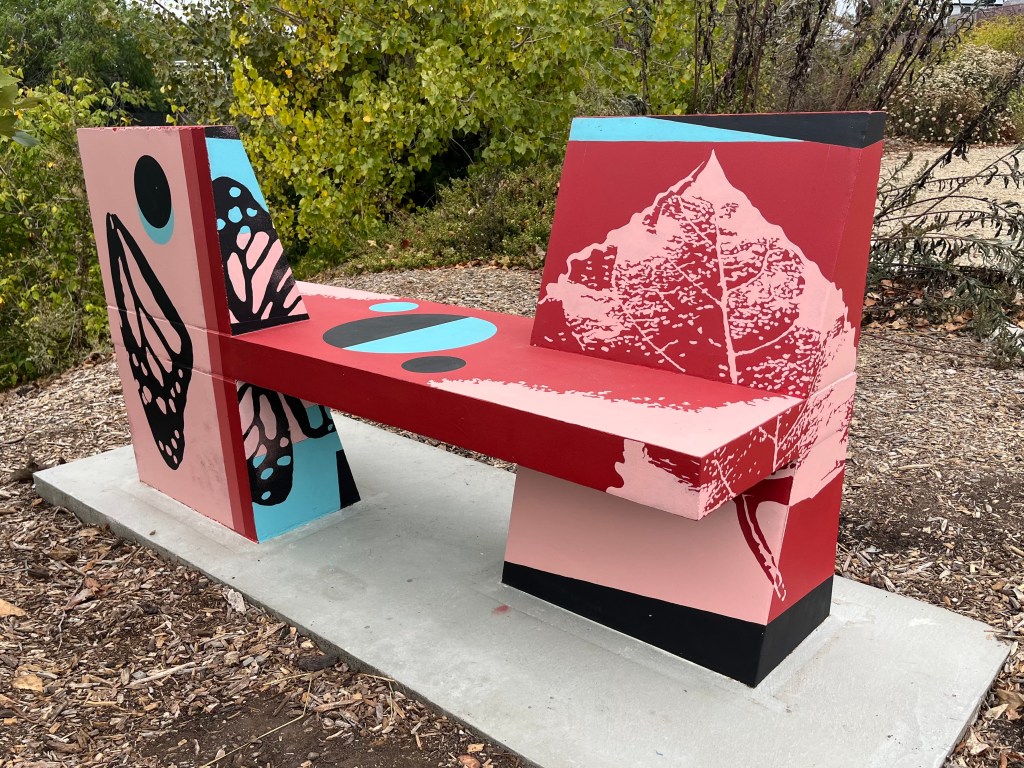
Melgo continues to work on fine art in varied disciplines and hopes to delve deeper into the mural aspect of his art — a literal community forum beyond gallery walls. Currently, he is working on a mural bench at the Octagon Barn in San Luis Obispo. In another mode, he will present experimental sound and video work as part of the House Show at UCSB’s Red Barn on Friday, December 5, at 6:30 p.m.
On the mural front, he says, “I hope Santa Barbara building owners will support muralism in a nonconformist way, so that public art can provoke reflection, spark conversation, and inspire us to reimagine society.”
Where did art enter your life, and how has it evolved over the years? Formally, it began around 3rd grade. My elementary school in Mexico City offered Saturday school classes in painting, and my mom encouraged my sister and me to take the courses. The class focused on oil painting. I guess I looked up to my sister’s creative facility to paint when I was younger. As we got older, she didn’t continue her creative discipline, but I have been carrying it on and off since.
Even further, my mom bought tracing paper for us, and we would trace cartoons from a rug that featured Looney Tunes characters. Tracing is still a tool that I use in my mural preparation and other art projects.
Which artists or movements in art would you say fed into finding your own voice? The Mexican muralism movement is one of my earlier influences. I’m fascinated by the mural size, conceptual content, and aesthetic of the work of Los Tres Grandes (David Alfaro Siqueiros, Diego Rivera, and José Clemente Orozco). I also have a strong admiration for the art collective ASCO, whose work explores the marginalization of the Chicanx community during the 1970s.
More recently, I have come to appreciate the work of contemporary brown artists, such as Ozzie Juarez and Rafa Esparza, whose conceptual work is particularly inspiring to brown Latinx people. I gravitate toward work that empowers and conveys a profound message, grounded in personal and cultural experience.
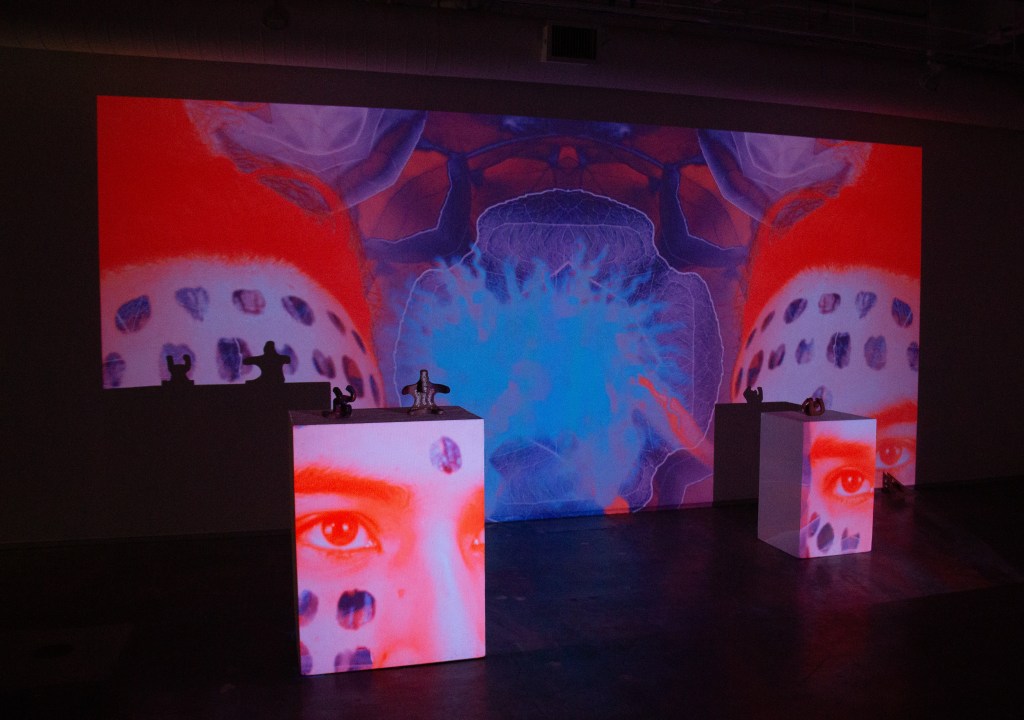
Addressing politics, of immigration, racism, and other timely topics, has been important in your art. Has that impulse become ever stronger in this mad period in American history? My work has consistently advocated for dignifying the experiences of brown immigrants in the U.S. However, I began to push forward these ideas after the Black Lives Matter movement and the uprising of racist ideologies during Trump’s presidency. As the political climate intensifies, I feel compelled to express my ideas as a means to create space for reflection and conversation. And also empower those who are familiar with resistance symbolism, such as the monarch butterfly and the watermelon.
You have now made murals in a few festivals — Lucidity, Lightning in a Bottle, and Joshua Tree. Does the multidimensional and communal nature of festivals appeal to your aesthetic mission, in a way? It did at one point in my career and art development. The festival environment is what pushed me to pursue art. Some of my early pieces, in printmaking, graphic design, and painting, share a nature similar to the visionary art movement followed by the California festival scene.
However, I have always aimed to portray and uphold good values in my artwork, while also critiquing the current systems that prevent humanity from achieving environmental and social justice. My initiative has always been to re-humanize my people. However, I appreciate the act of painting outdoors in nature, meeting new friends, and engaging in meaningful conversations.
Any public place is great for having a conversation about the current events in the country.
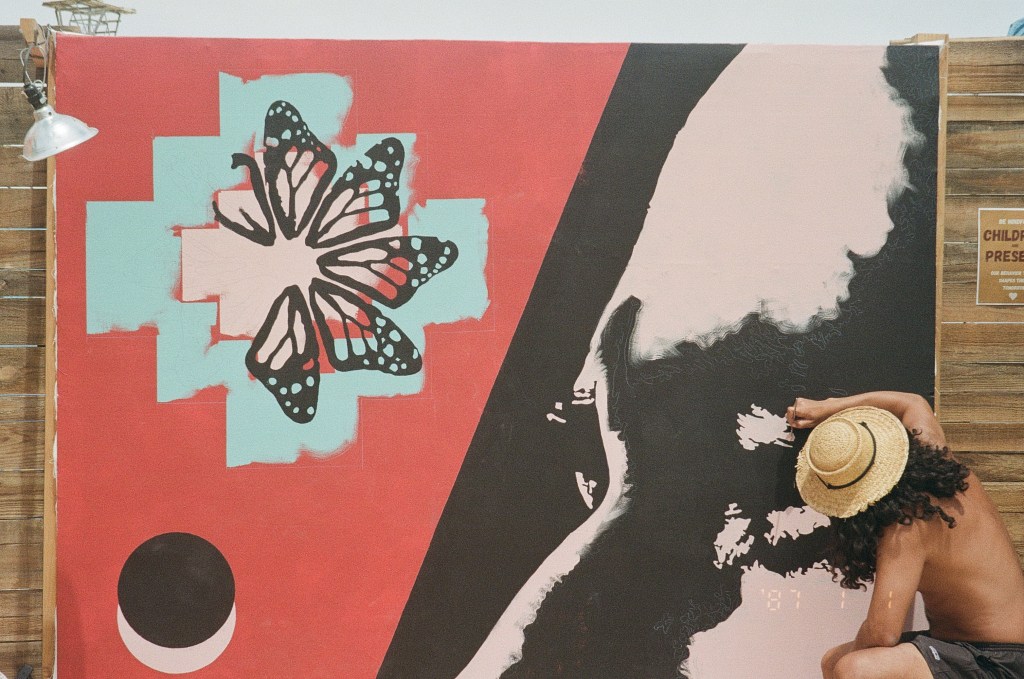
How did the Joshua Tree Festival murals come together for you, and what concepts were at work for you? A couple of community members from Santa Barbara mentioned the festival’s small and intimate nature, which sounded appealing given that most camping festivals can be overwhelming. I decided to apply to participate as a live painter in 2022. I have contributed to the festival since, and transitioned into painting murals in 2023. I have created two mural pieces for this year’s music festival, in spring and fall.
The spring mural is a self-portrait that reflects the struggle of losing one’s identity through diaspora and leaving behind multigenerational roots in search of stability or a better future. One side of the mural carries the weight of cultural isolation, survival, and the emotional toll of crossing borders. The other side conceptualizes cultural similarities among Indigenous traditions, highlighting shared visual languages, beliefs, and values that transcend borders.
The fall mural focuses on resistance symbols from both the current oppression of brown immigrants in the United States and the ongoing genocide in Gaza. I reintroduce the monarch butterfly motif to represent a symbol of resistance for immigrants in the U.S. The watermelon represents a symbol for Palestine. Palestine adopted it due to its similar flag colors and because Israel has attempted to prohibit it in the past.
I’ve been exploring the borders of Northern Mexico and Gaza since my graduate thesis, using their mirroring juxtaposition to reveal the shared realities of both regions. Through this focus, I’ve come to see deep parallels between Mexico and Palestine, especially in how surveillance and oppression shape people’s lives. Including both resistance symbols in this mural was my way of extending solidarity with those enduring this type of oppression.
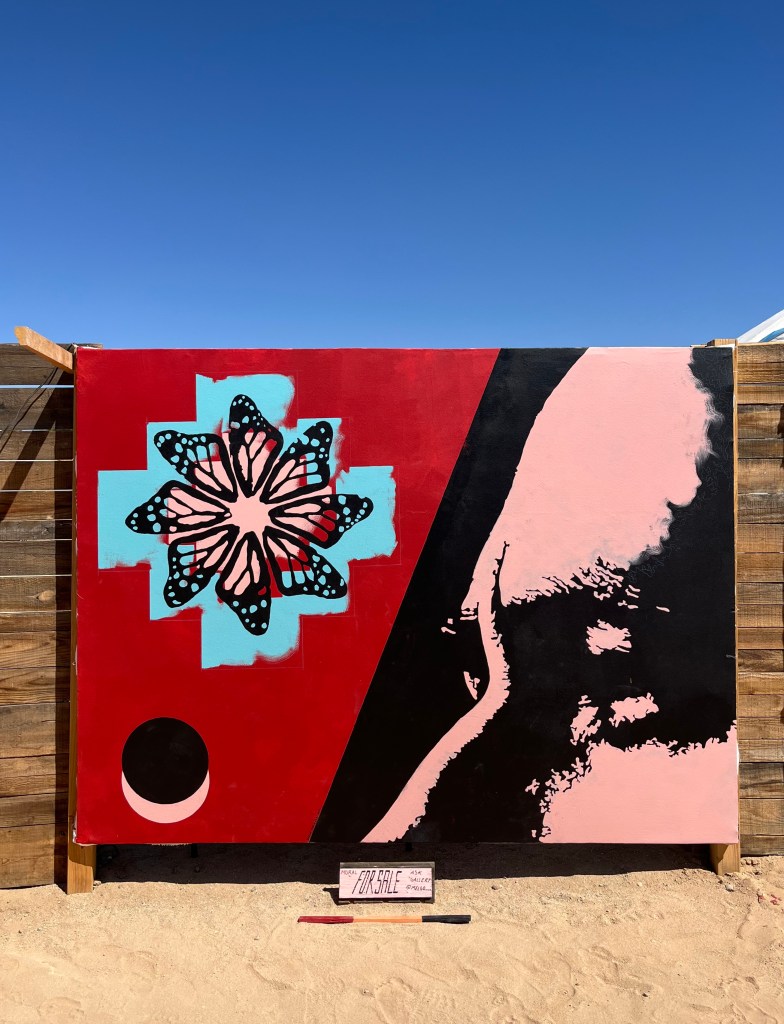


Joshua Tree Music Festival Fall Mural | Credit: Forest Snell, Diego Melgoza
What are the roots of your interest in murals? Is it partly something you considered as an extension and expansion of the deep tradition of Mexican mural art? I believe my interest in muralism stems from my Mexican cultural heritage and artists such as Los Tres Grandes. I’m interested in Mexican muralism because it serves as a tool to reflect our time and a means to document the essence of historical events. I consider my mural practice an extension of this tradition, but in my opinion, muralism must go beyond merely ornamentally beautifying a wall; it must carry meaning to continue this cultural tradition.
I view my mural practice as a means of resistance and a form of activism.
For more information on Melgo and his work, see melgo.art.



You must be logged in to post a comment.