

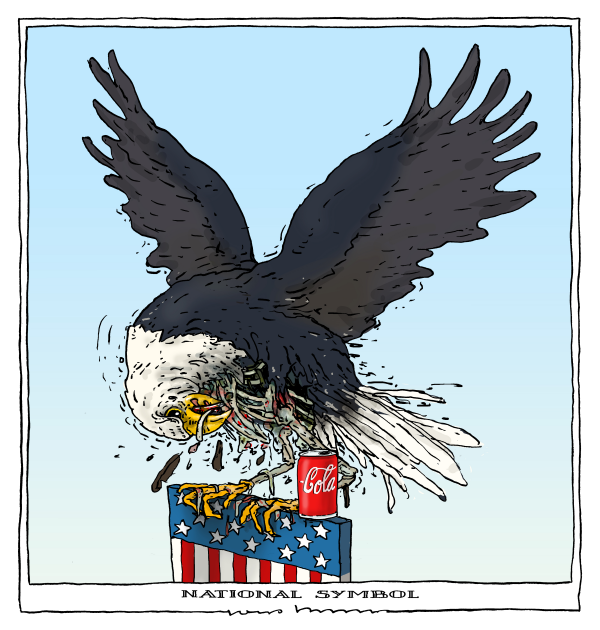
There are moments in history when people don’t yet agree on what’s wrong — but they know something is. The air feels charged. Conversations feel brittle. Institutions that once seemed solid begin to wobble. And a low, persistent unease settles in, even among those who can’t quite put it into words.
Santa Barbara, and America, are living in one of those moments now.
More than half a century ago, during another period of national unrest, a song by Buffalo Springfield captured that same uneasy awareness. It didn’t shout slogans or offer solutions. It simply observed what was happening — and warned people to pay attention. Its power came from restraint, not rage.
That’s what feels missing today.
We are surrounded by noise — endless arguments, viral outrage, partisan accusations — but very little clarity. Every event is immediately framed as proof that one side is evil and the other righteous. Every abuse of power is excused if it advances the “right” cause. Every lie is tolerated if it flatters our tribe. In that environment, warnings don’t arrive with sirens. They arrive as fatigue, confusion, and a creeping sense that the rules no longer apply equally.
This isn’t about left versus right. It’s about something far more dangerous: the quiet normalization of behavior that would have once alarmed us all.
When truth becomes optional, power fills the vacuum.
What’s different now is the machinery behind the unrest. The platforms that dominate our public conversation are not neutral bystanders; they are amplification engines. Their algorithms are designed to reward whatever provokes the strongest reaction — anger, fear, outrage — because those emotions keep people engaged. Calm reflection doesn’t spread. Nuance doesn’t go viral. But distortion does. The result is a public square where the most extreme voices are constantly elevated, while restraint and honesty are quietly buried. We don’t just disagree more than we used to — we are being pushed toward our worst impulses by systems that profit from the result.
We see the consequences everywhere — in the erosion of trust. Trust in elections, in courts, in journalism, in science, and ultimately in one another. We see it when loyalty is valued more than integrity, when obedience is mistaken for patriotism, and when dissent is treated as betrayal. We see it when people no longer ask whether something is right, but only whether it helps their side win.
History teaches us that democracies rarely collapse in dramatic fashion. They don’t usually fall to tanks in the streets or sudden coups. They erode slowly, as citizens grow accustomed to exceptions, rationalizations, and “temporary” abuses that somehow never end. Each step feels justifiable in isolation. Together, they become irreversible.
What makes this moment especially perilous is how easily distraction replaces reflection. We argue over symbols while ignoring systems. We obsess over personalities while overlooking patterns. We mistake constant motion for progress and constant outrage for engagement. Meanwhile, the foundations — shared facts, shared rules, shared accountability — continue to weaken.
The most dangerous lies are not always the loudest ones. They are the comfortable lies: that this is normal, that it’s always been this way, that our institutions are strong enough to withstand anything, that someone else will fix it. Those beliefs allow erosion to continue unchecked.
Disagreement is not the problem. Protest is not the problem. Passion is not the problem. Democracies are built to withstand all of that. What they cannot survive is the widespread acceptance of dishonesty, the selective application of justice, and the belief that ends justify means.
Something is happening here.
It’s happening when citizens retreat into ideological camps and stop listening altogether. It’s happening when facts are treated as opinions and opinions are treated as facts. It’s happening when people grow so exhausted by chaos that they begin to welcome authority — any authority — that promises order.
The warning signs are familiar not because history repeats itself exactly, but because human behavior does. We have seen what happens when fear replaces reason, when power escapes restraint, and when people convince themselves that the rules don’t matter anymore.
This is not a call for panic. It’s a call for attention.
Democracy depends on more than laws and elections. It depends on a shared commitment to truth, accountability, and restraint — especially when it’s inconvenient. When those commitments fade, no constitution can save us.
The tragedy is that by the time the danger becomes obvious to everyone, it’s often too late to stop. The real test comes earlier, when the signs are still deniable and the warnings easy to dismiss.
We are at that point now.
And ignoring it, history suggests, comes at a cost none of us will be able to afford.

