

Local law enforcement is meant to keep communities safe. They’re meant to serve and protect us, right? “Dedicated to Serve,” says Santa Barbara Police Department. “Community Based Policing,” echoes Santa Maria Police Department. “Safety, Service, and Security,” announces California Highway Patrol (CHP).
So why, when my community needed protection most, did those words ring hollow?
Santa Barbara County had been under attack all year. On Saturday, December 27, two days after Christmas and as families prepared to close out the year, our neighbors in Santa Maria were being terrorized. For four days, federal immigration agents persecuted the community, taking nearly 150 people, per the nonprofit organization, 805 Undocufund. They took people on their way to work, at their jobs, and even while grocery shopping. These were not targeted operations based on individual wrongdoing; they were broad, racially profiled sweeps aimed squarely at the Latino community.
My husband and I are rapid responders and community patrol volunteers with the 805 UndocuFund and SBResiste. We traveled from Santa Barbara to Santa Maria that morning to support our neighbors, educating residents about their rights, patrolling areas where agents were present, and responding when calls came in. Other volunteers from grassroots organizations including SBResiste, Carpinteria sin Fronteras, and VCDefensa did the same. We were there to protect our community through visibility and lawful observation.
Around 4 p.m., we immediately recognized a threat to our community: a black van with heavily tinted windows, long antennas, and a barely visible cage in the back. No identifying markings to the untrained eye, but unmistakable to those of us who do this work. It was ICE. We followed at a safe distance, recording and observing. The driver of this vehicle noticed. He slowed down, sped up, and taunted us. Still, we kept our distance and safely followed.
Earlier we had learned that two other volunteer vehicles had been stopped by the California Highway Patrol and Santa Maria Police Department while following other ICE vehicles. The pattern was clear: When agents realized community members were observing them, they called local law enforcement for backup. Volunteers were stopped just long enough for the ICE agents to disappear.
We continued following the black van. At one point, the driver pulled alongside us — phone to his ear, staring us down and smiling. After a series of turns, he drove straight into a CHP office on Carlotti Drive. We did not follow him in. We parked nearby. Then the van pulled out, made an illegal U-turn, and parked directly in front of us. Moments later, three CHP vehicles pulled up behind us with lights flashing. The ICE agent stepped out of the van, greeted the CHP officers warmly, smiling. A CHP officer knocked on my window and asked for my husband’s license, telling us he was being detained.
We asked why. The officer said a “federal agent” had called to report a suspicious vehicle following him home from work. Because of that call, my husband was detained. I explained that we were lawfully observing and that following a vehicle at a safe distance is not a crime. The officer insisted we had “crossed a line,” though he could not say which one. We asked a simple question: If we had called about a suspicious vehicle following us, would CHP have responded the same way? He said yes. I’m not sure that is true.
As the officer walked away with my husband’s license, another CHP officer approached the man from the van. They laughed. They shook hands. The van’s driver watched us, amused. When that officer was walking back to his vehicle, I rolled down my window as he walked past and asked if I could ask him a question. His smile vanished. “I don’t know what’s going on,” he said. “Just sit tight.”
Minutes later, the van drove away. Another officer returned the license and told us we were free to go. No citation. No explanation. No apology. This was not about public safety. This was about preventing federal agents from community accountability.
California law is clear: Local law enforcement is not supposed to assist in federal immigration enforcement. Yet what we witnessed was collaboration, using detentions as a tool to help immigration agents evade community observers. That is not “Safety, Service, and Security.” It is selective policing that endangers trust and targets communities already under siege.
When law enforcement chooses who deserves protection, they abandon their mission. When they detain community members without cause to aid federal agents, they violate the spirit and the letter of the “law.” And when Latino communities see law enforcement cars not as sources of safety but as extensions of fear, everyone is less safe. Communities are endangered.
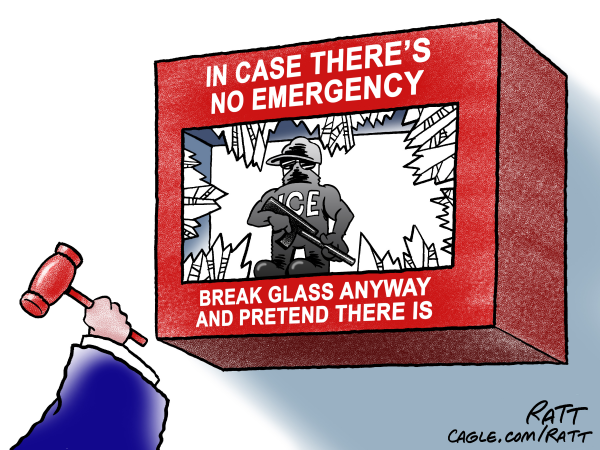
Local law enforcement must remember the oath they took and who they serve. Because right now, the message is clear: They are serving ICE, not the communities they claim to protect.

