

Press releases are posted on Independent.com as a free community service.
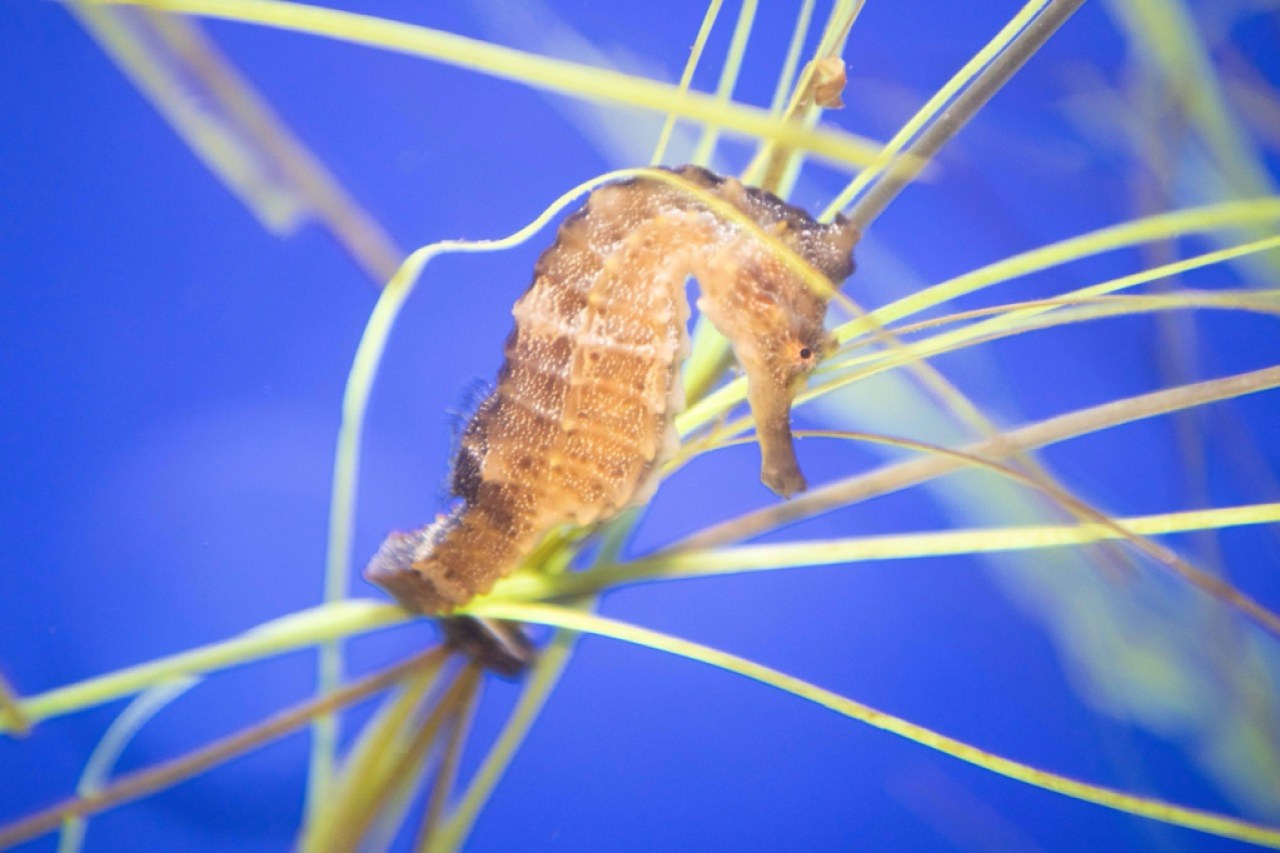
SANTA BARBARA, CA — They move like living question marks, anchoring themselves with delicate tails while their eyes swivel independently to scan the water around them. They are the only animals on Earth in which the male carries and gives birth to the young. And after a years-long absence, they are back, nine strong, at the Santa Barbara Museum of Natural History Sea Center on Stearns Wharf.
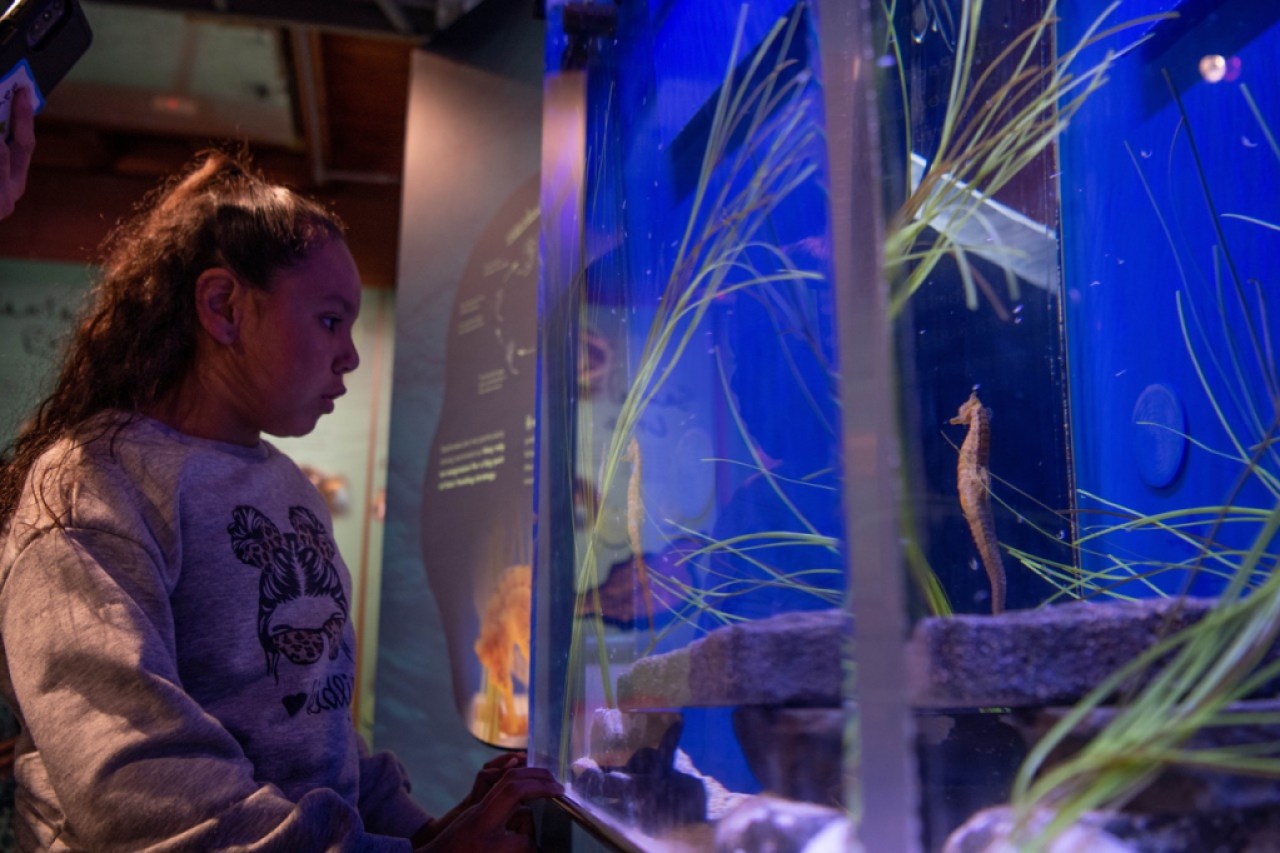
The Sea Center is thrilled to announce the return of live Giant Pacific Seahorses (Hippocampus ingens) to its Dive In: Our Changing Channel exhibit. The species is the largest seahorse in the world and native to California’s own coastline. Visitors can now observe the full group of nine seahorses up close, seven days a week, from 10:00 AM to 5:00 PM.
A Local Species on the Front Lines of Climate Change
The Giant Pacific Seahorse’s typical northern range ends around San Diego and Los Angeles. But as ocean temperatures rise and warm southern currents push increasingly into the Santa Barbara Channel, these animals, along with many other southern species, can be found farther north than ever before. The Sea Center has intentionally incorporated the seahorse display into its climate change education, as these captivating animals can help visitors explore the real and measurable effects of climate change on local marine ecosystems.
“Seahorses are a fascinating animal, and topics such as range expansion and contraction are great talking points in the climate change discussion,” said the Sea Center Director Rich Smalldon. “We hope people view them as ambassador species on the front lines of that conversation, a reminder that human activity has far-reaching implications for life on our planet.”
A Partnership Renewed
The Sea Center first welcomed six Giant Pacific Seahorses in 2019, received from the Cabrillo Marine Aquarium in San Pedro. With a natural lifespan of three to five years, the original seahorses passed away in 2024, and the habitat was temporarily reimagined as an urchin barren display, depicting the disruption seen in kelp forests when Purple Urchins proliferate unchecked. The COVID-19 pandemic disrupted operations at zoos and aquariums that exchange animals to preserve genetic diversity, putting a new generation of seahorses out of the Sea Center’s reach for several years.
In late 2025, Cabrillo Marine Aquarium successfully established a new breeding pair, and the Sea Center received four seahorses to restart its display. In February 2026, five more arrived, bringing the current population to nine. The two institutions have been invaluable partners, sharing knowledge and resources to provide the best care for these animals beloved by Santa Barbara visitors.
The World’s Most Surprising Father
Part of what makes seahorses so compelling, especially for younger visitors, is their remarkable biology. It is the male seahorse who becomes pregnant. The female deposits her eggs directly into the male’s brood pouch, where he fertilizes and carries them for roughly two weeks before giving birth to fully independent young. A single male can carry up to 2,000 eggs at once. Newborns emerge at just 9 millimeters in length, smaller than a fingernail. As in most species that create so many young, most of the young do not survive.
In the wild, Giant Pacific Seahorses are listed as Vulnerable on the IUCN Red List. Populations have declined by an estimated 50 to 90 percent in many areas, driven by incidental capture in shrimp trawl fisheries and demand for traditional medicine. Seeing these animals thriving in person is a rare and meaningful experience.
Come Meet Them
The nine Giant Pacific Seahorses are on display now in the Dive In exhibit at the Sea Center on Stearns Wharf, open every day from 10:00 AM to 5:00 PM. General admission applies. Aquarist Max Rudelic remarked that he recently overheard a guest exclaiming, “Oh I’m so glad they got the seahorses back, I love them so much.” The Sea Center is also in conversations with the Sunflower Star Lab about potential future exhibits highlighting efforts to restore wild populations of the Sunflower Sea Star, a powerful story of conservation on the California coast.
No reservations are required. For more information please visit sbnature.org/seacenter.
About the Santa Barbara Museum of Natural History Sea Center
Located on historic Stearns Wharf, this highly interactive regional aquarium and marine education facility offers guests close encounters with marine animals, and exploration of the Santa Barbara Channel on the Wet Deck. In addition to permanent exhibits, the Sea Center hosts unique events and special educational programming, including Underwater Parks Day and World Oceans Day.

