

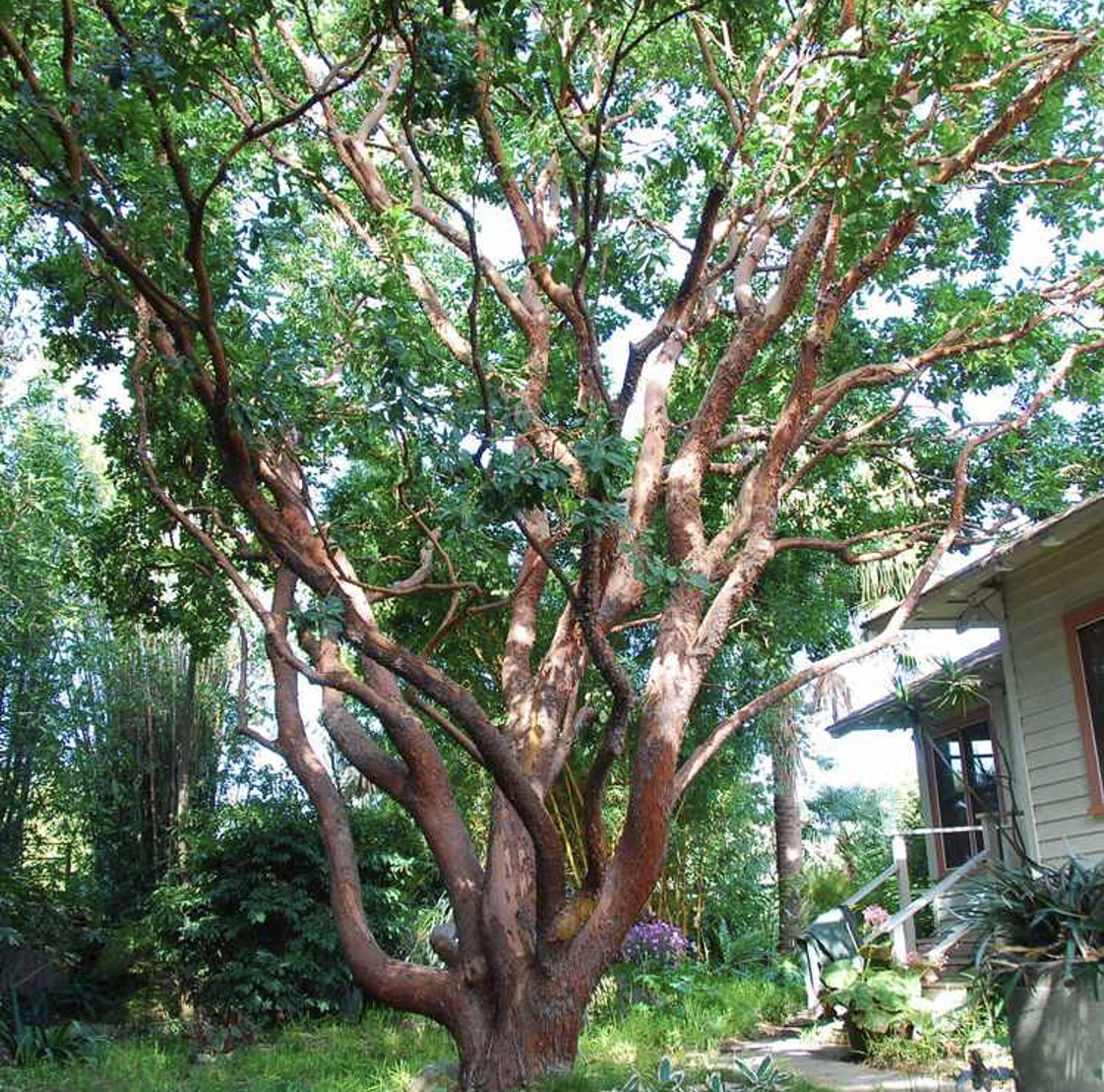
I am writing to express my deep disappointment that well over 400 trees, most of them native coast live oak trees, have been chopped down to make way for the San Marcos Ranch and Tatum Multifamily housing projects in the Goleta Valley. This loss, on top of the tremendous loss to the landscape industry with the closing of San Marcos Growers nursery, is a steep price to pay for market-rate and affordable housing in our area.
The county rezoned the San Marcos property (at 4960 Hollister Ave. and 125 S. San Marcos Rd) from agricultural to residential to comply with the state mandate to build more housing. Along with the Tatum property (at 4750 Hollister Ave.), a total of 1,473 units will be built. Under state housing law, both projects are exempt from California Environmental Quality Act (CEQA) review and qualify as “use by right.” The county’s ability to modify the project scope or require additional environmental review was extremely limited.
It is shocking that the developer of the Tatum project had permission to sacrifice such a massive number of coast live oaks growing within a natural, mixed-age oak woodland plant community. The Tatum project will also be allowed to encroach within the 25-foot native woodland buffer next to the oak woodland.
The developer of the San Marcos project has permission to take down several mature native and non-native trees: the national and California Big Tree champion Marina madrone, a majestic southern magnolia, the historically noteworthy California sycamore (the offspring of the Sister Witness Tree that once grew in Goleta), individual coast live oaks, and an uncommon Queensland kauri.
I do not dispute the need for more housing in the Santa Barbara area, particularly affordable housing, but this “use of right” designation comes at the expense of the urban forest that belongs to the entire community, not just the developers who own these properties. This is a sad example of death by a thousand cuts. How many creatures that depend upon these individual trees and the oak woodland habitat — birds, mammals, insects, reptiles and amphibians, soil microorganisms — will be lost as a result of these projects?
As part of the San Marcos and Tatum projects, 538 native trees, mostly coast live oaks, will be planted to mitigate for those removed. Of these, 456 trees will be replanted onsite and 82 will be planted at six Santa Barbara Unified School District sites. Many of the new oak trees were grown from acorns collected on the Tatum property to preserve local genetic diversity. These mitigation measures, however, do not compensate for the loss of habitat, food webs, and ecosystem functions. It will take many years to re-establish some of the ecological richness represented by the native coast live oak woodland and other mature trees on the properties.
I find it hard to believe that the developer did not see the value of preserving at least some of the beautiful, mature trees on these properties — both native and non-native — by finding a way to incorporate them into the design. County Planning and Development officials should negotiate with developers to preserve healthy native oak trees and specimen trees onsite or require them to be relocated. I urge the county to review its land use policies and residential housing plans so that loss of habitat on this scale is not allowed to happen in the future. And I encourage other residents who share my concerns to contact County Planning and Development as well.
Carol Bornstein is a horticulturist and co-author of the award-winning book “California Native Plants for the Garden.”

