
Lompoc’s Historic Theater
Coming Back to Life
Years of Dedication Have Made the
Dream Come True — Almost
by Shannon Brooks | March 12, 2026
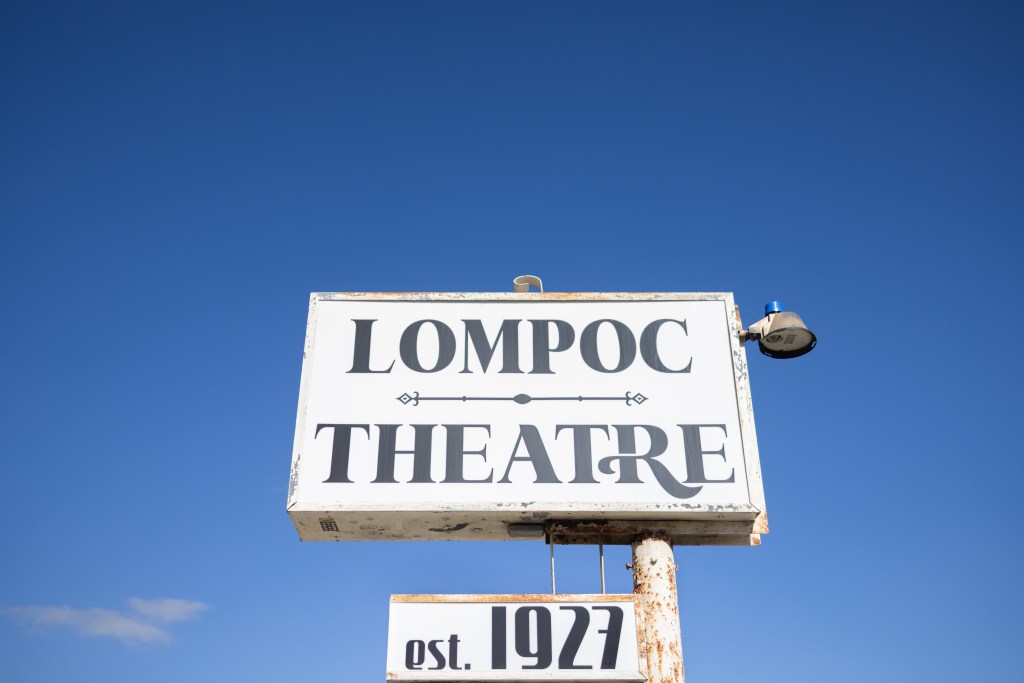
Change is in the wind in the Lompoc Valley. You can feel it in Old Town and in the conversations happening at kitchen tables and community meetings across North County. And soon, if the people behind one of Santa Barbara County’s most ambitious cultural projects have anything to say about it, you’ll be able to feel it the moment you step through the doors of a fully restored, reborn Lompoc Theatre when it reopens in conjunction with its centennial year.
What began as a grassroots preservation effort — weekend barbecues on the corner, small donations, sheer stubbornness — has grown into an $18.9 million capital campaign that has already raised more than $12 million. This includes a $2.285 million California State grant, a $1 million commitment from the John C. Mithun Foundation, sizable contributions from the Santa Ynez Band of Chumash Indians (including an additional $500,000 matching grant announced this week), and other local organizations, and more than 5,000 individual donors, many who gave $100 or less.
But the numbers don’t capture what the project truly represents. To understand that, you have to understand where it started: with a 10-year-old boy, a Saturday matinee, and a performance that changed everything.
The Boy from Lompoc
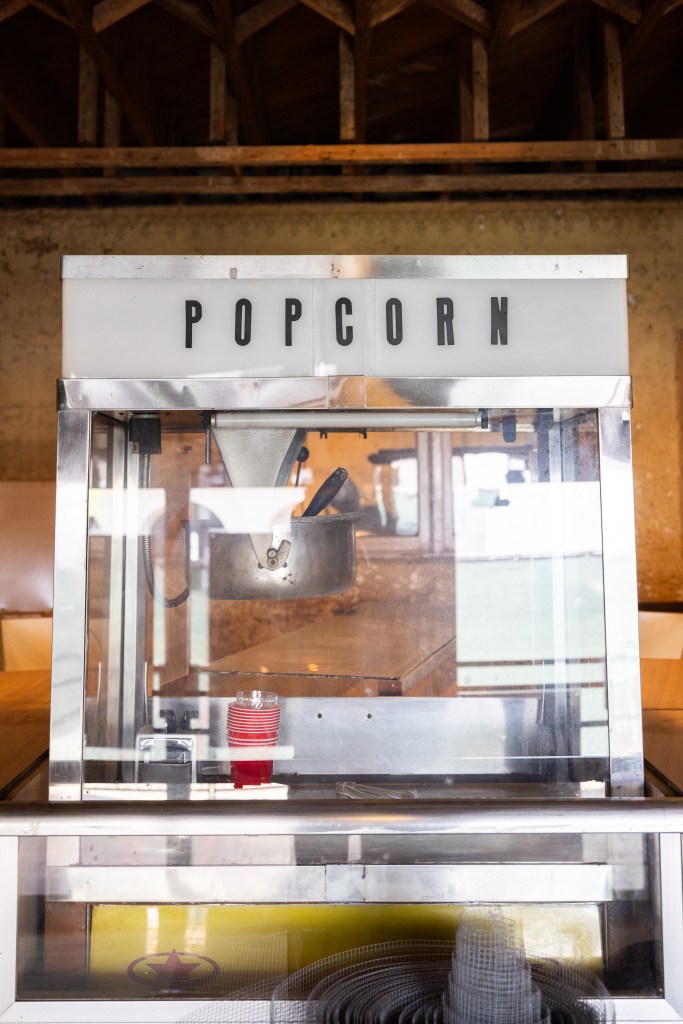
Mark Herrier grew up in Lompoc in the 1950s and ’60s, when the theater was the undisputed center of town. Kids were dropped off on Saturday mornings with a dollar in their pockets — enough for popcorn, a hot dog, a soft drink, and an all-day escape into cartoons and double features. When he was 10 years old, his mother dragged him to a showing of The Music Man. While watching the film, his reluctance transformed to reverence.
“At the end of it, I knew what I wanted to do for the rest of my life,” Herrier recalls. His heart was set on becoming an actor. “Robert Preston as Harold Hill changed my life.”
That revelation set Herrier on a path to Hollywood — as an actor, a director, and eventually a Broadway performer. Several years after that Saturday matinee, he found himself preparing to take the stage at the Majestic Theatre in New York, in the same dressing room where Robert Preston had originated the very role that had transfixed Herrier as a child. The boy from Lompoc had made it. Now, he’s brought those dreams back home.
A Century of Stories
The Lompoc Theatre has been a cultural anchor at the intersection of H Street and Ocean Avenue since 1927. In its prime, it hosted vaudeville acts, movie screenings, and live performances by icons such as Liberace, Van Cliburn, and The Coasters. In the 1930s, it was an official Mickey Mouse Club venue. It was the kind of place where, as 3rd District County Supervisor Joan Hartmann recalled Herrier describing it, the son of a trash collector could sit next to the mayor. “Everybody’s equal in the theater,” she said. “It’s just a tremendous place to celebrate.”
By 1975, facing economic pressure and changing media habits, the curtains closed. The final film screening took place in 1991. For decades, the building sat dormant and in disrepair, but preservation efforts never entirely ceased. The Calvert family, longtime owners, protected the structure from demolition before eventually selling it to the Lompoc Housing and Community Development Corporation. In 2012, the Lompoc Theatre Project officially formed. By 2016, they had the keys. And by the end of 2017, they had paid the back taxes, gutted the interior, and restored the iconic marquee.
Now the restoration is entering its final, most ambitious chapter.
As executive director of the Lompoc Theatre Project, Herrier speaks about the restoration not as a real estate project or a nonprofit initiative, but as a moral obligation. “There are hundreds of kids in this town as talented as I was, as driven as I was, but they do not have that catalyst to inspire them to dream,” he says. “It doesn’t happen from an iPad or your laptop. You have to be with people — hear them laugh, see them cry, be moved collectively. It’s cavemen sitting around a fire telling stories. It is primal to us as human beings.”
Herrier envisions high school bands hearing the Marsalis brothers perform and returning to their rehearsals forever changed. Elementary school kids seeing PCPA productions on a real stage — not in a cafeteria. A generation of artists, actors, dancers, and musicians who just needed somewhere to belong. “Lompoc,” he says simply, “is a creative volcano waiting to erupt.”
The Dream Team
If Mark Herrier is the heart of this project, the team he’s assembled is the backbone. And by any measure, it is extraordinary.
Theater Restoration Consultant Benton Delinger is, in Herrier’s words, “the best in the world” at what he does — designing and equipping performance venues. Delinger’s firm, TheatreDNA, has managed major projects in Mumbai, Los Angeles, and everywhere in between. Yet, his connection to Lompoc runs deep, too. His father taught music in the town’s schools as far back as 1965, which is how the family first crossed paths with a 5th-grader named Mark Herrier.
Delinger has been contributing his expertise to this project ever since he spotted Herrier on Facebook in 2012 and reached out. “I saw what he was trying to do,” Delinger recalled, “and I said, ‘Hey, I can help.’ ”
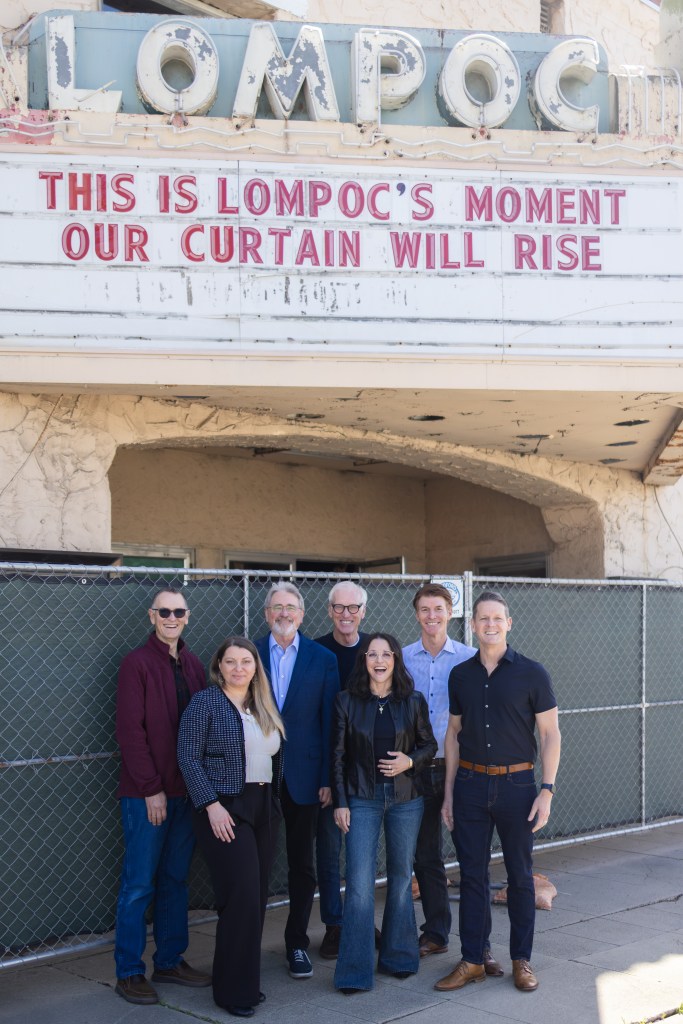
For Delinger, the dream realized isn’t seeing a famous headlining act on the stage; it’s seeing a full house of locals. “Seeing a wonderful mariachi concert followed by our local flamenco school dancers would be worth almost anything and everything,” he said. “When you have the arts in your community in a flagship way, reflecting ‘This is who we are,’ you can’t ask for a better thing. And Lompoc needs this.”
The buildout is being handled by 19six Architects, the respected Santa Barbara firm whose portfolio includes the Granada, Arlington, and New Vic theater renovations. Lead architect Ewa Pocwiardowska described a fundamental shift in thinking that shaped the current design plans: “We looked at this as a hub for the community, a place where people from Lompoc will come for events, for their kids’ birthday parties, for quinceañeras. This is a building for the people, for everybody to enjoy.”
She’s especially excited about the courtyard canopy — a semi-transparent structure that will filter light while providing shade and weather protection, creating an indoor-outdoor atmosphere unlike anything of its scale in the region. (They went so far as to conduct a wind study to get the canopy technology just right, one of the many well-thought-out details to the designs.)
Rounding out the team are honorary project chairs Julia Louis-Dreyfus and Brad Hall, who have been champions of this revival from the very beginning. The couple’s first donation enabled the project to remove the asbestos that was blocking progress, clean the auditorium, and clear what Herrier described as “six inches of guano” from the stage. They gave the project instant credibility, and they haven’t stopped.
Hall and Herrier met as teenagers acting in PCPA theater programs and have been friends ever since. Hall talked about the project’s role in the Lompoc Valley: “It’s just a rich area in so many ways. It has such a rich cultural heritage, and the opportunity is so tremendous.”
“We think that art is good,” Louis-Dreyfus deadpanned. “We’re believers in community gathering places for everyone, particularly here in Lompoc, which is a wonderfully diverse community in Santa Barbara County.”
Reimagining What a Theater Can Be
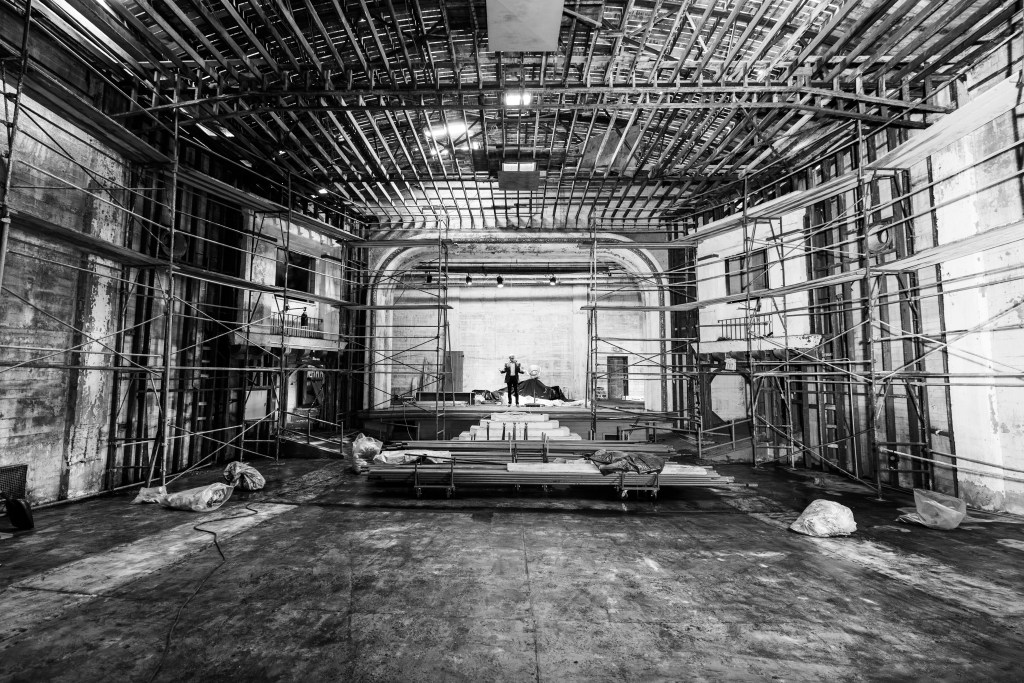
The physical transformation of the building is ambitious in scope. Phase two — already fully funded — saw the completion of seismic upgrades and reroofing the main building. Next up is overhauling the main stage. The fully restored 450-seat main auditorium will host first-run films, concerts, plays, ballets, and more.
The “Backstage Theater,” inspired by Austin’s famed Continental Club, will feature an intimate black box configuration on the main stage for up to 85 attendees, where performers and audience share the same level. The plan is to be able to host weekly live music events and smaller acts.

One of the most symbolic elements is the historic Land Office, the oldest wooden commercial building in Santa Barbara County, dating to 1874. Once used as the theater’s dressing room, it will be relocated and repurposed into a boutique cinema and smart room for smaller screenings, gaming, and events.
But what makes this project truly unusual — and super smart — is the business model underneath all of it.
“Mark is saying an 80/20 split — 80 percent earned income, 20 percent contributed revenue — because of the flexibility of the space,” explained Scott Reed, a key advisor to the project, along with his Lane 4 Fundraising partner Jon Bishop. Most performing arts organizations run on a 60/40 model: 60 percent contributed revenue, 40 percent ticket sales. That works in communities with deep philanthropic infrastructure. It was never going to work in Lompoc, so the leadership team flipped the script entirely.
The flexibility is baked into every corner of the design. A stunning outdoor courtyard and bar is available for weddings and private events — filling a void that downtown Lompoc has never been able to address. A reconfigurable main stage. A second screen for films. A smaller venue equipped for gaming competitions. Food truck Fridays in the parking lot. “They’ve come up with so many flexible ways to utilize the theater on a year-round basis that will boost earned income, keep it sustainable, and not tap the community out,” Reed said.
A Community Finally Being Seen
Supervisor Joan Hartmann has watched Lompoc for years with both admiration and deep desire to see it reach its full potential. “One of the things about Lompoc that really strikes me is that it’s 60 percent Latino, and yet in public spaces, you’d never know that,” she said. “You see Latinos in church and you see them in the parks, but you don’t see public celebrations. You don’t see their culture.”
The theater, she believes, changes that. “I believe culture grounds people. It helps you know who you are, where you come from, what you’re about, and we need to create more of that. In Lompoc, it’s our most diverse community. It’s really, in many ways, our most exciting, vibrant community. It’s got so many different influences historically, and we need to showcase that.”
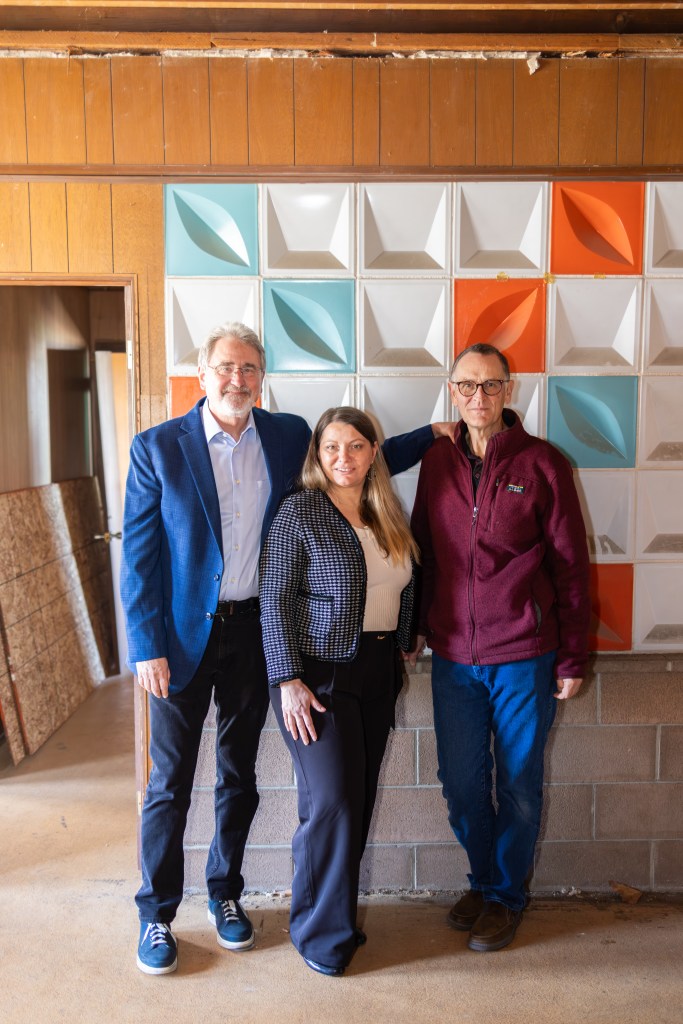
Susan Torrey, who runs the John C. Mithun Foundation — widely regarded as a gold standard in Santa Barbara County philanthropy — echoed that sentiment. Her foundation has committed $1 million to support the Education Suite, reflecting its deep focus on the intersection of arts and education.
But she is equally moved by what the project represents for a community she feels has been overlooked for too long. “Lompoc has really been overlooked by Santa Barbara and the philanthropic community,” she said, “and we have to remember that Lompoc has supported Santa Barbara for so long. It’s where so much of our food comes from, so much of our labor. It’s really time for Santa Barbara to give back.”
For Torrey, the Education Suite is the piece that sealed her foundation’s commitment. She envisions it not as a classroom, but as something more expansive. “My hope is really just to see it as a place to incubate dreams and ideas — a safe space for people to go to express their identity, to meet, to learn, to explore the arts.” She noted that while not every child aspires to be a performer, maybe they get a chance to stand on a stage, and they end up being a business leader who needs to give speeches — and they remember what it felt like to be there.
Barbara Satterfield, the theater’s Board Chair and a member of a Lompoc legacy family, grew up, as Herrier did, spending Saturdays at this very theater. When she walked back through its lobby more than a decade ago, something unexpected happened. “I’m not that emotional of a person,” she said with a laugh, “but I walked into the lobby, and I just had all these memories and emotions rush back in.”
She sees the restoration as something Lompoc has needed for a long time. “Lompoc always had a bit of an identity crisis — they didn’t know if they were flowers or art or wine or missiles,” she said. “I’m hoping that when this theater comes to pass, it’ll help pull everything together.”
The Next Generation Is Watching
Jamie Durek represents a newer wave of community investment in Lompoc — a dynamic professional with deep ties to the region’s entrepreneurial and philanthropic circles. When she and her partner were searching for a place to put down roots, they considered many options. Lompoc kept rising. “The more time we spent here, the more it rose to the top of our list,” she said. “We saw potential, heart, and a community that genuinely shows up for one another.”
From that vantage point, she sees the theater renovation as something that fundamentally shifts the conversation about what Lompoc is and where it’s headed. “This project signals that Lompoc isn’t just affordable or ‘up-and-coming,’ ” she said. “It’s intentional. It’s investing in culture, in gathering spaces, and in quality of life for the community and future generations.”
For the next generation of professionals deciding where to build their lives, she believes the presence of a thriving cultural hub sends an unmistakable signal. “A theater brings life — performances, conversations, shared moments. It becomes a gathering place not just for one group, but across generations.”

Partnerships Taking Center Stage
The Lompoc Theatre isn’t waiting until opening night to build its programming ecosystem. Partnerships are already forming across Santa Barbara County that will make the theater a North County hub for some of the region’s most respected arts organizations.
“With a belief that the Santa Barbara Symphony is for everyone,” says President and CEO Kathryn R. Martin, “a collaboration with the Lompoc Theatre will create unprecedented opportunities to bring the community the transformative power of both our professional symphony and our immersive youth education programs.”
State Street Ballet will bring its Nutcracker to Lompoc every year — giving many Lompoc children their very first experience with the beloved ballet. “This collaboration opens new pathways for aspiring artists and young dancers to train, perform, and experience life within a professional ballet company while staying close to home,” said Executive Director Cecily MacDougall.
UCSB Arts and Lectures is exploring programming partnerships, and conversations are underway with the UCSB film and archives department. The theater will also make its space available at no cost to local arts groups, giving them a home stage worthy of their work.
The Finish Line Is in Sight
With $12.2 million already raised, just $6.7 million remains to fully fund the centennial renovation. The project is also eligible for new market and historic preservation tax credits, which unlock when $4 million more has been raised.
A $500,000 matching grant the The Santa Ynez Band of Chumash Indians made to the Lompoc Theatre Project in December has been matched by donations to the nonprofit in just five weeks. This is the second matching grant extended by the tribe to the Lompoc Theatre. The first one was for $150,000 in 2023, and thanks to an overwhelming response from the community and longtime project supporters then, the ambitious group was able to raise funds for those matching dollars within seven months of the grant being announced. The Santa Ynez Band of Chumash Indians has now committed a total of $650,000 to the Lompoc Theatre Project, which before long will bring movies, concerts, live performances, and more back to the venue.
“The remarkable progress made on this project shows just how deeply the community believes in the future of the Lompoc Theatre,” said Kenneth Kahn, Tribal Chair for the Santa Ynez Band of Chumash Indians. “Our tribe is proud to support an effort that will restore a cherished landmark.”
“The Santa Ynez Band of Chumash Indians stepped forward two years ago with our first major foundation grant,” said Herrier, “and it is no exaggeration for me to say that this crucial and early support has been fundamental and foundational to our success. The citizens of Lompoc will treasure that support from the Chumash for generations when our doors finally reopen.”
“Overwhelmed with gratitude. That’s all I can really say,” said Barbara Satterfield, president for Lompoc Theatre Project, describing the reaction from the Board of Directors following the outpouring of support during the year-end fundraising campaign. “Every dollar raised gets us closer to reopening day and continues to demonstrate there is passionate interest in expanding arts and culture in the Lompoc Valley. We are ready to meet that need!”
Herrier has studied hundreds of historic theater restorations across the country. The pattern is consistent: Not one has failed, and every surrounding downtown was revitalized within years, as Modesto, Merced, and Old Town Pasadena have proved. Studies project $6 million in additional annual economic activity for Lompoc once the theater reopens.
But the case he makes most passionately isn’t economic. “You’re going to be able to see your kids and your grandkids perform on that stage,” he said. “It’s going to transform your family’s life.”
This is not a theoretical dream anymore. Lompoc is waiting for the lights to come up, for the curtain to rise, for the moment that changes everything. “We are approaching the finish line,” Herrier said. “I am no longer Sisyphus. The rock is on top of the hill. We just need the last of you to kick it down the other side.”
To support the Lompoc Theatre Project, visit lompoctheatre.org.





You must be logged in to post a comment.