

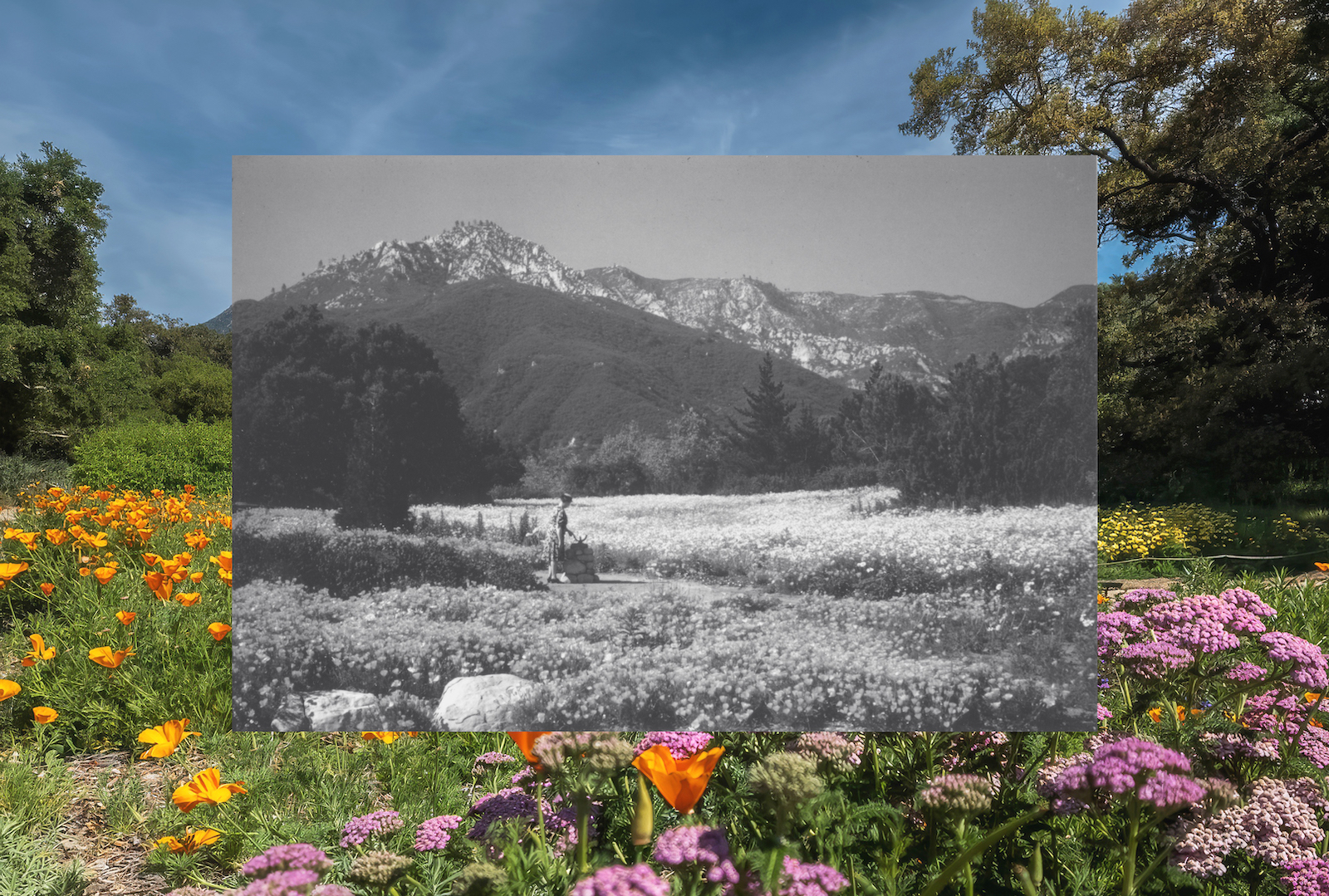
What will Santa Barbara look like in 2126, and how can our actions today create a place our descendants can love and enjoy 100 years from now? Walking underneath the majestic coast redwood (Sequoia sempervirens) grove at Santa Barbara Botanic Garden, we imagine the visionaries who planted those seedlings decades ago pondered those same questions. Listening to Mission Creek flow, insects buzz, and birds and butterflies flutter while inhaling the sweet smells of sage (Artemisia spp.), sycamores (Platanus spp.), and ceanothus (Platanus spp.), we appreciate their foresight and dedication. Likewise, we recognize how important it is to continue their legacy of connecting scientific research and environmental conservation with beauty and hope for the future.
Over centuries, Mission Canyon has been a place of refuge and discovery — for the original Chumash inhabitants, the Franciscan missionaries, and all of us who cherish Santa Barbara as our home or a unique place to visit. One hundred years ago, the Garden’s founders recognized the importance of conserving and celebrating native plants. Their foresight and care led to a century of stewardship, community engagement, and scientific research. As the first botanic garden in the nation solely dedicated to native plants, we have learned how imperative these species are in protecting biodiversity from mass extinction.
Today, as we celebrate the Santa Barbara Botanic Garden’s centennial, fulfilling its mission to conserve native plants and habitats for the health and well-being of people and our planet feels more urgent than ever before. Native ecosystems are under increasing pressure, and climate change is reshaping California’s landscapes. Fortunately, we all have the solutions at our fingertips.
Conservation happens in many ways. Certainly it happens in laboratories, preserved wilderness, and through the work of environmental professionals around the world. But, importantly, it also happens in backyards, schoolyards, and neighborhoods. It’s something we do together. Every native plant added to a home landscape, urban parkway, or commercial shopping area supports the birds and insects that call our region home. Because local wildlife evolved alongside native plants for thousands of years, they naturally provide the food and shelter these species depend on — something plants from other parts of the world can’t do. These are the building blocks for a healthy planet and human prosperity.
Visitors to the Botanic Garden can see, hear, feel, smell, and touch simple yet powerful ways to enhance biodiversity basics everywhere we live, work, and play. The garden’s programs make conservation accessible, and by engaging our young people — from summer camp to school visits to an afternoon in the Backcountry Section — we can ensure the next generation carries this work forward.
The garden is also a hub for conservation science. The Conservation Seed Bank safeguards rare and vulnerable California plant species, storing over 4 million seeds from 424 different at-risk species in our underground vault. The Clifton Smith Herbarium documents California’s botanical history with over 230,000 specimens dating back to the mid-1800s.
Staff scientists working in our Plant Genetics Lab or in the field throughout California collaborate with other land managers to inform and enhance conservation strategies, map where rare species are located, and determine how to protect both the plants and the wildlife that depend on them. Our staff and volunteers are also expanding beyond Mission Canyon to restore other areas with native plants at Elings Park, the Cuyama Valley, and even the 1200 block of State Street in downtown Santa Barbara.
Our centennial is a celebration of 100 years of dedication and resilience. Events like the annual Santa Barbara BotanicGarden Conservation Symposium highlight the urgency of our mission. Behind-the-scenes garden videos open the doors to science rarely seen by the public.Community events (like yoga in the garden, bird watching, or volunteering with a restoration crew at garden projects around our community) bring people together around a shared purpose. We welcome you to take part however you can.
The garden has always been more than a destination. It is part of the fabric of the community — and increasingly a movement to support the biodiversity that surrounds us. Yes, this centennial is a milestone birthday, but in addition, it’s a reaffirmation of hope, action, and the power of native plants. It is also a reminder that everyone is a part of this living legacy and plays a role in creating lasting change across California.
Please join the Botanic Garden’s habitat restoration efforts, visit the garden’s 78 acres (31.5 hectares) of sections and trails, plant any of California’s native plants, become a native plant steward, and support the science and conservation work that protects our region.
What will Santa Barbara look like in 2126? The answer starts with the decisions each of us makes today.
Helene Schneider is Board of Trustees chair at Santa Barbara Botanic Garden; Steve Windhager, PhD, is its executive director.

