This article was underwritten in part by the Mickey Flacks Journalism Fund for Social Justice, a proud, innovative supporter of local news. To make a contribution go to sbcan.org/journalism_fund.
Santa Barbara County now offers free, preapproved plans for accessory dwelling units (better known as ADUs). The plans are expected to speed up the approval process and reduce permitting costs.
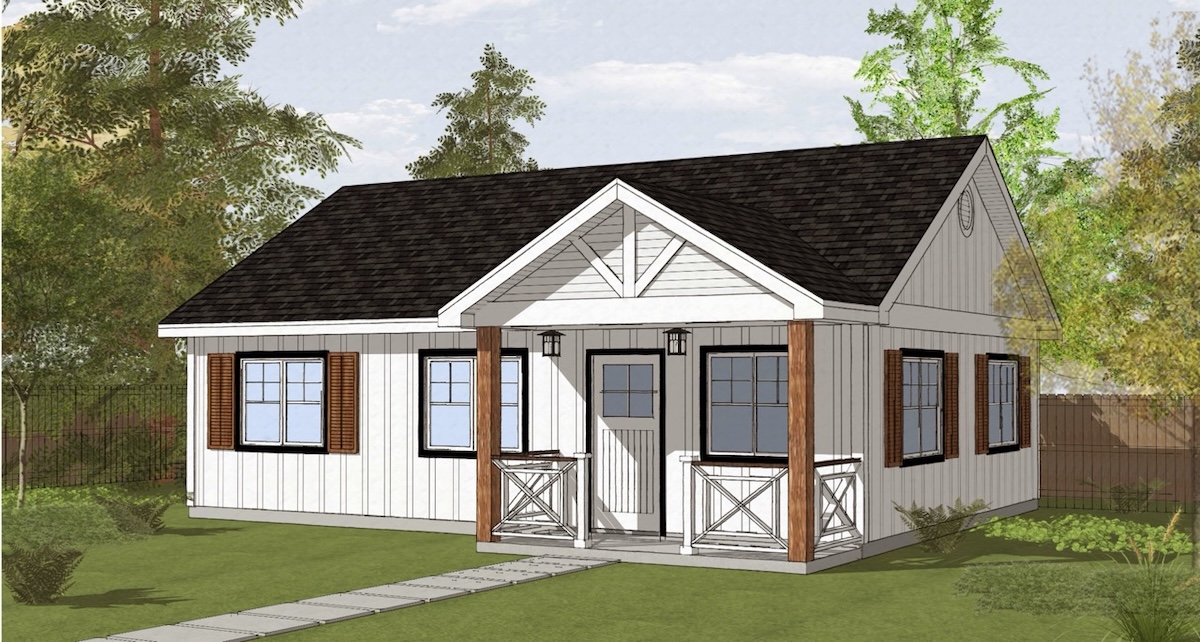
The plans offer four different square-foot options for studios and one-bedroom, two-bedroom, and three-bedroom units. All options include a kitchen and living area, a bathroom, and a laundry unit. People can select four styles for their ADUs: farmhouse, Mediterranean, midcentury, and contemporary.
Studio/One-Bedroom:The studio/one-bedroom ADU measures at 448 square feet (about the size of a two-car garage) and will include an approximately 105-square-foot bedroom area.
Larger One-Bedroom: The larger one-bedroom option is 672 square feet. It includes a larger bedroom than the studio unit — taking up about 143 square feet — and a larger living space. As a rule of thumb, a queen-sized bed takes up approximately 35 square feet.
Two-Bedroom: The two-bedroom ADU option is the largest of the four plans, at 909 square feet. One bedroom is around 132 square feet while the other is approximately 126 square feet. The large two-bedroom includes a larger dining area than the studio and one-bedroom plans.
Two- or Three-Bedroom:This plan, at 768 square feet, can be either two or three bedrooms. For a three-bedroom option, the bedrooms would each be around 110 square feet, while the two-bedroom option would have one bedroom at around 120 square feet and another at approximately 114 square feet, with a larger living and dining area.
Joseph Dargel, the Deputy Director of Planning and Development at Santa Barbara County, said that the plans will allow people to bypass hiring an architect to map out an ADU unit from scratch, though people would still need to submit a site-specific plan that shows where the proposed housing would go on a property. With the new plans, it is hoped, the Planning Department can focus on site-specific details, which could make the permitting process more efficient.
It may also make the permitting process cheaper since it offers a fixed permitting fee: $4,200. Dargel said that a recently approved 800-square-foot ADU had permitting fees totaling approximately $7,200, so the fixed fees would have saved the applicant about $3,000.
Building and zoning regulations would still apply to each project, and folks looking to build in the coastal zone would still need to obtain a coastal development permit. The site plans are for county areas only, and areas with specific features — those in areas with flood hazards or with steep slopes, for example — may not be able to make use of them.
Both California’s Department of Housing and Community Development and Santa Barbara County have stressed ADUs as a way to address housing shortages.
“ADUs are a key part of our strategy to increase housing options for residents at all income levels,” Lisa Plowman, director of Santa Barbara County Planning and Development, said as part of an April 2 press release.
From 2018 to 2024, Santa Barbara County recorded 918 building permits for ADUs. By comparison, the county recorded 809 permits for detached single-family homes and one permit for a single-family attached unit.