

While outer space has been called “the final frontier,” there are worlds on Planet Earth that are far from explored and understood.
In the entire area of the world’s oceans, the deep sea makes up 95 percent of the Earth’s living space. Fewer humans have explored the deepest regions of the ocean than have walked on the moon. The deep sea is home to creatures that have miraculously evolved millions of years in just above freezing temperatures. As many as 10 million different species may be found in a biodiversity as rich as in the tropical rainforests.
Manganese nodules — which take millions of years to develop to roughly the size of a potato, concentrated with metals such as cobalt, nickel, copper, and rare earth elements — are widely distributed across certain regions of the ocean. Scientists announced last year that in zones lacking sunlight, manganese nodules produce oxygen.
Only recently have scientists begun to understand these zones’ vital importance for our planet and for our lives. Only recently has the role of sea floors in carbon sequestration been discovered. Think climate change.
The Trump administration recently announced opening U.S. waters to seabed mining for manganese nodules. This may soon devastate American Samoa’s U.S. territorial waters. Seabed mining threatens to disturb and harm sensitive marine life, including plankton, fish, whales, and dolphins.
Sir David Attenborough likens bottom trawling to “bulldozing underwater rainforests.” Seabed mining is like bottom trawling on steroids doing irreparable damage.
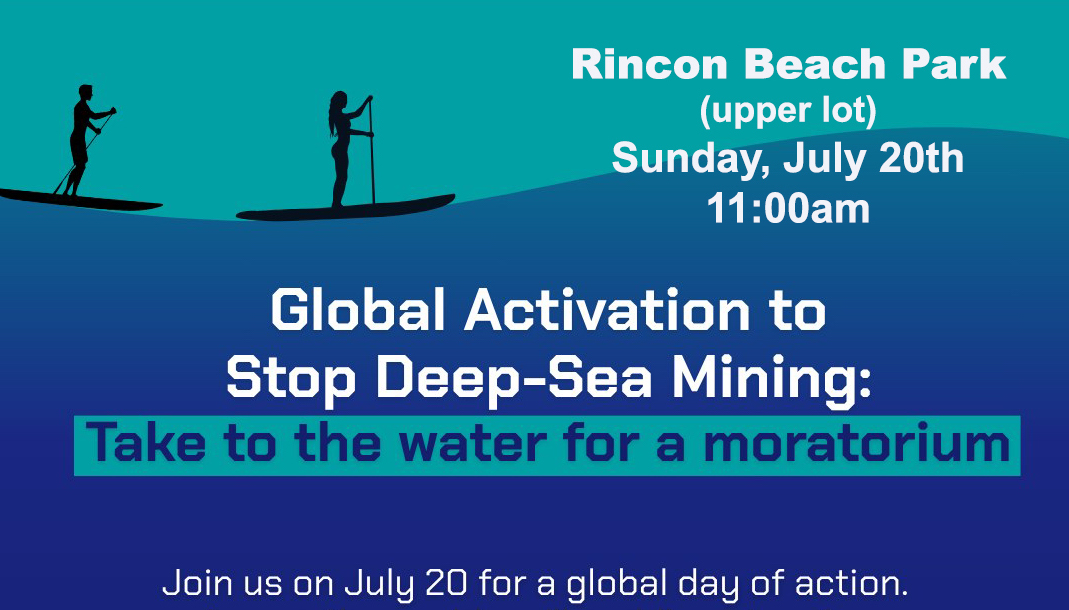
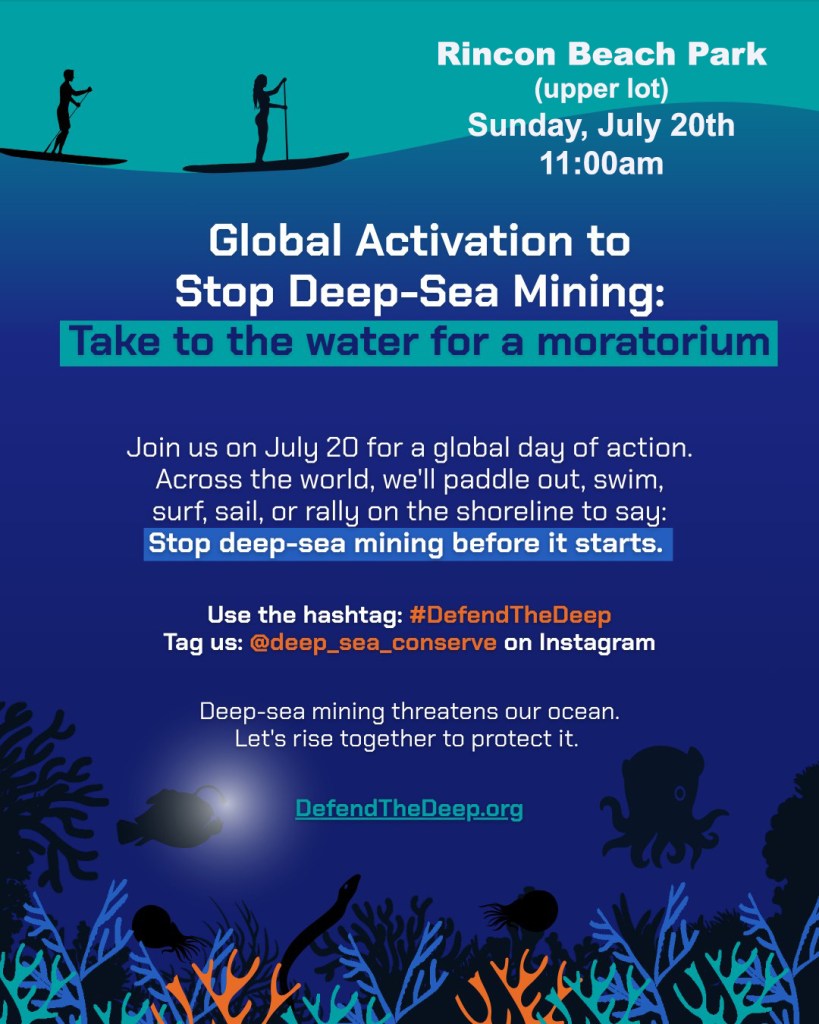
Join me July 20, 11 a.m. at Rincon Beach Park as part of the Global Activation Against Deep-Sea Mining.


You must be logged in to post a comment.