

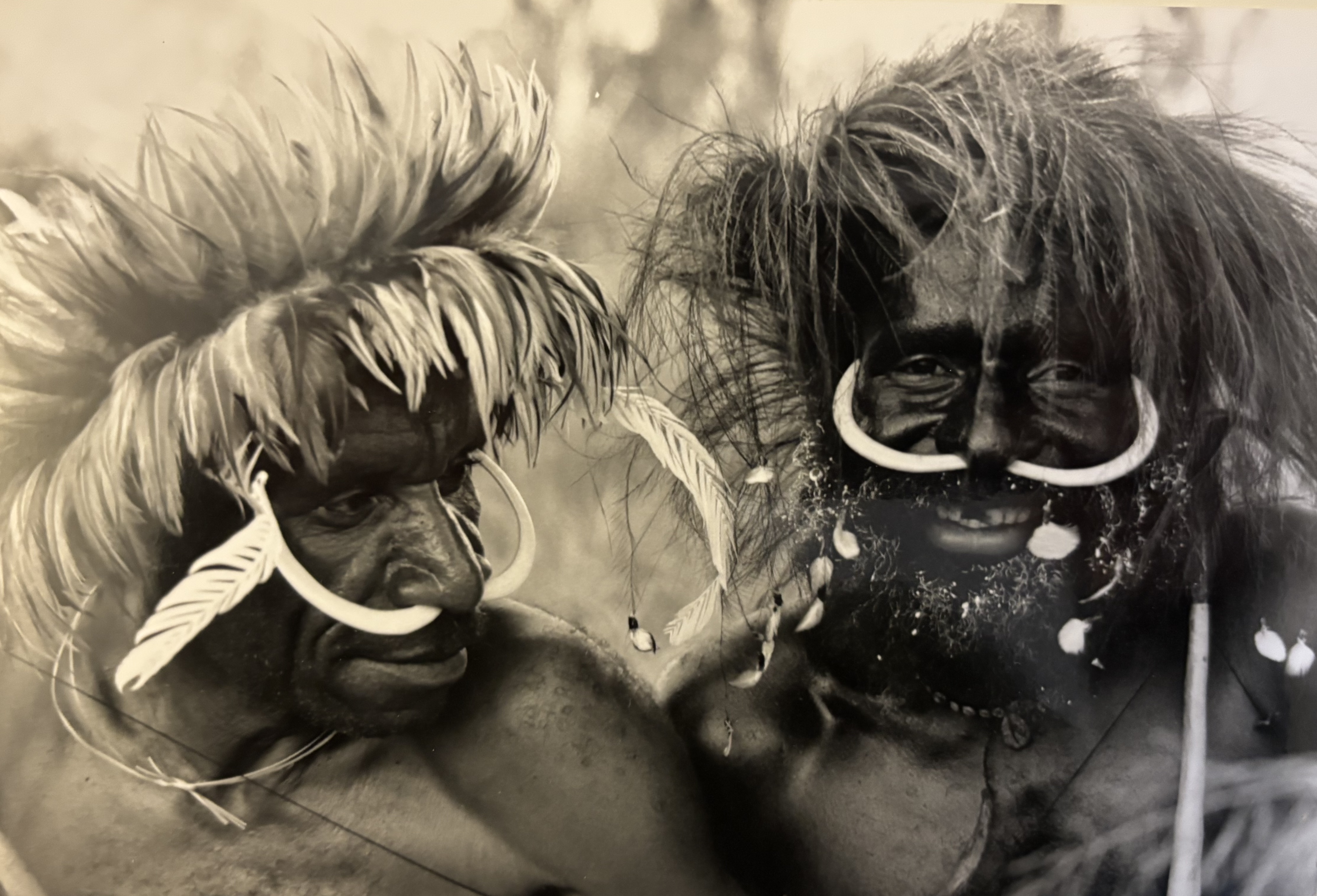
Deep in the jungle of West Papua, Tinus pulls back firmly on his bow string and with clockwork precision takes aim at a bird perched high in the canopy. As he releases the bamboo arrow takes flight guiding swiftly through the air. Diligently, Tinus wraps the bird in banana leaves, for the journey back to his village is long.
His life that of a nomadic hunter-gatherer, is all he has ever known. For thousands of years his people have remained cut off from the outside world. Their reality fixed upon an area of forest unmapped and forgotten. However, as the dark clouds loom overhead and the thunder shakes the ground, it is carrying a message. And Tinus knows all too well, as he has heard from neighboring tribes of unwanted visitors promising knives and tools and with it change.
For 37 years I have been exploring this region, trekking through the highlands and learning about a people and land that have grabbed my heart. I have built lifelong friendships with many of the indigenous people. It is these people and their determination for survival that I am so passionately focused on.
Papua is a Malay word for “frizzy haired people,” a place where some 2 million Melanesian indigenous live among an area of rain forest, swamps, and cloud-snagged mountains, reaching to heights of 16,000 feet, the highest elevation between the Himalayas and the Andes.
In the 1960s Indonesia laid claim to West Papua. Despite efforts to control the West Papuan people, it has failed on all aspects of doing so. Indonesia uniliterally annexed the former Dutch colony in 1969 with the United Nations referendum “Act of Free Choice.” What the Papuans call the “Act of No Choice.”
The Papuans quickly formed the Organisi Papua Merdeka, or Organization Free Papua, (OPM). It is made up of Papuan freedom fighters armed with bows arrows and spears as well as a few guns, obsolete booty of the Dutch. They have proven to be a thorn for the Indonesian military. The number of freedom fighters varies from a few hundred to thousands, depending on who you speak to. However, one thing is for certain their cause burns deeply in most all Papuans.
It’s obvious West Papua opposition to Indonesia will continue because the central government’s presence runs counter to the indigenous values. First, the local people do not feel they belong in Indonesia, experiencing more affinity with the people in the east Papua New Guinea (PNG) and the rest of Melanesia than the people in Indonesia proper. Second, policies of coercing the indigenous peoples into being Indonesian have fueled anti Indonesian feelings in the region. Third, respect for the land is very important to West Papuans and this value is being assaulted by the government’s transmigration and economic policies.
Indonesia sees West Papua as elbowroom. With so many people eking out an area of space on the islands of Java, Suliweisi, and Sumarta the central government brainstormed Operation Transmigration. Implemented in the 1970s the government has already moved at least 300,000 settlers to transmigration camps in West Papua. However, the open invitation has put a strain on the relations of the Papuans and the new arrivals, where more often than not, the native people are found to stand in the way.
With its blistering economy and the world’s fourth largest population, Indonesia can’t afford to lose West Papua. It sees the 26th province as a huge depot of natural resources. Vast amounts of timber, the largest gold mine in the world, and an abundance of copper and huge deposits of oil found in the lowlands.
For years I worked as a tour operator. Guiding small groups of people into this remote area for a glimpse into this fascinating culture. That was back in the late ’90s. Now, present day tourism is at an all time low. The area has become volatile with many tour agencies pulling back.
Between 200,000 and 300,000 Papuans have been killed since Indonesia’s occupation began. A report by Yale law school suggests that the intent of Indonesia’s actions fall within the legal definition of genocide.
In 2022 the U.N. condemned what it described as “shocking abuses” by the Indonesian military, including the killing of children, disappearances, torture, and large scale forced displacement where villagers flee deep into the jungle for safety. Despite global outcry Indonesia has shown little willingness to acknowledge the scale of atrocities, leaving Papuans with little hope other than continued resistance.
Despite parts of West Papua being unknown and unmapped the modern world is arriving, especially those multi-national corporations seeking wealth. The government has marked off great chunks of Papua for resource development. The French are looking for uranium, the Australians for gold, the British and Americans are searching for natural gas and oil, and the Japanese are logging the mangrove swamps. Geologists call Papua “elephant country,” a term for terrain with extra rich deposits. It’s estimated 41 million hectares of forested area to be state forests. This would take away indigenous peoples power to manage and make decisions about the territories they traditionally occupy and depend on.
Many Papuans now have access to mobile phones and the internet. Many are using this technology to coordinate their struggle for freedom and communicate with the rest of the world.
Recent developments in West Papua include the use of drones especially in the densely forested central highlands. Hundreds of villagers have been killed and injured during these military drone operations. Skirmishes in the region between the Indonesian military and the freedom fighters seem to take place on a daily basis.
With world events being what they are, wars, famine, civil unrest, and corrupt governments, most countries have little desire to get involved in West Papua and its quest for freedom. However this only seems to strengthen the people of this remote region as they continue to fight for a cause that ultimately depends on their survival.
“Cepat-cepat” (quickly-quickly), the words echo through the thick air. “We must finish climbing before nightfall.”
My good friend and porter Nadius peers into my eyes. The mountain is filled with spirits and it’s not safe to climb in the dark.
With every breath I feel my body struggle. Cautiously we weave and slither across a section of trail that seems to slow our progress to a crawl. Four of us had journeyed deep into the jungle of the eastern highlands of West Papua. Three years had passed since my last trip and I was back to visit one of the 250 indigenous tribes, the Yali or Yalimo (“people of the east”). The territory they inhabit is so rugged few outsiders have penetrated the isolated jungle to witness their way of life.
My body explodes with excitement. I was back in Papua.

