

Recent storms in southern Santa Barbara County have delivered some of the highest rainfall rates in years. With the heavy rain, local debris basins refill with coarse gravels and rocks once again. When this occurs, we face an important decision about where that material should go. The answer is straightforward: It belongs on the coast, where, before the debris basin installations, it arrived naturally.
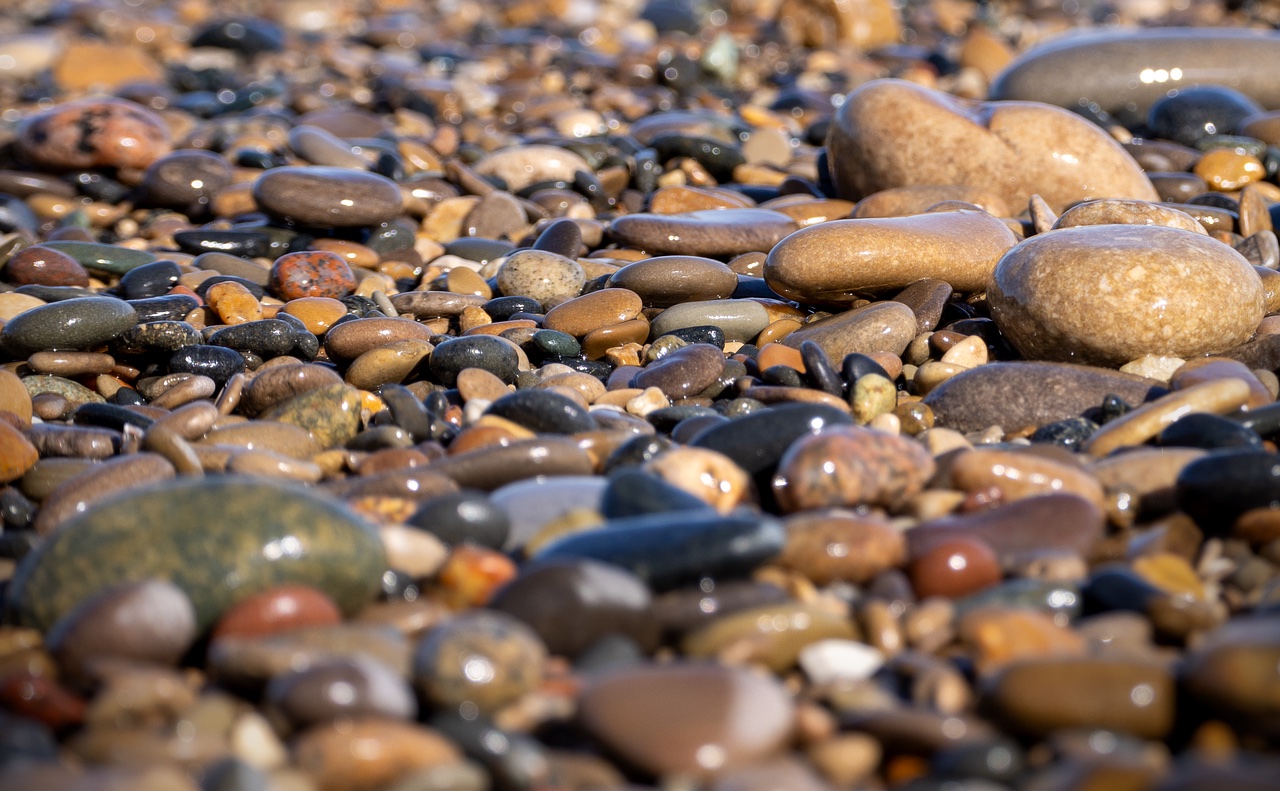
Santa Barbara’s beaches depend not just on wave energy but on the type of sediment they receive. Historically, major storm events delivered fresh, angular cobble from the mountains — material that interlocks, resists movement, and forms a natural and durable upper‑beach armor. But for over five decades, debris basins such as the Santa Monica Basin have trapped this younger sediment upstream, where it has been then trucked to upland disposal sites. What remains on the beach today is mostly older, rounded cobble that has been repeatedly tumbled by waves.
This distinction matters. Rounded cobble is the product of long-term abrasion; its smooth surfaces roll easily under storm surge and are quickly swept offshore or down‑coast. Unless we restore the steady supply of younger, angular material to replenish and stabilize the beach, the remaining rounded cobble becomes increasingly mobile and increasingly scarce. The shoreline is left with little more than sand to face winter storms — an erosion scenario we are now seeing play out year after year.
But coastal resilience is not the only part of the story. The ecological benefits of restoring coarse sediment to the beach are profound. Kelp forests, which once thrived off Carpinteria, depend on rocky and cobbled seabeds for holdfasts. When coarse sediment supply dwindles, kelp retreats. When cobble returns, kelp rebounds — bringing back habitat for fish nurseries, invertebrates, marine mammals such as harbor seals, and the biodiversity that defines our nearshore waters. Reestablishing this land‑sea connection strengthens the entire coastal ecosystem.
There are also significant public‑cost benefits. Every truckload of coarse sediment placed on the closest beach is one less truckload that must be hauled to a distant upland disposal site — reducing maintenance costs and truck emissions, and lowering long‑term operational costs for flood‑control agencies. At the same time, a more resilient shoreline reduces the need for emergency coastal repairs, storm‑damage response, and expensive protective measures. The avoided costs of erosion, infrastructure damage, and habitat loss far exceed the expense of placing sediment where nature intended it to go. Taken together, the ecological gains and the financial savings make this an easy decision for project managers and public‑policy leaders.
Nowhere is that connection more direct than in Santa Barbara’s south coast, where the mountains sit close to the shoreline and steep stream beds carry extraordinary velocities during storm events. These high‑energy channels are naturally capable of transporting large, coarse, angular sediment straight to the coast — a geological configuration that makes our shoreline both unique and historically resilient.
Debris basins were built to protect our urban centers, and they remain essential for public safety. But with thoughtful management, they can serve their purpose without cutting off the very sediment supply that stabilizes our beaches and sustains our coastal habitats. Placing this sediment back on the beach honors the natural design of our watershed.
Matt Roberts managed Carpinteria’s city beaches for 40 years as the director of the city’s Parks & Recreation, before retiring in 2023.

