

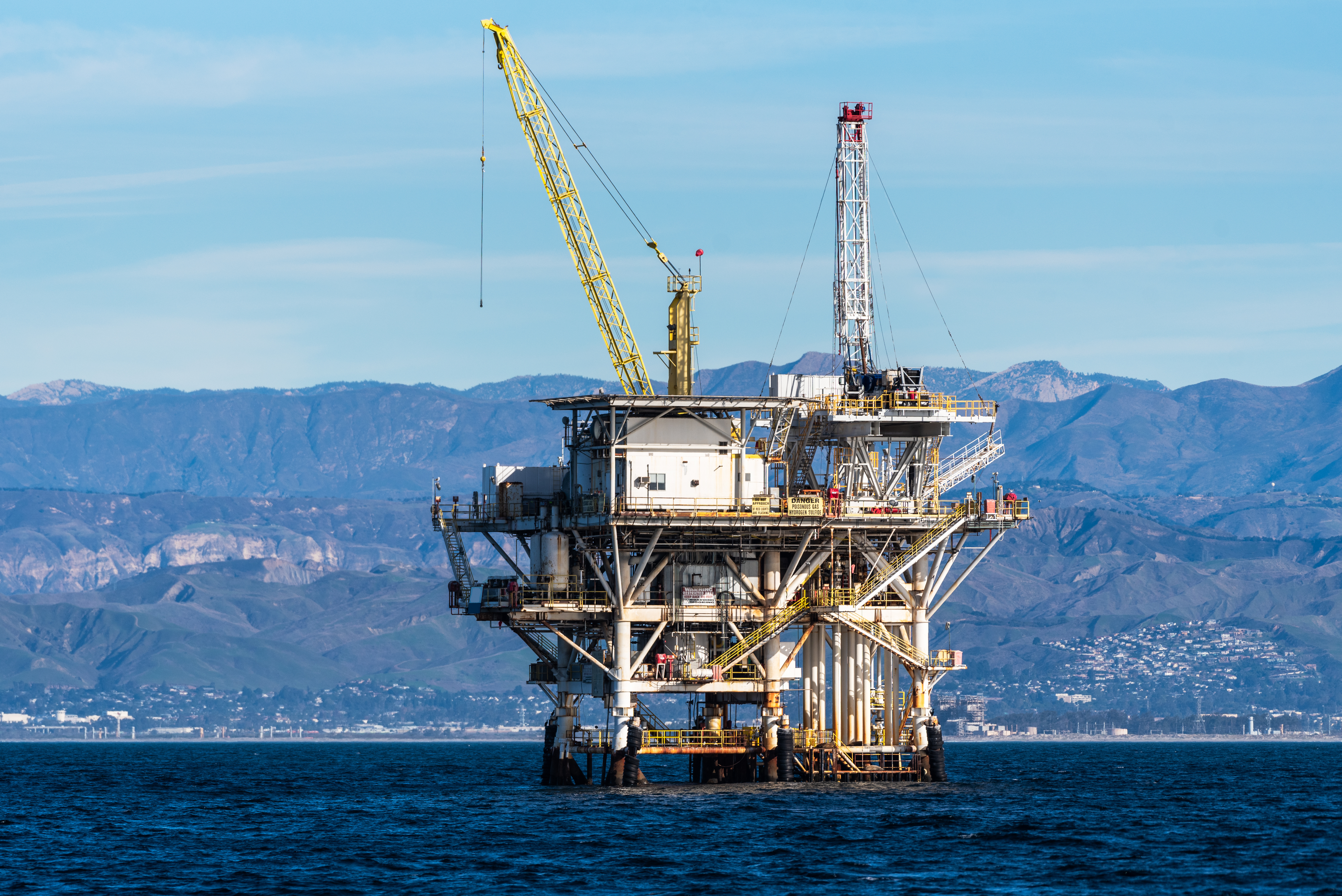
President Trump is once again pushing to expand offshore oil and gas drilling off California’s coast — and calling it “national security.” Californians have heard this before. We also know what it risks: our coastline, our coastal economy, and the climate stability our communities depend on. And offshore drilling isn’t the only front. The same push is now aimed at California’s public lands, proposing to open more than one million acres statewide — including roughly 400,000 acres of parks, beaches, ecological reserves, and surrounding lands on the Central Coast and beyond — to new oil and gas drilling.
If national security were truly the goal, we would see an all-of-the-above energy strategy that strengthens resilience, lowers costs, and builds industries that can compete globally. Instead, Trump is doubling down on oil, gas, and coal while deriding and undercutting renewable energy — even using “national security” claims to block offshore wind projects already underway on the Atlantic coast.
That contradiction points to a deeper truth: where a society gets its energy shapes who holds power — and who bears the burdens of dirty energy.
At moments of political consolidation, energy policy often recedes from public view — precisely when it matters most. In this moment, as the federal administration tightens its grip across key parts of public life — courts, immigration, public protest, emergency response — the systems that determine who controls our energy and infrastructure also determine how wealth is concentrated. Centralized, fossil-fuel-dependent energy makes centralized political power easier to wield. Distributed clean energy, by contrast, makes communities harder to bully and more resilient.
We’ve seen this dynamic throughout history. Whale oil fueled a global industry controlled by a few ports. Coal-fed factories and railroads were controlled by industrial barons. Oil requires multinational corporations, vast capital, and military protection.
Each energy era didn’t just power an economy — it locked in a power structure. Oil doesn’t just fuel our cars; it ties us to centralized systems, endless extraction, and geopolitics that repeatedly pull our country into conflict to secure supply lines. It concentrates power and wealth at the top while leaving communities to pay the costs in dirtier air, polluted water, and degraded land.
For more than a century, fossil fuels have concentrated wealth in the hands of a few while imposing enormous public costs—environmental damage, public-health harms, and military intervention to protect oil assets at home and abroad.
This is the old model of power: extract, concentrate, and spend endless amounts of money to defend these assets. And it is the model this administration is leaning on again — using dirty and dangerous energy systems to enrich allies and donors while the public pays the price.
Renewable energy does the opposite. Rooftop solar, energy storage, microgrids, and community-scale clean power distribute energy — literally and politically. They lower long-term costs, strengthen local economies, and help communities function when larger systems fail. As energy thinker Amory Lovins has long argued, a “soft energy path” expands freedom; a hard energy path concentrates control.
This is why Trump’s claim that “oil equals security” is so dangerous. It isn’t a strategy for protecting people; it’s a strategy for protecting an outdated and unequal power structure. Corporations keep the gains while communities bear the damage and rising costs of spills, fires, floods, and climate instability.
That’s not national security — it’s national sacrifice. And it’s economically self-defeating.
Meanwhile, the world is moving on. China, the European Union, India, and others are scaling clean energy and electric vehicle supply chains at lightning speed, while the United States doubles down on the fuels of the past. China now dominates global solar, wind, and electric vehicle manufacturing, exporting clean energy technologies at a scale the world is rapidly absorbing — especially in countries seeking to escape volatile fossil fuel prices.
When we slow-walk renewables, sabotage offshore wind, and retreat from EVs, we don’t “win” anything. We hand over the industries of the future: innovation, manufacturing, jobs, export markets, and the strategic leverage that comes with leading the technologies the world is buying.
California has shown there is a better path. Our state has built world-leading clean electricity and clean transportation markets, driven innovation, and demonstrated that economic strength and climate action can move together. But even California cannot fully shield families and businesses from federal backsliding: higher energy volatility, missed industrial investment, and retreat from the innovation economy.
Protecting our coast is not just about sea otters, surfers, or sunsets — though it is about those too. It’s about choosing who energy ultimately serves. It’s about choosing a future where power — economic, political, and electrical — flows outward to communities rather than upward to oil cartels and would-be strongmen.
We cannot drill our way back to global dominance. We cannot militarize our way to climate stability. Real national security protects people, not pipelines. We choose people power over petropower — and we say clearly to Washington: No new drilling. Not here. Not now. Not again.
Joan Hartmann is 3rd District Supervisor for Santa Barbara County, and Sigrid Wright is CEO and executive director of the Community Environmental Council.

