

I was in college during the Vietnam War protests. The country was angry, divided, unsure of who we were becoming. Then there were moments that stopped us cold. Kent State University was one of those moments.
In May 1970, students gathered to protest President Nixon’s decision to expand the war into Cambodia. After several days of unrest, including the burning of an ROTC building, the governor of Ohio deployed the National Guard. Tensions escalated. What happened next was unthinkable. Guardsmen fired dozens of rounds in a matter of seconds into a crowd of students.
Four unarmed students were killed: Allison Krause, Jeffrey Miller, Sandra Scheuer, and William Schroeder. Nine others were wounded. Some of those shot were not protesting at all; they were simply walking across campus, heading to class. The country was stunned. Even in a decade marked by protest and confrontation, Kent State crossed a line. It forced a question we were not ready to ask — but couldn’t avoid: Who are we?
The shootings ignited a national reckoning. Campuses shut down across the country. Millions of students went on strike. Congress held hearings. The press investigated. The tragedy was argued over, mourned, and remembered.
This was a crisis of conscience — a shared recognition that the use of lethal force against unarmed citizens required, demanded accountability. Kent State was a moral failure that forced the nation to ask another question: What do we stand for?
After the assassinations of President Kennedy, Martin Luther King Jr., and Robert Kennedy, I thought the violence was behind us. Kent State shattered that belief.
What we are witnessing now feels profoundly different.
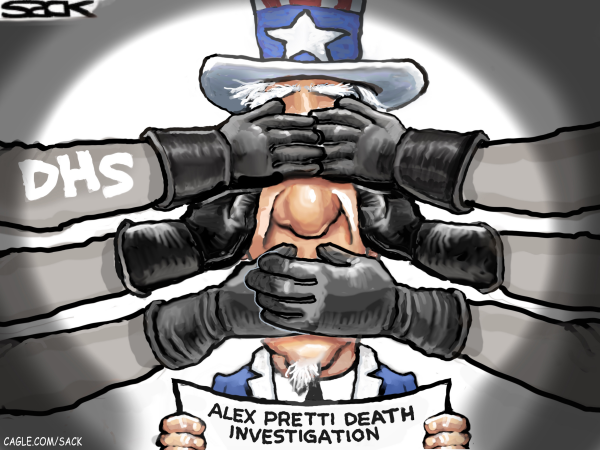
The danger today lies not in a single, conscience-altering moment, but in a series of moments that blur together. Federal forces are deployed. The shooting deaths of two citizens. A third violently pulled from her car onto the street. Investigations follow, and officials assert that agents acted within their authority and are shielded from prosecution. U.S. attorneys are excoriated by federal judges for non-compliance of court orders. Judges who insist on the rule of law face sustained attack. The press itself is repeatedly cast not as a safeguard of democracy, but as an adversary to be discredited.
Protest continues, but consequence has become optional. And without consequence, even grave violations lose their power to shock or compel accountability. The guardrails that once restrained power grow thinner each day, forcing us to ask another question: What are we becoming?
That is the difference between then and now.
Perhaps the aftermath of the shootings of Alex Pretti and Renee Nicole Good will make a difference, will mark a turning point. I don’t know.
What I do know is that something essential has been lost: not only trust in the institutions that once held us together, but confidence in the moral bearings that once guided us.
Lincoln warned us. “At what point then is the approach of danger to be expected? I answer, if it ever reaches us, it must spring up amongst us. It cannot come from abroad.”
Kent State shocked the nation because it crossed a clear moral boundary. Today, that boundary is increasingly clouded, as the standards that once restrained power are chipped away, moment by moment. We are losing confidence that we share the same moral limits.
The questions that emerged after Kent State remain with us — unresolved and urgent:
Who are we?
What are we becoming?
What do we stand for — now?

