
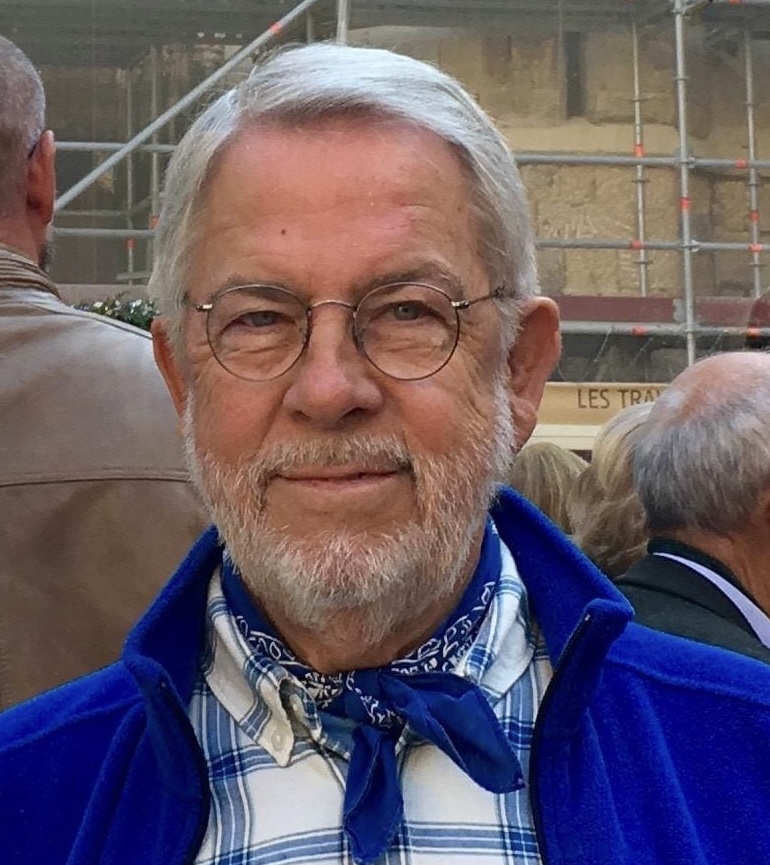
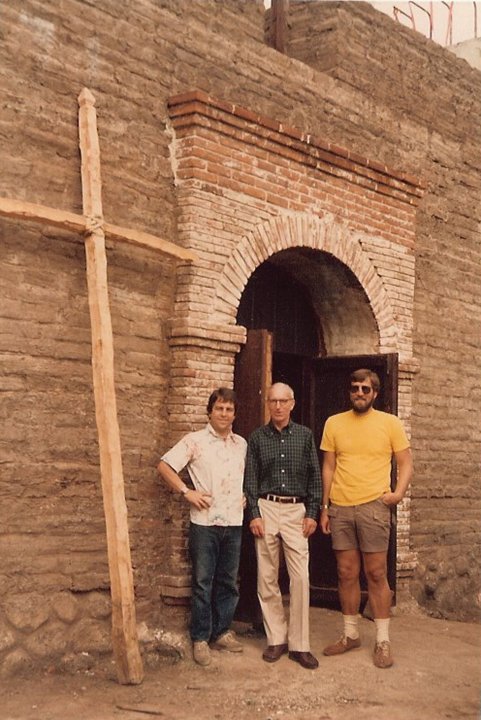
One of Santa Barbara’s own, Patrick O’Dowd, died on January 16 in Aberdeen, North Carolina, and though he had not lived in Santa Barbara for some years, it has always been clear that his geographical heart was here. An American cultural historian with a cherished library on John Quincy Adams, the early Republic, and California, Patrick contributed to the city he loved in deep, lasting, and often visionary ways.
Patrick was a romantic. An avid surfer from Redondo Beach and proud designer of a removable surfboard box fin, he chose to study physics at UC Santa Barbara because of its proximity to the ocean’s waves. Transformed by walks around the campus lagoon with his mentor and friend, the architectural historian Harold Kirker, Patrick relinquished science for history, yet not quite, as he presented his PhD dissertation in 1976 on John Quincy Adams’s report on weights and measures. Then, he took off to Europe.
Classes he had taken from the charismatic English professor Hugh Kenner, who wrote The Pound Era, took him to Schloss Brunnenburg for a symposium on Ezra Pound’ s epic poem The Cantos. Following the footsteps of Pound and the troubadours of ancient Provence, he was so enthralled that he unhesitatingly accepted UCSB’s offer to teach American Cultural History at the university in Aix-en-Provence. There, he met Anne Dory, one of seven children living what was for her a normal French country life, but for Patrick, it was unique. Sitting at that formal dinner table with Anne’s large family was an experience of feeling deeply rooted in tradition and beauty — nothing less than a fairy tale.
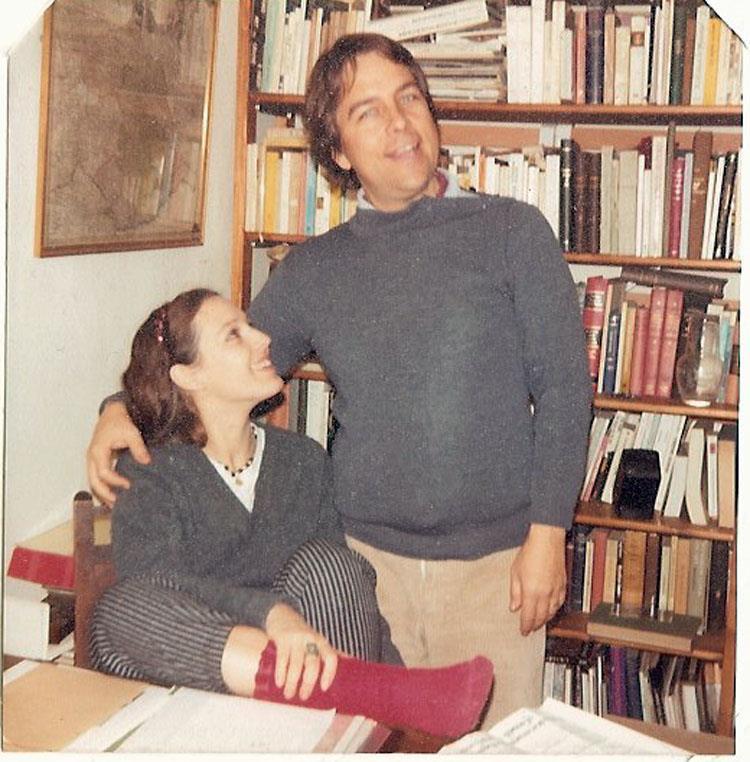
Patrick and Anne married, raised their children, Barbara and Seanessey, becoming a vital part of the Santa Barbara community for the next 20 years, while always maintaining a strong French connection. Patrick became president of the French Network and developed a Sister County relationship between Santa Barbara County and the Var Department in France, taking the county supervisors with him to visit Southern France.
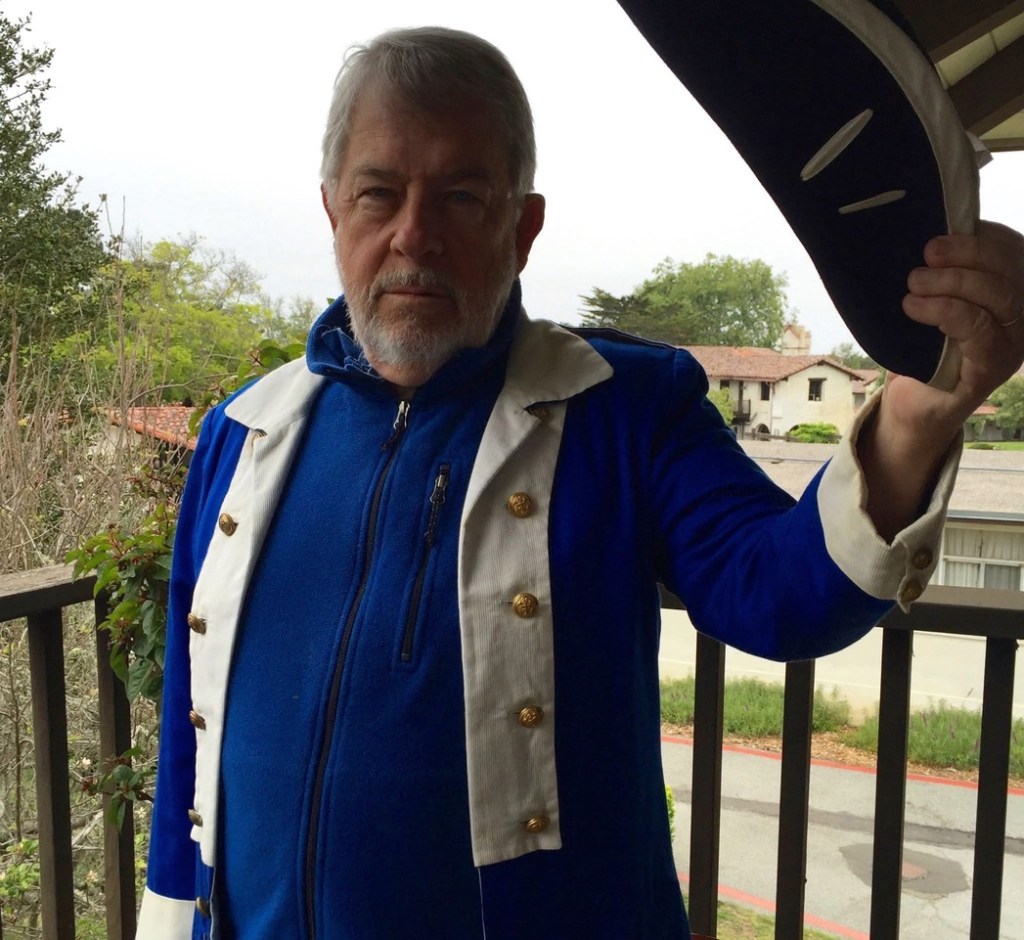
In the ’90s, Patrick brought back to life the story of Hippolyte Bouchard of St. Tropez raiding the budding city of Santa Barbara in 1818. He found a way to connect the Santa Barbara Museum of Natural History, the Chumash people, and the Musée de l’Homme in Paris through Leon de Cessac’s 1877 scientific expedition to California. Patrick loved living history and would play the part of French explorer La Perouse (who visited S.B. in 1786) at public events.
Patrick had a passion for connecting things — the past with the present, America with Europe, science and history — and always with an artistic bent. While he was a curator at the S.B. Museum of Art, Michael Ingham, a young, innovative music professor at UCSB, recruited him in 1978-79 for a massive undertaking — a weeklong program of the music of the Austrian composer Ernst Krenek featuring Krenek himself. The festival got international attention and was a resounding success. The stunning 176-page illustrated program Patrick created survives today as a collector’s item.
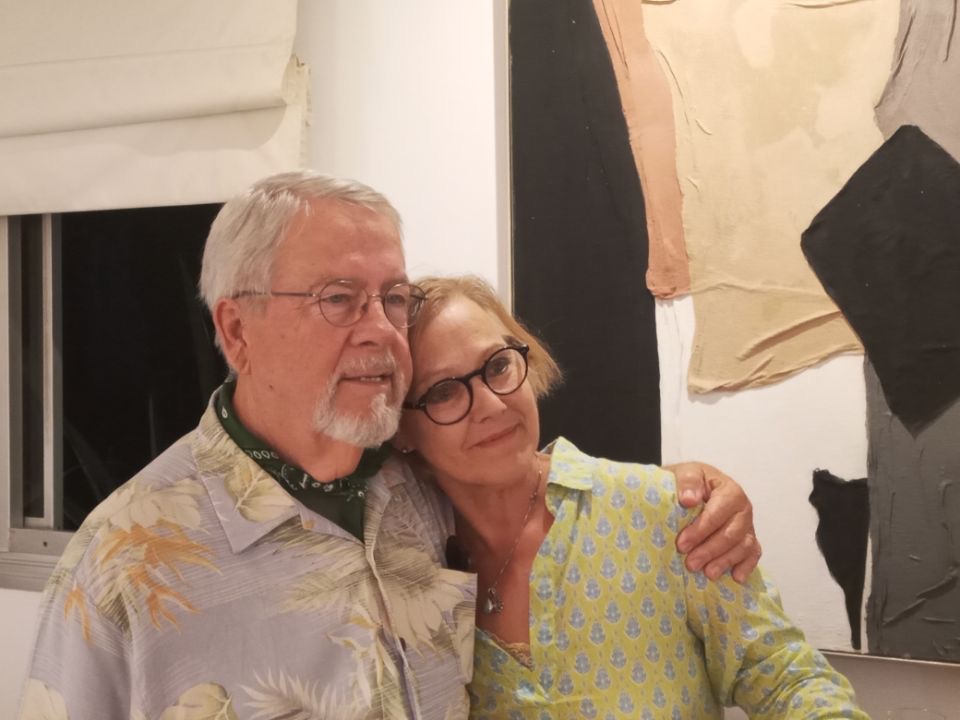
Before it became what it is today (the Santa Barbara Yoga Center at 32 East Micheltorena Street) Patrick converted what was then a large church into an inspiring space for his publishing company, Arpel Graphics, and the stylish Arpel Gallery. He took careful consideration in choosing the exterior colors for this unique building, which remain unchanged for close to 50 years.
Arpel hosted many art openings and interesting cultural gatherings. Henry Brant, the Pulitzer Prize–winning acoustic spatial music composer from Canada, was living incognito in town at the time. But he wasn’t unknown to Patrick, who held a couple of spatial music concerts in his gallery. Patrick insisted, “We want to do poetry, music…. I’d like to make Santa Barbara a more interesting place to live.”
Arpel published stunning art books during this time, including Nature’s America by photographer David Muench. Patrick was meticulous in their production, seeking out the best printers to get his colors just right. His passion for surfing and the ocean resulted his publishing The Book of Waves: Form and Beauty on the Ocean by Drew Kampion of Surfer magazine. This book, hard to find today, has become a cult classic.
In the early 1990s, Patrick volunteered at the Santa Barbara Trust for Historic Preservation, eventually becoming associate director. He made his mark as project manager of the landmark Casa de la Guerra restoration. As with everything else, Patrick threw himself energetically into this project. Today, “The Casa” is regarded as California’s most accurate restoration of a Hispanic Period adobe. He organized a symposium he called “Plaza de la Guerra Reconsidered” to share his vision of a European-style civic plaza. Patrick later served as Santa Barbara City Historian and remained a trusted voice, exchanging ideas with city planners, such as Brad Hess.
For Patrick’s friends, walking the streets and byways of Santa Barbara with him is a treasured memory. He was a spellbinding storyteller and knew everything about the “old” city — he wove events into romantic fairy tales — the way everything used to be and how things had changed and the evidence of the old that is still here if you know where to look for it. Not only did Patrick “know” it, he loved it dearly.


You must be logged in to post a comment.