
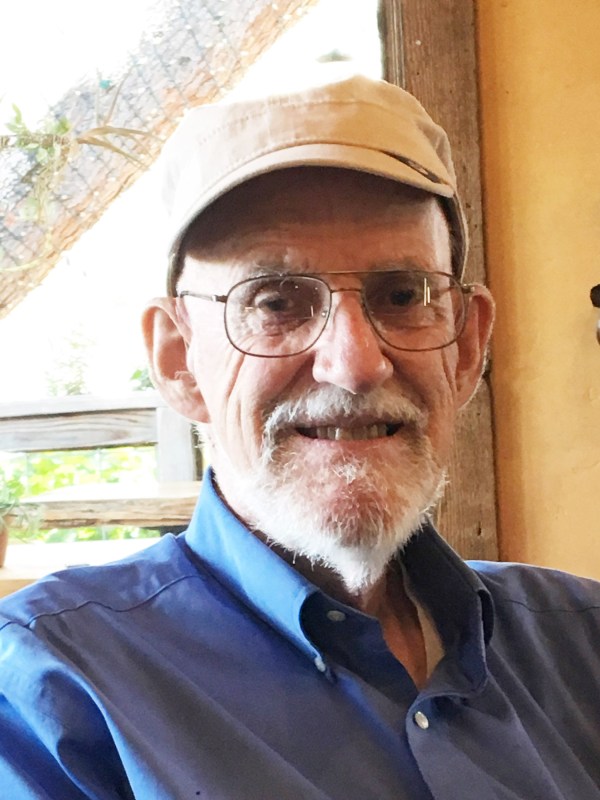
Raymond F. Sawyer
1932-2026
Raymond Sawyer, a theoretical physicist, former Vice Chancellor at UC Santa Barbara, and co-founder of its Kavli Institute for Theoretical Physics, passed away on February 21 at the age of 93. Ray was born on August 30, 1932, in Northfield, Minnesota. His parents came from farming families in Wisconsin and New Hampshire. Both studied as research scientists, and the family moved between academic jobs in Northfield, Danville, Kentucky; Oak Ridge, Tennessee; and finally Bethlehem, Pennsylvania where Ray attended high school. During summers Ray was sent to do farm work in Wisconsin, taking the train alone from Kentucky starting at the age of 12.
A rebellious spirit in a traditional family, Ray found school a struggle. A guidance counselor recognized his potential and suggested that he apply to Swarthmore College, where he was offered a scholarship, working summers at Bethlehem Steel to earn the remainder of his tuition. Finding fascination in the study of physics, Ray made a leap into the elite circles of theoretical research when he was accepted for graduate study at Harvard under the Nobel laureate Julian Schwinger. While pursuing his doctorate, Ray met Curry Rinenberg, who was also studying physics. They married in 1956 and for their honeymoon drove a ramshackle Plymouth across the country to summer research jobs in California.
After graduation in 1958. Ray departed for Switzerland to do research at CERN on an NSF postdoctoral fellowship. He next took a faculty position at the University of Wisconsin in Madison. While there he was invited by Robert Oppenheimer to spend a year as a member of The Institute for Advanced Studies at Princeton. In 1964, he was a Visiting Professor at MIT. During these years, Curry and Ray’s two sons were born, and in 1966 the family moved to Santa Barbara, California where Ray had accepted a faculty position at UCSB in a relatively new physics department. Ray aided in building up the program with new hires. After several years of trying, in 1978 Ray and three colleagues persuaded the National Science Foundation to fund a new Institute of Theoretical Physics that would offer residencies to leaders in physics research from around the world and hold conferences on topics across the field. More than four decades later, the Kavli Institute continues to thrive as one of the world’s most prestigious research centers for theoretical physics and fundamental science questions.
A leader outside of his department as well as within, Ray was elected by his colleagues to chair the Academic Senate at UCSB, and in 1979 was invited to join the Chancellor on one of the first academic delegations to tour newly-reopened China to discuss research exchanges. Meeting with representatives of the Chinese Academy of Science, Ray heard of smashed laboratories and a determination to rebuild Chinese science in the aftermath of the Cultural Revolution, and he left with a commitment to bringing a visiting Chinese physics scholar to UCSB. Shortly after returning, Ray was appointed Vice Chancellor of the University, in which role he was instrumental in elevating a number of programs, in particular the Engineering School where Ray spearheaded the founding of a new Materials Science program. He also initiated and oversaw the construction of new housing for young faculty in the increasingly scarce and expensive local housing market. Ray’s foray into administration ended in 1986 when he resigned out of his ethical concerns over the conduct of University leadership. Despite a gap of several years, he was able to pick up the thread of his physics research, which he pursued avidly for the rest of his life.
Ray shared with Curry a love for the outdoors, taking the family on frequent hikes and backpacking trips. Their adventures culminated in a trek together above the base camp of Mount Everest in 1988. He was an avid cyclist and joined colleagues in an annual ride over the coastal range, in the loop over Figueroa Mountain. He also loved music, especially classical music, which he got to know from radio broadcasts during his student days, but also the groundbreaking rock of the 60’s and 70’s. Ray was public-spirited about environmental issues and mounted a campaign that opposed and ultimately prevented a new oil platform in the sensitive and leak-prone waters off the coast of UCSB. After retiring from teaching in 1994, Ray had more freedom to travel and returned for substantial periods to the farmhouse of his forebears in Webster, New Hampshire, making improvements to the structure and enjoying the peace there to work on his physics. Ray liked reading history, especially about distant times and places. He also read detective novels, often in French, reading the endings first to remove the suspense so he could better enjoy the cleverness of the construction.
Theoretical physics was at the center of Ray’s life, and he continued to publish papers into his nineties, exceptionally rare for a physicist. He focused on theoretical astrophysics, specifically regarding compact and massive objects like neutron stars and supernovae. His research spanned neutrino physics, nuclear fusion in dense environments, cosmology and quantum effects in gravity.
Ray collaborated with Ben Lee on the seminal article “Regge Poles in Field Theory,” and subsequently on “Pion Condensation in Superdense Nuclear Matter” a collaboration with Douglas Scalapino,” one of his co-founders of the Kavli Institute, that stands as his most frequently cited paper.
In his final research, from 2021 to 2023, Ray showed that neutrinos can strongly influence one another in extreme environments like exploding stars and the early universe. By reexamining the theory from first principles, he challenged widely accepted models and suggested new ways these interactions could shape cosmic evolution, affect the neutrinos we may someday detect from distant supernovae, and perhaps help explain the origin of dark matter.
Ray is survived by his wife, Curry, two sons, two daughters-in-law, and two granddaughters. Eric Sawyer, his wife Cheryl Zoll, and daughter Lydia are based in Amherst, Massachusetts. Brian Sawyer, his wife Cecily Rhett, and daughter Josephine live in Glendale, California.

