

One hundred and seventeen years ago, the National Association for the Advancement of Colored People (NAACP) was founded in response to the horrific lynchings of African Americans taking place all across the United States and to address existing racial and ethnic disparities. The NAACP and its all-volunteer forces changed American history, playing a critical role in the nation’s civil rights movement and in advancing policies to expand human rights, eliminate discrimination, and accelerate education and economic security for Black people and all persons of color.
These efforts came to affect one of the authors, Lawanda Lyons-Pruitt, personally. In the early 1950s, the Supreme Court case Brown v. Board of Education of Topeka, Kansas was argued before the justices by a team of attorneys led by Thurgood Marshall, who later became the first African American to sit on the Supreme Court. The year before Lawanda was born, the court agreed in 1954 that segregation in public education violated the Equal Protection Clause of the 14th Amendment.
By the time she began her freshman year of high school in 1970, Lawanda’s school was desegregated. She didn’t have to be bused to the school for Black students, which was 15 to 20 miles from her hometown in Mississippi. Instead, she attended the “White” school in town that had existed for years. For the first time, the Black teens’ books were new, not hand-me-downs. But aside from not being bused and receiving new books, nothing else changed as the school remained largely segregated with White students and Black students congregating separately.

The Brown decision was the second of Marshall’s notable wins for the NAACP. The first concluded in a Supreme Court ruling in 1950 that forced state universities to provide equal facilities for all students.
These fights for equal education were followed by tumultuous but peaceful efforts — at least by the NAACP members — to achieve civil rights: Rosa Parks, a member of NAACP, was arrested in 1955 for refusing to give up her seat on a segregated bus in Montgomery, Alabama; nonviolent sit-ins by members of the NAACP Youth Council in 1958-1960 led to the desegregation of lunch counters in 26 Southern cities; and in 1964, Congress approved the Civil Rights Act, which eliminated discrimination on the basis of race, color, religion, sex or national origin. The NAACP played a major role in the passage of the Civil Rights Act, which paved the way for future anti-discrimination legislation.
The NAACP’s next focus was on voting rights. After President Lyndon B. Johnson signed the Voting Rights Act (VRA) into law in 1965, the NAACP persuaded more than 80,000 African Americans in Mississippi to register to vote. The VRA is considered one of the most effective pieces of civil rights legislation ever enacted as it enforces the right of every citizen to vote, as guaranteed in the 14th and 15th Amendments. Congress has amended the VRA numerous times to expand its protections, opening political opportunities to participate in all aspects of the political system, on an equal basis, to all.
More than 60 years after the right to vote was declared fundamental, this right has come under attack daily.
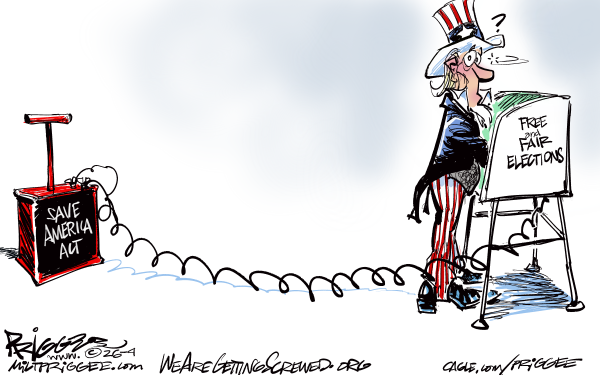
Many voters have heard of the SAVE Act, which was re-introduced in 2026 after it was defeated by the voice of the people in 2025, and is currently stalled in Congress. Purportedly, the bill is in response to election integrity and noncitizen voting issues. As a reminder, noncitizen voting has been a federal crime since 1968, and every person who registers to vote must swear under penalty of perjury that they are a U.S. citizen.

Some say that they are okay with providing proof of citizenship. But according to a report by the Brennan Center, “more than 21 million citizens do not have a birth certificate, passport, or naturalization papers readily available.” Among that group, people of color are disproportionately affected, as are women who married and have a different name than their birth certificate; they would be required to establish their identity. Also, more than 210,000 transgender Americans lack identification that reflects their name and gender.
Just recently, President Trump signed an executive order that seeks to create lists of U.S. citizens who are eligible to vote in each state and instruct the U.S. Postal Service to send mail ballots only to verified voters. Many states have already filed lawsuits; elections experts believes the executive order is “an overreach” by the federal government and an attempt at election subversion. Approximately one year ago, a previous executive order on elections that President Trump signed was blocked by federal judges. They cited the president’s lack of constitutional authority to set voting policies, which is clearly established by our Constitution to belong to the states and Congress.
One major provision of the Voting Rights Act has been weakened, making it harder for Black and Brown communities to participate in the political process. The attack began with the Shelby County v. Holder decision in 2013, in which the Supreme Court ruled that the VRA formula to determine which jurisdictions it covered was outdated. The VRA had required places with a history of discriminatory voting rules to have any new rules first vetted by the courts; Shelby removed that requirement.
The NAACP and a coalition of like-minded groups continue to fight restrictive voting laws in states such as Georgia, Florida, Arizona, and Mississippi. Among them are attempts to limit ballot drop boxes, make it a crime to give free food or water to people waiting in line, make it more difficult to vote by mail, and restrict when mail-in ballots can be counted.
Leading up to the mid-term elections this November, the NAACP remains a trusted messenger in the Black community, one of the largest, oldest, and boldest civil rights organizations in the nation. Through the courts, the legislative process, and the voices of the masses, we will continue our fight for voters’ rights and voters’ integrity, against voter suppression and intimidation, and weaponization of our election system, as we continue to safeguard every U.S. citizen’s guaranteed right to vote.
Lawanda Lyons-Pruitt is retired chief investigator with the Santa Barbara County Public Defender and the current president of the Santa Maria-Lompoc Branch NAACP. Connie Alexander Boaitey is co-founder and co-executive director of Gateway Educational Services and the president of Santa Barbara NAACP.
More than 2,200 NAACP branches in the U.S., Japan, and Germany field more than 500,000 members. In California, 56 active branches in California sit under the umbrella of the Baltimore-based national office. All officers, executive committee members, members, and nonmembers volunteer their time and services 100 percent gratis.


You must be logged in to post a comment.