
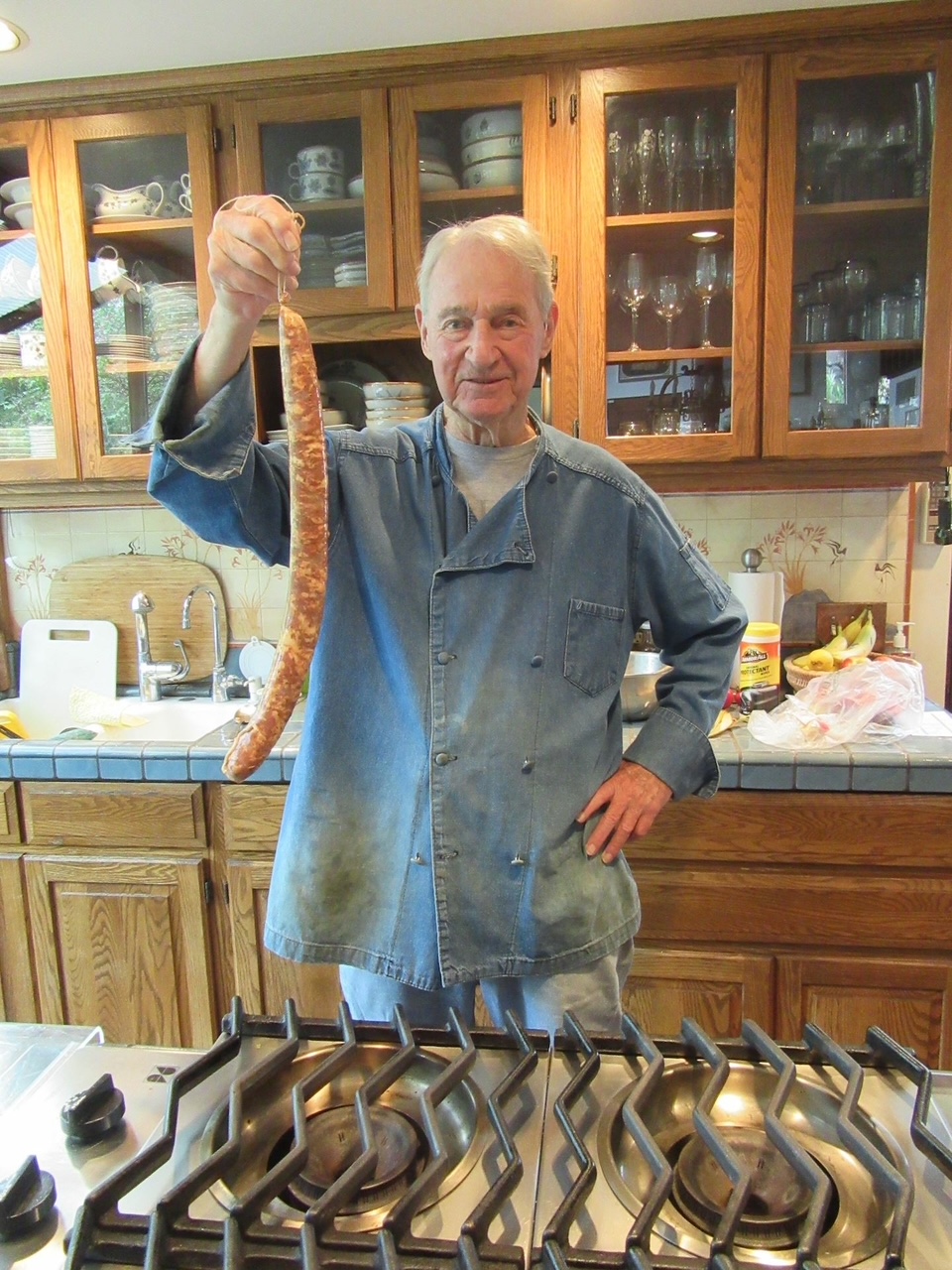
Frank J. Frost Jr., patriarch of the Frost family, scholar, university professor, underwater archeologist, musician, veteran, and public servant, died on January 9, 2026. He was born on December 3, 1929, in Washington, D.C., to Frank J. Frost Sr. and Eugenia Reynaud Frost (née Morris).
His early childhood was marked by frequent moves as the family headed west, in search of clear, dry air for health reasons. He and his siblings were often homeschooled and found to be far ahead in their studies by the time they started elementary school. Education and books, books in multiple languages, were pushed by Eugenia, the absolute matriarch of the family. This influenced Frank for the rest of his years.
The family ultimately settled in Palo Alto, where Frank entered the 3rd grade at the age of 6. By the time he was admitted to Oberlin College, he was just 16. Unfocused and somewhat nerdy, by his own account, the two-year difference made a socially awkward gap. Close to flunking out, when he turned 18, Frank joined the army. The military doctor mentioned during his physical that the TB lesions on his lungs exempted him from having to join; Frank told him he was “volunteering.”
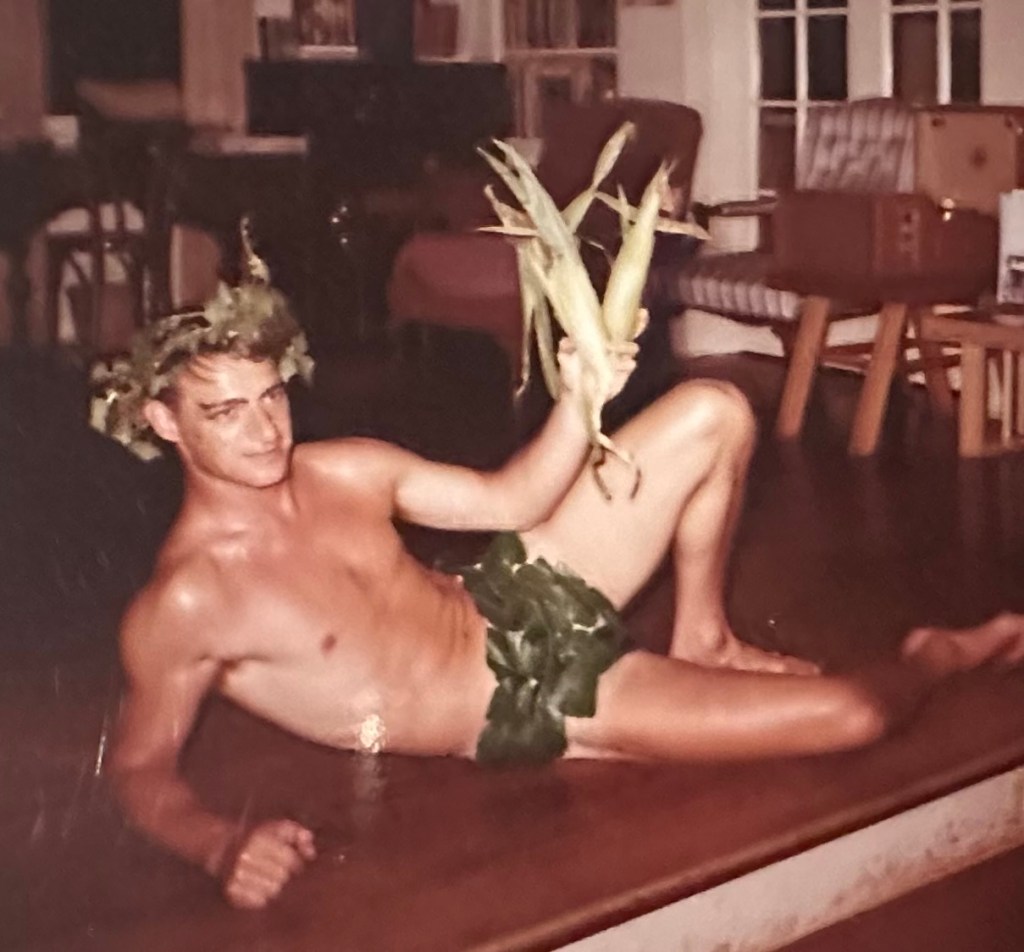
Frank had attended a military academy during high school and found boot camp “easy.” Throughout his tour of duty, Eugenia bestowed lavish care packages of books, food, and booze, which made him popular on the front lines in Korea. What set his trajectory for his future as a Greek scholar and archeologist was a book on Alexander the Great. Frank never failed another class when he resumed the university.
During his military service, Frank performed a wide range of duties, but he was later assigned to atomic testing in the desert — experiences that profoundly shaped his worldview. He was honorably discharged in 1953.
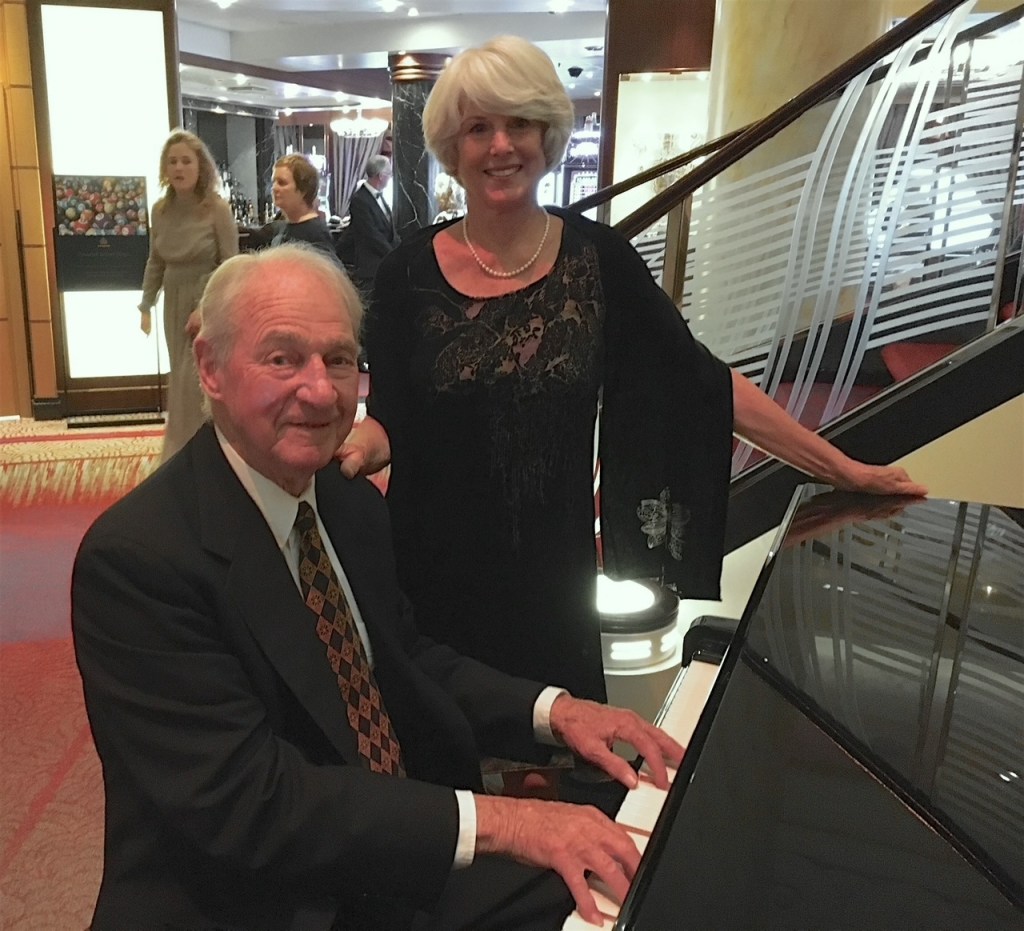
That same year, Frank married Cadidad “Violet” Nuñez, and together, they returned to Santa Barbara, where his family had settled. Frank supported his young family through the one skill he had fully mastered at that point in his life: jazz piano. Music was not merely a means of survival; it became a lifelong vocation. He continued to perform professionally in clubs and venues throughout Santa Barbara for decades, playing regularly until just months before his death.
Deeply inspired by books and by the moral urgency born of wartime experience, Frank went on to earn a doctorate from UCLA, mastering Ancient Greek, Latin, German, and French along the way. A gifted athlete and water polo player, he started underwater archeology during its infant stages. He joined trailblazing pioneers such as George Bass, who excavated the Bronze Age shipwrecks such as Cape Gelidonya in Turkey circa 1960. He mapped submerged ruins at sites like ancient Halieis in Greece’s Argolid Peninsula and Phoukari.
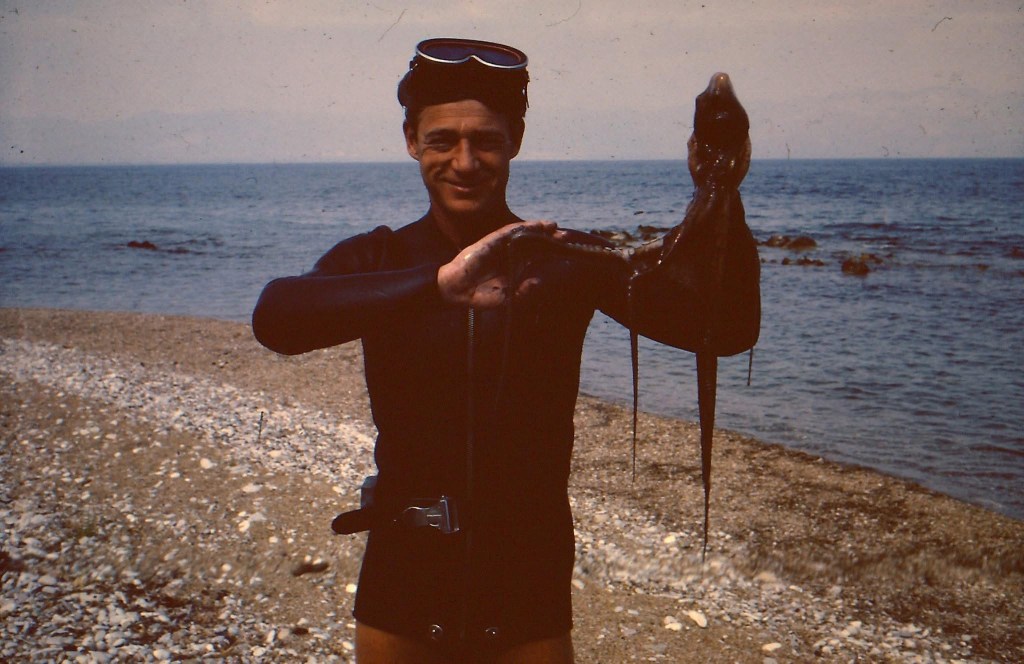
In later years, Frank would invite his graduate students to join in summer digs, most notably at Falasarna, dirty hard work under the hot Grecian sun. He found it enormously humorous that his students would fall victim to the charms of the local taverna owners at the end of a hard day. After pouring copious amounts of ouzo and wine during dinner, they would then offer the traditional after-dinner tsikoudia, also known as raki. The young grad students would slam it, only to have it refilled by the host. The sound of vomiting would interrupt the otherwise quiet night in the remote location. At six o’clock in the morning, the students sheepishly tried to disguise painful hangovers as they marched back to the dig site. Frank never did warn them.
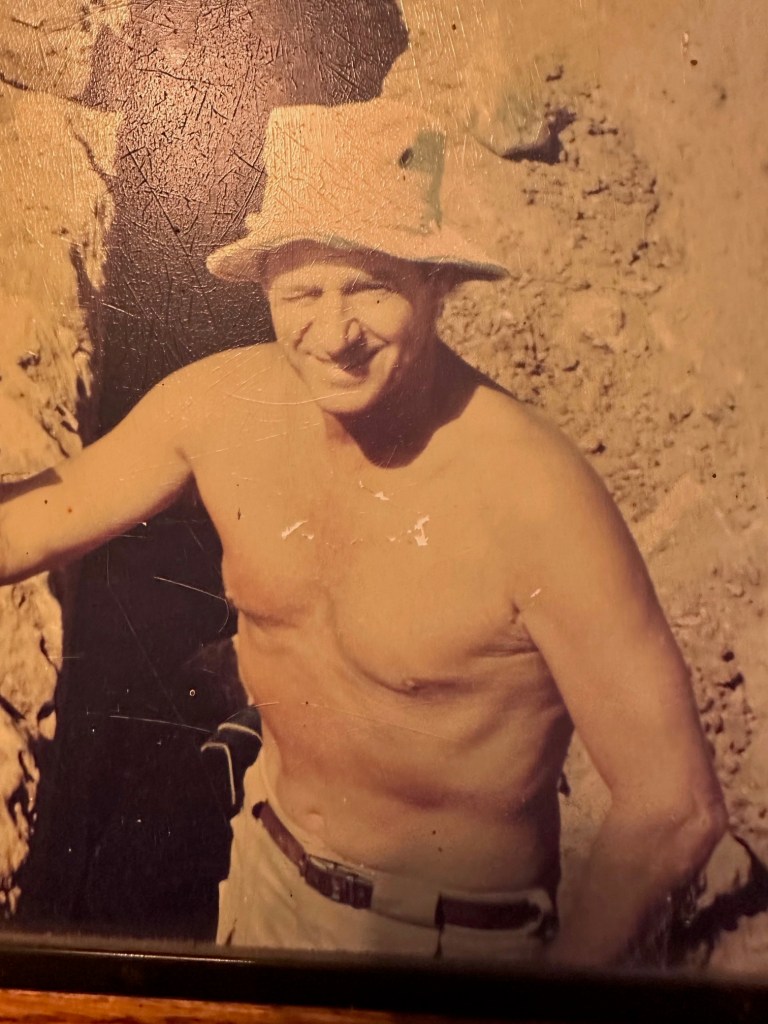
In the 1970s, deeply concerned about unchecked growth and development in Santa Barbara County, Frank entered public life. Running on a groundbreaking environmental and managed-growth platform — the first of its kind in the county — he was elected county supervisor. His election marked a turning point in local politics and permanently altered the trajectory of land-use and environmental policy in the region.
In 1978, Frank married the great love of his life, Amanda “Mandy” Clark. The two had first met a decade earlier when Mandy was a graduate student, and they were reacquainted in the early 1970s. Grounded in shared intellectual, cultural, and artistic interests, together they built a rich and expansive life. They purchased a home in Murs, France, in the Provence region, in the 1990s, spending half the year there until COVID hit.
Frank held a deep love of sailing, and he and Mandy would sail around the Mediterranean during their time in Europe. He even founded his own sailboat company — largely, as he would jokingly admit, for tax write-offs — promising to deliver sailboats anywhere in the world. He had greater success teaching courses on ancient mariners and maritime history.
Frank is the father of three children: Frank J. Frost III; Esmé Eugenia Frost, who predeceased him in 1972; and Victoria Rufina Frost (Robert Blanchard). He is also survived by three generations of grandchildren. —Victoria Frost
My grandfather, Frank Frost, had five grandkids and five great-grandkids, plus three great-greats. Somewhere along the way he started signing his emails “Gramps.” With that much lineage, you might imagine a man softened by time.
His hugs were big. He kissed us on the cheek. He loved fiercely. But he was never cuddly. The word implies frailty. Implies softness. And he was never that. Not even at 96.
Instead, he gave us something else. His comfort was storytelling. His therapy was curiosity. His intimacy was knowledge. That is how he loved, not by shrinking himself down to us, but by inviting us up into a larger world.
When I was about 12, I wanted to visit him and Mandy in France. He told me I could come, but only if I learned French first. So, I took private lessons for a couple of months. Unfortunately, I am not him. He spoke five languages. I learned how to ask where the bathroom was.
I flew to France anyway. Alone.
When he picked me up, the first thing he did was take me to a restaurant and make me order for him and Mandy. I did my best. We survived.
Later on that trip, he drove me to Aix-en-Provence, to a large French mall. He handed me some cash and said, “I will meet you back here in two hours.”
No cell phone. Definitely no French. Just a 12-year-old’s desire to shop.
That was his version of care. He believed you did not become capable by being protected. You became capable by being trusted. He did not wait for me to be ready. He sent me out, and trusted I would become so.
Another time, he and Mandy drove all the way up to Northern California to pick me up from summer camp, way up in the Trinity Alps, where you can see Mount Shasta in the distance. I had not packed. He was in a rush. So, he helped me pack by crumpling my clothes and shoving them into my bag, insisting this was the superior method. He was a veteran. He knew better. But his watch had other things in mind.
We rushed and rushed and rushed, driving for hours to what he called his favorite pit stop along the way. I half expected a glitzy restaurant with farm-to-table roasted rabbit. Instead, we arrived at a hole-in-the-wall truck stop diner in King City with early hours, at the time the only place without a drive-through for miles around.
He liked that the locals gathered there; he liked that it was rusty; he liked that it probably held lots of stories.
This was a man who flew first class, drank the best wines, ate the finest meats, and drove the cheapest Toyota on the lot. Everything was manual, including the windows.
Grandpa lived at the highest levels and spent freely where it mattered. But he was never precious about the parts that did not matter. Luxury, to him, was a tool, never the point. Living was the point.
And then there was the bookstore.
There was a difficult moment for my family when we were children, and he came to pick up my brother and me. He did not explain much. He did not ask questions. He took us straight to Chaucer’s Books. He placed us in the children’s section and walked away.
After a while, I went looking for him, half expecting him to be nearby, watching over us. Instead, I found him sitting on the floor in the aisles, paging through books.
It took me years to understand that he had not taken us there for us. He took us there for him.
That was how he regulated. That was how he stayed upright in the world. And that was what he shared with us, not answers, but a way through.
Cuddles? Nah. Stretching the binding of a fresh, new book? Therapy.
And yet. For all the ways he resisted softness, there were moments when his tenderness surfaced, quietly, unmistakably.
When my daughter was born, I called my grandpa to tell him the news. He asked how I was. He asked if she was healthy. And then he asked her name. I asked if we could use his late daughter’s name, Esmé.
There was a long pause.
And then he said, very simply, “This is the first time I have heard that name and cried happy tears.”


Frank Frost and his great-granddaughter Esme | Credit: Courtesy
That moment mattered to me not because it was sentimental, but because it showed me something essential. That even a man who was not cuddly held his family at the very center of his life. Love did not always look like softness with him, it looked like steadiness, lineage, and the adventure of always moving forward.
He did not hold us close to keep us safe; he sent us out so we could live. He believed that knowledge was care, and that stories were love. And that the greatest inheritance he gave us was the courage to step out into the world, and the curiosity to make sense of it ourselves.
That was his gift to us. —Alex Frost


You must be logged in to post a comment.