

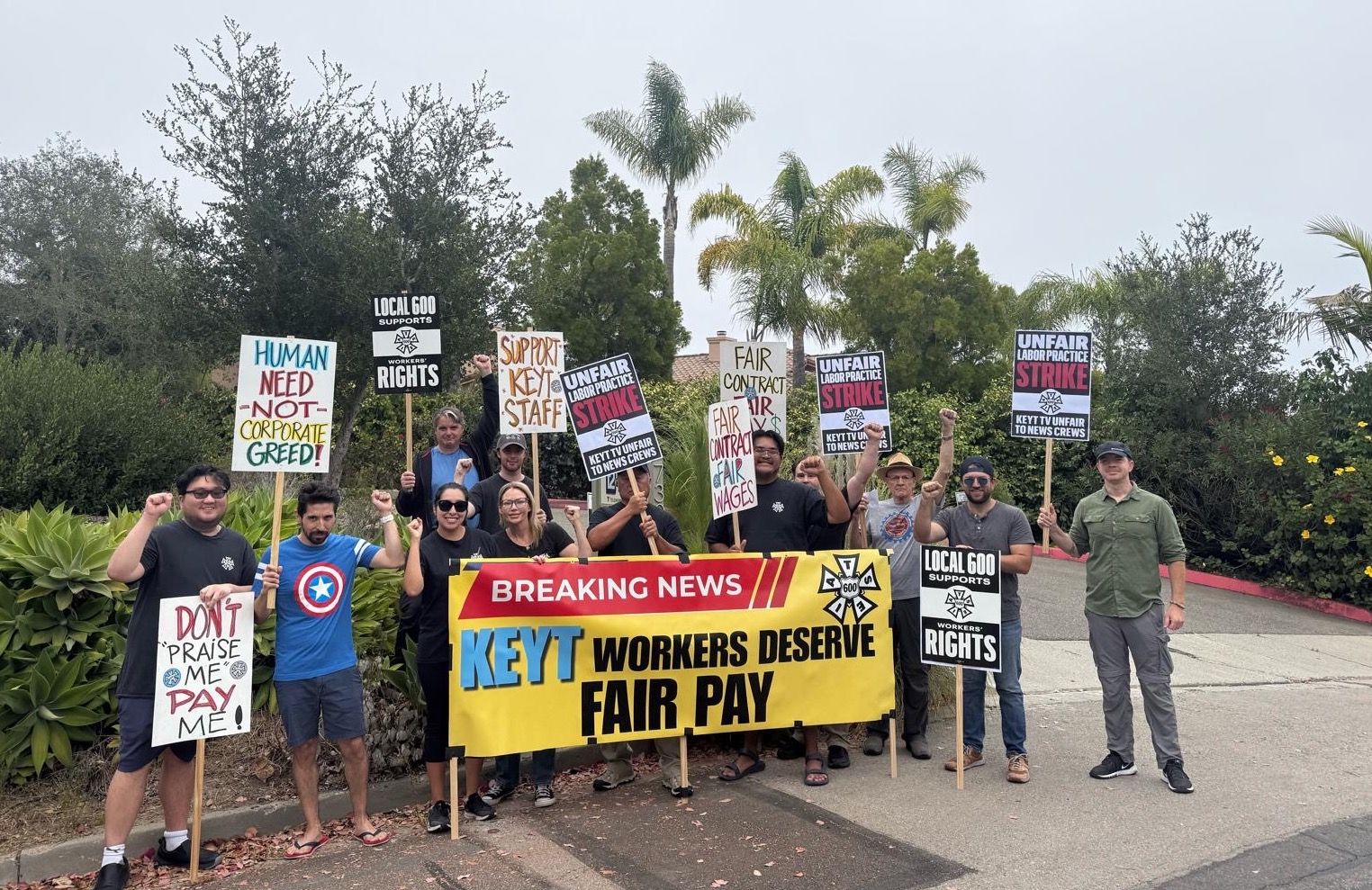
On Wednesday August 5, viewers across the Central Coast turned on their TVs for another edition of Your News Channel’s Morning News. Only this time, they weren’t greeted by Andie Lopez-Bornet and Joey Vergilis. Instead, they were left watching local coverage from our ownership group’s station in Palm Springs, hundreds of miles away.
Understandably, our newsroom received numerous emails and phone calls, paired with a wave of local media coverage. Everyone asking the same question: Why did KEYT staff sign-off on the same day as Fiesta Pequeña?
Before I explain why, I want to walk you through what it’s like to air a newscast.
When you turn on your TV, every show you watch is produced by a dedicated team of reporters, videographers, producers, editors, and directors. It requires a full day of preparation, making sure scripts are written, stories are fact-checked, and video is gathered and edited; all while being ready to pivot to breaking news at any time.
Our schedules are all over the place. KEYT has shows on every day of the week, requiring our staff to work early mornings and late nights, on top of weekends and holidays.
Everyone at KEYT understands the sacrifices this career requires. Even on our hardest days, we would still rather be here than anywhere else. We chose this life because we recognize the importance of local journalism. We truly love what we do.
But that love doesn’t pay the bills.
According to MIT’s cost-of-living calculator, the average adult needs a living wage of $35 an hour to live comfortably in Santa Barbara County. When we talk to the public about our jobs, they’re shocked to find out most of our staff make less than $40,000 per year. Even some of our coworkers you see on TV work second jobs just to get by.
This economic reality puts us all on a timeline. Employees at the station are routinely priced out of our own coverage area and forced to find new jobs. It’s caused intense turnover with little room for newsroom growth.
We’ve seen roughly a dozen people leave in the last two years, with management keeping essential positions unfilled. From Santa Maria to Paso Robles, we only have two dedicated reporters for that whole region. We have no producers, reporters or photographers for the weekend shows. Our remaining workers are stuck doing the jobs of multiple people, leading to high expectations and consistent burnout.
But no group is more negatively impacted than the public. When wildfires break out, we have viewers that rely on us for evacuation orders. When our neighbors go missing, we make sure the public knows who to look out for. Every year our staff comes together for noble causes like the News Channel 12 Turkey Drive and the Unity Shoppe Telethon, because we recognize that the strongest communities protect one another.
As much as we love our jobs, these issues must be addressed. That’s why we voted to unionize back in November 2024. Like any fight for change, a healthy bit of compromise was expected, which we were happy to abide by.
Our priorities include raising our base pay to at least $23/hour, adding staffing minimums, and expanding our bereavement leave. We’ve already negotiated an A.I. clause that changed our workplace for the better and protected job security.
But after a year-and-a-half of negotiations, our parent company News-Press & Gazette (NPG) has refused to budge on our proposals while actively bargaining in bad faith.
Since negotiations started, our station has spent a considerable amount on investments like an automatic gate, new equipment for our control room, and an office renovation for the sales department. And that’s not even including the multiple vacant positions which may be freeing up space on the ledger.
While infrastructure changes are important, the human beings that do this work need to be prioritized.
NPG even went as far as proposing a wage grid featuring less pay than we already make during negotiations. They didn’t even bother to look up California’s minimum wage law before presenting it to us. Their blatant disrespect speaks for itself.
Throughout this process, our union members have been incredibly patient. A big reason why we didn’t go on strike sooner is because we didn’t want to put our direct managers — people we like, respect, and work alongside every day — in the impossible position of working without us. We held out until we had no other options.
But we’re coming up on two years since our vote, and we’re all fed up. NPG is clearly trying to wear us down, hoping that we throw in the towel. But we refuse to back down.
Without notable progress in the negotiations, we will have to continue striking and the public will once again be left without the quality journalism they have come to expect.
Working in news often means holding people in power accountable for their actions. As journalists, it’s time we hold our corporate ownership to that same standard.

