

On August 19, a federal judge in Los Angeles ruled that Sable Offshore Corp. can keep pumping oil through the same pipeline that ruptured at Refugio State Beach in 2015. The state asked the court to pause the operation and was turned down. It also lost its authority to regulate the pipeline at all. The judge, however, did find that Sable broke the federal consent decree governing that pipeline and fined the company $1.45 million. Sable sold about 38,000 barrels a day this summer. For them, the fine is just the cost of doing business, but we should all be worried about what comes next.
This ruling landed in the middle of a much larger and more serious effort. The Department of the Interior has proposed a new five-year program that would open federal waters along the entire California coast to oil leasing, with as many as six Pacific lease sales beginning in 2027. Before that program was even finalized, the Bureau of Ocean Energy Management began asking oil companies which blocks of ocean off Central and Southern California they would like to bid on. No new federal oil leases have been sold off our coast since 1984.
This Santa Barbara Coast Is Sacred Chumash Territory
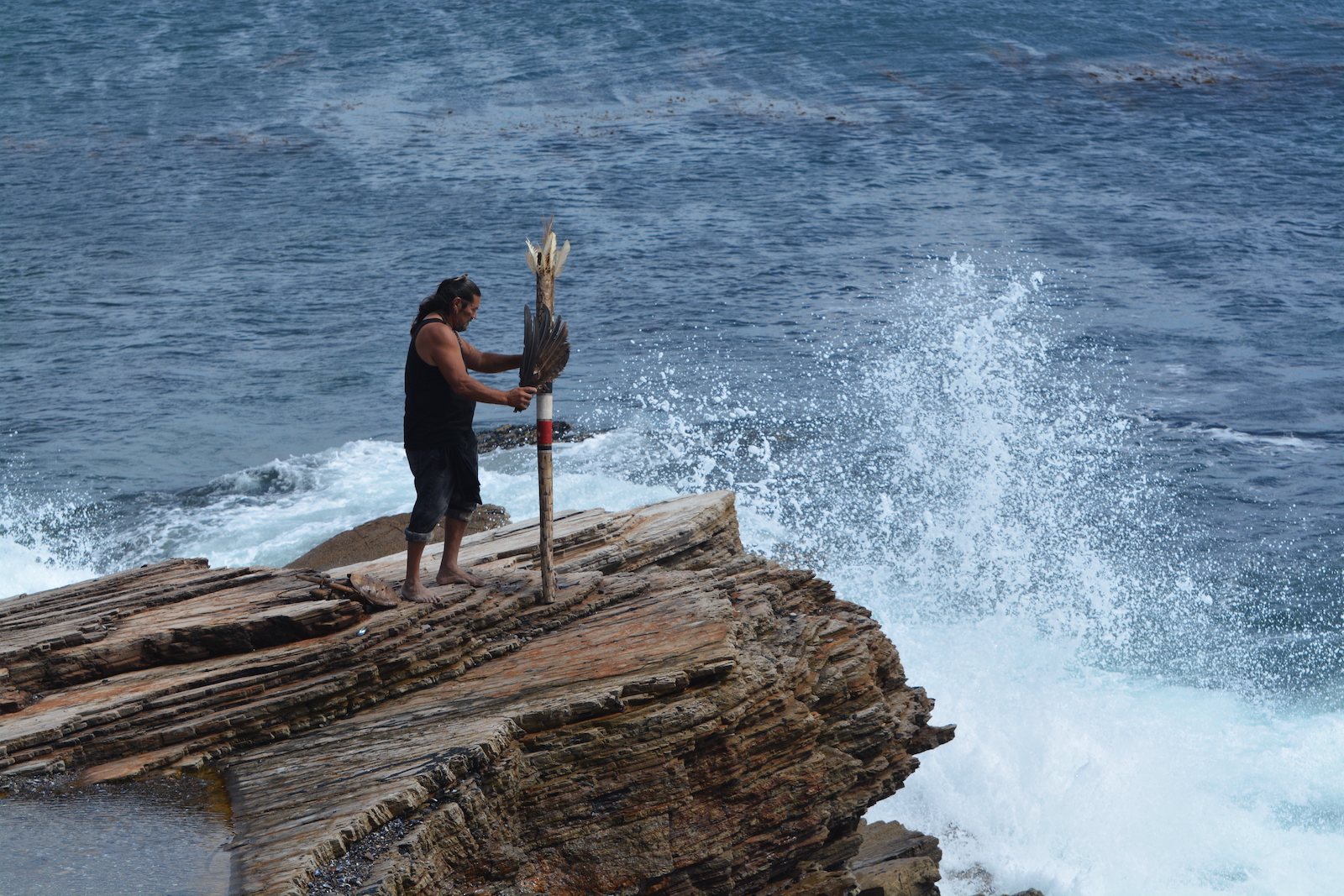
Being Chumash means being in kinship with nature. That means our responsibility is to the land and the water. The Santa Barbara Channel is not just scenery to our people. Our ancestors crossed it in tomols, traditional plank canoes sewn and sealed by hand, trading between coastal villages and Chumash islands for thousands of years before any settlers arrived. Point Conception is Humqaq, the Western Gate, where the spirits of our dead depart. There are many village sites, burial places, and ceremonial grounds along this coastline. It is sacred.
The kelp forests, the marine life, the ocean water itself, these are our relatives. They are the reason our cultural lifeways continue to exist. Our elders taught us that our regions form us and we must protect our home. I have spent more than three decades in collaborative protection of our coast through ceremony, tribal community gatherings, public education, and in hearings and courtrooms, following in the footsteps of the elders and ancestors who came before us. Wishtoyo Foundation and our tribe, the Coastal Band of the Chumash Nation, participated early on in the drafting of the Tribal Marine Protected Areas in traditional Chumash waters and helped build the campaign for the Chumash Heritage National Marine Sanctuary, the first of its kind initiated by Indigenous people.
We must continue working together with agencies and the community to protect our Mother Ocean, especially in the face of the political actions of this current gilded White House. Once again, our coast is being jeopardized by big oil, backed by the support of a federal government that has oppressed Native voices since its inception and has consistently prioritized extracting resources over environmental preservation. Where is our voice in this matter? The Chumash have stewarded these waters for millennia, and our people must have a say in what happens to them. After all, protecting Chumash cultural resources is protecting the environment.
History Speaks for Itself
In 1969, three million gallons of oil stained our coastline and helped start the modern environmental movement. In 2015, a corroded pipe at Refugio spilled 142,000 gallons, roughly 21,000 of them into the ocean, killing thousands of birds and marine animals, and closing 138 square miles of fisheries. The oil is gone from the sand, but it still exists in the sediment and within our memories. The infrastructure being revived is the same infrastructure that caused this last disaster. What has changed is that state agencies with the local knowledge to inspect the pipeline, and the political accountability to say no, are being denied, their voices oppressed, and their hands tied.
Together, We Can Be Heard
August’s federal ruling was a real setback, but it was not the end. California has appealed to the Ninth Circuit Court of Appeals. The Coastal Commission has issued cease and desist and restoration orders and levied an $18 million penalty, among the largest in its history. Meanwhile the five-year leasing program is not final. There will be further comment periods. Every city council, tribal council, county board, harbor district, and fishing association on our coast can be heard, and over the past decade, more than a hundred of them have already gone on record against drilling.
I am not asking anyone to oppose what’s happening because it’s a Chumash issue. I am asking everyone to notice who is being heard, and who is not, when the future of a shared coastline is being decided. Our people have stewarded these waters for more than 10,000 years without polluting them. So, we will keep going to court. We will keep speaking at hearings. We will keep doing what we were taught to do, which is to take care of our home, whether or not Washington recognizes why doing so is essential for our very existence.
Mati Waiya is founder and executive director of Wishtoyo Foundation and chairman of the Coastal Band of the Chumash Nation.

