

S.B. Museum of Art Appoints Chicago Curator as New Head
Larry J. Feinberg brings expertise in Renaissance and 19th century painting.

Larry J. Feinberg brings expertise in Renaissance and 19th century painting.
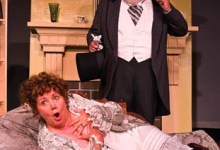
1)Because you love Oscar Wilde and/or Monty Python. Evan Smith’s comedy is full of droll reflections, absurd inferences, and hysterically proper Victoriana-even though it was only written a few years ago. Smith is a master at constructing convincing scenarios that take his characters-and the audience-all the way over the top.
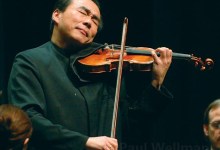
Although it may seem incongruous to imagine, Wolfgang Amadeus Mozart was an excellent violinist and wrote his violin concertos in much the same spirit as his piano concertos-as works that could be conducted by the soloist.
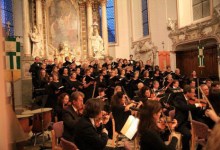
In this 60th anniversary year of the Santa Barbara Choral Society (SBCS), rehearsals, like much of the music it sings, are sacred. Wednesday night attendance is required of every one of SBCS’s 126 current members, and director Jo Anne Wasserman insists there be no fooling around. Got something to say to your neighbor in the Tenor 2 section?

This fascinating and ambitious production takes as its point of departure the life of atomic scientist J. Robert Oppenheimer, a powerfully conflicted figure who played a key role in the development of the bombs that were dropped on Hiroshima and Nagasaki.
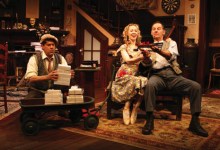
You Can’t Take It with You, in many ways the greatest of all screwball comedies, gets a stellar production from director Jenny Sullivan and a wonderful, Rubicon record-setting cast of 19. Robin Gammell is outstanding as Grandpa Martin Vanderhof, the paterfamilias of a zany extended family living on New York’s Upper West Side in the late 1930s.

The Arlington crowd for this concert was so enthusiastic that there was a moment at the start of the second encore when it seemed as though it would not let Queen Latifah leave the building.

In honor of Veterans Day, the Santa Barbara Symphony offered this evening of works by American composers. Tai Williams was the guest soloist, and she made a splendid job of Samuel Barber’s lusty, romantic Violin Concerto, Op. 14.

An excellent production of one of world literature’s most provocative plays, Thomas Whitaker’s Woyzeck is great both as theater and as food for thought about drama’s most enduring yet volatile genre, the tragedy.

Few plays have as tangled a history as Woyzeck, the acclaimed Late Romantic masterpiece by tragically short-lived playwright and agitator Georg B¼chner. B¼chner packed about as much literature, philosophy, and risk-taking into his 23 years as it is possible to imagine. And Woyzeck is the distillation of his precocious genius, a play that anticipates Brecht and Marx by decades while fulfilling the German Romantic quest for a drama to rival Shakespeare’s force, tension, and propulsion.

