

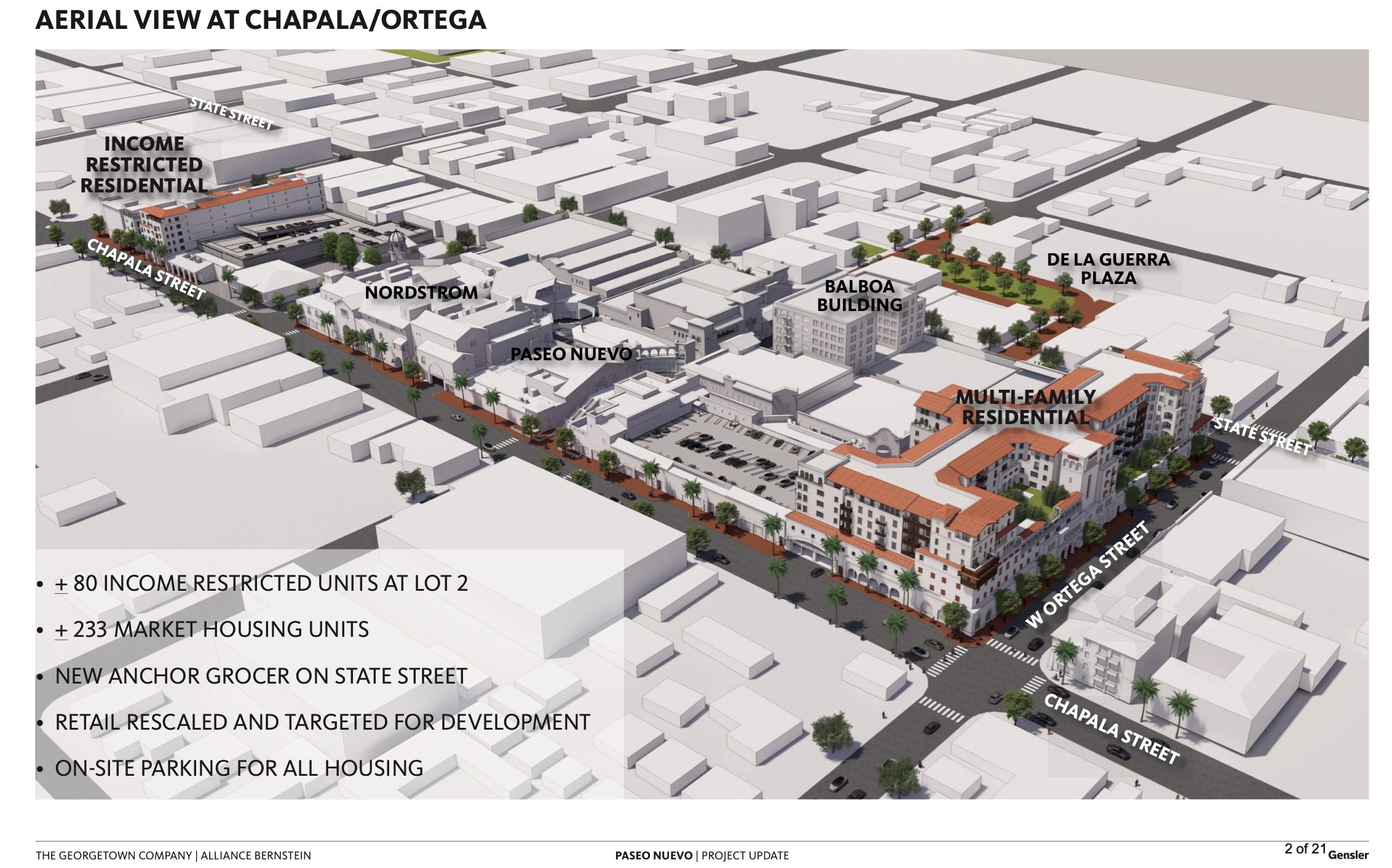
The Paseo Nuevo redevelopment is a major public-private investment and a once-in-a-generation opportunity to reshape the heart of our city. As one of Santa Barbara’s most valuable public assets, this site deserves careful consideration that aligns with our housing, climate, and cultural goals while reflecting the community we are today and aspire to be.
As a longtime resident, former staff member, and professional planner, I support transforming this space into housing, public-serving uses, and a vibrant civic space that makes downtown more inclusive, resilient, and welcoming. But this transformation must be thoughtful, transparent, and grounded in community priorities, not rushed under pressure from private interests. I would add that as a city planner, I did not work on this project.
Reconsidering Land Use and Height
The proposal includes a large gym and grocery store and exceeds the City Charter’s 60-foot height limit. Exceeding the height limit for a gym, in particular, raises serious concerns. The gym and grocery store together account for 35,000 square feet, which is significant area. On a site of this importance on City-owned land, we must be thoughtful about the uses and their long-term value to the community.
While a grocery store downtown could be transformative, it must reflect community needs. A permanent farmers market, public market hall, or a modest grocer like Trader Joe’s would do far more to serve residents, support local agriculture, and activate the area daily than a high-end fitness chain or boutique market geared toward an exclusive clientele.
We must be careful not to promote luxury and exclusivity, especially in the civic heart of downtown. Tenants and land uses should enhance public life and economic vitality while remaining accessible to the broader community — not just the well-resourced few. Redevelopment should welcome and reflect the diversity of Santa Barbara, and support the people who give this place its character: artists, families, workers, and small businesses.
The 1972 Charter height limits may at times constrain good infill, especially where surrounded by taller historic structures, like the Balboa Building in Paseo Nuevo. But height should be a tool in service of public good — not simply a concession to maximize private development yield. If increased height is proposed, it should be for uses that clearly deliver lasting public benefit, such as affordable workforce housing – not premium amenities for the few.
In this case, the community is granting substantial benefits to the leaseholder — development rights on public land, a 75+ foot height allowance, and free use of a City-owned parking lot for housing. These are not routine entitlements. Such extraordinary concessions warrant extraordinary public return: significant affordable housing, meaningful civic uses, and long-term community value.
Maximizing Housing Potential
The proposed 80 affordable units are a start, but this site can and should deliver more. A target of at least 150 affordable units across all phases appears reasonable and necessary, particularly if total unit count increases. The recent reduction from 500 to 233 market-rate units suggests an opportunity to revisit the unit mix. Public land should be used to create more homes for those who need housing – not larger homes for those who don’t.
Smaller, more efficient units can better serve downtown workers, students, and seniors, while helping meet RHNA targets. Paseo Nuevo is exactly where housing belongs – downtown, near jobs, transit, and services – not on ecologically or culturally sensitive sites like 505 East Los Olivos.
Importantly, any affordable units gained through this agreement should not be transferable or used to fulfill inclusionary requirements elsewhere. If the public is providing land and entitlements to enable affordable housing, that benefit should be delivered and not watered down.
Ensuring Public Benefit and Civic Integrity
Any lease or land deal should include enforceable guarantees: affordability levels, delivery timelines, and clear milestones. These commitments must be binding, not aspirational.
The site’s existing community assets – such as the theater, gallery, and cinema – should be retained or reimagined, as they anchor and enrich downtown life and serve all ages. Similarly, circulation and design should strengthen links to Plaza de la Guerra and reflect a walkable, car-free vision consistent with community consensus.
Designing for Climate and Culture
This project should model climate-forward design with high-efficiency systems, drought-tolerant landscaping, and green infrastructure as the baseline expectation. Space should also be reserved for public art, cultural interpretation, and potentially public-facing City services that foster civic identity and connection.
This is a chance to leave future generations a downtown that is functional, beautiful, and equitable; and truly serves all of Santa Barbara.

