
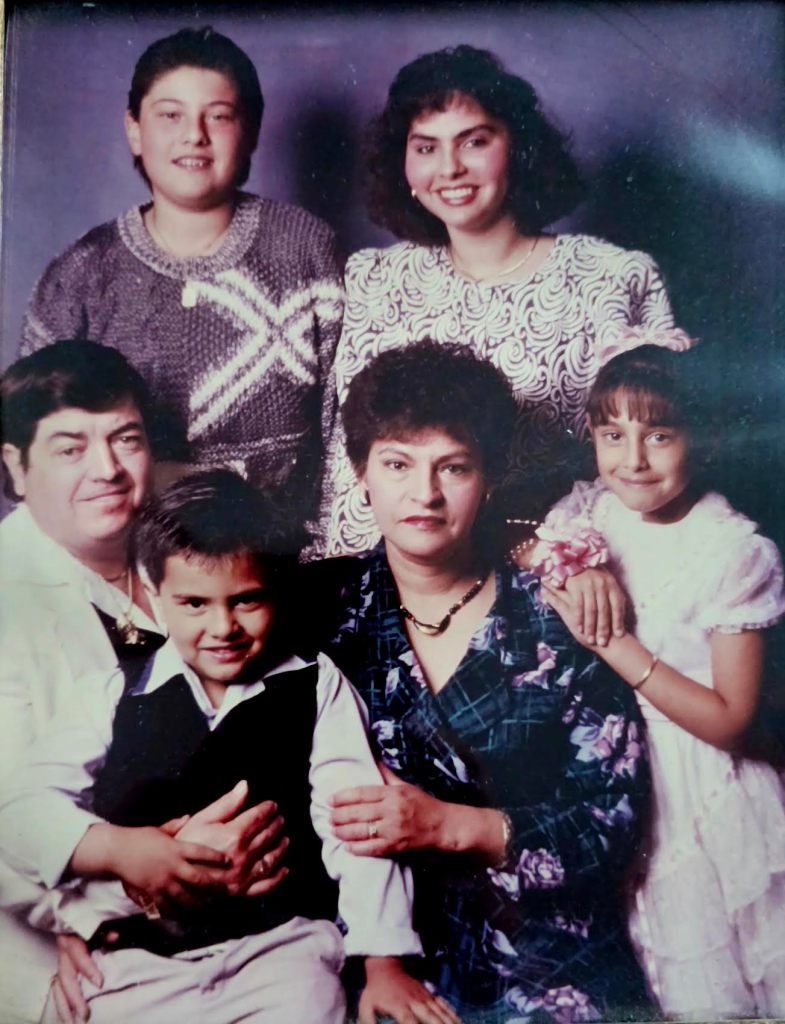
‘We Are Our Ancestors’
Hopes and Dreams’
Oscar Gutierrez Tells
His Family’s Story of
Immigrating to
Santa Barbara
By Oscar Gutierrez | August 14, 2025
The federal raids of Glass House Farms in Carpinteria and Camarillo on July 10 sparked a new level of awareness about the Trump administration’s “mass deportation agenda.” Armored military trucks and more than 50 uniformed federal agents with U.S. Immigrations and Customs Enforcement, Department of Homeland Security, and Border Patrol had shown up in Carpinteria, a coordinated effort to serve search warrants for evidence of possible immigration violations. Hundreds of residents came out to protest the operation, and in the chaotic standoff, the armed federal officers deployed flash-bangs, rubber pellets, and smoke grenades on the crowd, which included community members, legal observers, and local government representatives.
This week, Santa Barbara City Councilmember Oscar Gutierrez opens up about the Carpinteria raids, his own family’s immigration story, and what it means to be Mexican-American in 2025.
—Ryan P. Cruz
What happened in Carpinteria deeply struck me — the son of migrant farmworkers, a former Carpinteria city hall staffer, and now a Santa Barbara City Councilmember. Our communities have faced so much, especially with federal agencies overriding local authority, leaving many of us feeling powerless. But seeing local leaders and activists unite to push back gives me hope. While I may have limited power to stop it, I can still use my voice to honor my family’s struggle and sacrifice to live and thrive in this country.
The message hit home at the annual luncheon of the Democratic Women of Santa Barbara County, where Senator Cory Booker gave a powerful keynote. He sat alongside leaders like Congressmember Salud Carbajal, Senator Monique Limón, Assemblymember Gregg Hart, supervisors Laura Capps and Roy Lee, and Superintendent Susan Salcido. Seeing such a bold, diverse group filled me with pride.
The moment that stayed with me was Senator Booker’s words: “We are our ancestors’ hopes and dreams manifest.” It brought a flood of memories about my own family’s journey in this country.
‘Mexican Repatriation’
My mother’s family has Indigenous roots in what is now Texas, dating back before Spanish colonization. In the 1930s, during the so-called “Mexican Repatriation,” my U.S.-born great-grandparents and my grandmother were illegally deported along with an estimated 2 million Latinos — targeted simply for the color of their skin.
Even though my mother’s family were legal U.S. citizens, they were unaware that they did not have to go through the immigration process to claim their U.S. citizenship. They suffered through decades of stress and fear because of this.
After leaving Texas, my great-grandparents settled in Michoacán, where my grandmother met my grandfather. He later joined the Bracero Program, which brought Mexican farmworkers to the U.S. between 1942 and 1964 to fill wartime labor shortages. He died painfully from pesticide exposure in the fields, and my mother’s family was so poor they had to bury him in an unmarked community grave.
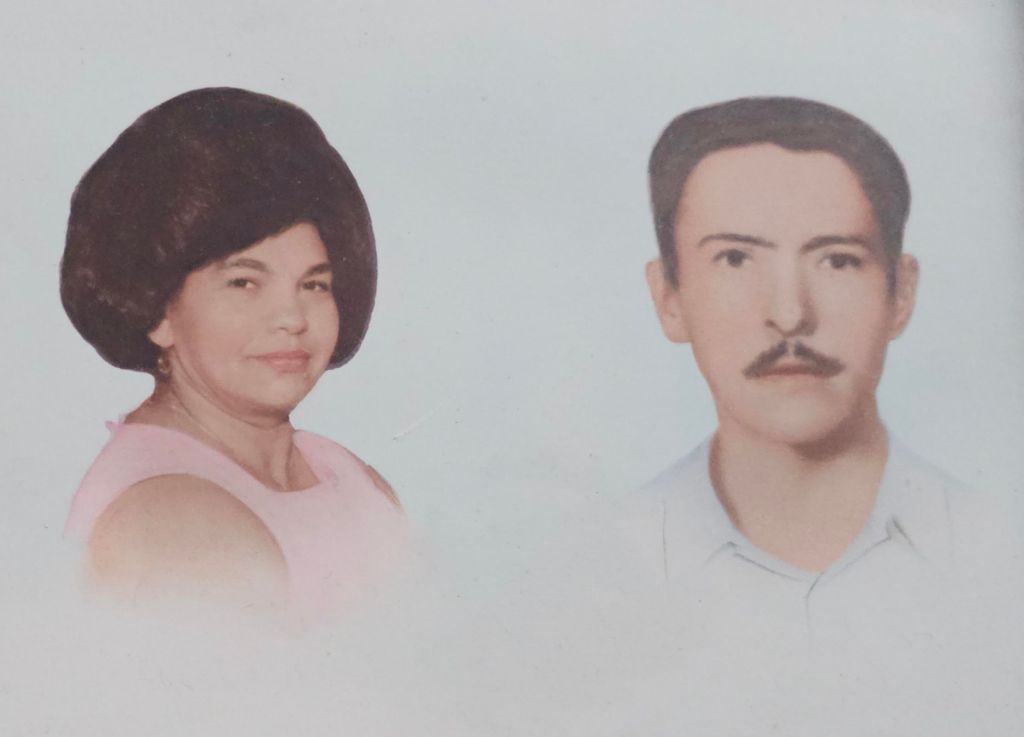
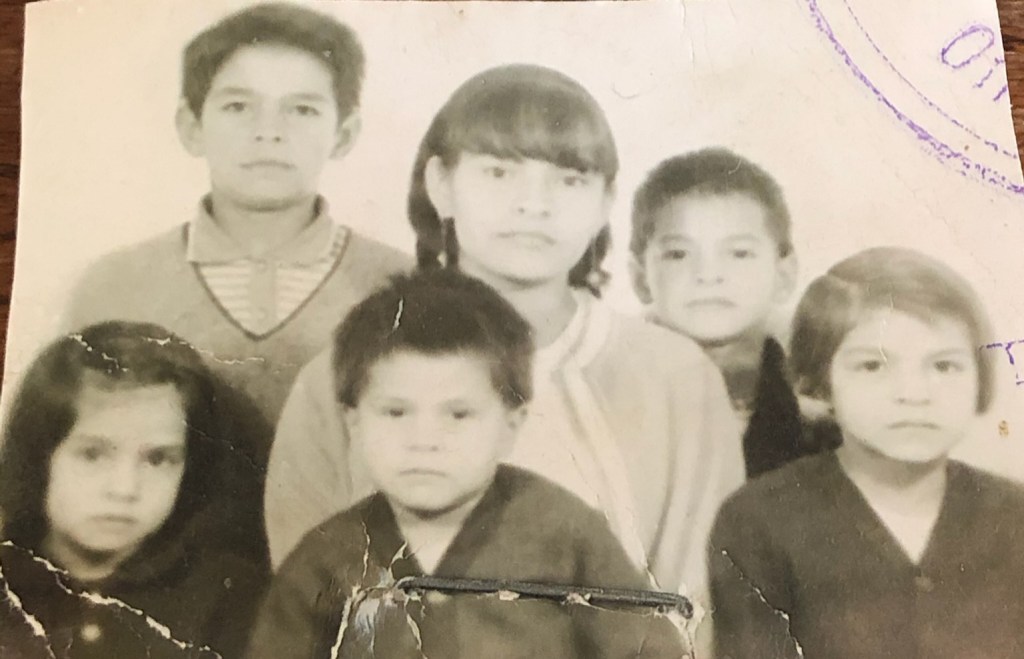
After my grandfather died in Mexico, my grandmother immigrated to California to support her children, but the money she sent never reached them. At 19, my mother took charge and got legal tourist visas for herself and seven of her younger siblings. They traveled from Michoacán to the U.S.–Mexico border.
When the bus reached the border, a border official ordered only my mother to get off. But she refused to leave her younger siblings behind, insisting they stay together since she was responsible for them and they had legal tourist visas. Frustrated, the official demanded the address where they were going, warning that Immigration would follow up. My mom, being honest, gave it to him. After he left the bus, she quietly prayed he’d lose the paper — and as the bus pulled away, she saw the wind blow it from his hand into a river.
Family Lore
This brings me to my father’s side of the family, who came from Spain and settled in Jalisco. Unlike my mother’s Indigenous roots, my father’s family were white Europeans who came to Mexico to colonize it for Spain and the Catholic Church.
Family lore says we’re blood relatives, through my grandmother, of San Toribio Romo, the Catholic patron saint of immigrants. He was a priest martyred during the Cristero War in the 1920s. My father used to say we have the blood of a saint pumping through our heart.
In 1969, after serving in the Mexican Army, my father came to the U.S. on a work visa at age 19 to work in the Goleta fields. He took on various jobs — janitor, construction, gardening — and was so committed to becoming a U.S. citizen that he repeatedly tried to enlist in the Army to serve in Vietnam. But his limited English held him back.
He used to tell a funny story about memorizing answers to recruiters’ questions. On his final attempt, he was thrown off by an unexpected question and confidently replied, “Yes, sir!” The recruiter burst out laughing and denied him again. Later, he’d joke that the question was probably, “Are you a homosexual?” This could have actually happened, since the military excluded gay people from serving until 1993.
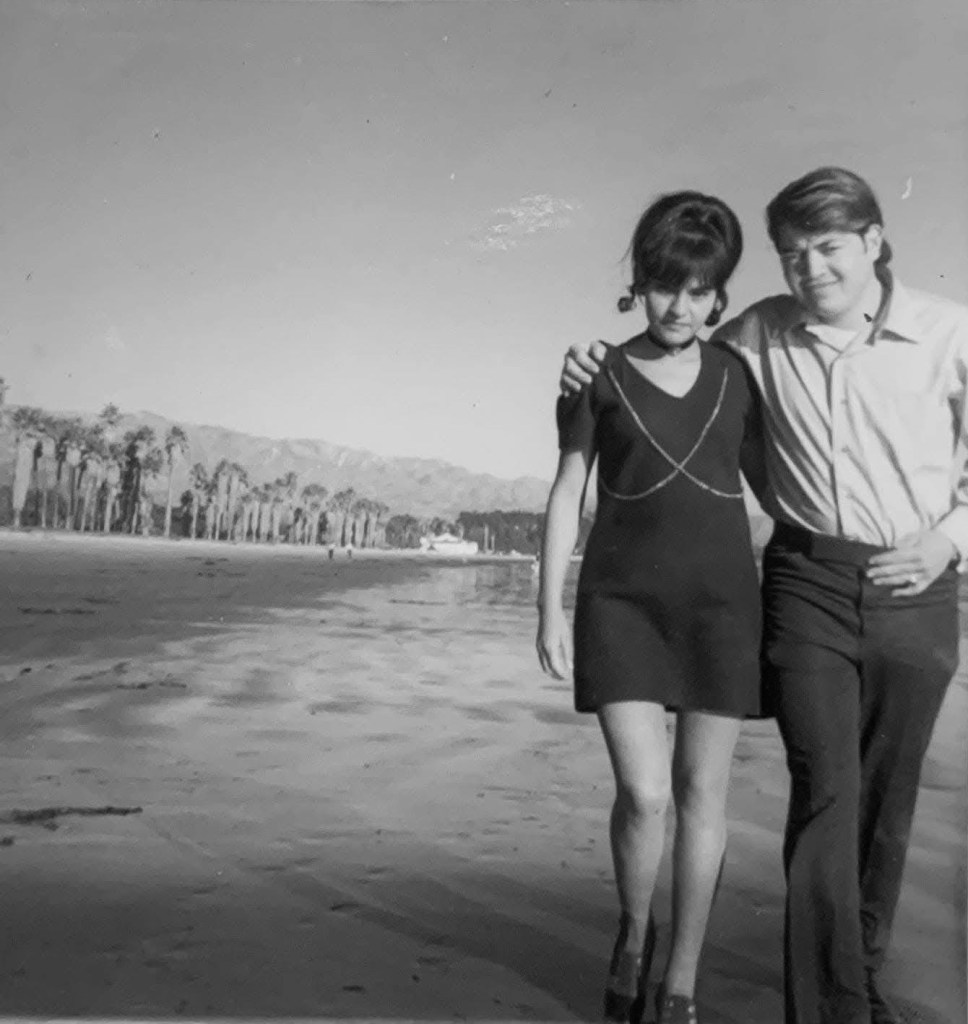
My parents met at a party hosted by the future founders of La Casa de la Raza when they were both 19. Neither had formal schooling or spoke English, and they arrived during a time of anti-war protests, an oil spill, Isla Vista riots, and immigration raids. Still, they agreed Santa Barbara was the best place to raise a family and build a life.
La Migra Again
My mom’s second encounter with Immigration came in 1970, right after giving birth to my oldest sister. Hospital staff told her that immigration officers had come for her, but they refused to let them take her while she was recovering. If not for the staff at Cottage Hospital, she likely would’ve been deported right after giving birth.
My mom’s third encounter with Immigration happened while walking an elderly woman home on Chapala Street. Officers stopped her, asked for papers, and detained her when she had none — driving her to the Mexican consulate in Oxnard. In the lobby, people were giving fake names of Mexican celebrities, causing laughter. But, true to form, my mom gave her real name and information. She was able to obtain a temporary work visa then.
My mom’s fourth encounter with Immigration happened during a raid at the Miramar Hotel, where she worked as a maid. She hid until the officials left. My mom believes that one of her coworkers who were detained during the raid reported her to immigration officers. They gave her a choice: Be deported alone or return to Mexico with her young daughter.
Unfortunately, my father was in Mexico at this time, delivering money he had earned to his parents. My mom took my 5-year-old sister to Tijuana to get residency paperwork to come back. My sister acted as translator and impressed the officials so much one even offered to adopt her and have her live on his ranch with his ponies and bunnies — but my sister refused, loving her parents too much.
Interestingly enough, my father never had encounters with Immigration. He did have the proper paperwork for the most part, but he claimed that being white with green eyes helped him avoid being deported more than proper paperwork.
Team U.S.A.
My parents were Team U.S.A., always rooting for American teams. When I asked my mom why she sacrificed so much to live here, she said growing up in Mexico was harsh: Twelve people lived in an adobe hut with no water, power, or gas, amid violence in the streets and break-ins at home. Since immigrating to the U.S., she’d never gone hungry, always felt safe, always had a job, and always had money — things she never experienced in Mexico.
Until I was 5, I lived in fear that my parents might be taken from me. That year they were finally able to become U.S. citizens. I remember teaching them the Pledge of Allegiance since I said it daily in kindergarten. That memory stays with me whenever I recite the pledge at council meetings, graduations, or on the Fourth of July.
My family is not picture-postcard perfect. I have family who have served years in prison, but I also have family who have honorably served years in our military and law enforcement. Even though my parents never went to school, all of my siblings and I have graduated from college and now have careers in public service.
My mother and father always worked at least two jobs to be able to provide for us here in Santa Barbara, working 14-hour days, seven days a week. My mother became disabled. My father died at 60 early in the morning while getting ready to head to work at UC Santa Barbara. When I graduated with honors from UCSB, it happened to fall on Father’s Day. To honor him, I wrote my dad’s name on my announcement cards, which caused my entire family to sob.
Even though my parents worked manual labor jobs, they were able to own a few homes in Santa Barbara and rent them out to teachers, nurses, military service members, and fellow immigrants because they believed in paying it forward so that others could achieve the American dream as well.
To echo back to Cory Booker’s words about being our ancestors’ dreams manifest, California’s booming economy relies on immigrant labor, and Santa Barbara’s long-standing tourism industry celebrates our culture. Nothing should hold us back from living freely.
I urge everyone to participate in community events, support local businesses, and be loud and proud — I’ll be there with you. My term ends in 2028, and I encourage you to get involved politically. If you’ve thought about running for office or know someone who should, now is the time to continue making our ancestors’ dreams into realities.



You must be logged in to post a comment.