
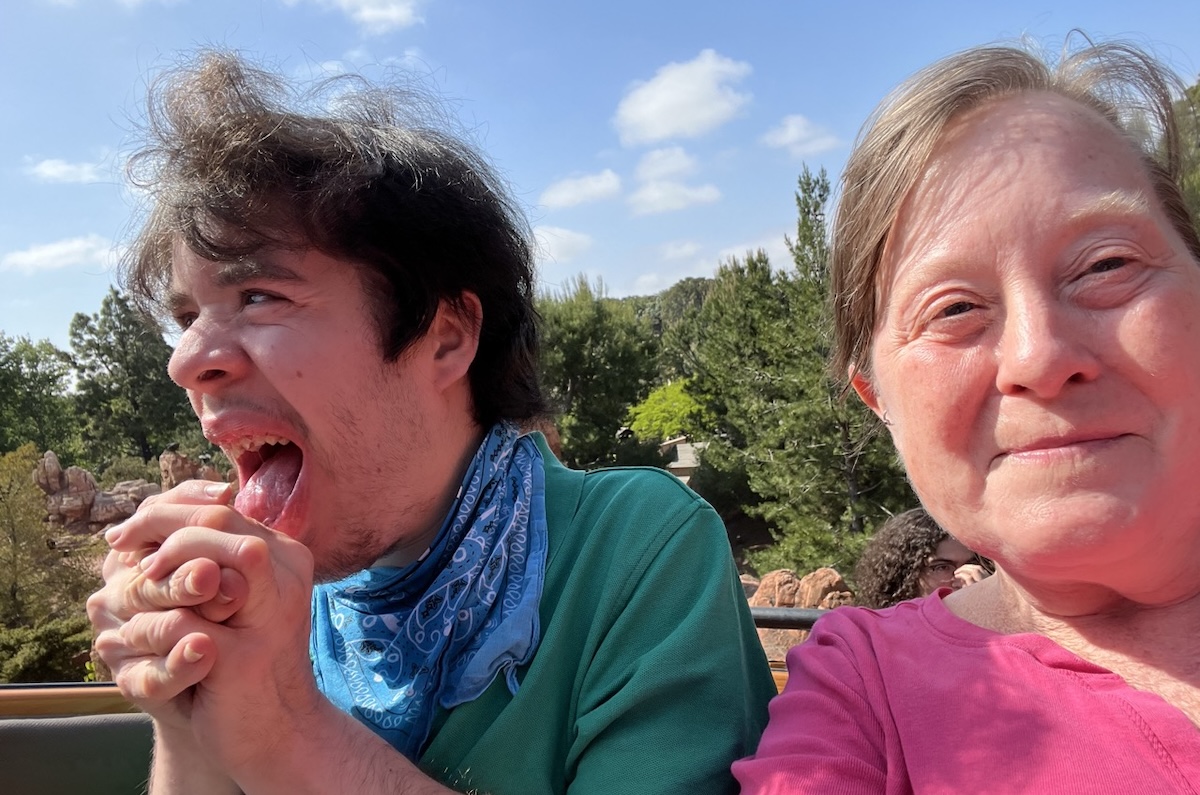
Mary Bouldin, 58, works about 140 hours a week taking care of her 24-year-old son, Tom. It’s a round-the-clock job due to Tom’s extremely rare genetic condition, called Coffin-Siris Syndrome, which involves seizures, incontinence, an inability to chew and feed himself, and an inability to speak. She gets no days off. He can walk, she says, “but it’s always in the wrong direction.”

“Tom’s a sweet guy, but he has absolutely no sense of self-preservation. He wanders; he gets up at all hours; if he can escape, he will. It’s ongoing home security,” Bouldin told the Independent. “I’ve been waiting 24 years to sleep through the night.”
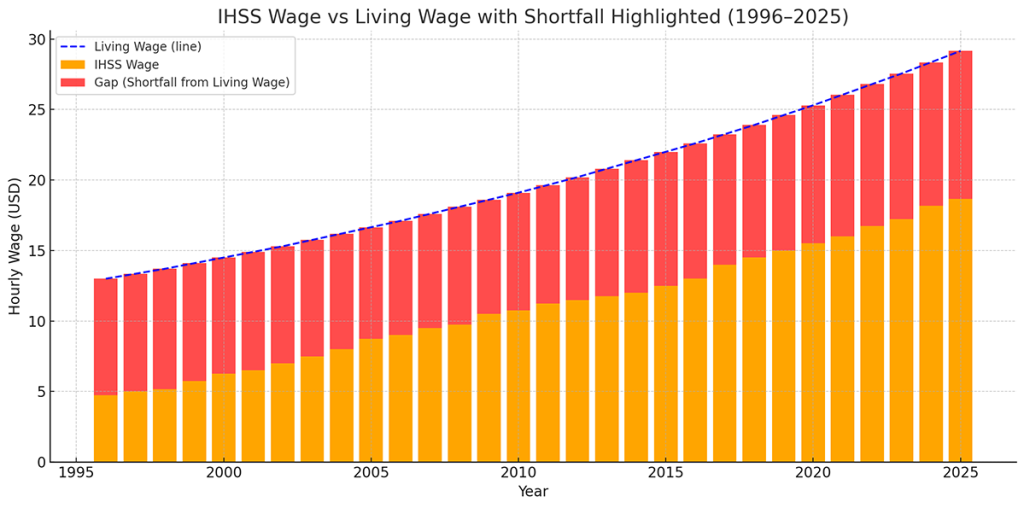
Through a state program called In-Home Support Services (IHSS), Bouldin can take care of Tom as a full-time job, logging the max of 70 hours a week at $18.67 an hour. But considering the various expenses related to Tom’s care, on top of living costs in Santa Barbara, it’s challenging. And it’s not enough, she says. Right now, she and other IHSS caregivers in Santa Barbara County are advocating for higher wages amid their ongoing contract negotiations.
Bouldin was compassionate, witty, and bright as she spoke about the constant struggle that’s involved in being a full-time caregiver to her son. She lives with her ex-husband’s 96-year-old mother, because she can’t afford to live elsewhere, especially since Tom has a habit of banging on walls. She was a graphic designer, a job she loved, but she quit to “do what was best for my son,” she said. Caregivers deal with higher rates of mental illness and stress, and shorter life spans, she noted. “We’re giving up a lot for a job that really kind of sucks,” she said. “Morally, I came to a crossroads in my life, and I made the choice I could live with. But it has a lot of downsides.”
In-Home Supportive Services caregivers — often loved ones who are “hired” to be caregivers by their disabled, elderly, or blind family members and compensated through Medicaid and the county — are claiming a “wage crisis” in Santa Barbara County.
These caregivers, represented by the UDW (United Domestic Workers of America) union, are calling on the Board of Supervisors to raise their wages to $22 an hour to be more in line with Santa Barbara’s cost of living.
Bouldin said that IHSS caregivers in neighboring counties, such as Ventura, make about $1-$3 more an hour, but face lower costs of living.
Since they are in labor negotiations, Board Chair Laura Capps could not say much about the issue, but said she is “incredibly moved” by the work IHSS caregivers are doing. In Santa Barbara County, there are roughly 4,800 participants in the program, which is 100 more people than the county government’s combined workforce.
“These are wonderfully compassionate, hardworking people,” Capps said. “I have so much respect for them, and I know the rest of the board feels the same.”
She called Mary Bouldin’s hard work and dedication “admirable.”
“We do use other counties’ wages as a benchmark,” she noted. “It’s a logical and loving job … Of course, I want to make sure she [Mary] is compensated — I shouldn’t go further because we are in negotiations — but there’s pressure from all sides.”
The first wage contract meeting was Tuesday, and their second will be next week in Santa Maria on August 24.
“I can explain it to the Board of Supervisors as much as I want, but until you spend a week with Tom, you don’t get it,” Bouldin said.







You must be logged in to post a comment.