

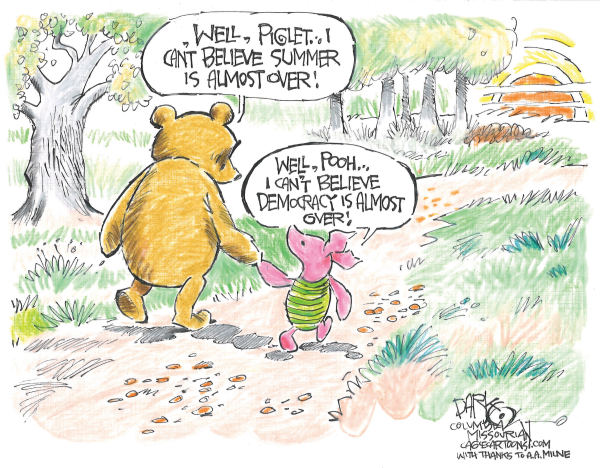
On August 3, 2025, Texas Democrats walked out of the statehouse to block a Republican redistricting plan backed by Governor Greg Abbott at the urging of President Trump. GOP leaders sought to push through new maps five years ahead of schedule, aiming to secure five additional safe seats in the next election.
When I was asked if the walkout by Democrats was ethical, my first response was clear: while constitutional and legally permissible, it wasn’t ethical.
Why?
However noble the cause, walking out isn’t about strengthening fairness in the vote — it’s about stopping the machinery of government. And once you justify shutting it down for your side, you open the door for the other side to do the same. That’s not principle; that’s escalation.
In a democracy already strained by division and distrust, repeating tactics that undermine public confidence only fuels the cynicism that politics is nothing more than power plays.
Ethics isn’t about whether you can do something; it’s about whether you should. Walking out may have blocked a vote, but it also raised the deeper question of whether paralyzing government can ever be consistent with democratic responsibility. At the time, I believed it could not.
But then the ground shifted.
In the days after the Texas walkout, the Trump-aligned GOP began advancing similar redistricting schemes in other states, echoing Abbott’s playbook. What first looked like a single abuse of power turned out to be part of a coordinated effort to stack the deck and silence opposition.
Gerrymandering, of course, has a long history in American politics. The term dates back to 1812, when Massachusetts Governor Elbridge Gerry approved a district map so distorted that one district resembled a salamander — hence “Gerry-mander.” Both parties have engaged in it for so long that it’s become the norm. But what makes today different is the scale and coordination: legislatures working together to entrench power and weaken voters’ choices for a decade or more.
And that’s when ethics came back into sharper focus. What I had first judged as an opportunistic maneuver by Texas Democrats revealed itself as something more: a moral stand against a larger assault on democracy. Their purpose was not to deny government functioning for its own sake, but to defend the rules that protect all of us.
That’s the difference between legality and ethics. Legality answers to the Constitution. Ethics answers to conscience. Sometimes the two align. Sometimes they don’t.
Politics thrives on maneuver. Ethics demands consistency. It requires us to measure every action by whether it defends or diminishes democracy. Some will continue to call the walkout theater. But when one party manipulates the rules so it cannot lose, resistance is not theater — it’s duty. You don’t abandon principle because it’s inconvenient. You hold to it because it’s essential.
On August 20, the Texas House approved the new congressional map, followed by the Senate two days later, sending it to Governor Abbott, who signed it into law this morning.
But here’s the harder truth: when democracy itself is under attack, neutrality is not an option. You either defend it, or you surrender it.
Jim Lichtman has written and spoken on ethics for more than 30 years. His weekly commentaries can be found on: ItsEthicsStupid.com.

