
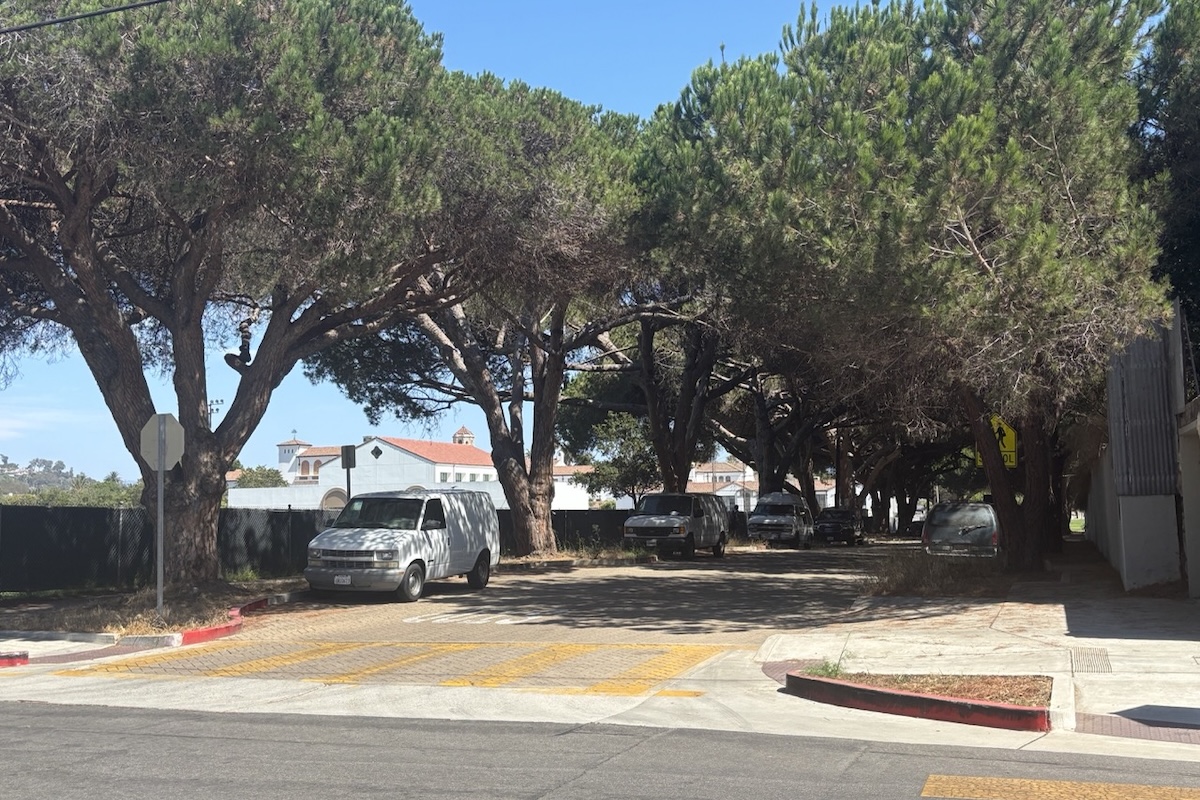
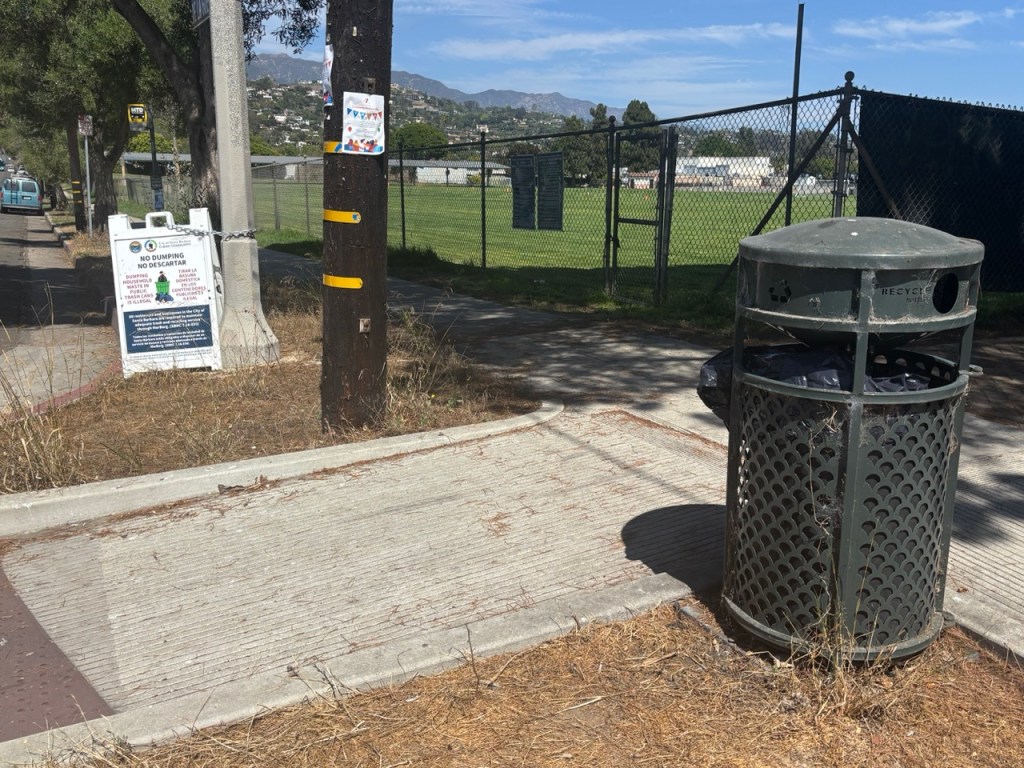
The Downtown Club, which offers after-school activities for boys and girls on Santa Barbara’s Eastside, is battling “blight” on the streets around the building — where children, on their way to and from school, walk past overflowing trash cans, overgrown weeds, and people living in vehicles.
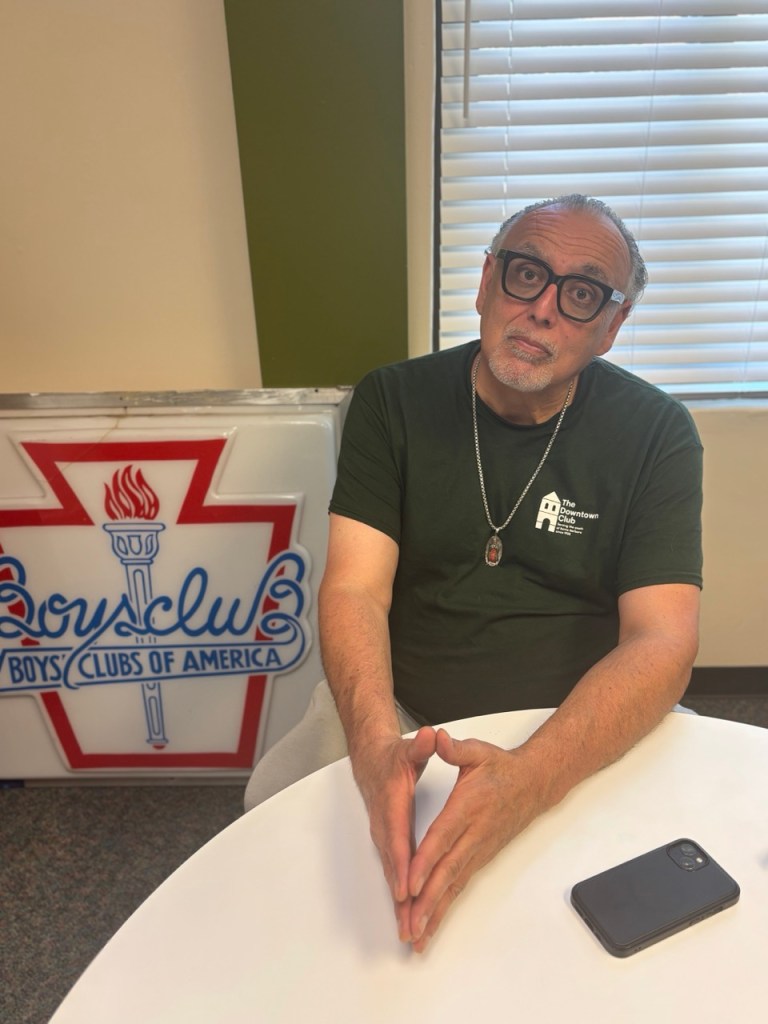
Mark Alvarado, the Downtown Club’s executive director, worries for their young members. “I have 2nd- and 3rd-graders running around here,” he said. “When you’re here every day, it’s a little different than just hearing about it.” For Alvarado, it’s personal. It’s where he grew up, too.
Parents are concerned, he added, and even staff members feel uneasy. The area in question sits at a crossroads between Santa Barbara High School, the junior high, Providence School, and the Downtown Club.
Alvarado shared a photo appearing to show someone defecating in broad daylight on a street corner. Neighbors also reported a strong smell of urine wafting from the streets.
“It’s a public health and safety issue,” Alvarado said. He added that some of the girls who walk to the club or high school have been catcalled. “It’s not a matter of if something is gonna happen, but when.”
Residents like Alejandro Sosa, who lives on North Quarantina Street, say their families feel unsafe. Sosa’s daughters, who are 16 and 17, do not feel comfortable leaving the door open when they hang out at home. “Some guys park around the house and live there. After that, they leave trash behind,” he said.
But the situation is complex. “There’s also the issue of people living in their cars — people who are struggling,” Alvarado said. “We need a humane approach. It’s not just about sending in bulldozers.”
A majority of those living in vehicles are not dangerous, just priced out of Santa Barbara’s expensive housing market.
“Over the years, we haven’t really had the safety issues that people are usually concerned about,” noted Kristine Schwarz, the executive director of New Beginnings, a nonprofit organization dedicated to helping unhoused people in Santa Barbara.
She said most vehicle dwellers are longtime Santa Barbara residents who hit hard times — such as a divorce or rising rents.
“Over 40 percent of the people we work with are employed full-time,” Schwarz said. “They just can’t afford housing.”
She added that most people know where they can park without disrupting businesses or risking citations. Many park near their work, doctors, schools, or former homes, hoping to “quietly stay safe until they can secure housing.”
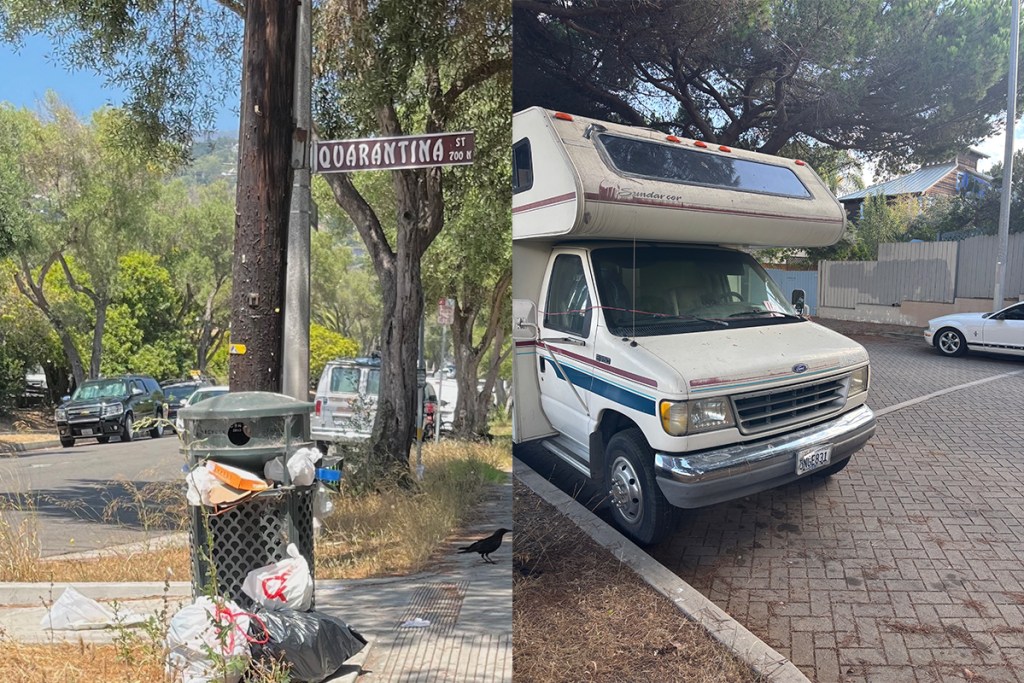
Challenges often arise, especially with oversized vehicles such as RVs, which often stay parked long-term. One, on North Quarantina, had three parking tickets on the hood. These vehicles are usually older with mechanical issues, but act as a “security blanket” keeping their owners from living on the streets. Giving up the cars — even for housing — can be a terrifying risk.
New Beginnings routinely engages people in the area, offering help with vehicle repairs and housing placement. Their Safe Parking Program provides 31 designated lots where people can park safely overnight. They’ve also offered daytime parking for oversized vehicles, though some lots have been lost to redevelopment — like the new police station downtown.
Still, Schwarz said that in just one year, her organization helped 150 people move directly from the street into housing, including some living near the Downtown Club.
Despite this progress, Alvarado questioned why an area with so many children hasn’t seen more investment from the City. Last year, Alvarado and other community leaders met with city officials to voice their concerns — but the problems, he said, persist.
City officials say they’ve taken action. After last year’s community meeting, efforts included increasing law enforcement, facilitating outreach, and using funding from the California Encampment Resolution Fund program to target vehicular encampments in six priority regions across the city, including the Eastside.
New Beginnings enrolled 101 individuals in the program—72 of whom were living in vehicles. Of those, 45 were placed in interim housing and 53 in permanent housing, according to City Administrator Kelly McAdoo.
“The safety and well-being of our youth and their families are of the utmost importance to us,” City Administrator Kelly McAdoo said. “This is also my neighborhood, so I did observe — and reported to the city team — the re-population of the vehicular homeless population in this neighborhood at the start of the summer.”
More effort and resources — including litter removal, law enforcement response, vegetation management, and New Beginnings’ outreach — are being rededicated now that school is in session, she assured.
Still, the challenges are growing. The 2025 Point-in-Time Count found 381 people living in vehicles citywide — an increase of 80 from the year before. Many neighborhoods are reporting similar concerns, and the city is looking into how to adequately address them.
“I don’t want this to be a situation where we’re hating on the city,” Alvarado said. “I want to work together. This isn’t just to get on a soapbox and bellyache. This is about our kids; this is about our neighborhood, our community.”








You must be logged in to post a comment.