
A Vaquero Who Taught
Max Schott About Horses and Life
The Portrait of a Hero in a Novel
About Memory and Adolescence
Introduction by Bob Blaisdell | Excerpts by Max Schott
October 2, 2025
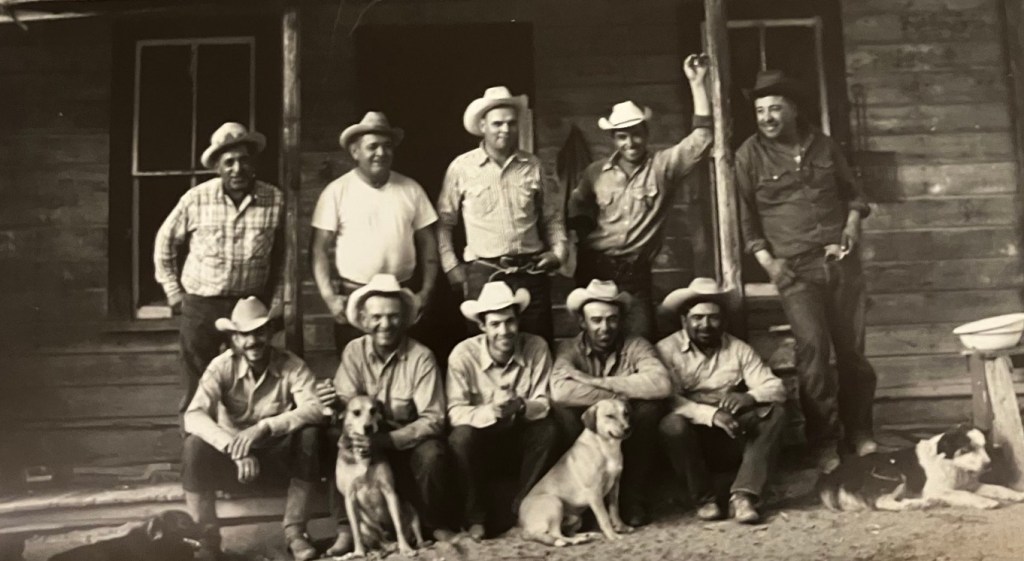
“The story is not just what you remember but how it comes to mind,” wrote Max Schott in 2014. He was in the midst of trying to recall and imagine his adolescence and his hero of that time, the cowboy and horse trainer Ralph Camarillo.
Schott is a writer, born in Los Angeles in 1935, who has lived in Santa Barbara for the last six decades. After working as a horse trainer in Klamath Falls, Oregon, and in the Santa Ynez Valley, he attended graduate school in English at UCSB. He taught literature at UCSB’s College of Creative Studies from the late 1960s into the early 2000s, where I was his student.
He has published four books: the novels Murphy’s Romance and Ben and the collections of stories Up Where I Used to Live and Keeping Warm. From 1991 to 1992, he had a biweekly column in the Independent, “A Writer’s Notebook,” the concluding two pieces being his remembrances of Ralph Camarillo. Twenty years later, he began a novel based on this man, of whom he said: “If God had tailor-made a hero for me — he would have been a great deal like Ralph.”
Schott was 15 the summer he began working alongside Camarillo for Katherine (“Katy”) Schott Peake, Max’s aunt, and the painter Channing Peake on their horse and cattle ranch. Rancho Jabali, or the Peake Ranch, as most people called it, is on the Old Santa Rosa Road south of the Santa Ynez River — 1,200 acres. These days, part of it is still a ranch, part a winery.
Ralph Camarillo was a member of the San Juan Capistrano Band of Mission Indians. Born in 1917, he worked on ranches in Santa Barbara County from the 1940s and into the 1950s before moving to Oakdale in the San Joaquin Valley. “He was a cowboy — more than an ordinary cowboy — striking to look at — tall, well made — but packing some extra pounds — thick-barreled, heavy-chested — graceful like an athlete,” remembers Schott.
While Ralph was coaching his own young sons in various rodeo competitions, he also introduced Max to the art of training horses and how to rope. (Leo and Jerold Camarillo became international rodeo stars.)
In 2013, after the onset of Parkinson’s, Schott found himself wondering again about Ralph: “In my old age, things come back to me — people, scenes, animals too for that matter,” he wrote. “Nothing is new probably but I think of things I haven’t thought of in a long while and sometimes think of them in new ways. All this would be reason enough to write if I need a reason.”
While at first, he found his recollections were disappointingly fragmentary, they soon sparked his imagination, which stirred further memories and eventually fictional re-creations: “If you are old and you tell a story,” Schott realized in the writing, “it will be at least partly a story about being old.”
Schott wrote almost every day from September 2013 to August 2014 at the downtown public library or at the now-defunct Coffee Cat on Anacapa Street. He reflected at the time: “I can hardly put together a coherent sentence — feels good even so to write. I’m old and unwell — not just in body but in mind — I think I can’t produce a coherent thought — and if I can I cannot sustain it — still I’d like to go on writing — pictures still come into my mind as thoughts and questions.” He wondered on June 14, 2015: “Why out of the many things I might write about I choose to write about Ralph — I have no clear idea except that I was at the beginning of manhood then.”
In February 2025, Schott gave me (by then, I had become his literary executor and longtime friend) the 1,200-page manuscript of “Ralph” that he had worked on in 2013-2015. All of the pages are on loose-leafed, lined paper. Almost all are dated. Although I have inserted some periods in the quotations above, in the manuscript Schott scarcely uses periods or commas; he uses dashes and line breaks — and yet the sense is firm and clear. The manuscript I have typed up of 60,000 words is more or less complete, just as Schott composed it.
In the excerpts that follow, I try to show Schott as the writer at work as he extends his imagination and rediscovers and recreates memories, particularly the episode in which Ralph introduces the 15-year-old Max to the art of training a horse. Schott reminds himself and us, his readers: “This was a long time ago. When I put words in our mouths I am writing fiction — I remember only the gist of what we said. Sometimes not even that.”
—Bob Blaisdell
Ralph: Excerpts from a novel by Max Schott
How little I remember, really
What conclusions are there to draw — none —
What am I up to, then?
He is alive in my mind
A foolish banal way to put it no doubt but he is present there — in my mind — everything in my mind is in danger of slipping away — is certain to slip away —
When I catch it for a moment — turn it into words on paper —
If I find pleasure in this odd process what harm is there in that?
*
He was a hero to me partly for the wrong reasons
For superficial reasons
He was Indian a horseman
A rodeo cowboy and so on —
But for deeper reasons too
*
His lessons lodged themselves in my mind — in my bones and nerves and muscles too —
Not just in my mind — training a horse —
In reacting to a horse
In finding the right reaction to the actions
On a horse
There is usually not time to think
Most of the time not time to think
But it’s slow terribly slow —
A horse acts nervous and muscles read you
React instantly
For better or worse
At night lying in bed you relive it — suffer over it —
*
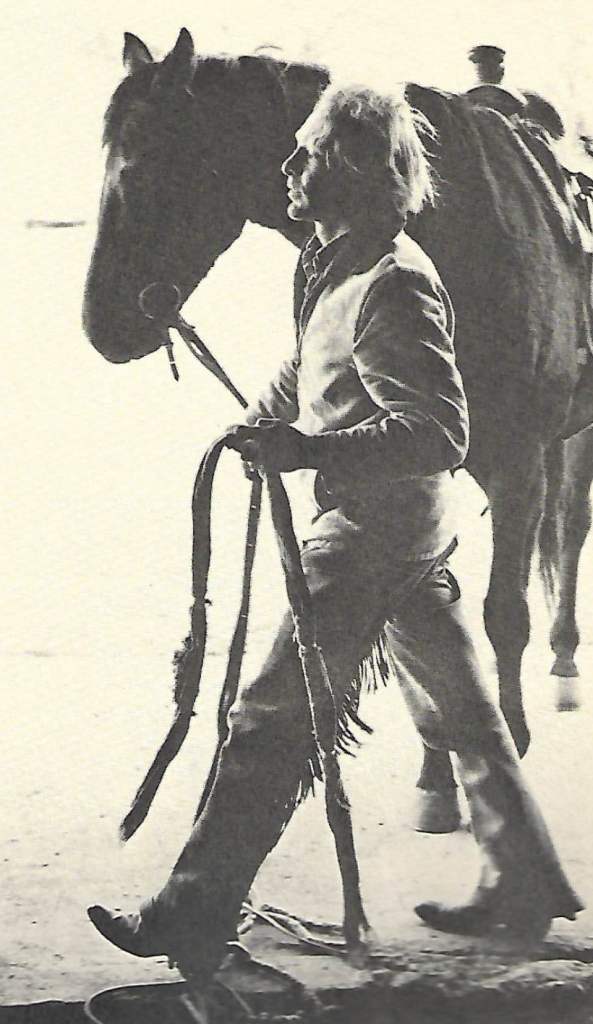
We were at [a rodeo] jackpot roping once and a man came up behind him and said “Indio!”
A day or two later resting in the shade of the barn — I asked him “Are you an Indian?”
He laughed. Me sure a Mission Indian — from down by San Juan Capistrano —
My parents had a little piece of land there and a home
My mother still does — big enough to feed a few goats and chickens
Pilar’s from there too —
Mission Indians they called us since “San Juan Capistrano Band of Mission Indians” is too long to say —
[Note: The present-day name of the tribe to which Ralph and his wife, Pilar, belonged is the Juaneño Band of Mission Indians, Acjachemen Nation. See jbmian.com.]
The memories are dear to me — deep & clear — and always on the verge of disappearing. I always hope the words – even the wrong words will make the memories more vivid and more lasting —
*
My fear was her [Ginger the mare’s] fear —
I could feel her the pounding of her heart beating against my leg —
I could feel through the leather skirt of the saddle I could feel her heart pounding against my leg —
She can’t run very fast in this deep sand — that’s why we brought her down here [i.e., to the Santa Ynez River] — If she wants to try to run away let her — just pull her into a circle a little at a time — Watch and don’t pull too hard — if she’s trying to run straight and you pull her too hard into a circle she’ll tangle her legs up and fall —
What do I do then?
Whatever you can — Get up and shake yourself off I guess — and count your arms and legs — take an inventory — see if your arms and legs are working — If they are you gather the reins together and get back on —
I was a serious boy and he was beginning to take a measure of that — touched by it —
I was afraid of course but that ought to be beside the point —
If he had said to me “Are you afraid?” I would have lied —
*
I pulled her head to the left — the reins were made especially for young untrained horses — fat many stranded braids of mohair soft to the touch easy to pull hard on —
The woods rushed towards me —
Became not just woods but low branched willow thickets —
Frightened
I slid my left hand down the left rein and pulled as hard as I could —
The trees with all their many lethal looking branches came rushing at me — frightened I slid my left hand down the reins and pulled —
She twisted her neck again resisting — this time I kept pulling pulled hard —
Her head bent gradually — her head at the neck gave way
The pressure of the rein —
Against her will turned — her legs
Her whole body in accordance with her will —
Made a gallant stab at running on — could not be done —
Some law of physics must explain it —
Tangled her legs and stumbled —
Her face plowed onto the ground —
What happened was exactly what Ralph said would happen
Struggling to keep her feet under —
I let the reins go slack
I gave her head too late —
Flung well free of her — lighter and flung forward out of the saddle — through the air fell well beyond her
(Her momentum stopped mine started) I was flying 10 or 12 feet through the air and landed on my hands and knees —Face plowed into the sand — her nose plowed into the sand — all the struggle went out of her for a moment — and she lay flat on her side —
One of those long moments — after a moment when the whole world earth and sky seem out of order —
(Those long moments when you don’t know where you are or what is happening) —
I shook my head and got to my feet —
All of the struggle went out of her for a moment — and she lay flat on her side
Not much different from the way it looks now when as an old man I struggle and fall
Mare got her front legs under her — thrust her head forward pushed with her hind legs and struggled to her feet
Ralph urged his gelding up next to her reached down took hold of the reins — though she didn’t look inclined to run off —
I might have seen Ralph’s face
From fear (if I were dead or even badly injured my uncle would not like it) —
Relieved and then angry —
Anger and self blame
(Send a boy to do a man’s job) —
That’s what happens when you let a boy do a man’s job —
My seriousness about the job we were trying to do made him smile —
I was alive and evidently unhurt —
Well you did just what I said not to — No harm done though no harm done — brush some of the sand off her face and get back on — if you want to — Now ride beside me — In a little while she’ll like the company — She’ll be all right — Good little mare she means no harm — Tomorrow we’ll ride her up in the hills — The same kind of country she was raised in — see how she likes that — You’ve done a good job so far — you don’t know enough to know it but you have — You don’t know enough to know
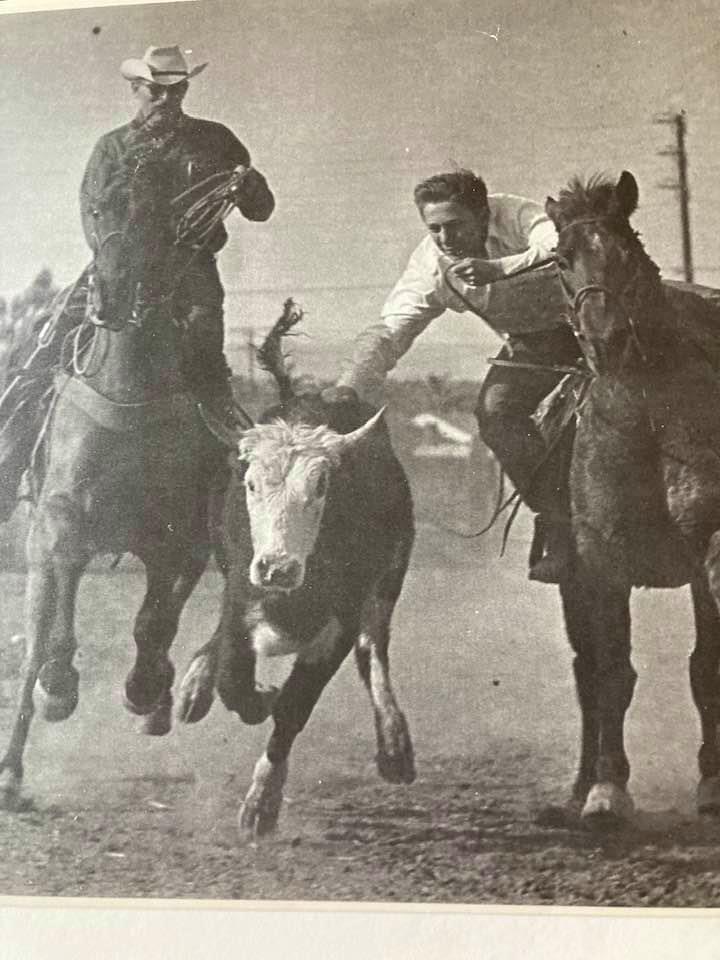
I understood that it was possible or even necessary to do both things at once — to watch her every second and at the same time to relax —
Sink down into the saddle as if it were an easy chair
*
Nearly everything a man knows is forgotten —
If he is an ordinary man — still he wants to remember
*
Who knows why you remember one thing and not another — or why some memories sparse at first fill themselves in become more detailed more vivid —
I thought my memories would sort themselves into some sort of order —
By thinking this through I would come to some conclusion – but this hasn’t happened –
The only thing I can think of to do is to begin at the beginning —
To take the advice that any child would give me — to start at the beginning —
*
In thinking about Ralph I don’t want to make him into a better man than he was —
Or a worse —
He was a hero to me — a hero and not an angel —
I want to see him clearly —
Look back and see him more clearly than I do —
*
I’m trying to say that this has to be part of the story too —
The story is not just what you remember but how it comes to mind —
*
How would you describe what you do produce?
A good question — I’m not quite sure
Already losing the thread of what I want to say —
Not to put too fine a point on it — more sick than well –
In lucid intervals I go on writing what I’m writing — easier to go on than to stop —
The pictures keep coming (stirred or spurred by God knows what)
The urge to make sense of them —


You must be logged in to post a comment.