
Making an Impression
Santa Barbara Museum of Art Director Amada Cruz
Believes Art Is for Everyone
By Ella Heydenfeldt | Photos by Ingrid Bostrom
October 23, 2025
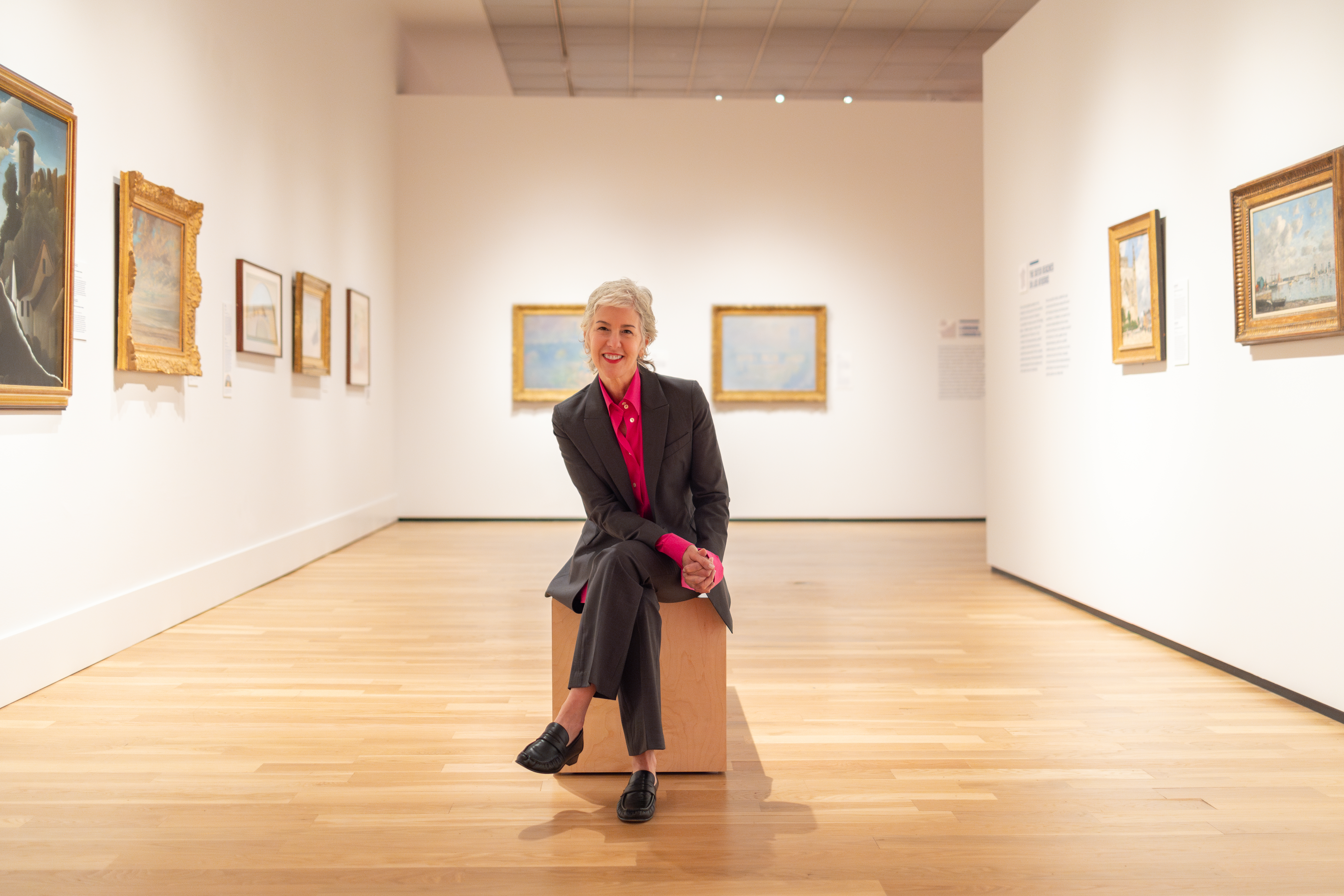
When Amada Cruz talks about museums, she doesn’t describe cold temples of silence or dusty sanctuaries of high culture. She talks about energy. Surprise. Relationships.
“How do you create energy in a static space?” she asks.
That may seem impossible in rooms where the art on the walls does not move, but in her view, a gallery should never feel still. It should echo with shockwaves of surprise.
As the Robert and Mercedes Eichholz Director and CEO of the Santa Barbara Museum of Art (SBMA), Cruz is part of a small but growing group of women running major museums. That isn’t the point of her work, but it is a hard aspect to miss. “These women! They’re powerhouses,” said Cynthia Wornham, a communications consultant for SBMA.
Cruz’s path to museum leadership has been less about pedigree and more about a lifelong intimacy with art. Born in Havana, Cuba, she left with her family at nine months old, eventually settling in Chicago after a few months in Miami. Her father, a lawyer and professor in Cuba, was offered a rare opportunity to restart his career in the U.S. He worked during the day, went to law school at night, and eventually passed the bar. “I still remember the raucous party when he passed the exam,” Cruz said. Her mother worked as a translator, and the family was supported by a vibrant Cuban émigré community and relatives in Chicago. “Even though it must have been a struggle, we all remember that time fondly.
“Culture was a very important part of my life growing up,” she tells me. “I danced ballet, I read a lot, and I was taken to museums at a very young age.”
She didn’t initially plan on a career in the arts. “I thought I was going to be a lawyer,” she says. While studying pre-law at NYU, internships were a requirement. She landed one at the Guggenheim Museum in New York — that spiraling white nautilus of a building where form and function are entwined. “I went to the interview and was hired!” she says, smiling.
She did not get paid. Instead, she found the catalyst for the rest of her career. She helped the curator organize a show called New American Painting, a survey of emerging American artists. “That experience probably goes back to why I focused on living artists,” she says. “Because there’s no art without artists. People forget that.”
She didn’t.


A Vincent van Gogh wheat fields painting, currently inside the galleries at SBMA | Credit: Ingrid Bostrom
Over the years, Cruz has become a fixture in contemporary art circles — first as a curator, then as a grant specialist (allocating funds to emerging artists), and eventually as a museum director. “I’ve had so many great conversations with artists,” she says. “It was the best part of being a contemporary art curator — having a dialogue with some of the most creative people in the world.”
One of those conversations turned into something much more lasting. “The artist who made the most impact on me was Félix González-Torres, who sadly died of AIDS. We spent a couple years working on an exhibition of his work and became friends in the process. He was smart, thoughtful, and fun. He was an example of living with integrity, commitment, and joy. I think about him a lot.”
Cruz was co-curator of González-Torres’s 1994 traveling retrospective and part of the team that proposed his work for the 1995 Venice Biennale. She once described his work as “an art of blank spaces and things left unsaid.” Their collaboration deeply informed her philosophy as a curator.
She talks about artists with reverence and specificity, but also with familiarity — especially those, like González-Torres, with whom she sat in their studios, speaking deeply about the world, the mind, the unspoken rules of society.
What does she think makes artists unique?
“They question things the rest of us take for granted. I think that’s what makes it political. Even if it doesn’t look like it.”
She points to the Impressionists as an example.
“Before them, people were painting religious scenes and aristocrats. The Impressionists were like, ‘No, there’s beauty in daily life. Let’s paint everyday people having lunch in the park. Let’s paint the light on leaves.’ They challenged conventions. That’s what I find so inspiring.”
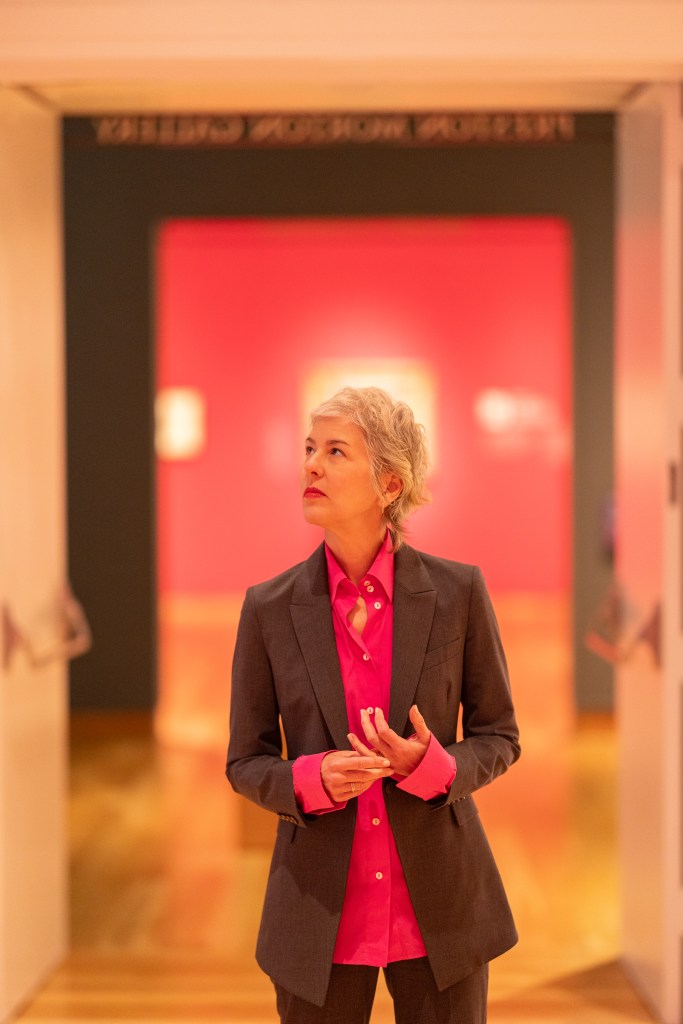
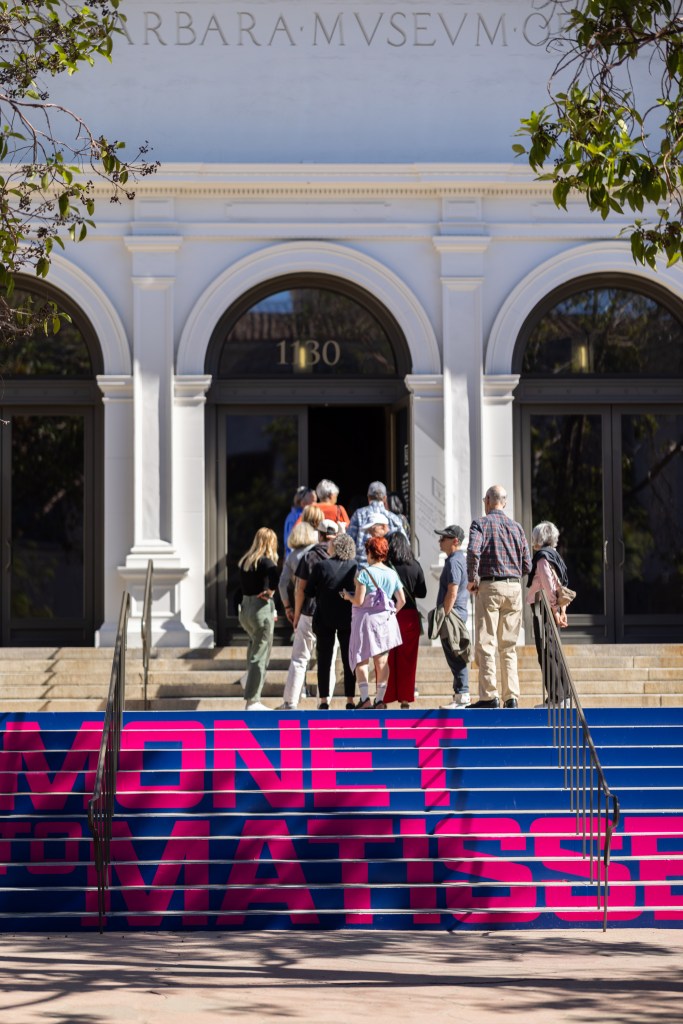
The current Impressionist exhibition at SBMA is not shy about playing with that radical spirit. A neon-pink-and-navy map of Paris stretches across one wall, a pop of urban dynamism that might have scandalized the old guard. Some of the paintings are shown against a rich purple backdrop. Cruz grins. “It is bold. And fun.”
In itself, the Impressionist exhibit is a big deal, and it is thanks to the relationships forged between SBMA and the Dallas Museum of Art. The result? Santa Barbarans have the luxury of being able to stand in a room containing not one but four Monet paintings — quite a coup for a museum of this size.
The Impressionist exhibition also arrives at a moment of quiet subtext for Cruz. A few years ago, a controversial cancellation at a previous institution sparked media criticism, framing her as overly focused on contemporary work and dismissive of art history. This show — with its luminous Monets and 19th-century Parisian scenes — might seem like a rebuttal.
Cruz, however, is matter-of-fact: “I was a contemporary art curator for a long time, so that is no doubt my curatorial specialty,” she says. “I booked the Impressionism show from Dallas and supported the Encore show [a companion exhibit solely from SBMA’s collection] because they relate to SBMA’s strong collection of French 19th-century works. That was the main reason; the other was the extraordinary quality of the works.”
Relevance is her real priority: “I’m very interested in making historical works resonate for contemporary audiences — by exploring context and relating the issues of the past to our own.”
Speaking of that, Cruz says that this connectivity is a way to surprise you — to knock you slightly off-balance, in the best way.
“Our collection is eclectic. We have older work; we have Asian work; we have a really important photography collection. It’s very global. So, we think a lot about how to honor that legacy by showing older work alongside contemporary art.”
The word she comes back to most? “Relationships.”
“We always show the historical work. But we also want to show how contemporary artists respond to it. There are always connections — even across centuries.”
Elliott Hundley’s recent installation, By Achilles’ Tomb, made that connection obvious. He juxtaposed SBMA’s renowned collection of Greco-Roman antique sculptures with his own work of bright colors and collages, and the result was a mythic fever dream.
“It was a dream of mine to work with antiquity like that,” Hundley tells me. “It’s incredibly rare for a museum to be that open. It says a lot about Amada’s leadership.”
Aside from Amada, much of the collaboration was facilitated through curator James Glisson and SBMA’s installation and registrar teams. “Everyone brought their own creativity. That was Amada’s leadership — not micromanaging, but trusting. It was joyful,” says Hundley.
And Cruz, I ask? What was she like?
“Lovely. Funny. Always smiling. Cheerful … and that sounds superficial, but it’s actually a really great quality in a leader,” Hundley says.
It’s not at all the ice-queen perfection of Miranda Priestly in The Devil Wears Prada (though there is a bit of that sophisticated New York air) — it’s a poised yet warm presence. A style. A quiet confidence.
“She’s approachable,” Hundley says. “Even with whatever challenges come up in an institution, she was just always upbeat.”
Cruz joined SBMA in late 2021 after serving as executive director of the Seattle Art Museum. With previous leadership roles at the Phoenix Art Museum, Bard College’s Center for Curatorial Studies, and the contemporary residency program Artpace in Texas, she was no stranger to running large institutions. But it was SBMA’s setting that caught her eye.
She had visited Santa Barbara on vacation years earlier while living in L.A., and both the museum and the town stuck with her. “The lifestyle drew us — the gorgeous weather and landscape. Can’t beat the mountains and sea. I had also been to the museum and was impressed by the collection and programming. It is rare to find such a good museum in such a small town.”
The best part? “How friendly everyone is. We have been very warmly welcomed.”
Santa Barbara is definitely not the first city that comes to mind when you think of contemporary art. Cruz wants to change that.
“This city is more diverse than people think. It’s 47 percent Latinx. That’s important to represent,” she says. “We want the museum to be a place where people feel welcome — not just for special occasions, but on a regular basis.”
She describes her first few months as a “listening tour,” during which she met with community members and asked them what they wanted to see in the galleries. What she heard, overwhelmingly, was openness to change.
“People were ready for us to try new things. That was very encouraging.”
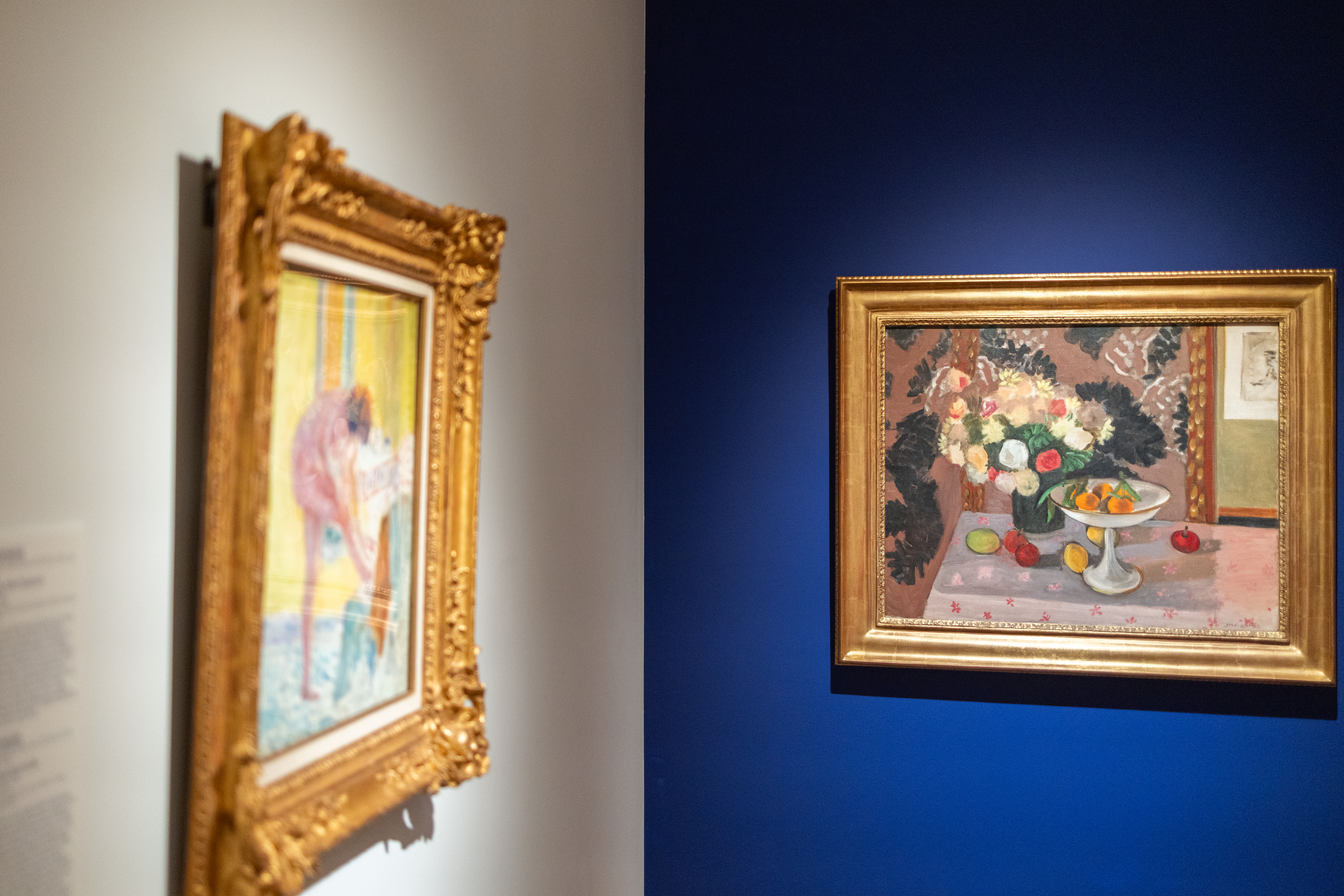
Cruz is, above all, curious. She wants to know how things work — whether it’s the flow of foot traffic through a gallery or the color of the walls. She added a Spanish-language option to the informative signs within the museum. She visits other museums to see how they label their collections or where they place the benches.
But she also thinks big.
“The Louvre started as a fortress,” she says. “Thick walls. No windows. It was about preserving the emperor’s collection. And now? It has a glass pyramid. It’s literally transparent. That’s the shift. Museums should be open.”
She believes that shift can be philosophical as well as architectural. “We’re not an ivory tower. We should be embedded in the city — within schools, the ballet, the opera. The artists. The designers. Everyone.”
It’s a worldview shaped, quite literally, by the globe: roots in Havana; an early career in New York, Los Angeles, and Phoenix; and years traveling as a curator and arts funder. Cruz lights up when talking about the Venice Biennale, the architectural drama of Madrid, or the grandeur of Paris.
The woman has seen a lot of the world. Therefore, connections and inclusivity make sense as being high upon her list of priorities. She often speaks about accessibility — kids’ programs, free Thursdays, multilingual signage — and always asks how the museum can reach more people.
“It’s not just about what we show,” she says. “It’s how we show it. What we emphasize. What we pair together. What stories we tell. And who we tell them to.”
Many museum directors rise through the ranks via fundraising or scholarship. Cruz comes from curation. And that, she says, gives her an edge.
“As a curator, you’re already trained to build relationships. With artists. With donors. With communities. That was the groundwork.”
She doesn’t hide the realities of the job, either. “Yes, I have to raise money. And you do that by building trust.”
What she genuinely enjoys, though, is what can’t be bought. “I really like talking to people. I like people who are different from me. I think that might be my greatest strength.”
She laughs. “That, and optimism.”
In our sunshine town, Cruz fits right in with her sunny personality. But it’s not naïve. Her view of art is expansive and global, layered with historical context and contemporary funk. She often describes museums as civic spaces, not bunkers. As Athens, not Sparta.
“Athens had the culture, the conversation, the beauty, the art. Sparta had war. So, I ask people, ‘What do you want to be?’ ” In her view, it’s not even a question.
“She believes art is for everyone,” says Wornham. “She is not only an artist advocate but also believes in the inclusivity of the museum.”
What Cruz is building in Santa Barbara pushes the museum away from tradition and toward innovation, and that’s the point. We would not have the iconic glass pyramid of the Louvre without this outlook. Art, after all, is meant to be seen.
“We don’t have a lot of opportunities to stop and think about what makes us human. Art does that. Museums do that. It’s not just about preserving objects. It’s about celebrating human creativity.”
She pauses. “That’s what a museum is, to me.”
A Walk Through ‘Unfinished’ Art
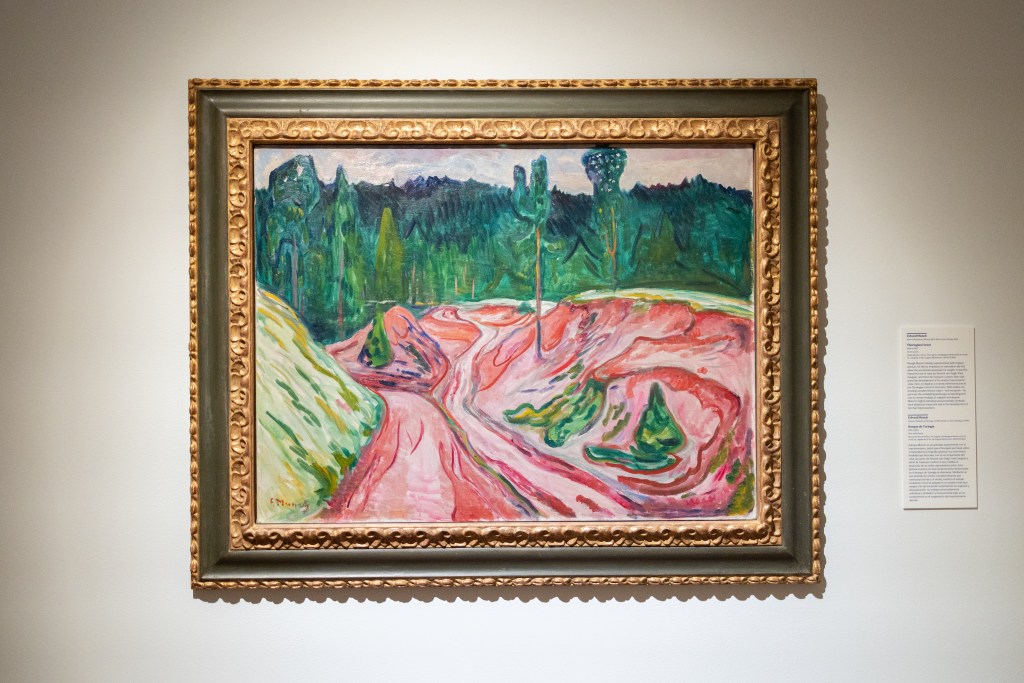
Walking through the Impressionist exhibition at the Santa Barbara Museum of Art was, simply put, surreal. Seeing works that have existed in the background of my life — on posters, postcards, phone wallpapers — suddenly made real, in front of me, and full of texture. It’s jarring.
The show was curated by Nicole R. Myers, PhD, chief curatorial and research officer at the Dallas Museum of Art. She walked us through each room with clarity and articulately explained deep knowledge, explaining the historical context of Impressionism — not only what it looked like, but also what it meant. How these paintings, now universally beloved, were once seen as unfinished and laughable. It made me look at every canvas differently.
Amada Cruz gave the opening remarks, then stepped to the side. She let the team speak but remained close. Present. Warm.
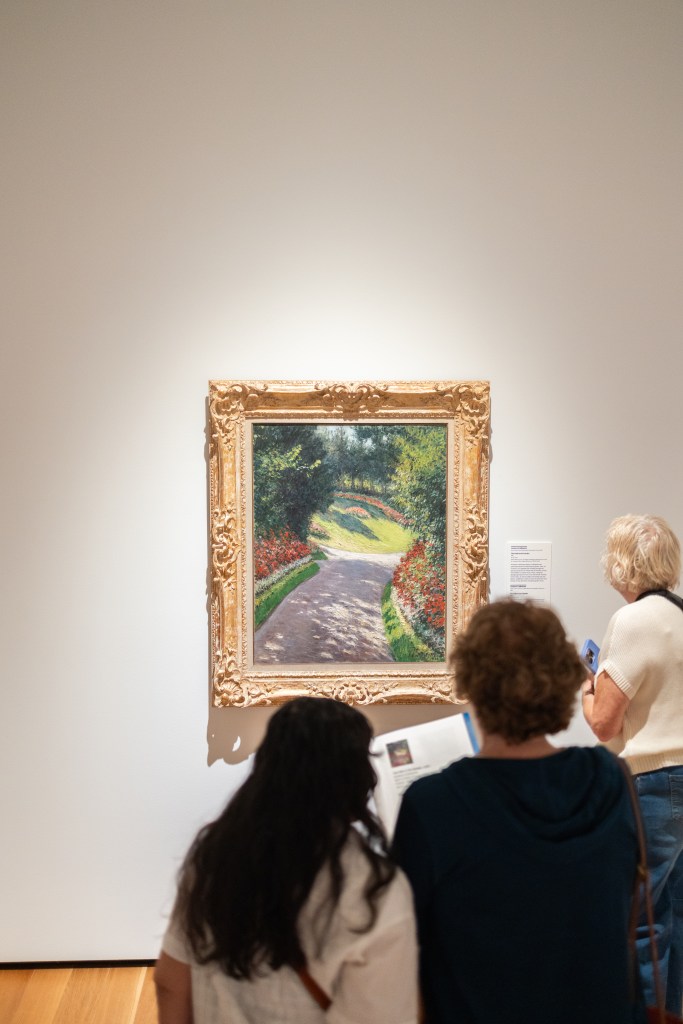
One painting that stayed with me was Monet’s “Villas at Bordighera.” The Italian Riviera, a mirror to our own American one. White buildings, terra-cotta roofs, agave, hills, sea. It could have been Santa Barbara, but instead was painted hundreds of years ago on a different continent.
Another: “Femme à sa toilette” by Louis Anquetin. A woman at her vanity, mid-grooming, her gaze so direct it catches you off guard. The longer you look, the more layered she becomes — part seduction, part exhaustion, part performance. Yes, an Impressionist painting, but the eyes are so realistic, as well as the layered background of patterns, the cascading red curly hair.
The Encore exhibition followed — SBMA’s own collection, including its own Monets. The walk through felt like a piece of France. Famous landmarks, artists’ studios, Parisian streets. All told through SBMA’s lens.
Together, the two shows are a beautiful explanation of a different time and place … where beauty was discovered in the “unfinished” art of day-to-day life. —Ella Heydenfelt
The Impressionist Revolution: Monet to Matisse from the Dallas Museum of Art, and Encore: 19th-Century French Art from the Santa Barbara Museum of Art are on view through January 25, 2026. This is a special ticketed exhibit; see sbma.net for details.



You must be logged in to post a comment.