
Searching for
Ghosts
on the
Central Coast
Santa Barbara’s
Spooky Local Legends
Reveal the Region’s
Haunted History
By Ryan P. Cruz | October 30, 2025
Can ghost stories do more than just curdle the blood and quicken the heart? For those who research paranormal experiences firsthand, the stories behind these ghostly apparitions can reveal deeper truths about our county’s history and offer a glimpse into the lives of all of those who lived on the Central Coast for generations before us.
“These stories really help preserve the history of the city,” said Julie Ann Brown, founder of Santa Barbara Ghost Tours. “Researching ghost stories is a way of tying us to the past — it’s history and tradition.”
Brown is a Santa Barbara City College professor, storyteller, and ghost tour guide who started sharing her paranormal experiences with the public seven years ago. Her walking tour is a quick trip through Santa Barbara’s complicated history, filled with ghost stories from Chumash to Spanish to Mexican to modern-day California.
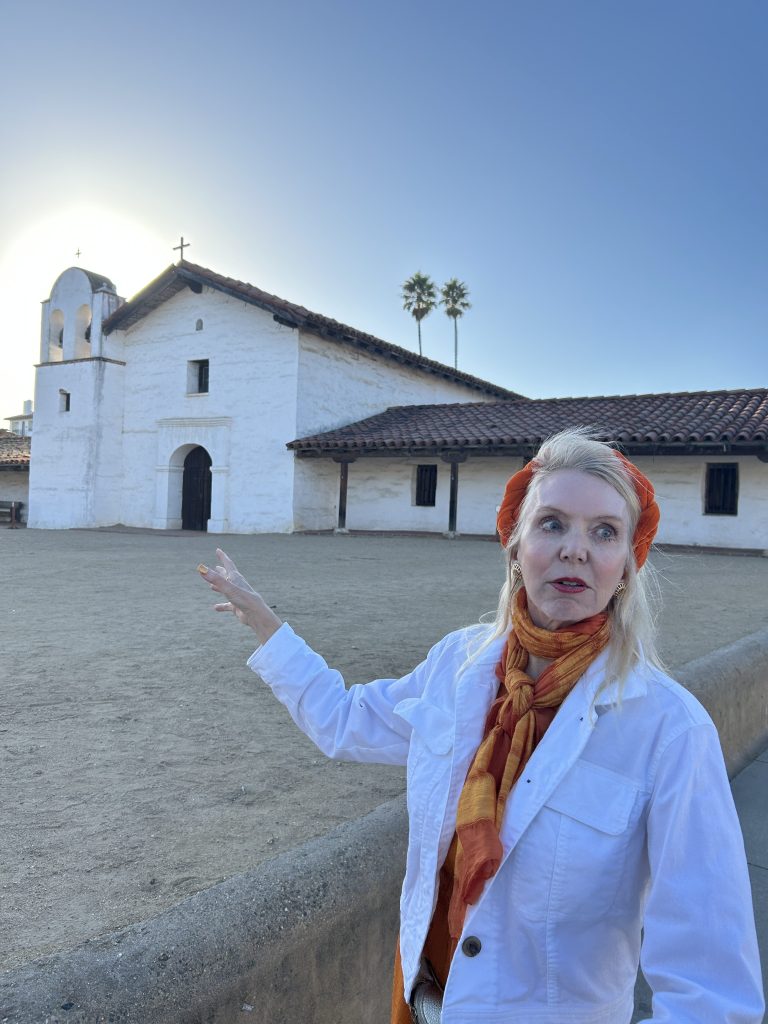
She says Santa Barbara is the “city of happy ghosts,” and a paradise that souls love to visit in this life and the next. But her stories also dig into the region’s darker history of oppression, excess, gambling, and greed.
Some stories are bittersweet, such as the tale of Sister Vincentia Bermudes, whose faded, cracked headstone can be seen in the cemetery behind the Old Mission Santa Barbara — along with thousands of Chumash natives, Spanish settlers, and parishioners throughout its history.
Brown retells the story of Sister Vincentia, a novice nun who was sent to live in Santa Barbara with the Daughters of Charity of St. Vincent de Paul, an order of former battlefield nurses easily recognized for their distinctive habit with its wide, white, wing-like headdress. Although she was fatally ill with tuberculosis, Sister Vincentia, who was popular with the Santa Barbara parish, was determined to take her vows before she passed away.
On Christmas Eve, the whole parish community gathered to watch Sister Vincentia officially take her vows. “Everyone in town loved her, and all she wanted to do was be a real nun,” Brown said.
Sister Vincentia didn’t live through the night, but her story lived on into the 20th century. By then, the Daughters of Charity were running the St. Vincent school and orphanage in a Victorian building still located today on De la Vina Street. One late night, the Mother Superior had a dream of a young nun warning her to sell the property, and when she awoke, she saw the shadow on the wall of what appeared to be a nun wearing the St. Vincent habit. According to legend, she became so convinced it was Sister Vincentia that she sold the building and moved the orphans to a new property, just before the 1925 earthquake seriously damaged the third floor.
Walking Through Time
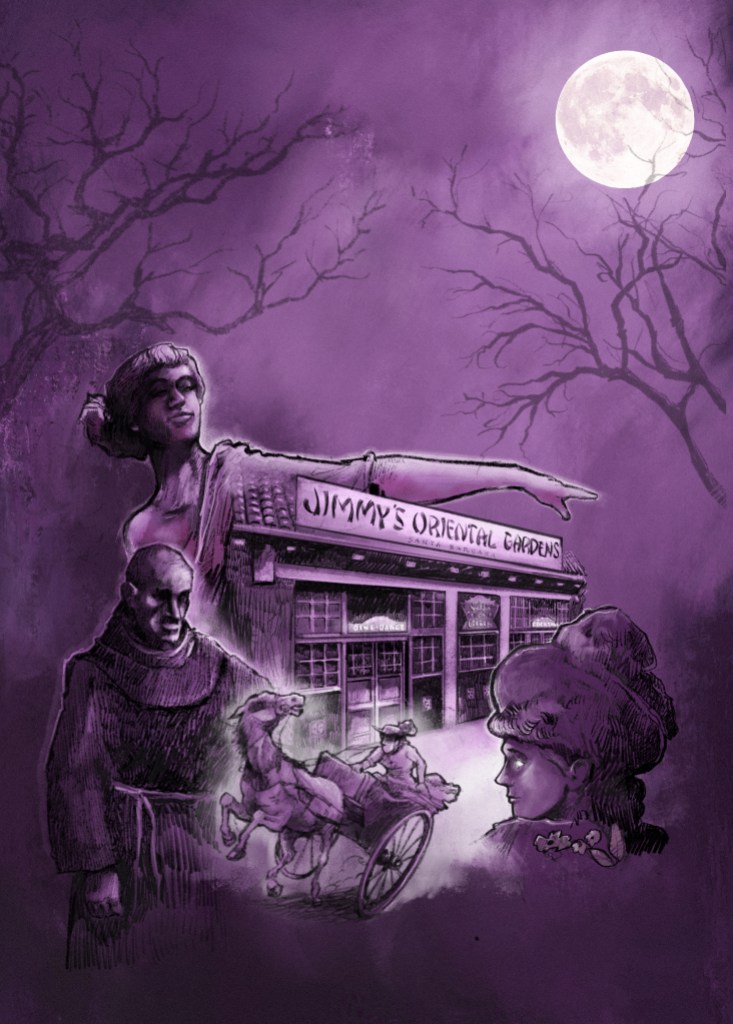
Brown’s Santa Barbara Ghost Tour centers around the El Presidio neighborhood, making stops at historic sites such as the Lobero Theatre, Santa Barbara Post Office, El Cuartel, and Jimmy’s Oriental Gardens (now the Pickle Room).
The area is a hotbed for local paranormal activity, according to Brown, due to its significance to the many groups that have lived there. “The area was sacred to the Chumash. Then it was sacred to the Spanish, the Mexicans, and the Chinese and Japanese,” she said.
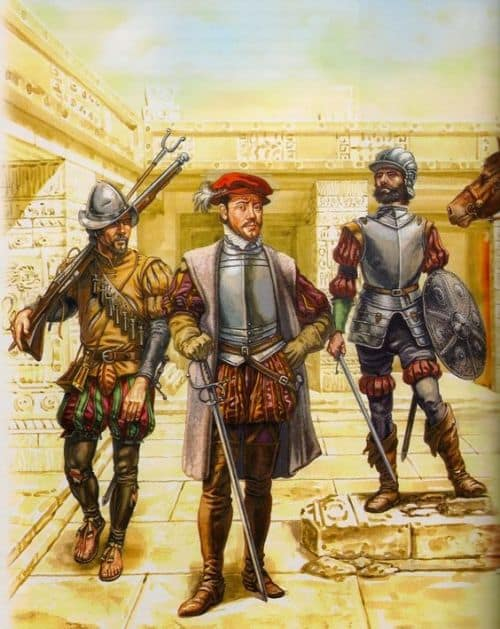
During her tours, visitors have reported things they couldn’t explain: seeing friars floating in their brown robes and Spanish soldiers in full armor; hearing the sounds of Chumash chanting and singing; and smelling the strong scent wafting by from phantom horses.
One of Brown’s favorite ghost stories is of Miss Pearl Chase, a seminal figure in Santa Barbara history who, after the disastrous earthquake of 1925, dedicated her life to rebuilding the city in a unified Spanish Colonial aesthetic. A couple who bought Chase’s home at 2012 Anacapa Street some years ago told Brown about a night when the French doors in the kitchen suddenly opened wide and there stood Miss Chase, young and beautiful and smiling. “It freaked them out so much,” Brown said, that they sold the house.
Brown leads her tour groups to a forgotten alleyway behind Jimmy’s Oriental Gardens to a collection of efficiency apartments that used to be the two-story home of owner-founder Jimmy Chung; his wife Nuey; and their five children.
The alley was vandalized with anti-Asian graffiti in 2020, and when the owners were cleaning the property, they saw a strange “movement” in the alley they couldn’t explain. Brown showed us a grainy security video with what seems to be a transparent, whitish shape floating across the alleyway from the back door of the bar toward the front door of the house. A brief bright spot appears on the screen before the shape is gone.
Brown said she interpreted the video as Jimmy possibly coming back to visit, perhaps upset at the hateful messages written on a wall behind his beloved bar.


Jimmy Chung opened up Jimmy’s Oriental Gardens in the heart of Santa Barbara’s “Chinatown” in the late 1940s. | Credit: Boston Public Library Tichnor Brothers collection
Brown acknowledges the tangled history of the neighborhood, from its time as a Spanish stronghold to the era of Mexican independence and the eventual arrival of Chinese and Japanese working-class immigrants. The area was also known for its many brothels, she said, and underground tunnels used to transport girls, opium, or liquor.
She says the basement tunnels can be home to darker spirits, but in her experience, the city has a way of attracting more “friendly ghosts,” such as the ghost of a former caretaker of El Presidio, who was said to be so proud of his work that he comes to make sure everything is in order; or the former stagehand of the Lobero, Harry Pideola, who died in the theater and is said to return to make noise or play tricks on staff in the night.
“We live in an enchanted land, and even our ghosts are enchanted,” Brown said. “Santa Barbara ghosts loved it here during life, and they want to come back.”
Heartbreaking Hauntings
Ghost legends survive all over the Central Coast — such as Summerland’s history as a spiritualist utopia or at the Big Yellow House, where a playful ghost, Hector, makes appearances — but a few lesser-known stories are worth remembering.
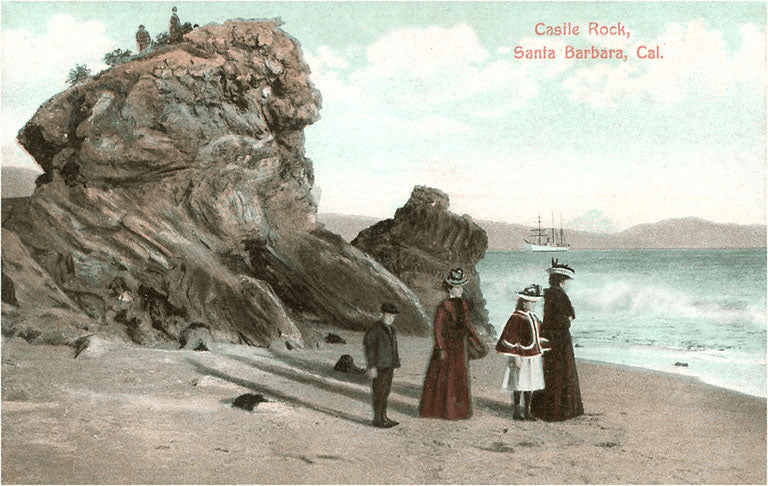
One of these is “The Haunted Rock at Santa Barbara,” a ghost story written by V. Forward Russell and published in the 1873 issue of The Overland Monthly magazine in San Francisco. It details the story of “Doña Inocencia” and “Rodrigo De la Guerra,” a pair whose tragic end left their souls restlessly wandering the area shores of Leadbetter Beach and Santa Barbara Harbor.
Russell wrote of traveling to Santa Barbara and being surprised by “the appearance of an old man” whose gaze seemed transfixed on the crumbled remains of a rocky piece of land jutting off the end of current-day Castillo Street. “He was dressed in the Spanish garb,” Russell wrote, “tight breeches, fastened with buttons of silver from the ankle to the loins, a scarf crossed over the bosom, and a black silk kerchief bound about the forehead.”
The ghostly man “wore an expression of deep despair and grief,” and told Russell of “troubles [that] are beyond the power of this world.” He revealed his name as Rodrigo de la Guerra and told the story of the tower and castle that once stood above the jagged rocks.
Castle Rock was a fortress that became the home to a Spanish gentleman Don Luis Gonzales and his daughter, Doña Inocencia. Russell describes Doña Inocencia as “a lonely girl” whose mother had passed away when she was very young. She eventually met Rodrigo de la Guerra, the son of a merchant sailor who had arrived to trade with California rancheros along the coast.
Rodrigo stayed with the Spanish family, and the two formed a close bond as they grew up together, until Rodrigo was forced to take a job back on the seas with his father. Through all his seafaring adventures, he remained true to Doña Inocencia.
But Doña Inocencia’s father did not approve of his daughter marrying a sea-wandering merchant, so Rodrigo returned to Spain to work with his uncle, vowing that he would come back a rich man and win Inocencia’s hand in marriage.
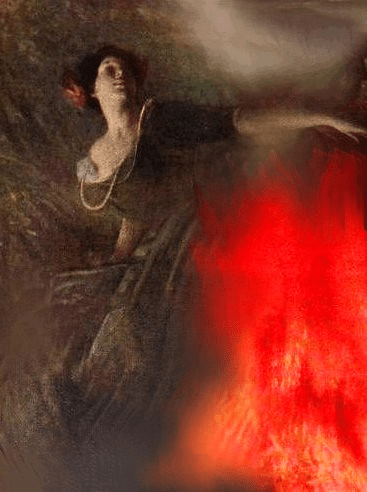
In Spain, Rodrigo fell ill and was delayed, but he remained committed and sent love letters to Doña Inocencia in California — or so he thought. Unbeknownst to Rodrigo, another woman in Inocencia’s household had become infatuated with him, and in jealously, burnt every one of his love letters. When he was back to full health and had inherited a large fortune, he wrote that he was returning, but that letter was also burned by the jealous woman, who forged another letter saying Rodrigo had found a new love in Spain and would never return to California.
Doña Inocencia, having not received any of his letters, fell ill with heartbreak. The forged letter broke her spirit completely and, one night, she “threw herself from the castle tower down to her death on the rocky shore below.”
In the night following her death, Doña Inocencia was laid in the castle tower where priests led the gathered friends and family in prayer. A storm was raging outside, and a sudden gust of wind “swept wildly through the room” setting the drapery ablaze. A white figure, with floating hair and uplifted hands, appeared off in the black distance, and everyone fled the tower.
The fire reached a large cache of gunpowder and demolished the structure completely.
Ever since, sailors and fishermen traveling near the area have reported seeing a figure standing above the rocks, and others have seen a woman in white wandering the shoreline near the harbor and Santa Barbara City College, looking to the sea, as if waiting for a ship to bring her lost love back.
Agnes of Harris Grade
Harris Grade Road near Lompoc has its own ghostly history. The eight-mile stretch of curvy mountain road has a reputation for a high rate of car accidents due to the dense fog, hard-to-navigate turns, or possibly the presence of a ghostly spirit that drifts along the former state highway route.
When the Spanish took over the land around the current Harris Grade from the Chumash people living there, they converted into ranchos in the 1800s. During the days of stagecoaches and wagons, the treacherous roads that were carved into the wilderness were notorious for sandy soil that snapped wheels and axles like toothpicks. Travelers were often left stranded, their coaches overturned or sent slipping off into deep ravines to serious injury or death.
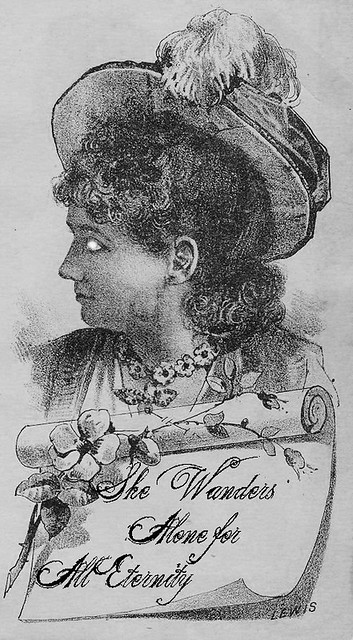
Even today’s paved mountain roads remain dangerous for late-night drivers caught in the mountain mist. But some drivers have reported a “woman in white” standing in the road, eyes aglow, often forcing cars to swerve at the last second.
There are several legends about this roadside ghost, most of which revolve around the spirit of “Agnes.” One says she is a woman who met her death on the dangerous road some foggy night years ago. Her spirit roams the countryside roads, eager to claim more victims to join her in the lonely afterlife.
On an online forum about that version of the legend, one woman wrote that she saw Agnes while on a date with her boyfriend: “I screamed as he jumped back in our car, and we zoomed right out of Harris Grade; so just keep in mind what they say is true. The whole time, we felt unwanted and out of place, but she didn’t have a face, just the shadow of her. Scary shit.”
In 2012, the legend of Agnes was turned into a book written by late Cabrillo High School English teacher Roderic Schmidt, Agnes of Harris Grade.
Schmidt made the story even more horrid. This time, Agnes was driving a car with her infant, when her car broke down. She was killed by another vehicle coming down the road and today, she is still up there “looking for her child,” Schmidt said in an interview about the book. “The story is, she would stop cars coming over Harris Grade and say, ‘Would you help me find my baby.’ ”
Whether or not there is truth to the legend of Agnes, Harris Grade has been home to at least eight fatal accidents over the past two decades, including a November 2024 collision that claimed the lives of two children.
Ghosts Are People Too
Paranormal investigator Earlene deMoulpied has been researching hauntings and ghost experiences for decades, ever since having her own paranormal experience as a child in her family’s Carpinteria home. She now trains investigators and gives lectures about paranormal activity, most recently at Carpinteria Historical Museum in September.
As a former marriage and family therapist, deMoulpied takes a clinical approach to her investigations, making sure to rule out any outside factors. “We do a pretty comprehensive interview,” she said when getting a call asking for help from people who believe their home is haunted. “We set out to prove there’s not a ghost — that it’s haunted.”
That includes checking the house for rodents, looking for problems with windows or doors, or addressing potential hallucinations resulting from drug abuse or mental health issues. Only after she rules out all other contributing factors does she look to the otherworldly explanations. “If we can absolutely find nothing, and if we can get it to replicate while we’re there, then we may say it’s paranormal,” she said.
As a child in Carpinteria, she would feel the spirit of a small girl playing with her hair. The experiences were constant, and when her family saw and heard other signs of paranormal activity, they soon accepted they were living in a haunted house.
“I grew up with it, so it was very normal to me,” deMoulpied said. “We certainly knew what we were seeing, what we were hearing, what we were feeling in the house. But nobody would believe us.”
As she got older, she began to look into ghosts and hauntings more seriously, and even though she still avoided talking about it at school and work, she began to pursue a side life as a paranormal investigator. “Once you go out and you get a taste of it, you want to go back,” she said.
Over the years, deMoulpied has become more connected to the paranormal, learning how to use dowsing rods, crystals, or lights to communicate with spirits. She says it’s a skill that can be developed, but it requires being open to the unknown. “Everybody has the ability,” deMoulpied said. “But they’re so scared of it, where I’m the kind that welcomes it in.”
She considers the spirits she encounters as people with their own unique personalities, and in some instances, they become friends. “Ghosts were people once,” deMoulpied said. “Treat them with respect.”
In her view, connecting with spirits is not just some show for Halloween, and it’s not something that should be done for entertainment, internet attention, or money. “The really tried and true ones are people who have been doing it for a while,” deMoulpied said. “And they’re in it for the pure joy of doing it and helping people who are really struggling with paranormal activity going on in their home. And that’s where I come from.”
She says sometimes she hears from a family who moves into a new house, and they are quick to ask if she can come in and “get rid of the spirit.” In those cases, deMoulpied explains that “it doesn’t work like that.”
“I didn’t put them there,” deMoulpied said. “So, I can ask them to leave, and I can explain that you care about the house as much as they do. But if they really don’t want to leave, they’re going to be there.”
She often tells her clients to be open-minded about what they are experiencing, and to stay away from assuming that spirits have bad intentions. “You have to look at it from both sides,” deMoulpied said. “If I interviewed them, they would probably be scared of you yelling and screaming at them to leave.”
The Central Coast is a “beacon” for paranormal activity, deMoulpied says. Anywhere with Chumash history, or connection to the ocean and waterways, can attract spiritual activity. In her experience, there are more local ghost sightings than people may realize. “Some businesses don’t want to reveal they have anything,” she said.
She hopes to continue her work in the paranormal field, helping clients understand their own ghost experiences and expanding her own knowledge about whatever it is that happens after this life. “There is some sort of what I call a life after death, or a transition,” deMoulpied said. “When we transition, it’s like becoming eternal.”



You must be logged in to post a comment.