
Past Times at Santa Barbara High
Celebrating 150 Years of Educational Excellence,
with Centuries More to Come
By Callie Fausey | November 20, 2025
It’s 1966, and Rebecca Cole-Turner and her family have just traded Ohio for Santa Barbara.
She is petrified. Her new school, Santa Barbara High, is huge.
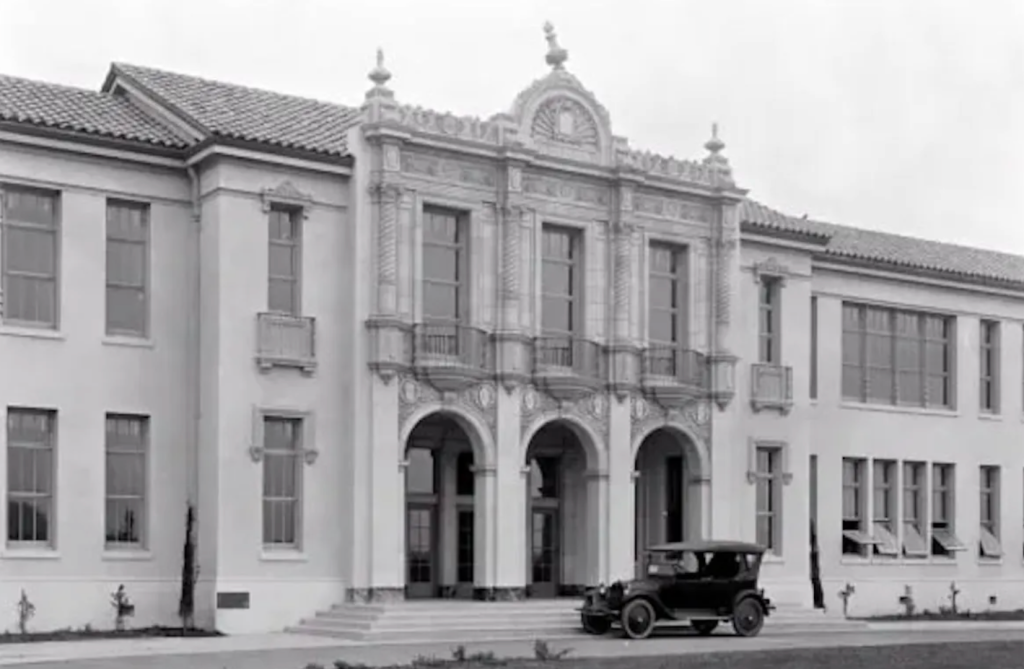
Now a designated historic landmark, the century-old main building is celebrated for its beauty — but back then, to 15-year-old Beccy Cole, it was a frightful sight. The red-tiled roofs of the Spanish-colonial structure loomed above her. Clusters of intimidating teens lingered in the grassy courtyards. The long rows of exterior windows seemed to stretch on forever, concealing an unknown adolescent world behind the glass.
Her warm welcome? Her locker was bashed in and her English textbook stolen.
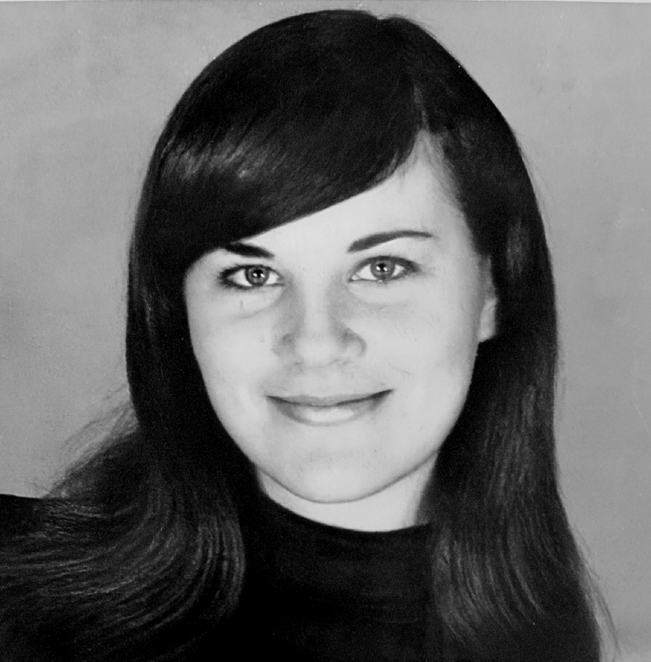
The culprit was never found — CCTV was still in its early phases — but the principal, Claud H. Hardesty, personally apologized. An apology can’t fix a locker, but it showed Cole that “the person at the top really cared.”
In time, with the help of new mentors, Cole found her footing. And her voice. She gravitated to The Forge, a longstanding pinnacle of public-school journalism.
When she joined, the front-page story centered on Bruce Holderman, the first SBHS graduate killed in the Vietnam War. It left a mark.
“It was the seriousness and the importance of what we were doing — the responsibility to get things right, to write clearly, and to honor someone who had fallen in the line of duty,” Cole recalled.
Cole — now a reverend and poet with a doctorate — was already chronicling the school’s history, as she would again more than 50 years later. She is the author of the newest chapter in Santa Barbara High School’s official biography.
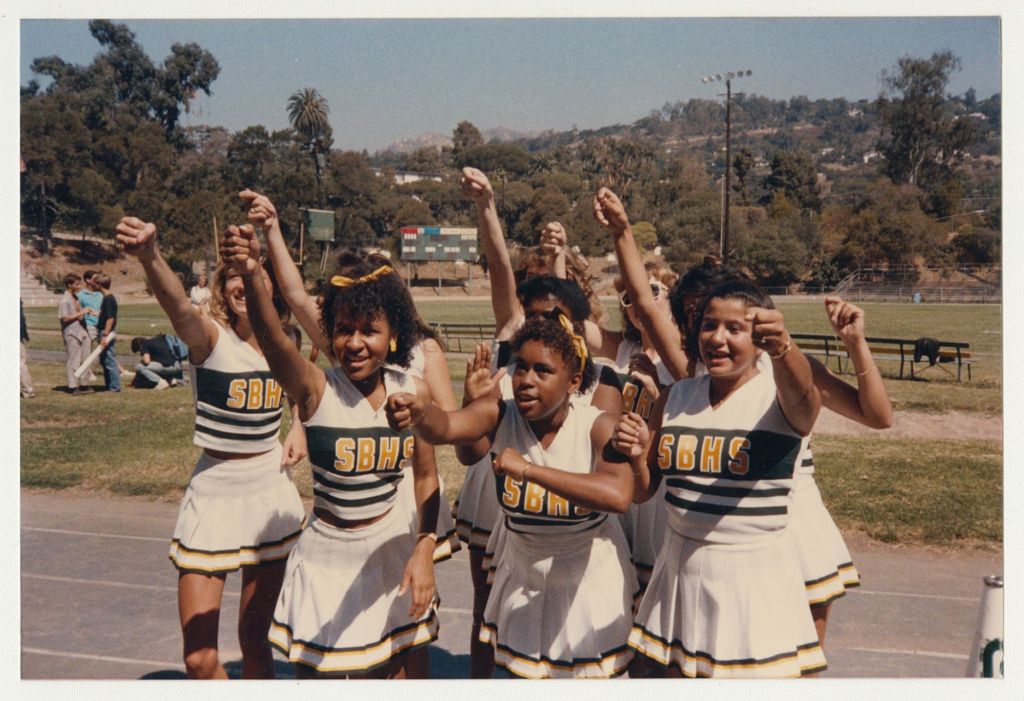
Established in 1875, the school celebrates its 150th anniversary this year as the sixth-oldest continuously operating public high school in California. It has survived an earthquake and questionable fashion fads. Famous people have walked its halls. And within its walls, countless students have learned, grown, and found the springboards that launched their lives.
Forging Ahead
As Cole reminisced about her high school career, I couldn’t help but drift back to my own. I’m also a Santa Barbara High alum. But my experience, decades later, was … different.
Perhaps surprisingly, I never wrote for The Forge. Wasn’t my thing back then. If anything, my “thing” was showing up 20 minutes late to class with a bagel and a coffee from Jack’s.
Cole, on the other hand, became editor of the paper her junior year. She had to run an election campaign in classic high-school fashion — handmade promotional banners strung across hallways. She won, of course, joining the legacy of the second-oldest continuously published high school paper in California.
In the first issue of The Forge — October 1914 — the paper’s founders, successors to the short-lived Fly-Leaves (which graduated with its editor, pioneering aircraft manufacturer John Northrop, in 1913), declared that it stood for “Democracy, Student Control, and the Right School Spirit.”
They covered the war, the football team’s embarrassing 20-0 loss to Los Angeles High School, newly installed drinking fountains, and the school’s growing pains.
By 1914, The Forge reported, enrollment had climbed to 403 students — a far cry from the school’s first class of 40 teenagers housed on the top floor of the now-closed Lincoln Elementary School. The school moved twice to keep pace with Santa Barbara’s growing population. By 1924, quadrupled enrollment forced it out of its third campus on De la Vina and Anapamu and into its current digs at 700 East Anapamu Street. Today, nearly 2,000 students walk those halls each year.
“The increasing attendance each year at The Santa Barbara High School is attracting the attention of the outside world,” The Forge reported in that first issue. (For more than 80 years, it was the only public high school in the district, hence the moniker “THE high school.”)
More than 50 years later, when Cole was editor, she was covering the assassination of Martin Luther King Jr. and the waning diagnoses of tuberculosis among students. The TB story, she recalled, was entered into a national competition, and it won. The staff pocketed a first-place prize of $50, which they used to expand the paper.
But teenagers will be teenagers. And teenagers love being facetious. In the 1960s, for example, students dedicated a cheeky section of the yearbook to the extracurricular activities of their teachers, titled “Teachers Are People, Too.”
When I was in school, I was part of the Computer Science Academy. Along with the Multimedia Arts and Design Academy (MAD) and the Visual Arts and Design Academy (VADA), these programs enriched the school’s academics as “schools within a school,” nurturing creativity and exploration. My computer science courses introduced me to lifelong friends and made my high school experience far more colorful. I didn’t go on to pursue a career in coding (if I had, I’d probably be sipping a piña colada somewhere instead of writing this), but I do like flexing that I can speak the language.
The school has lost some classics — German, Latin, ancient history, astronomy — but it has since gained the academies, Career Technical Education pathways (including the state’s first Interpretation/Translation pathway), Dual Enrollment options, and a variety of Advanced Placement courses.
Smells and Stars
In my journey to collect content for this story, I returned to Santa Barbara High for the first time in years. I was meeting with two members of the Alumni Association — historian Gloria Cavallero (class of ‘72) and membership director Sharon (Keinath) Henning (class of ‘74) — to reminisce about the school’s past.
The moment I walked through the front doors, I was greeted by that smell. It’s unmistakable. Distinct. Neither good nor bad. Something like old wooden desks and fading textbooks mixed with a hint of pubescence. As my feet hit the green linoleum of the long main hallway, lined with spirited paraphernalia and student club flyers, memories flooded back: lugging a backpack full of books from class to class, catching up with friends, buying a Valentine’s Day gram for that guy who sat next to me in Computational Art.
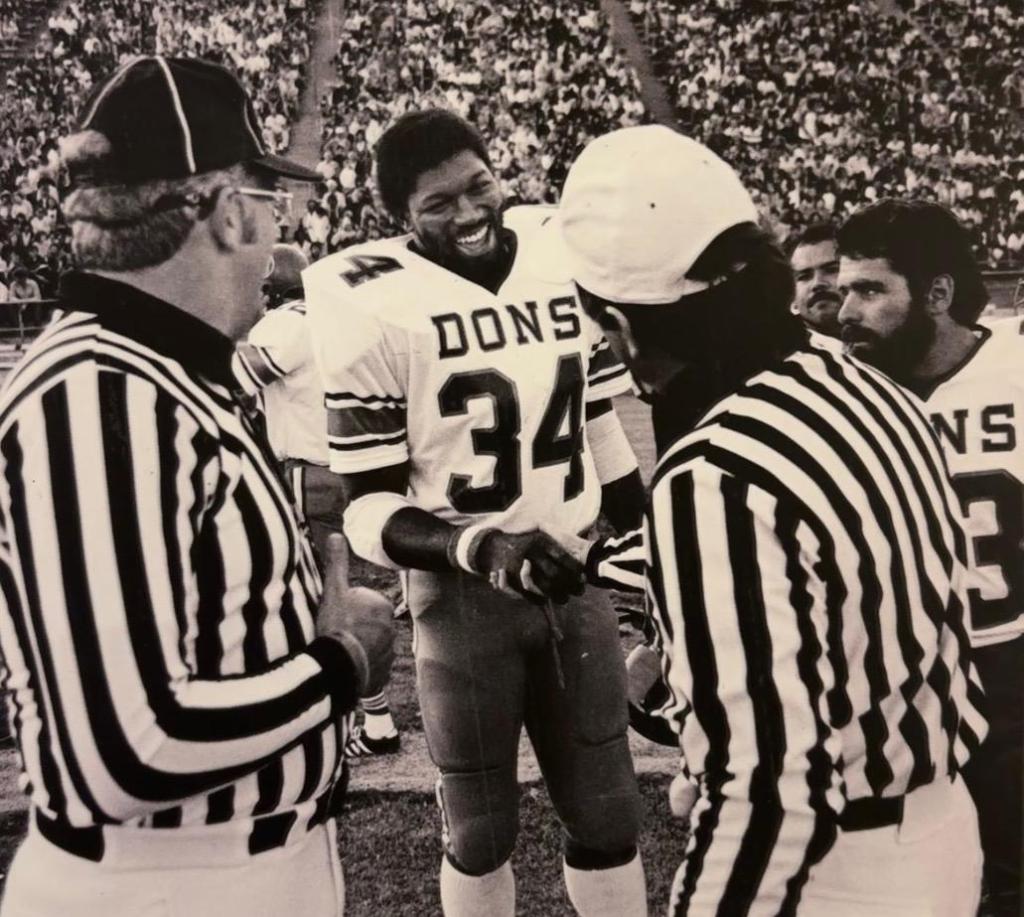
As I basked in the scent of nostalgia, my fellow alumnae filled me in on the school’s history and the remarkable people who shaped their burgeoning identities there. Every year, five new alumni are added to the “Wall of Fame.” It’s an impressive lineup. Charles Schwab; famous footballers Randall Cunningham and Sam Cunningham; and Santa Barbara’s political powerhouses, Supervisor Laura Capps and State Senator Monique Limón.
The five new names added this year included David Muench (class of ‘59), celebrated for his photography of the American West; and Dr. Lynn Fitzgibbons (class of ‘96), renowned for her leadership in infection prevention and public health as Medical Director for the Cottage Center for Population Health.
The Alumni Association itself is celebrating its 50th birthday this year. Since its founding in 1975, the association has awarded nearly $3 million in scholarships to more than 1,400 graduating seniors and alumni (myself included), many of them first-generation college students. Based on data from the last three years, an impressive 94 percent of students who walk down the hill at graduation now go on to pursue higher education.
Talli Richards-Versola (class of ‘82), the Alumni Association’s current president, said she joined as a way to honor her father, JR Richards. The school’s renovated gym was named after him in 2013 following his sudden death at 63. He was the only former student — class of ‘57 — to later serve as principal.
“He started as student body president and ended as principal,” Richards-Versola said. “So, I thought this is a great way to stay close with my dad. And then, my first year on the board, I was almost immediately diagnosed with breast cancer.”
Richards-Versola has now been in remission for seven years. But that experience, coupled with her time on the board, changed her outlook. She used to hate the spotlight — especially public speaking — describing her younger self as “shy and nervous.” The role pushed her past that.
“I realized that although I had started to feel close to my dad, what happened was I discovered a whole new part of myself,” Richards-Versola said. “I just feel super connected to a lot of people and the community, and what I love most is that while our country is pretty messy right now, I’m able to do something tangible, something where I can actually help my own community.”
To foster even more of those connections for the school’s 150th birthday party, she said she wanted the celebration to be the biggest, baddest, and free-est of them all.
Once a Don, Always a Don
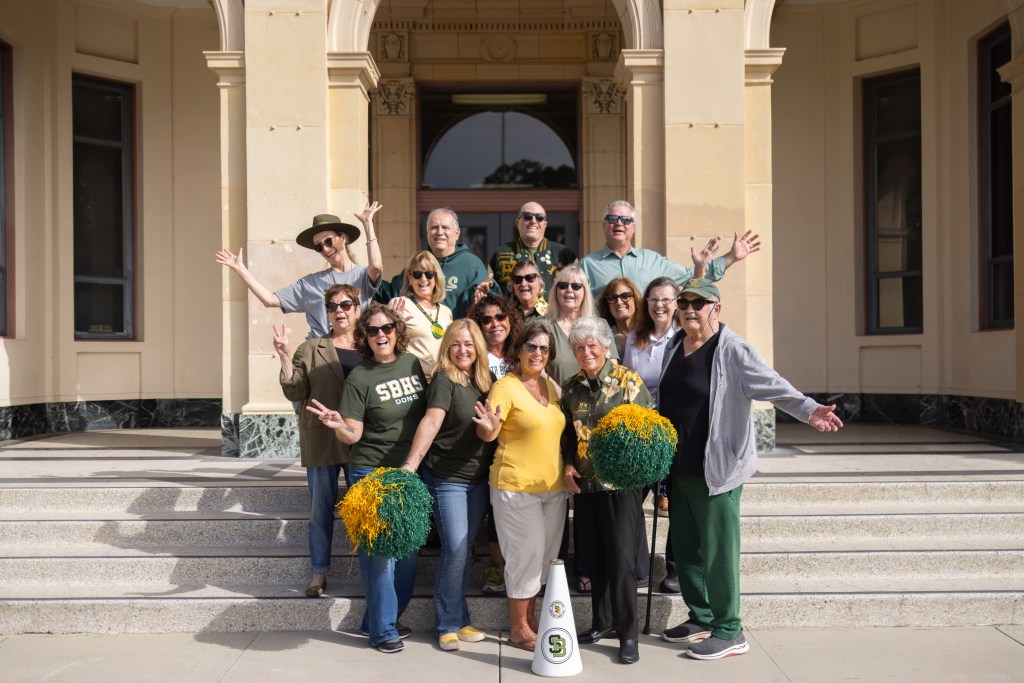
Everybody came to this year’s All Dons Reunion, held in October. Tables repping classes as far back as the 1950s filled the main courtyard. Alumni brought black-and-white photos and stories immortalized in Olive and Gold yearbooks — the earliest copies of which date back to 1906. Deejay Frank Ramirez, class of ‘77, was spinning tracks. “Once a Don, always a Don, baby,” he reminded the crowd more than once.
(Fun fact: The school wasn’t always home of the Dons. It started as the “Vaqueros,” like Santa Barbara City College. But by the 1920s, local newspapers began shortening the football team’s nickname to “Dons” to squeeze it into their headlines. It stuck.)
Greeting everyone at the entrance was the new Bossie, a recreation of the plaster cow that lived atop the old Live Oak Dairy building at Milpas and Canon Perdido streets for more than 80 years. Her harassment began in 1965, when undergrads dressed her in a poncho and sombrero and painted “Dons ‘67” on her flank.
After that, painting Bossie in the school’s colors, green and gold, became a senior tradition. Students from San Marcos High School made it their tradition, in classic rivalry fashion, to defile her in royal blue and scarlet. For years, she was painted, kidnapped, and — in 1971 — even decapitated.
She endured endless pranks for decades. But in 2020, the old girl met her tragic end when she toppled off the building — now home to Bossie’s Kitchen — and shattered beyond repair.
Before anyone could have a cow, the Alumni Association raised money for a new Bossie. She made her debut at the 2022 All Dons Reunion, standing proudly near the “Walk of the Dons” entrance atop the newly remodeled Peabody Stadium. She lives on a portable platform for pep rallies and other events, but otherwise resides “near the Alumni Garden where she will watch future generations as they walk down the hill to graduation,” the association says.
The new Bossie looked on as old friends ran across the courtyard to embrace, local officials presented resolutions honoring the school’s 150th anniversary, and current students performed for an audience of their forebears.
It was a sweet occasion. Wall of Famer Fitzgibbons “came and found my mom and told her this whole story about my dad that made her cry,” Richards-Versola recounted. “That was really special.” Another attendee’s daughter said her elderly mother’s memory wasn’t very good, “but she knew where she was the second she got onto campus.”
This campus is where people like Adrian Melero, class of ‘76, learned how to play the tuba for the marching band. In 1975, he explained while showing me old photos, the band performed during the halftime show for the Los Angeles Rams. They traveled a lot — even internationally — and boasted around 300 members. “We had football players who wanted to be in the band,” he grinned, “but they had to play football because they didn’t make it in the band.”
For Supervisor Capps, SBHS is where she found her voice. She was student body president in 1990, and her time at the school, she told me, helped her come out of her shell. For her mother, former Congressmember Lois Capps, it’s where she worked for 10 years helping take care of the children of teen parents, a service the school still offers.
“It helped develop my leadership skills, my sense of self. It’s such a part of who I am and my family,” Capps said at the reunion, while presenting the Board’s resolution designating the school a “cornerstone” of Santa Barbara. “This is a school for everyone. This is a school for the community.”
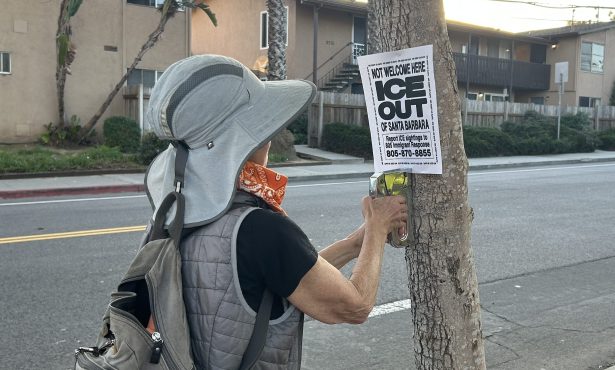
After the festivities, I visited the Forge staff at their booth. While earlier Forges documented the growth of Santa Barbara, today’s writers tackle modern issues. In the October issue I picked up, the young reporters covered fears surrounding the increasing presence of ICE and the rising costs of higher education. New stories, sure, but same old Dons spirit.
‘A Matriarch with Thousands of Children’
For A Celebration of 150 Years of Educational Excellence: Santa Barbara High School Sesquicentennial, 1875-2025, Beccy Cole builds on the work of earlier alumni biographers. It took her two and a half years to put together. She calls her contribution Chapter Nine, since it follows eight previous chapters of history before diving into “the new stuff”: a pictorial collection of first-person accounts from graduates reflecting on how the school shaped their lives, called “Don’s Highlights.”
The late alumna Dorothy W. Brubeck — a past adviser to Cole — wrote the original comprehensive history of SBHS for the school’s centennial in 1975. It includes the founding of schools in Santa Barbara in general, dating back to the Spanish Era. “Governor Micheltorena in 1844 issued a decree that schools should be established in several towns, including Santa Barbara,” she wrote, before delving further into the history of public education in the region.
The opening pages of Brubeck’s book include congratulatory letters from President Gerald Ford and California Governor Ronald Reagan, as well as the Alma Mater by Doris Holt, “Santa Barbara, Hail to Thee!” In the introduction, Brubeck compares the school to a lady, writing, “She is a lady with a past, and proud of it … a matriarch with thousands of children in all parts of the world.”
Several first-person stories grace Chapter Nine, including, for instance, Victor Bartolome (class of ’67). He graduated from Santa Barbara High’s basketball team to play for the Warriors and then in Europe. Later in life, he developed a rare blood cancer that upended everything for him, his wife, and their five children. However, in a turn of fate, he underwent a new treatment using CRISPR. “I called Victor, and we talked for two and a half hours,” Cole told me. “And Barbara, his wife, agreed to write his Don’s Highlight.”
“The results so far are very promising, and Vic’s story offers hope not only for millions of cancer patients, but for the future of medical science,” Barbara writes.
His story — along with others that weave together a living, breathing chronicle of the school — will appear in the book when it’s published later this year.
So, sure, Cole may have had a rocky beginning at Santa Barbara High. But she’s ensuring the school’s legacy will live on through her pages.
To end with the words of current Santa Barbara Unified Superintendent Hilda Maldonado: “This anniversary is a testament to the thousands of educators and students who have built a tradition of excellence. The school’s forward-thinking approach … ensures it will continue to shape leaders for centuries to come.”

Pre order Cole’s book at tertulia.com.
Casa De la Guerra will be hosting a photographic history of the school, Once a Don, Always a Don: Celebrating 150 Years of Santa Barbara High School, through the end of November. An exhibit is also on display in the Main Lobby of the Santa Barbara Public Library.
UCSB’s Santa Barbara Community Archives Project has also been collecting photographic souvenirs from the Santa Barbara High School Alumni Association, to be preserved in perpetuity. Learn more on their Facebook page.


You must be logged in to post a comment.