


I was very happy to hear from the owners of the home at 408 Plaza Rubio who invited me to write about their 1926 home. I found so much interesting information about this home that I decided to sit back and let others do the writing for me this month.
The Neighborhood
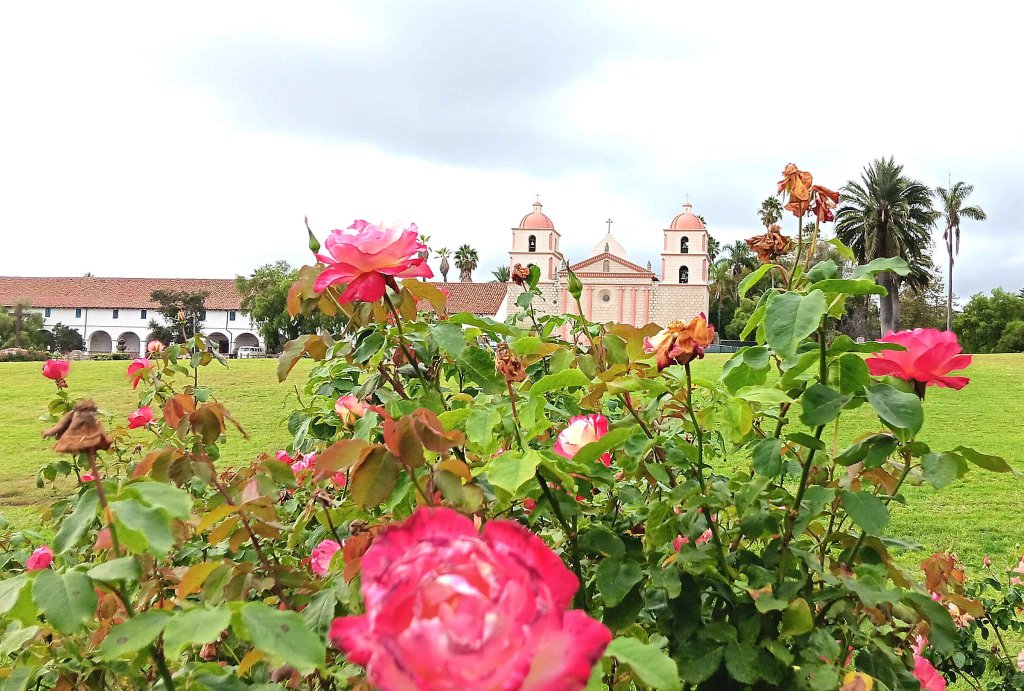
“It is hard to imagine the challenge of building across from Mission Santa Barbara and impossible to imagine a finer solution. The houses on Plaza Rubio neither intrude on the mission nor are upstaged by it. With near pitch-perfect planning, they are far enough away to remain deferential yet close enough to embrace the mission in a framed composition” (Spanish Colonial Style: Santa Barbara and the Architecture of James Osborne Craig and Mary Mclaughlin Craig, Pamela Skewes-Cox and Robert Sweeney, 2015).
“Plaza Rubio, which faces the rose garden of Mission Historical Park, is a small-scale example of early urban planning. The seven homes were designed in the mid-1920s by Mary Craig as a unit, built to stylistically complement the imposing architecture of the Old Mission” (Michael Redmon, Santa Barbara Independent, June 25, 2014).
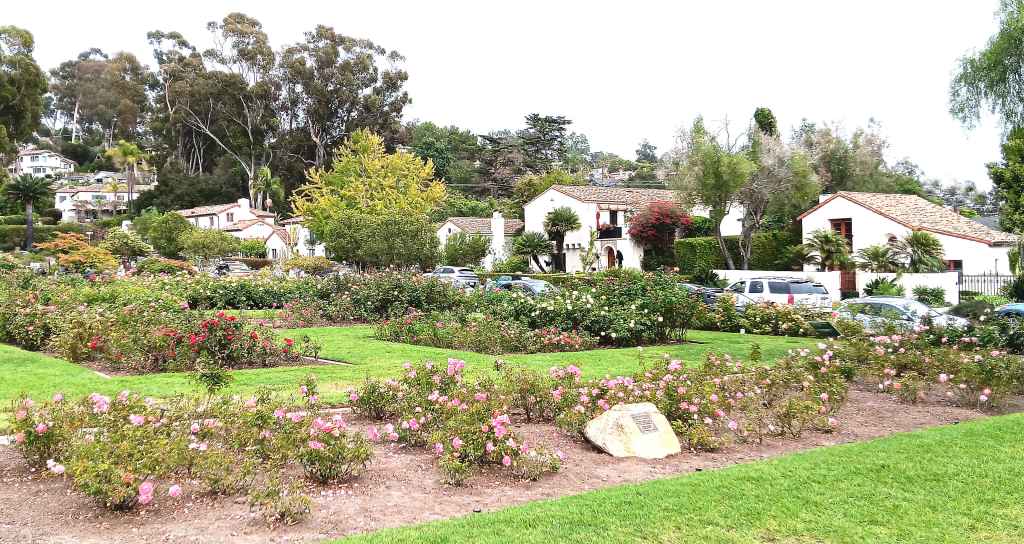
“Fortunate are the Santa Barbarans who live within sound of the Mission bells. Thrice blessed are those who live so close to this famous monastery, whose beauty exceeds any other in town, that they can see it any time of day or night. Plaza Rubio faces the Old Mission, across the mission pasture with its rows of Spanish-California houses with red-tiled roofs” (Santa Barbara News-Press, December 16, 1955).
Mary McLaughlin Craig
“The houses designed by the architect Mary Craig in the mid-1920s, in the 400 block of Plaza Rubio are outstanding examples of the Spanish Colonial Revival style” (Proposed Mission Gardens Historic District, City of Santa Barbara).
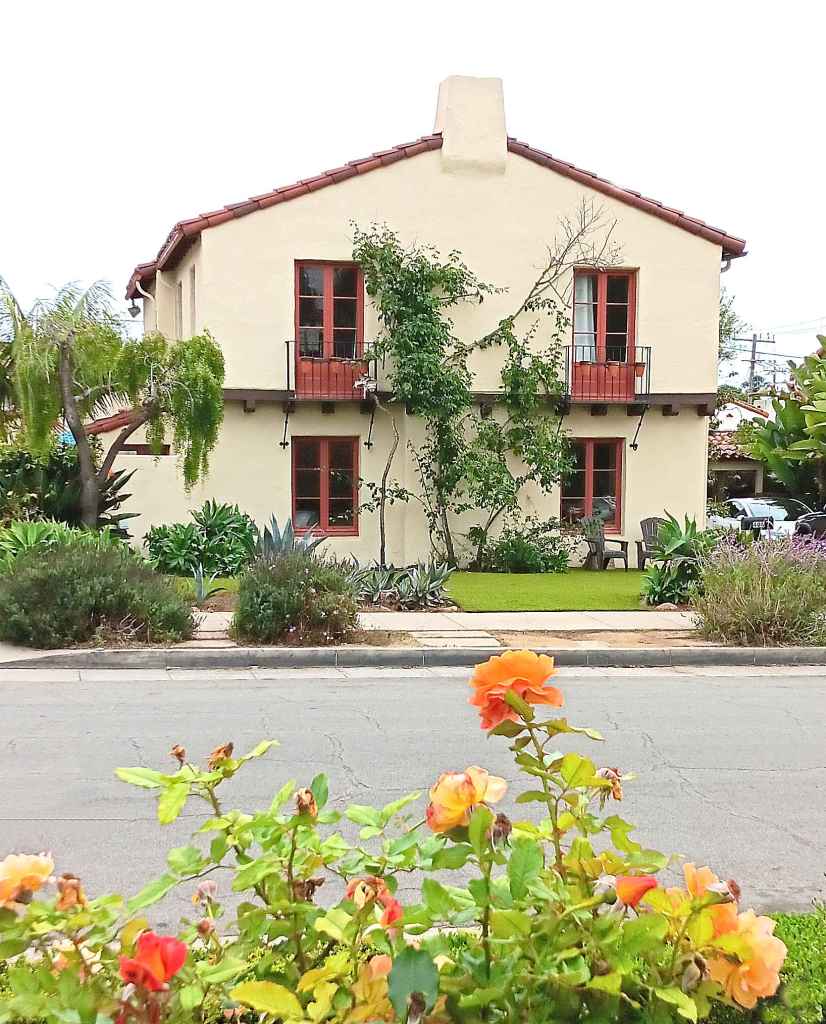
Shortly after it was completed, this home won a prize in the Small House Competition of 1927. “This is a comfortable house of substantial dignity. The overhang at the front and the balcony … cast interesting shadows on the white stucco walls” (Santa Barbara Morning Press, May 23, 1927).
“Mary Craig is indelibly linked with Plaza Rubio. Completed with Margaret Andrews, it represents a remarkable synergy of strong women in the 1920s and coincides with a gradual shifting ethos in a profession historically dominated by males. Here lies Mary Craig’s true legacy” (Spanish Colonial Style: Santa Barbara and the Architecture of James Osborne Craig and Mary Mclaughlin Craig, Pamela Skewes-Cox and Robert Sweeney, 2015).
Margaret Knight Andrews
“The 1920s … saw the portion of Santa Barbara Mission grounds that bordered Plaza Rubio sold by the Franciscan order to fund [1925] earthquake repairs. The land was purchased and donated to the City as a park, by Mrs. J.A. Andrews” (Proposed Mission Gardens Historic District, City of Santa Barbara).
“Andrews was responsible for many of the fine buildings in Spanish architecture for which Santa Barbara is famous … the typical Spanish homes built by her in Plaza Rubio opposite the Old Mission … have added much to the city’s beauty and fame” (Santa Barbara Morning Press, August 17, 1932).
“Near the Mission Santa Barbara and circling around its wide fields before the beautiful south front, is a group of houses lately built in the most approved Santa Barbara methods. All the charm of color and old-world detail which Santa Barbara has lately learned to use in her buildings has been drawn upon to make a delightful neighborhood in this choice situation.
“The owner of the property [Margaret Andrews] … planned a group of houses … and engaged … [Mary] Craig to make the designs.
“When two such women consult to make houses which people will want to live in, we may be sure of the success of the project…. Craig has carried on the traditions of California’s colonial houses…. Without being too intimately placed, the houses have a neighborly atmosphere and a distinctive beauty of trees and street fountain” (California Southland, June 1926).
The Homeowners
Members of the same family have owned this home since 1984. Current owners Andrea Maitra and David Konell told me, “We love the charm of the house, the views, and the significant historical contribution to the architectural legacy of Santa Barbara. The fact that Plaza Rubio was developed and designed by women in 1925 is really something we are very proud of. … A fun added bonus of living across the street from the Rose Garden is having front-row seats to the daily marriage proposals, weddings, engagement and quinceañera photo shoots. There’s nothing better than witnessing the joy of happy events.”
Please do not disturb the residents of this home.
Betsy J. Green is a Santa Barbara historian, and author of Discovering the History of Your House and Your Neighborhood, Santa Monica Press, 2002. Her website is betsyjgreen.com.




You must be logged in to post a comment.