
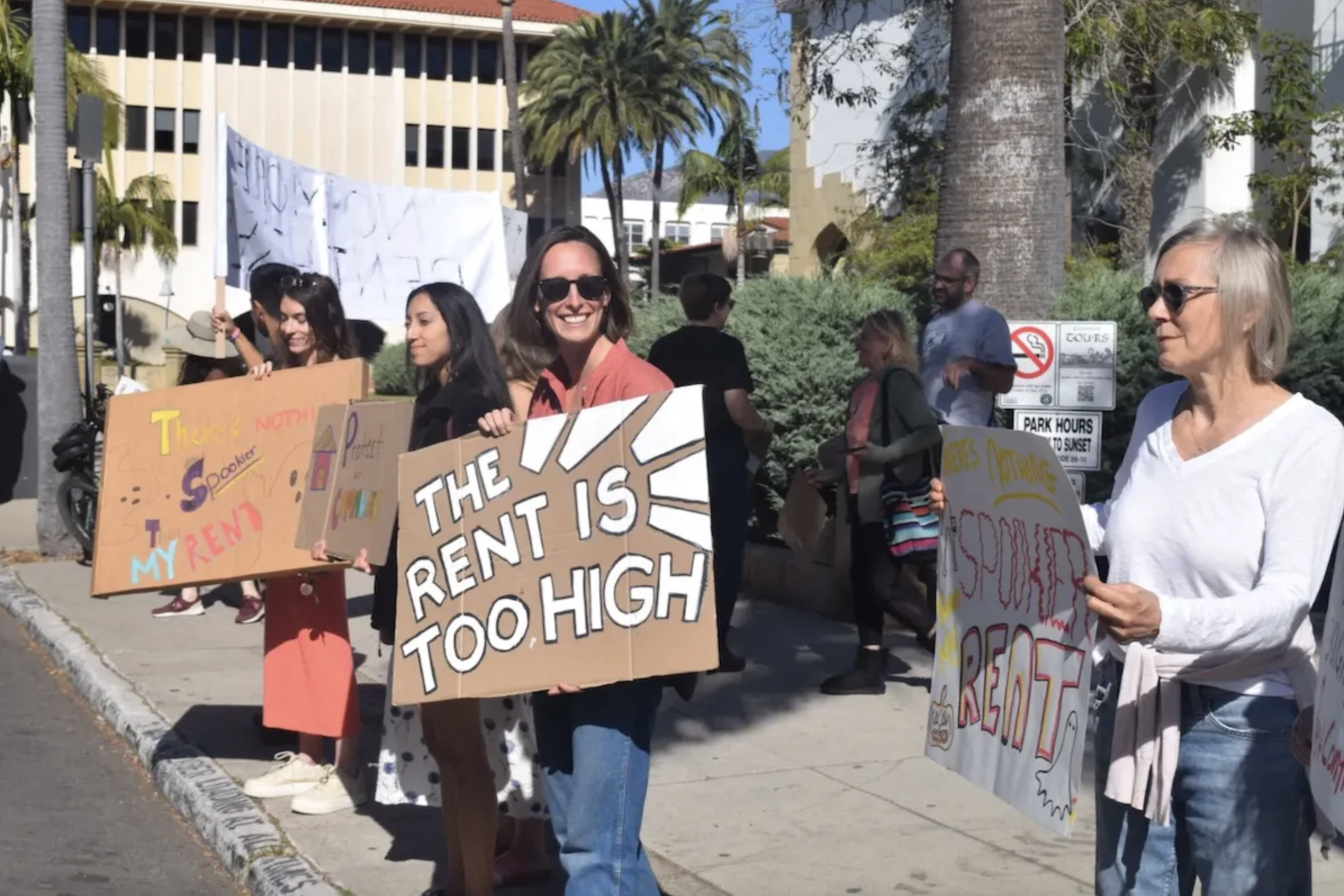
It’s been more than a week since the City of Santa Barbara’s temporary moratorium on rent increases went into effect, and the new rules and regulations have already sparked a wave of confusion and new concerns for tenants and property owners alike.
When the City Council approved the temporary rent freeze on January 13, the intent was to put a hold on rent increases to allow city officials to work out the details of a permanent rent stabilization ordinance over the next few months. But the temporary moratorium also brought unintended consequences, which came to light in the weeks between council approval and the February 26 effective date.
Representatives from organizations providing support to tenants, such as Santa Barbara Tenants Union (SBTU) and CAUSE, say they have been flooded with questions about the rent freeze. Tenants have reached out for clarity about whether their units are covered by the moratorium, and for guidance about how to handle potentially illegal rent increases.
Angelina Sanchez, an organizer with CAUSE who has worked closely with tenants reaching out for help, said the uncertainty around rent increases — and the power dynamics between landlords and tenants — leave renters in a vulnerable position.
“Many tenants are expressing fear, confusion, and financial stress,” Sanchez said. “Some are paying increases they believe are unlawful simply because they cannot afford the risk of nonpayment or retaliation.”
Much of the confusion comes from the effective date of the ordinance. During the 40-day period between the council’s approval of the temporary moratorium and when the rules went into place, dozens of tenants said they were served notices from property owners raising rent prices. SBTU’s weekly help desk and CAUSE representatives said many tenants were uncertain over whether they were required to pay the increased rate.
Ana Arce, a policy advocate with CAUSE, said that a general rule for tenants to keep in mind is that if an increase takes effect after February 26, and the unit is covered by the temporary moratorium, that increase may likely be illegal — even if the notice was served before the effective date.
But that interpretation has already been challenged by some landlords, who have argued that increases are valid if notices were issued prior to February 26. “That interpretation has led to confusion and inconsistent compliance,” Arce said. “Without a clear enforcement mechanism, tenants are left to challenge these increases on their own.”
One tenant, who asked to remain anonymous out of fear of retaliation, described the frustration of trying to figure out the regulations without much input from the city. This tenant described their experience receiving a recent rent increase from the Meridian Group, one of the largest rental companies in Santa Barbara.
In this case, the tenant and several of their neighbors received a letter from property management, which referenced the city’s rent moratorium as a reason for offering a new 12-month lease. The company told the tenants they were being offered a new lease “with a rent increase which will be waived” and later credited to their tenant ledger. The ownership company told the tenants they would not have to pay the new rent price until the “new ordinance is passed or January 1, 2027, whichever comes first.”
This tenant first reached out to the SBTU help desk to check if their unit was covered by the ordinance (the temporary rent freeze covers most properties constructed before 1995, but does not cover single-family homes, condos, hotels/motels, or units that are part of a specialized facility such as school dorms, nonprofit housing, and Section 8 units), and if their increase could be considered illegal.
An SBTU representative who worked with the tenants said the new lease offer seemed to be an attempt to workaround the rent freeze, by getting the tenants to agree to a new price while technically complying with the ordinance as written. But when the tenant in question contacted rental mediation staff, they were told that the city could not offer legal advice.
After a group of tenants spoke during public comment at last week’s City Council hearing, sharing similar frustration about the mediation program, City Administrator Kelly McAdoo addressed the concerns, saying that the city was limited in its ability to offer advice, but that the rental mediation staff is working to intake complaints for further investigation.
“What we can do is enforce the ordinance,” McAdoo said. “Then we are working on a protocol with the city attorney’s office where their investigative staff will be looking into these issues on a complaint-by-complaint basis.”
The tenant who shared their experience said this made them feel like “test subjects” being used by property owners to test the boundaries of the law and the city’s ability to enforce the rent freeze.
“What is the point of this ordinance if there is no enforcement?” the tenant wrote in an email to the Independent describing their experience. “Why do I have to mediate with a property management company that is clearly not complying with the ordinances that directly apply to them?”
CAUSE representatives and help desk volunteers have been urging tenants to be proactive by requesting written communication when dealing with property ownership, citing the language of the ordinance, and keeping a record with copies of every document needed.
Arce said she was concerned about tenants being forced to act as their own legal representatives to enforce city policies, and that the recent confusion highlighted the need for the city’s permanent rent stabilization to include a strong enforcement program. In the meantime, tenants have been directed to begin the process by filing complaints with the Rental Housing Mediation Program.
But even the complaint process itself can leave some tenants feeling more vulnerable. Tenants reported feeling pressure to pay the higher rent rates to avoid eviction threats, late fees, or negative effects on their credit scores. This fear can be worse for Latino and Spanish-speaking tenants who worry that speaking out makes them a target for immigration enforcement.
“With these temporary rent freeze protections we are further seeing the urgency for a strong rent stabilization ordinance to be implemented with an enforcement mechanism,” Arce said. “The community needs to feel security to be able to not only reach out to the city about tenant protections violations but also be able to feel like there is going to be accountability.”
The city published a page of Frequently Asked Questions to provide guidance about the technical aspects of the ordinance. This covers everything from the exemptions to the regulations regarding rent increases served between December 16, 2025, and February 26, 2026. As written, lawful increases from this period may be factored into future adjustments, depending on how the permanent rent stabilization ordinance is structured.
Further complicating matters is the legal challenge planned by the Santa Barbara Rental Property Association (SBRPA), which seeks to halt the temporary rent freeze and invalidate the permanent rent cap ordinance. While the lawsuit has not officially been filed, the threat of legal action has been characterized by housing advocates as an attempt to squash the years-long push to implement a citywide cap on rent increases.
“What’s been notable in the early discussions is that some groups have already begun talking about potential lawsuits and continuing to claim the policy will be harmful in the long run,” Arce said. “That response raises questions about whether some individuals and/or groups are approaching the process with a genuine interest in shaping a workable policy or whether they’ve already decided to oppose it regardless of the outcome. For many tenants and for the city staff, the temporary freeze represents an opportunity to slow down, gather input, and build a strong policy that balances immediate stability for tenants and provides space for long-term housing solutions to resolve our current local housing affordability crisis.”
The temporary rent increase moratorium remains in effect as the city continues to plan for a permanent ordinance. Housing advocates recommend that any tenants concerned over illegal rent increases reach out to SBTU’s weekly help desk (sbtu.org/tenanthelpdesk, Thursdays at 6 p.m.) or contact CAUSE representatives at causenow.org/santa-barbara.
Related Posts



Premier Events

Sat, Oct 03
9:00 AM
Santa Barbara
Fall Plant Sale and Master Gardener Workshop

Sat, Oct 03
7:00 PM
Santa Barbara
Clean Comedy at Carrillo Recreation Center
Sat, Nov 14
7:00 PM
Santa Barbara
Clean Comedy at Carrillo Recreation Center
Sat, Dec 05
7:00 PM
Santa Barbara
Clean Comedy at Carrillo Recreation Center

Thu, Oct 01
11:00 AM
Santa Barbara
In Studio: Julie Anderson Mathias

Thu, Oct 01
7:30 PM
Santa Barbara
Robert Plant with Saving Grace and Suzi Dian

Fri, Oct 02
5:30 PM
Santa Barbara
Pet Blessing at Trinity Episcopal Church

Fri, Oct 02
8:00 PM
Santa Ynez
Comedian Ron White Performs at Chumash Casino Resort

Sat, Oct 03
9:00 AM
Goleta
Out of the Darkness Suicide Awareness Walk

Sat, Oct 03
10:00 AM
Santa Ynez
Chumash Intertribal Powwow Returns

Sat, Oct 03
10:00 AM
54th Santa Barbara Old -Time Fiddlers’ Festival

Sat, Oct 03
11:00 AM
Santa Barbara
OktoBEERfest at Dutch Garden Restaurant!

Sat, Oct 03
12:00 PM
Santa Barbara
Reclaim Your Radiance Fall 2026 Healing Arts Faire

Sat, Oct 03
12:00 PM
Santa Barbara
CWC Docs: “SURFILMUSIC” (2026)
Sat, Oct 03 9:00 AM
Santa Barbara
Fall Plant Sale and Master Gardener Workshop
Sat, Oct 03 7:00 PM
Santa Barbara
Clean Comedy at Carrillo Recreation Center
Sat, Nov 14 7:00 PM
Santa Barbara
Clean Comedy at Carrillo Recreation Center
Sat, Dec 05 7:00 PM
Santa Barbara
Clean Comedy at Carrillo Recreation Center
Thu, Oct 01 11:00 AM
Santa Barbara
In Studio: Julie Anderson Mathias
Thu, Oct 01 7:30 PM
Santa Barbara
Robert Plant with Saving Grace and Suzi Dian
Fri, Oct 02 5:30 PM
Santa Barbara
Pet Blessing at Trinity Episcopal Church
Fri, Oct 02 8:00 PM
Santa Ynez
Comedian Ron White Performs at Chumash Casino Resort
Sat, Oct 03 9:00 AM
Goleta
Out of the Darkness Suicide Awareness Walk
Sat, Oct 03 10:00 AM
Santa Ynez
Chumash Intertribal Powwow Returns
Sat, Oct 03 10:00 AM
54th Santa Barbara Old -Time Fiddlers’ Festival
Sat, Oct 03 11:00 AM
Santa Barbara
OktoBEERfest at Dutch Garden Restaurant!
Sat, Oct 03 12:00 PM
Santa Barbara
Reclaim Your Radiance Fall 2026 Healing Arts Faire
Sat, Oct 03 12:00 PM
Santa Barbara

