

Santa Barbara’s central city is at a crossroads. The era of the city’s retail sector, source of sales and property tax revenues, dependence upon automobiles as a part of shopping is over. The explosive growth of online shopping has decimated the retail sector.
However, people want the experience of being together and shopping and dining more urgently than ever. Cities of our size can capitalize on the central city as a gathering and entertainment zone with many dimensions and experiences.
We have been here before. In the 1980s, downtown Santa Barbara was undergoing the challenge of change. Historically the city was the cultural, business, and retail center of the Central Coast. But the growth of Goleta and the growing suburbs in the region came with new malls at La Cumbre and the Camino Real Marketplace. Ventura, Oxnard, and Santa Maria were competing for business with suburban malls as well.
In the historic center of Santa Barbara’s downtown during the ’80s was El Paseo, and State Street was lined with shops that offered a diverse range of shopping opportunities but no major department stores or chain stores.
Also in downtown were: the Lobero, the Granada, Arlington, Alhecama, and Mission theaters. The Santa Barbara Museum of Art, Contemporary Arts Forum, Historical Society Museum, and the Trust for Historic Preservation’s adobes. The city’s historic center, including De la Guerra Plaza, informed our world-famous architecture and sense of place. Downtown Santa Barbara offered a rich tapestry of cultural and entertainment experiences to be enjoyed by local residents and visitors from around the world.
As the decade worn on, a combination of empty store fronts, homelessness, and indecision on the part of decision makers were taking their toll, making State Street feel abandoned, unfriendly, and unsafe. The city’s consultant’s recommendation was that a downtown mall was the solution to stabilize the retail and visitor sectors of our economy. The national brands of Macy’s and Nordstrom’s, the Gap, Banana Republic, and so on were predicted to be the driver of downtown revitalization.
There were close to 25,000 malls in the U.S. in 1986. Today there are fewer than 2,000.
In fact, Santa Barbara in the 1980s was rife with artists, arts advocates and supporters who urged the city’s nonprofit arts organizations to become involved in Santa Barbara’s redevelopment. Following the Arts Edge Conference in 1984, co-sponsored with the California League of Cities and the California Gold Conference, in 1986, the Santa Barbara News & Review, predecessor to the Independent, published a map of Santa Barbara’s Historic Cultural District, advocated by artists, arts organizations, and a majority of the members of the City Council.
In the years that followed, the City Redevelopment Agency commissioned a strategic plan for developing Santa Barbara’s arts infrastructure and provided seed money for needed repairs and improvements to our aging cultural venues. The private philanthropic community enthusiastically embraced the projects.
As the design of Paseo Nuevo moved forward, the role of the Downtown Organization expanded. In concert with the arts community, the Downtown Organization promoted the area as a cultural destination: an Historic Cultural Arts District anchoring programing in the heart of the city.
The competition for developer of Paseo Nuevo was won after community-wide charettes by the firm that recognized that culture and commerce were aligned in the Arts District. Center Stage Theater, the Contemporary Arts Forum (now the Santa Barbara Museum of Contemporary Art) were built as a part of Paseo Nuevo. There was a sense of celebration in Paseo Nuevo. Downtown Santa Barbara was marketed as an Historic Arts District integrated into the plaza and paseo system.
The revitalized downtown quickly secured our stature as an arts destination: A City of the Arts.
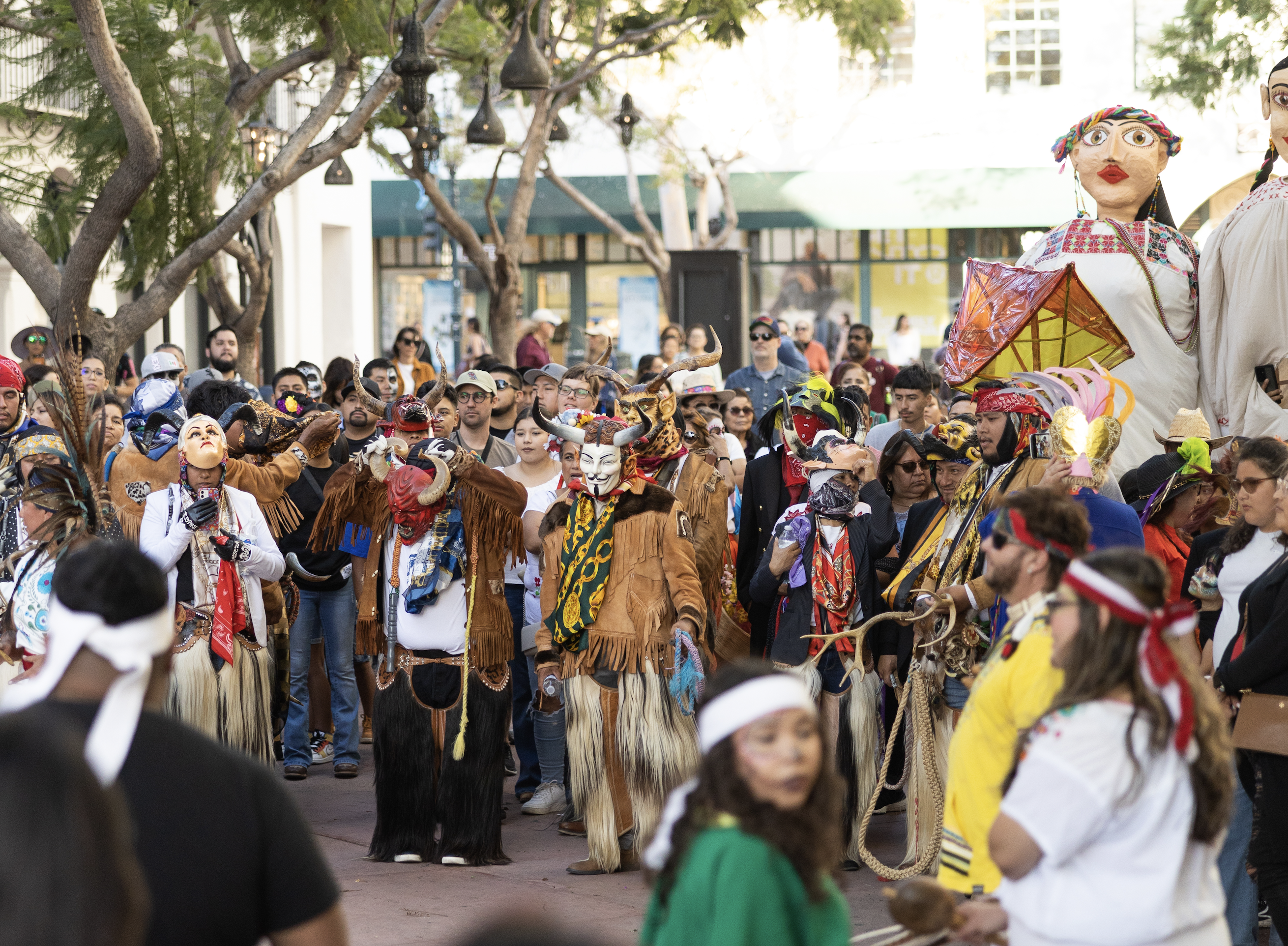
Over the last dozen years, as online shopping decimated brick-and-mortar stores, malls have been closing rapidly. Yet here, people come downtown in great numbers. The throngs on State Street gather and shop and dine and are entertained and engaged.
It is a welcoming place.
New arts venues are being positioned along State Street. The Santa Barbara International Film Festival is creating a film center in the heart of downtown. Across State Street the Music Academy of the West is creating a music education center.
The Lobero, Granada, Ensemble, Arlington, and Center Stage theaters are alive and well. The Santa Barbara Museum Art is mounting blockbuster exhibitions and Santa Barbara Contemporary Art Museum has exciting shows and events happening in the heart of downtown.
As the retail sector is reimagined, the arts remain a mainstay, and they dramatically enhance our local quality of life and attract people to the Arts District.
The time to reclaim our brand as a City of the Arts is now. Security cameras and cleanup crews are not going to revitalize the downtown on their own.
Coordinating and marketing the diverse programing of our established nonprofit arts organizations and multitude of galleries and creative spaces will reestablish Santa Barbara’s brand. We need to create a place of celebration.
We are a creative community.
Strong marketing and media is critical to reclaim our reputation and brand as an arts destination.
We don’t need to wait for another consultant’s plan. We have what it takes right now.
We need to embrace our brand and Celebrate Santa Barbara, City of the Arts on the American Riviera.

