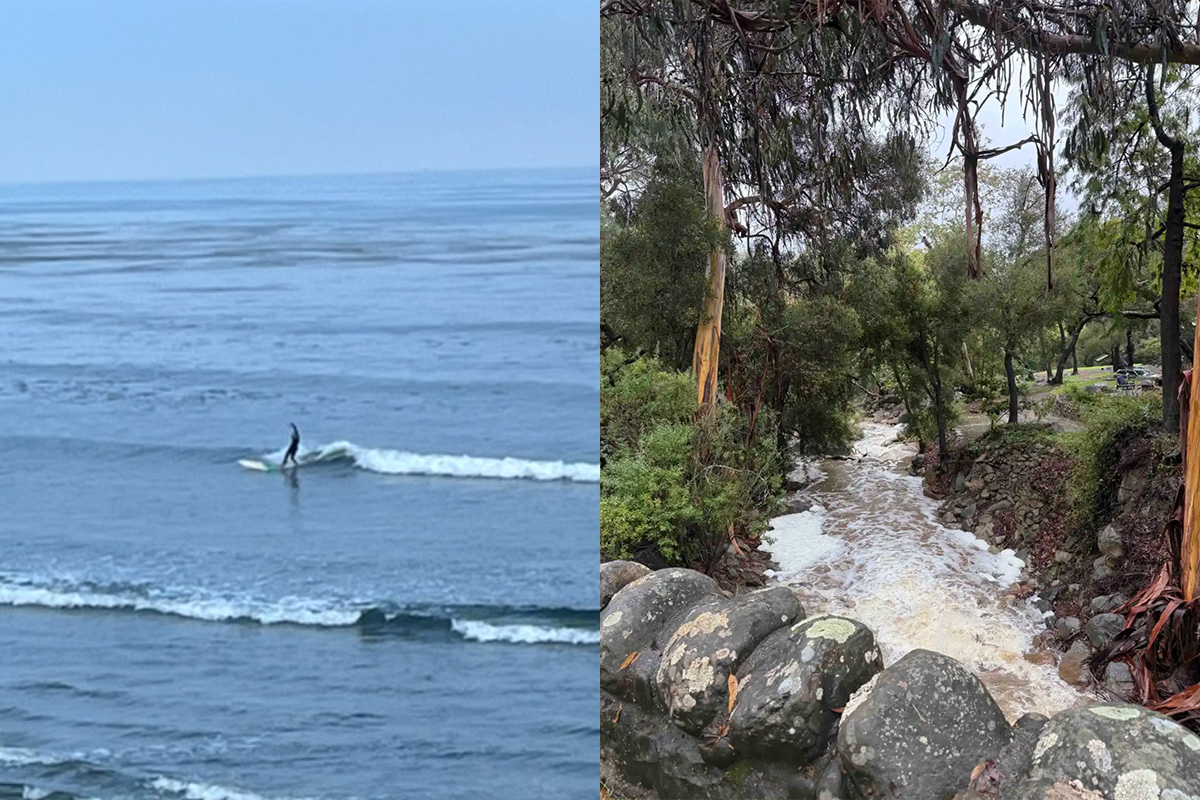
The surf was up, but so were the bacterial levels.
After record-breaking rainfall earlier this month, county health officials urged beachgoers to stay out of the ocean. The warning was not due to waves (although some areas did have a double overhead), it’s about what floats in them.
“Storm water is untreated rainwater that flows through the drain system into creeks, the ocean, and other waterways,” Santa Barbara County Environmental Health Services said in a rain advisory issued November 14. “Contact with storm water while swimming or surfing may increase the risk for certain types of illnesses such as rashes, fever, chills, ear infections, vomiting, and diarrhea.”
With the intense start to a rainy season, the runoff that is produced carries a multitude of pollutants. It drags along motor oil, fertilizers, pesticides, human waste, or even Lime scooters, as reported by the Daily Nexus, straight into the ocean — often near the same spots surfers paddle out or shellfish are harvested.
County health officials recommend avoiding ocean contact for at least 72 hours after significant rain, and warn shellfish harvesters to wait a full 10 days, due to the risk of chemical and viral contamination that cooking can’t fix.
Despite the warning, not all folks waited to reenter the water.
“I went surfing Friday, Saturday, and Sunday last week,” said Dario Bucy, a Mesa Lane regular who lives downtown. While Bucy said he had not gotten sick from surfing before, this time “it felt like I had a cold — lots of coughing and sore body, low energy for three days. My new rule after getting sick this time is to wait 72 hours after the first big rain that clears out creeks — or you could get sick for 72 hours!”
Lucian Scher, a UCSB grad student in Environmental Data Science, also ignored the warning and the brown-colored water. “I surfed on the day and the day after a big rain. I knew I was not supposed to, but at sunset, the wind died and the swell was still pumping …,” he said. “My sinuses were screaming the next few days. I couldn’t breathe out of my nose, my head hurt, and I felt generally feverish.”
Health officials stress that symptoms like those — fever, vomiting, respiratory issues — aren’t uncommon among surfers and swimmers after rain events. And the stormwater does not only negatively affect human health but also the health of the entire ecosystem.
“High bacterial levels, pesticide, herbicide, and motor oil grease flushed into the ocean with the storm runoff may impact shellfish beds,” the County Health Department stated. “Adequate cooking of shellfish will destroy harmful bacteria but may not be effective in killing viruses … and does not eliminate chemical and metal pollutants.”
In short: Runoff polluting the waters off our coast is real. Wait a few days after a storm before grabbing your surfboard.