
Chadillac Green:
The Wonderful Wizard of Arts
The Multifaceted Man of Many Mediums
Talks About Tattooing, Murals, Music, and More
By Roger Durling | December 18, 2025
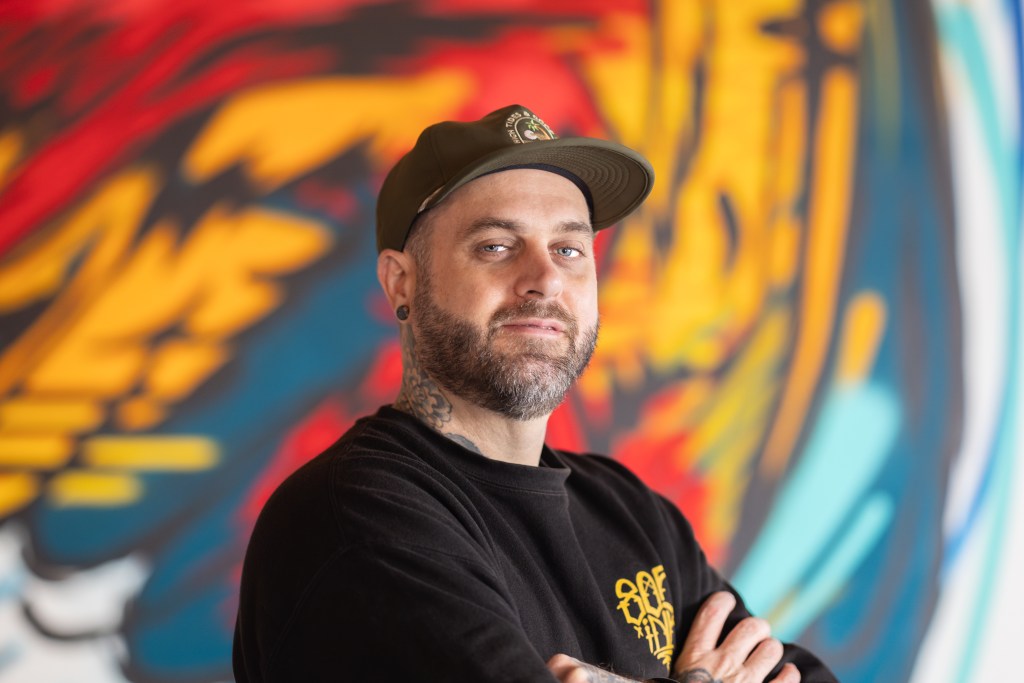
“Art to me means self-expression; it is a way to escape,” says Chadillac Green. “It lets me bring out my emotions for others to feel in their own way.”
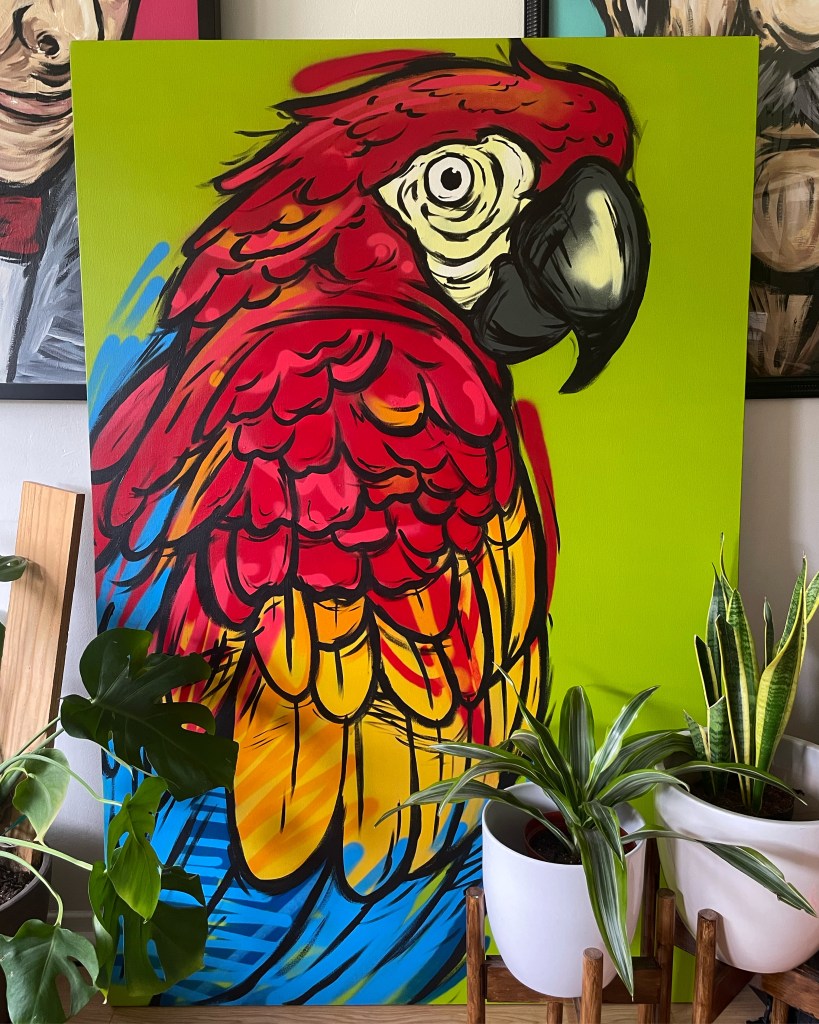
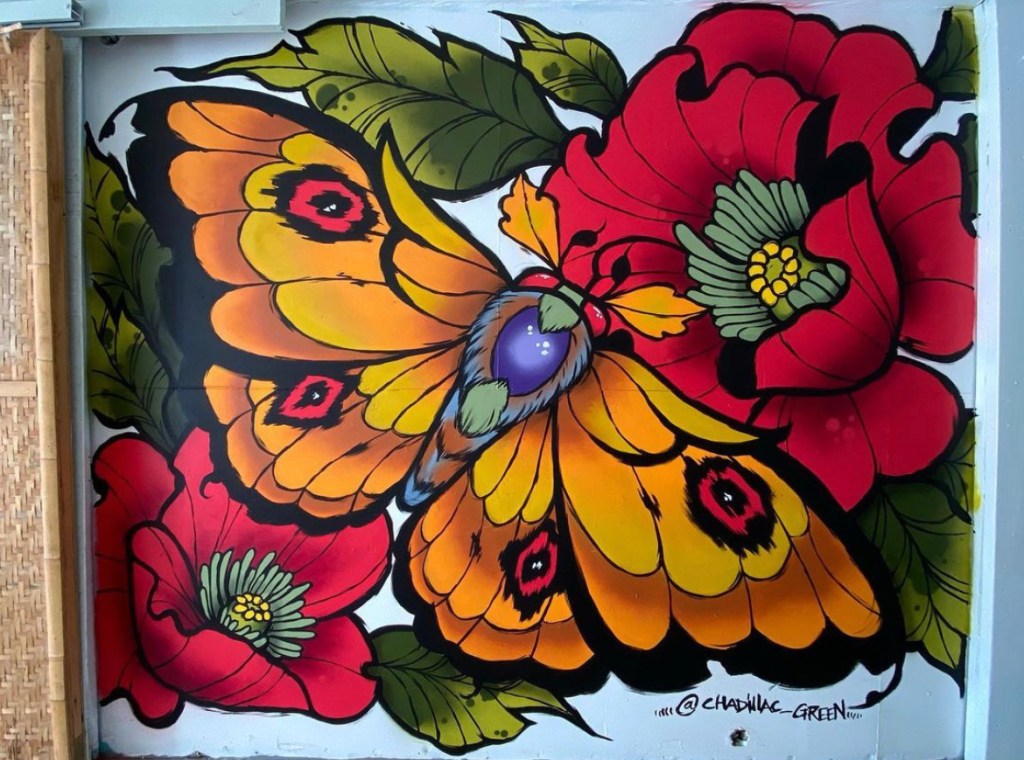
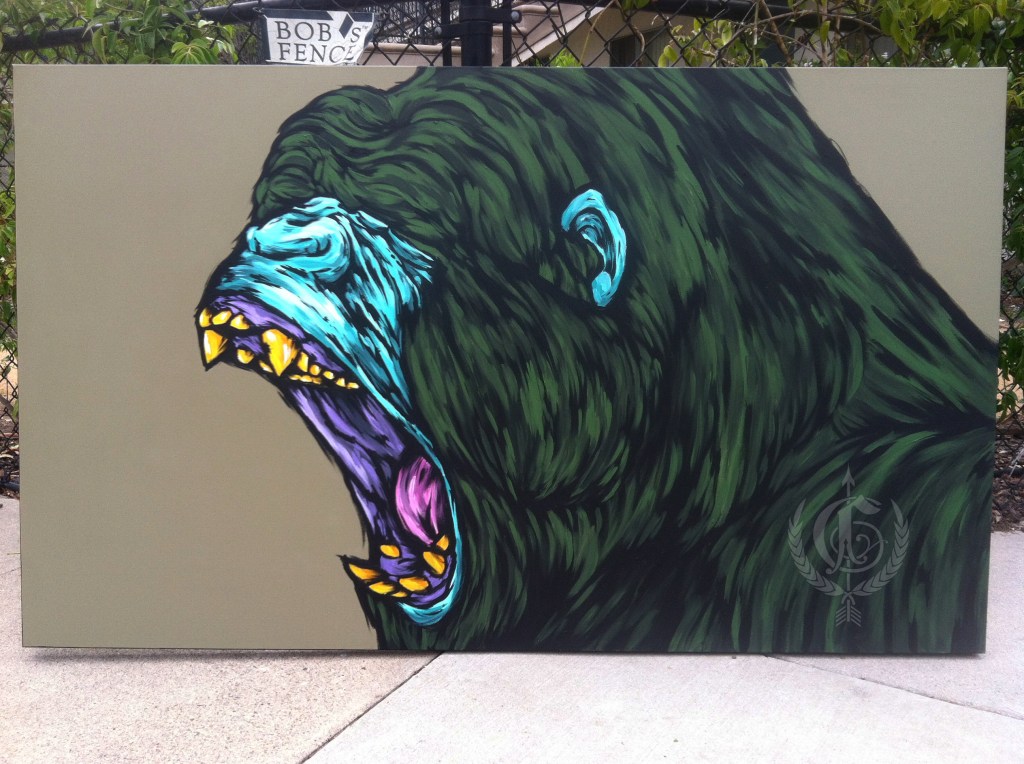
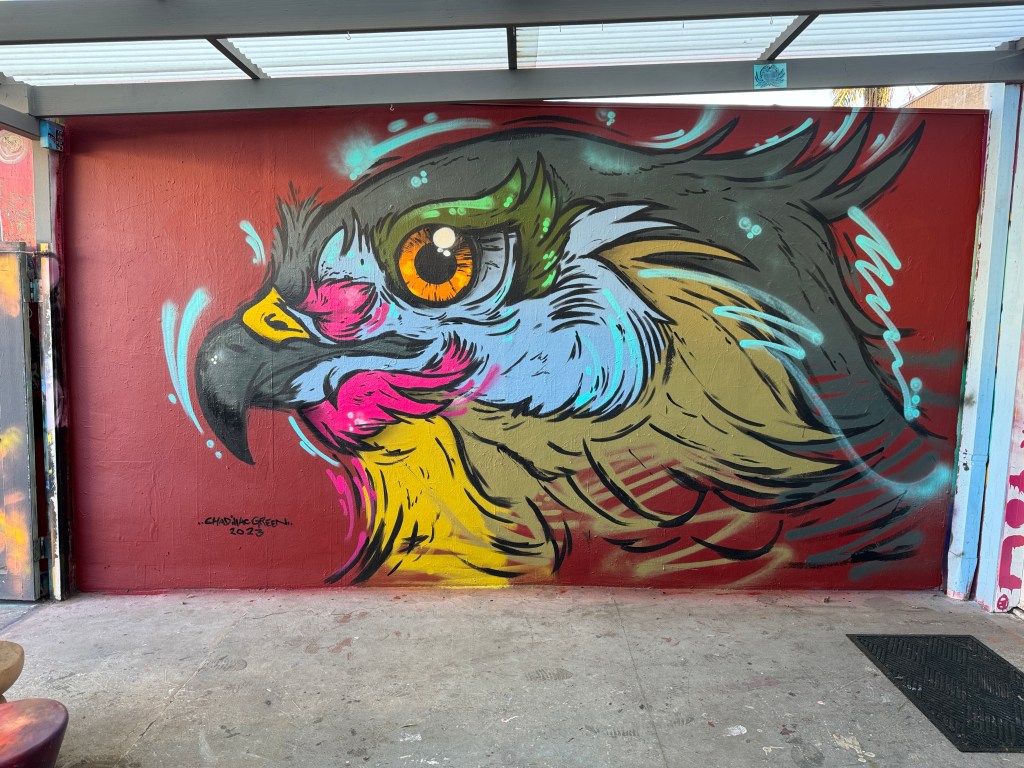
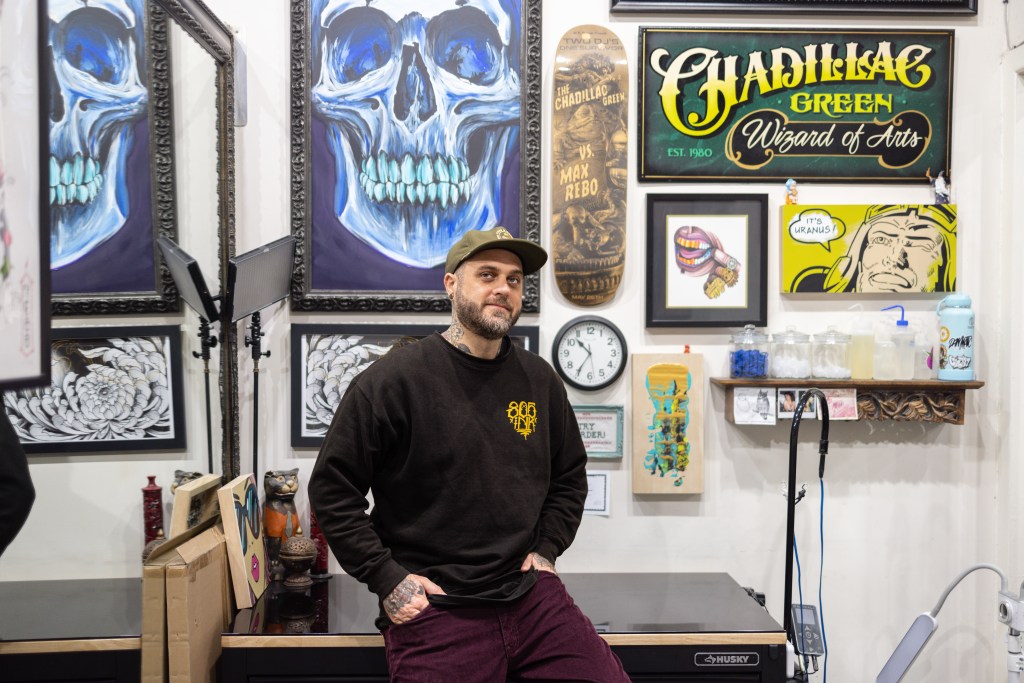
In the past few years, art lovers have noticed the quiet yet steady evolution and maturity of Chadillac Green — one of most immediate artistic voices in Santa Barbara. This multifaceted artist is skilled in canvas painting, in murals, and in performing as a deejay, as well as being one of our best-known tattoo artists in town. In whatever medium he chooses, Green’s work is evocative — effectively blending a simple, pure, childlike aesthetic with sophistication and wit. He succeeds in creating a collective language in whatever form he’s working on — with kinetic bold lines, bright colors, and an uncanny understanding of composition.
Working quickly and at times intuitively, Green adjusts his images to capture the spontaneity of the moment. His murals in our city have become iconic and ubiquitous.
“His style pays tribute to the past while also pursuing a contemporary voice in the progression of the art form,” explains artist Skye Gwilliam. “Chad pays homage to the pop giants such as [Roy] Lichtenstein and Patrick Nagel, bringing the iconography that shaped his youth into the public sphere through his own signature style.”
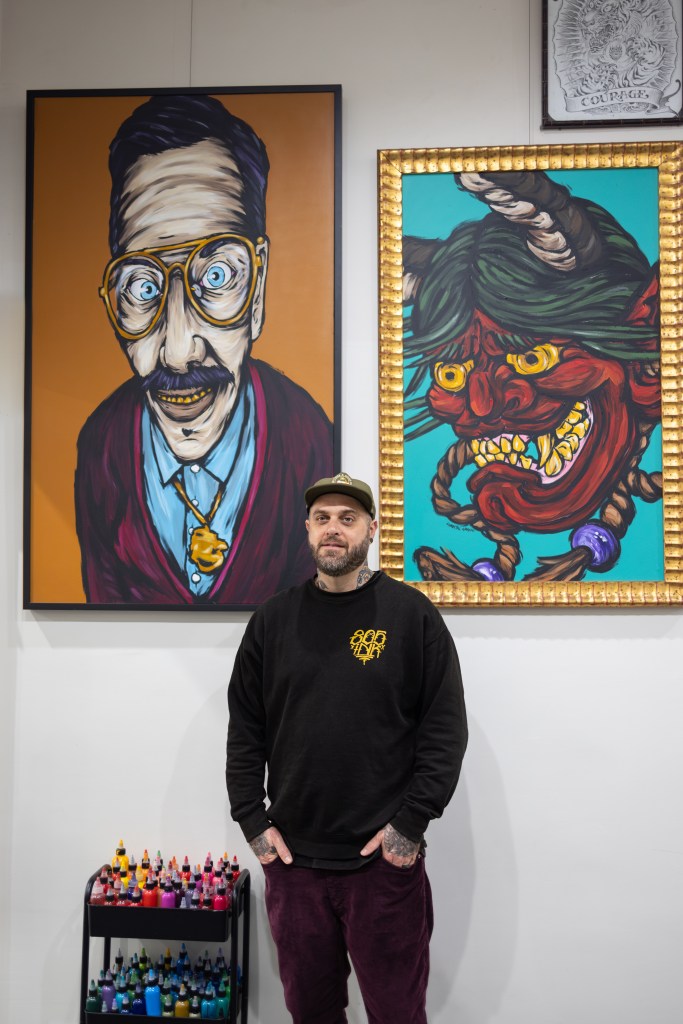
Green’s work is street art that is no longer rejected as deleterious or counterculture. Through the past decades, murals, graffiti, tattoos, and even disc-jockeying have evolved many times over to be considered viable forms of expression.
“Twenty years ago, tattooing and ‘street art’ were considered fringe,” says Kenneth Knox, the original owner of Santa Barbara’s iconic tattoo shop 805 Ink who now owns the Private Studio tattoo shop in Paseo Nuevo. “These days, so many artists with less-than-conventional backgrounds are finding more success in mainstream circles. I feel the art scene as a whole is so much better off for it,” says Knox.
When I ask Green what the connection is between all the facets of his artistic career, he responds without hesitation: “I’d say it would be hip-hop. People say it’s just a genre of music, but I believe it’s a way of life. The style of pop art, the color and boldness. It has influenced my graffiti/murals. Big boldness with my tattooing. With my deejaying, no matter what genre I play, it’ll all have that hip hop feel to it.”
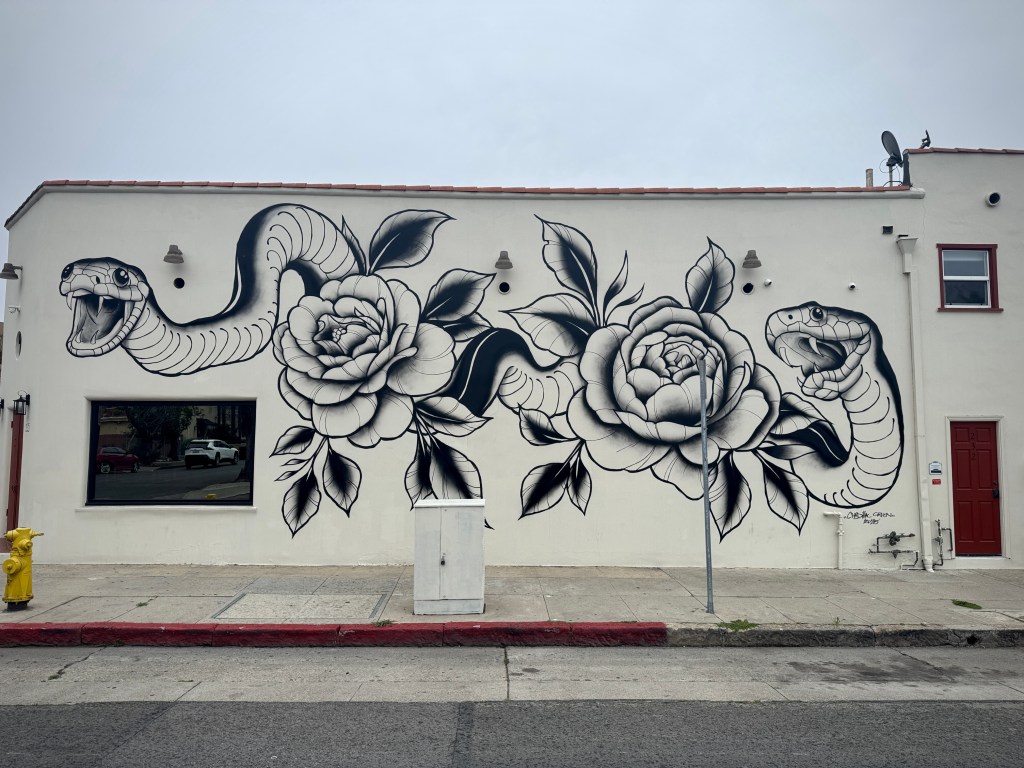
His work is omnipresent. You’ve seen his mural at the Blue Owl restaurant or as you drive past the Seven Bar and see a wall decorated with snakes. Over at Eos Lounge, you’re face-to-face with a lady’s lips and a lollipop, and a striking young African American woman smoking greets you at Fuzion Gallery. You can also hear Green spinning vinyl at the Wildcat Lounge, Paradise Springs, and other venues in town.
“Muralists like Chadillac are perpetually underappreciated for their contributions to our cultural heritage,” says Nathan Vonk, owner of Sullivan Goss Gallery, who featured Green’s work in an exhibit titled The Muralists in November. “While their names might not be as well-known as artists who you’ll find in traditional galleries, their work has an enormous impact because it inhabits our public spaces. So, we see it while we go about our daily lives, and may see it many times in a single day or week. For both locals and visitors, it becomes a fundamental part of our visual identity,” Vonk says.
“This is a dude that loves making art,” says Knox. “It can be personal and intimate like a tattoo that only a few people might ever see, or a public mural that is there for all to enjoy. In my experience, it’s all about the process of making it, and whatever happens afterward is just icing on the cake.”
In 2015, Fuzion Gallery on State Street (co-owned by my stepson Alex “Lunchbox” Launspach) featured one of Green’s earliest shows of his canvas work in Santa Barbara. I was enthralled by a striking painting that featured an anthropomorphized lemur with blue hair and wearing a yellow tuxedo. It has a black background recalling classic portraits of the Golden Age — yet it’s completely modern and whimsical. The lemur is looking directly at you, and his tongue is subversively sticking out. I have been collecting paintings for many years, and this work is a prized possession of mine that is prominently displayed in my office. I love sitting in front of it as I hold meetings — and watch people’s reactions to it.
“There is an extraordinarily high level of craftsmanship in all of his work,” says Vonk. “I am still not sure how he creates such incredibly clean lines. The result is that his work has an enormous amount of visual gravity. It draws your eyes in, and it is hard to look away.”
“I wanted to put my name out there,” Chadillac explains was his first attraction to graffiti as a young man. “I knew it was vandalism, yet I needed to express myself. I needed to let things out there.”
He was born on May 26, 1980, and learned about graffiti in 5th grade while growing up in Lee’s Summit, outside Kansas City, Missouri. By his own admission, he says he was a problem child. “I didn’t get along with school,” he says. “I skipped a lot, and I would get kicked out, but I always drew. I was always into art. When I was in school, that’s all I cared about.”
A friend told him about tagging — the act of quickly writing a formalized signature with the artist’s non de plume. “It blew my mind,” Green says. “People didn’t know who you are, but they knew your name. Nobody knew who the superhero was, but they knew his name.”
Young Chadillac got a marker and would write the name “GUNKO.” “It was the first word that came to me,” he says. “A friend will give you a name, or you would come up with one that you felt suited you. I would tag around school.”
He continues, “I remember driving to visit my aunt in the city and noticing the graffiti and spray paint. It expanded the horizons of what I could do.” By 6th grade, he would paint in sewer tunnels with spray paint, adding flair or “character” to his letters. In 7th grade, he became more active. He started doing the back of buildings and rooftops. He would skateboard downtown to do graffiti. By 8th grade, a friend, Brad, introduced him to his older brother Matt. They both started digging deeper into the graffiti culture through videos and magazines. They would look for “permission walls” — legal, sanctioned walls where artists can create graffiti or street art without fear of vandalism charges. He was mainly doing words and characters around this time.
It was then he started to think of graffiti as art. “You had to know color values,” he says. He learned the concept of three-point perspective — the usage of three vanishing points, with two on the horizon and a third one either below or above it to create a sense of depth. He would use bright pinks and purple. Growing up in the late ’80s and early ’90s, neon colors were everywhere.
“In high school, I was really into caricatures,” he says. “The artist Keith Haring (an American artist whose pop art emerged from the New York City graffiti subculture of the 1980s) was an early inspiration. My uncle, Joe Westmoreland, lived in N.Y.C. and inspired me a lot. He would send me mixtapes and would send me photos of N.Y.C. with graffiti, and he’d wear a Keith Haring T-shirt.”
Chadillac’s dad, Bob Westmoreland, worked for a company that sold fire hydrants to the city. His mother, Pam, was the librarian for the high school. When she found out that Chadillac was doing graffiti, she bought him spray paint for Christmas.
“Dad thought I would get in trouble,” he said. “He liked the things I did when I had permission. Graffiti affected my life so much growing up. My bedroom was completely covered in graffiti.” After tagging as GUNKO in 5th grade, he started using SINT in 8th grade. His family didn’t have much money, and he always felt broke. “I only had one cent to my name,” he says, smiling. “I’d practice writing different names until I found something that fit me.”
In high school, his friend Steve Campbell introduced him to tattoos. “I thought it was like graffiti, but it is forever,” Green says. “It’s your art on people.”
He also started to deejay when he was 16. “I learned how to ‘match beats’ from my friend Scott,” Green recalls. “I was really into hip-hop. I would play house parties.”
He moved out of the house after finishing school, because he didn’t want to go to college. When he was 21, he got arrested for tagging SINT. A citizen called the police after seeing him tag a wall that was already full of tags. He was in jail for just one night because they couldn’t find the owner of the store to file charges. His parents weren’t too happy. After that, he started using the name HUEY. “I really liked Huey Lewis and the News,” he says. “HUEY stuck with me.”
Green began tattooing at age 25, trained by Jeremy Latta. At first, he thought it would be great to be doing tattoos and not have a tattoo on his own body. Then he realized that he wanted to see what it was like for himself. “I thought it was cool!” he says. “I got a skull with guns. It was a great feeling.”
Around that time a friend of his, Dan Matic, started calling him Chadillac, and he got a tattoo on his hand with the Cadillac emblem. The name stuck. The last name “Green” came about when he signed up for Instagram. Chadillac Green was born.
“I have always lived by an alias,” he says. “In graffiti, you always have a name.” And in that spirit, he asked me to refrain from using his real name in this story.


“Excuse Me?” (left) and “Cool Like That” by Chadillac Green Credit: Courtesy
Sixteen years ago, Green was ready to get out of Missouri. At first, he thought he would move to New York, but after visiting San Diego, he fell in love with California. Through mutual friends, he was introduced to Kenny Knox, who at the time co-owned 805 Ink on State Street with JJ Ortiz. Green did a guest spot for five days in 2008 during Fiesta, and six months later, he moved here.
“He is one of the best at connecting with his customers,” says Knox. “Effortlessly friendly, but also stern when he sees someone making a bad choice. Good tattoo artists know when to end a bad train of thought. All that aside, he is a very well-rounded tattooer.”
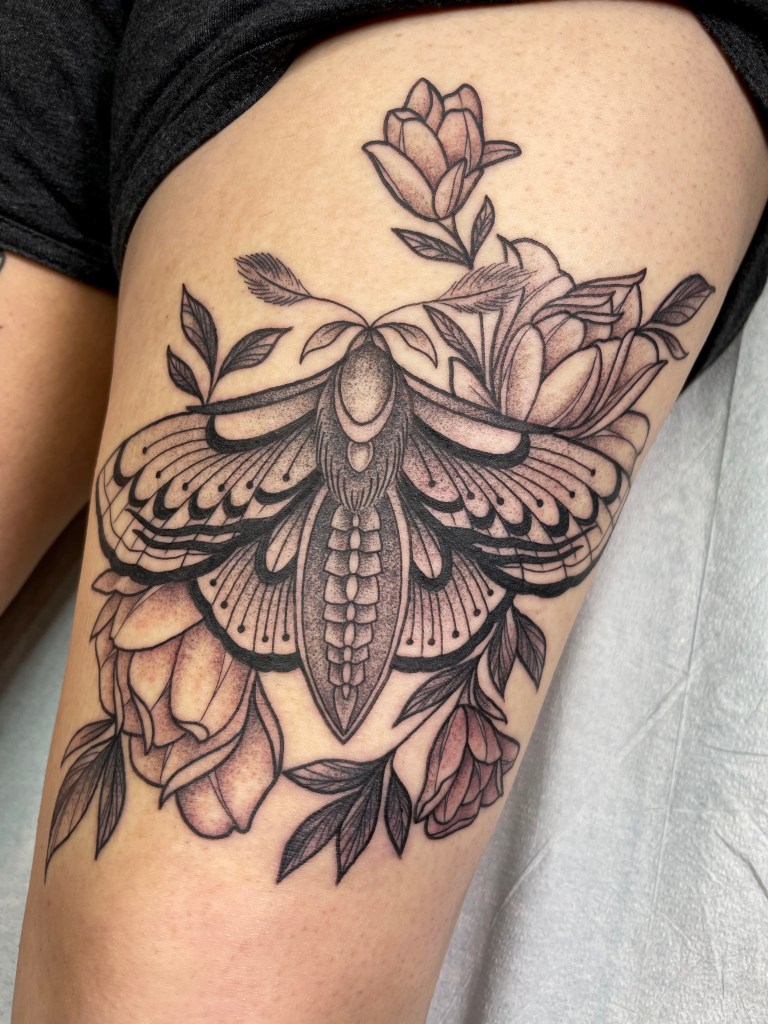
When he started working in Santa Barbara, Chadillac knew he needed to up his game. “You have to be more perfect,” he says. “Tattooing is 100 percent damage control.” His work is now instantly recognizable. His tattoos look clean and are done in a palette of blacks and grays. He keeps a book of line drawings that he works on to this day in his free time. He still works at 805 Ink Monday through Friday.
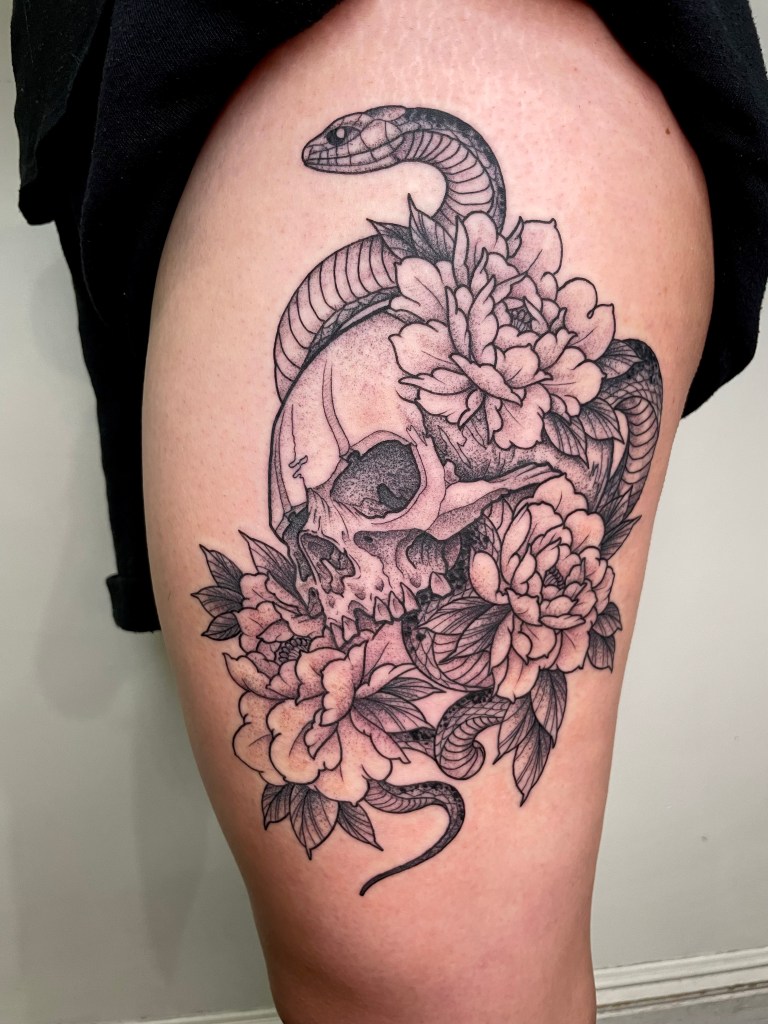
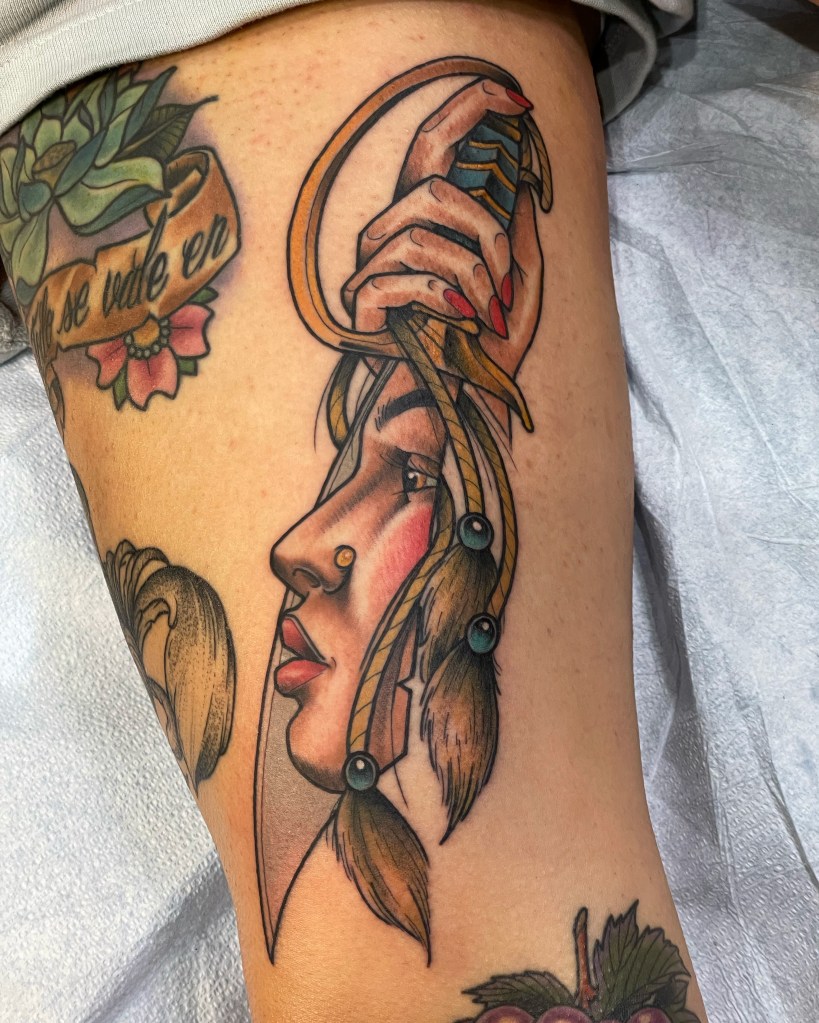
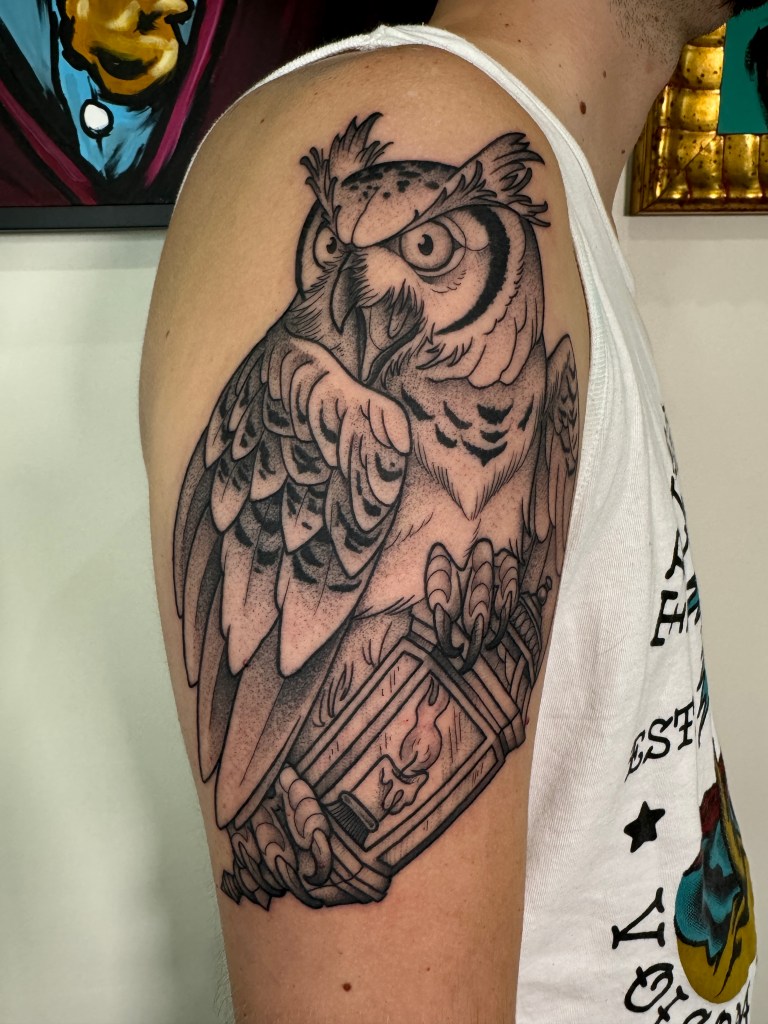
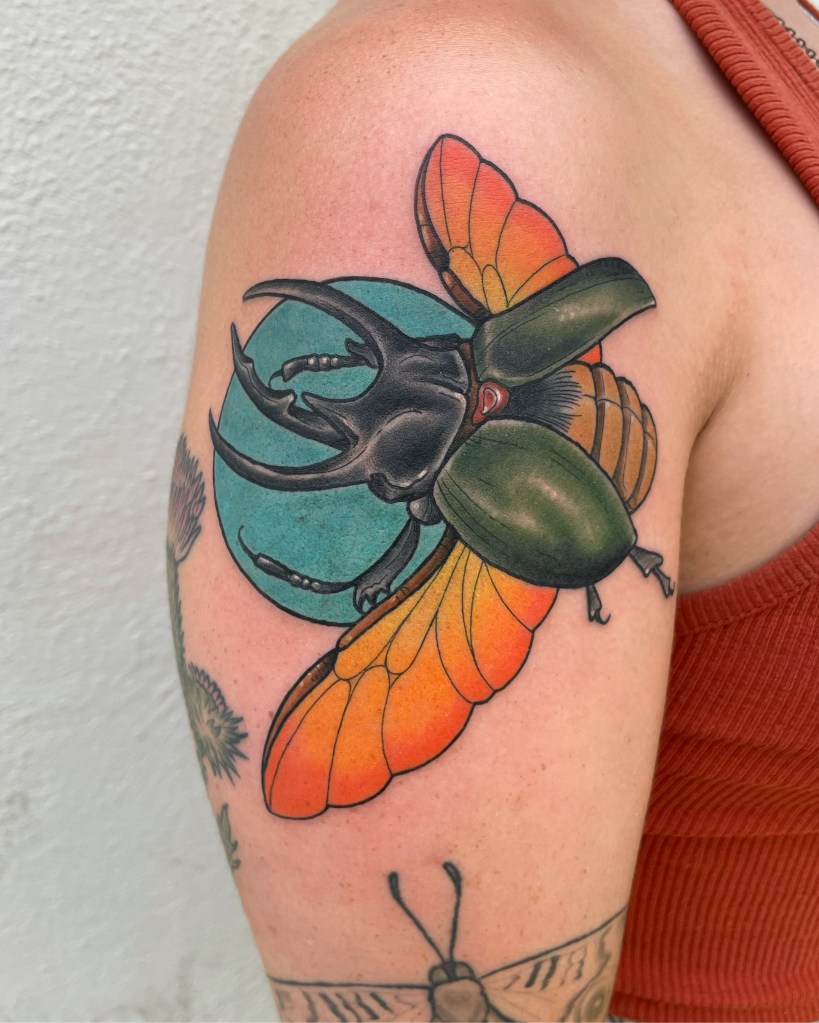
“I didn’t paint on canvas until I came to Santa Barbara 15 years ago,” Chadillac says. “I needed to express myself in art besides tattooing. At first, if I painted on canvas, it was graffiti. It was weird. I didn’t know what I was doing.” He wasn’t mixing the paint before application. He would do it directly on the canvas. Eventually, he figured it out. Because he was trained in graffiti — doing things that were illegal — he works really fast. He started doing paintings of skulls because that’s what he was into at the time. Then he progressed to owls, but gave up because friends started calling him the Owl Man.
Around 2014, I saw an arresting exhibit of his in the basement of Fuzion, where he featured a series of famous people who get high, including The Dude, Cheech and Chong, Willie Nelson, and Notorious BIG. All with very bright neon backgrounds.
“I like the challenge of doing murals,” he reveals. “It’s fun. I like painting big. It’s hard for me to paint small.”
Green’s first mural was at the now-closed REDS in the Funk Zone. It was called “Life Is a Voyage” and depicted an old couple. He calls that mural his footprint in this town. Ralph Lauren did an ad shoot in front of it.
He has now painted several murals in our city, but none as impactful as the memorial to George Floyd painted during COVID with Griffin Lounsbury. From the start, there were strong reactions to it, both positive and negative. The mural emblazoned with the words “Black Lives Matter” started being vandalized. “People would write vulgar things,” Green remembers. “As soon as it was fixed, somebody else would damage it. To keep it up was too much. That was heavy, to see how it affected people. Watching people react to it.”
Chadillac has been married to Teresa Westmoreland for two years now, after dating for seven. She’s a chocolatier working in Carpinteria and also an artist. She paints and does jewelry, and both husband and wife create in the same room together. He is also proud to be a stepdad to her son, Jude, and it has earned him a new alias — Jude calls him Step Chad or CHADA.
Asked about all the creative facets of his life, Chadillac says they are all separate. “But they balance me,” he says. “Canvas painting, murals, tattoos, deejaying, and family life … they are different alleyways to me. I’m thankful that I am able to be an artist.”
Editor’s Note: This story has been updated to correct the name of Chadillac Green’s collaborator on the George Floyd mural to Griffin Lounsbury.


You must be logged in to post a comment.