
Here Today, Gone Tomorrow:
What Happens After an ICE Arrest
Jupiter Castillo, a UC Santa Barbara Grad and Healthcare Worker,
Shares His Experience of Detention and Deportation
By Ryan P. Cruz | January 15, 2026
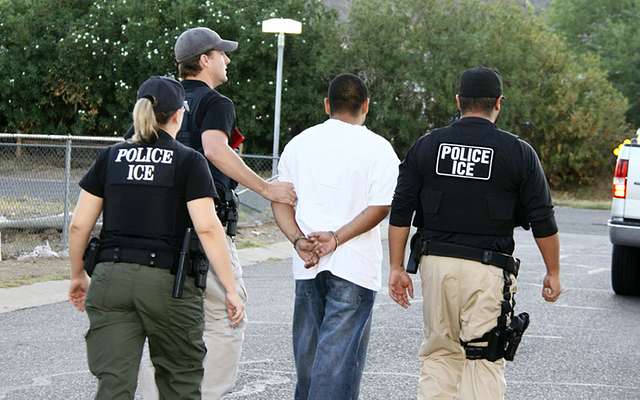
It was supposed to be just another boring Tuesday.
When Jupiter Lara Castillo woke up on the morning of September 16, 2025, he didn’t expect his life to be turned upside down just a few hours later. When he got dressed in his usual work scrubs and got into the car he had just recently bought, he didn’t expect that he would be stripped of both and would not return home that night.
Sure, he had seen the videos on social media and read news headlines about masked ICE agents arresting and deporting undocumented immigrants across the country. Here on the Central Coast, more than 1,200 people have been arrested by federal immigration enforcement this year, including at least 150 in Santa Barbara County during the final week of 2025.
Castillo, a healthcare worker, UC Santa Barbara graduate, and DACA recipient whose legal status had been secure for nearly two decades, hoped that he would be safe from facing the same treatment, especially since he had been in the country since he was 7 years old, and he had always renewed his paperwork. But still, he said he had a nagging fear that — because of the way he looked, and because he was born in another country — he might be seen as a target for deportation.
Those fears came true later that morning, when Castillo made a quick stop to turn in some work registration papers at the Department of Social Services building on Calle Real outside Goleta. It was the beginning of a long, chaotic, and emotionally draining journey over the next several weeks, as Castillo was shackled, thrown into unmarked vehicles, and driven from detention center to detention center as he tried to fight his case to stay in the country. Eventually, he was deported to Mexico, a country he hadn’t known since he was a child, and far away from his partner, his brothers, his parents, and the life he had built here in Santa Barbara.
Now in Mexico City, Castillo offered to share the details of his harrowing experience, from being picked up by masked agents to being stuck in freezing basement holding cells to being driven out to the infamous Adelanto Detention Center in the California desert. He said he hopes his story can help put a face to the hundreds who have been arrested and deported in Santa Barbara County over the past year, many of whom are workers, family members, and community members who have been cast as criminal aliens by federal authorities.
A Dream Deferred
Jupiter Lara Castillo didn’t have much say in his crossing over into the U.S. as a child. He arrived with his parents when he was 7 years old, and every major step in his life since then happened here in California. He received protected status under the Deferred Action for Childhood Arrivals (DACA) program, an initiative created in 2012 to ensure children who were brought into the country would be protected from deportation and could apply for legal work permits.
DACA recipients, known also as “Dreamers,” are considered as holding a temporary lawful presence in the country. As long as they meet the criteria during each renewal period, DACA recipients have been allowed to remain in the U.S. and have not been typically targeted for deportation.
But the Trump administration and federal officials have been challenging that protected status recently, and the Department of Homeland Security (DHS) has upped the rhetoric against Dreamers. DHS Assistant Secretary Tricia McLaughlin recently told NBC News that the agency now believes DACA “does not confer any form of legal status in this country,” and she said DACA recipients could be detained and deported.
Making things more difficult for Dreamers, the agency in charge of DACA renewals — U.S. Citizenship and Immigration Services (USCIS) — has added hurdles to the process, creating new requirements and asking those seeking to renew their status to submit applications five months in advance or risk delays. These delays can lead to the loss of protected status and work authorization. In some cases, DACA recipients facing delays have been encouraged to “self-deport” and leave the country voluntarily.
For much of his childhood, Castillo didn’t even consider the implications of his status as a DACA recipient. He grew up in a home in Whittier with his parents and two younger brothers, who were both born in the U.S. and are citizens.
He says that his experience was similar to most California kids. He played youth soccer, hung out with friends, and went to school. His friends didn’t consider him as an immigrant, and he was always treated like an American.
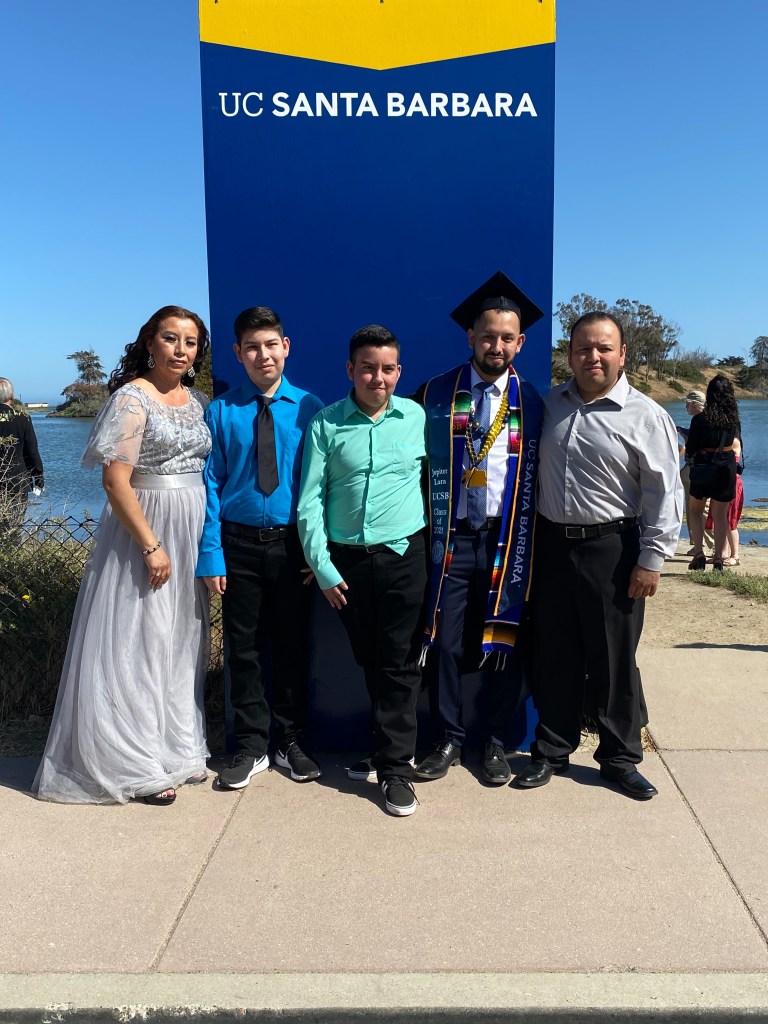
When he graduated high school in 2017, he applied to UC Santa Barbara, a campus and a town that attracted him due to the sunshine, beaches, and community. He changed his major from accounting to sociology after he enrolled in a few classes that exposed him to the social injustices of the world. “I wanted to help people,” he said.
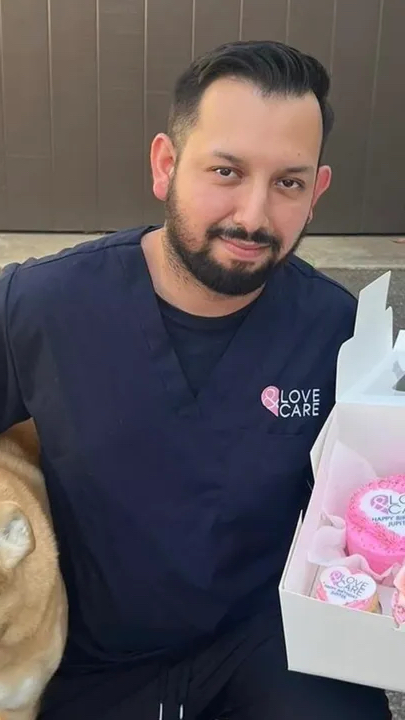
Castillo graduated with a bachelor’s in sociology in 2021, and shortly after, he began working in the healthcare industry. For the past three years, he worked two jobs, spending days doing home aid care for the elderly through Love and Care — an organization providing in-home care in Santa Barbara — and then working the night shift helping homeless people at Good Samaritan Shelter.
It was a busy schedule, and it was tough to make ends meet in an expensive place like Santa Barbara (especially with taxes taking up to a third of his two incomes). But Castillo enjoyed his life here, spending days off going on trips with family and friends, hitting the Wildcat for a drink, hanging out at the beach, or taking a hike on one of the many trails in the region.
He says he felt like part of the local community. He renewed his DACA status each year, made all his proper appointments, and didn’t have anything on his record other than a speeding ticket or a minor traffic violation.
He had plans for the future, with his partner and his career. He had a lease on an apartment and payments on a new car that he would be paying off for the next few years. It all seemed to be going smoothly until September 16.
Taken in Plain Sight
“I went to turn in my home-aid care registration,” Castillo says, remembering the day he was arrested by federal immigration enforcement. He spoke to the Independent in a series of e-mails and interviews via Zoom and FaceTime from his grandparents’ home outside Mexico City.
Castillo says that as soon as he came back outside to his car around 11 a.m., he noticed a group of federal agents walking around the parking lot. “At first, I thought maybe it was the police,” he said. “But as soon as I walked up to my car to unlock it, I just felt somebody right behind me.”
He says the four agents, dressed in masks and bulletproof vests and driving unmarked vehicles, did not identify themselves. He saw that two of the agents wore vests marked with “HSI,” and the others wore black vests marked “Police.” When Castillo pressed them to ask who they were, they told him they were with Homeland Security and he was not free to leave.
Castillo said he pleaded with the agents, and asked if they had a judicial or administrative warrant for his arrest. He attempted to show them his California driver’s license and employment authorization documents, but they did not accept either. “I told them I had active DACA status, but they didn’t care,” he said.
Within minutes, the agents placed handcuffs on both his wrists and ankles and shoved him into the back of an unmarked blue SUV. As the vehicle hit the freeway south to transport Castillo to the regional ICE facility in Camarillo, he heard the voice of a superior officer speaking through the crackled static of the radio. “Good job, guys,” the voice on the radio told the agents.
“This was an easy one,” replied one of the agents in the car.
That comment — and the way the agents appeared to be so cavalier about what was a life-changing moment for him — made Castillo well up with emotion in the back seat.
“It was like they were congratulating themselves on the catch of the day. They told me, ‘We didn’t even come here for you,’ ” Castillo said. “I was angry for most of the ride.”
Castillo sat in the back seat thinking about what had just happened. It was over so quickly, he wasn’t even able to lock his car or grab his keys. He felt like he was racially profiled, and said it was even more disappointing to hear the agents speaking with accents revealing they were also Latino. “Just knowing it was your own people doing this …,” Castillo said.
He wasn’t allowed to use his phone to inform his family about his arrest until he arrived at the ICE facility on Cortez Circle in Camarillo. There, the agents allowed him to send a quick message to his family, and to tell his boss he wouldn’t be coming in that day, or any day soon.
He took a photo of the handcuffs on his wrists and feet, and sent it to his loved ones with a message letting them know what had happened. In an emotional interview with a Mexican news station on October 4, Castillo’s mother Melina recalled receiving the photo of her son in shackles, along with a short message saying, “Don’t be scared, Mom, but I’ve been picked up by ICE. I’m sorry.”
The ‘Fridge’
Castillo arrived at the Camarillo ICE facility around midday, less than an hour after he was arrested. He was there for only about two hours, in a holding tank alongside a group of eight men and one woman, all farmworkers picked up from the Oxnard fields that same morning. All the detainees were jammed into a van and transported to the central ICE processing facility at the Federal Building in downtown Los Angeles.
The giant concrete and glass building at 300 North Los Angeles Street is home to a basement fortress of holding cells with narrow cement benches that are notoriously cold during the fall and winter months. “They call it the fridge, because it’s freezing in there,” Castillo said.
He was held in a holding cell with about 15 other detainees, in one of at least five cells stuffed with people who were awaiting transfer to the much larger GEO Adelanto Detention Center later that night. Each person was given a bag lunch with a bologna sandwich, a mini carton of milk, cookies, a bag of chips, and a Capri Sun.
That evening, Castillo was finally able to make a short phone call to his partner, and to his parents. He said it was surreal to hear their voices, and he tried to hide his emotions to not make them worry more. “Those three minutes on the phone were just to calm them down, let them know I was okay, and that I wasn’t being beaten or mistreated,” he said. “I was trying to keep myself together, to stay strong for them.”
Into the Desert
At midnight, Castillo was handcuffed again and loaded into an unmarked van with blacked-out windows. Leaving the downtown Los Angeles facility was much different than arriving. There was now a group of protesters outside the building, yelling at the transport vans as they attempted to leave the gate. The van driver sped past the protesters, hit the highway, and headed for the desert.
The drive to Adelanto was colder than the holding cells that he just left. Castillo said the driver was pushing 90 miles an hour trying to make it to the desert facility quickly, while the detainees were huddled in the back, hands shackled and shivering all the way. “We were freezing cold,” he said. “They didn’t give us blankets or anything.”
Riding in the unmarked van contracted to transport prisoners to a privately owned detention facility made Castillo wonder just how much money companies were investing and making to incarcerate and detain immigrants. Adelanto Detention Center is one of four in California owned by the GEO Group, a billion-dollar contractor that houses the bulk of ICE detainees in the country. The Adelanto facility holds nearly 2,000 detainees at any time and is estimated to generate up to $85 million a year through government contracts.
“It’s just a reminder of how much money the government is willing to invest into getting us immigrants out of the country,” Castillo said.
At Adelanto, Castillo went through a full intake process. He was stripped, searched, fingerprinted, and given a series of physical health checks. Then he went to another holding cell, where he was held for the rest of the night until he was placed in a dorm the next morning.
Detainees at Adelanto are housed and clothed based on their level of risk. Those with blue jumpsuits are considered low risk, with minor citations or no criminal history at all. Orange jumpsuits are given to those with minor criminal offenses, while those with felonies or serious criminal records are clad in red.
What Castillo saw inside Adelanto is consistent with statistics collected by Trac Immigration, which found that, of the more than 65,000 people currently held in immigration detention nationwide, more than 73.5 percent have no prior criminal conviction. Castillo said that most of his fellow detainees wore blue jumpsuits, with a handful wearing orange and even fewer classified in the high-risk red jumpsuits.
“They aren’t criminals,” he said. “It was all workers — farmworkers, construction workers, or service workers.”
Castillo described the dorm units, which each hold about 70 bunk beds. The restrooms are just a series of stalls without doors, with shower heads sitting behind thin curtains that offer little privacy. In the recreation area, detainees can watch TV without sound, read books, or play card games.
During his stay at Adelanto, Castillo said he spent much of his free time speaking with his fellow detainees, learning their stories and trying to make the best of their shared situation. “All we had to do to kill time was talk,” he said.
Nowhere to Go
The day after his arrival at Adelanto, Castillo’s family contacted a lawyer in an attempt to address his immigration case. Castillo hoped his DACA status would protect him, or that he would at least be granted bail to fight his case from home. But he soon learned he had very few options to leave the facility.
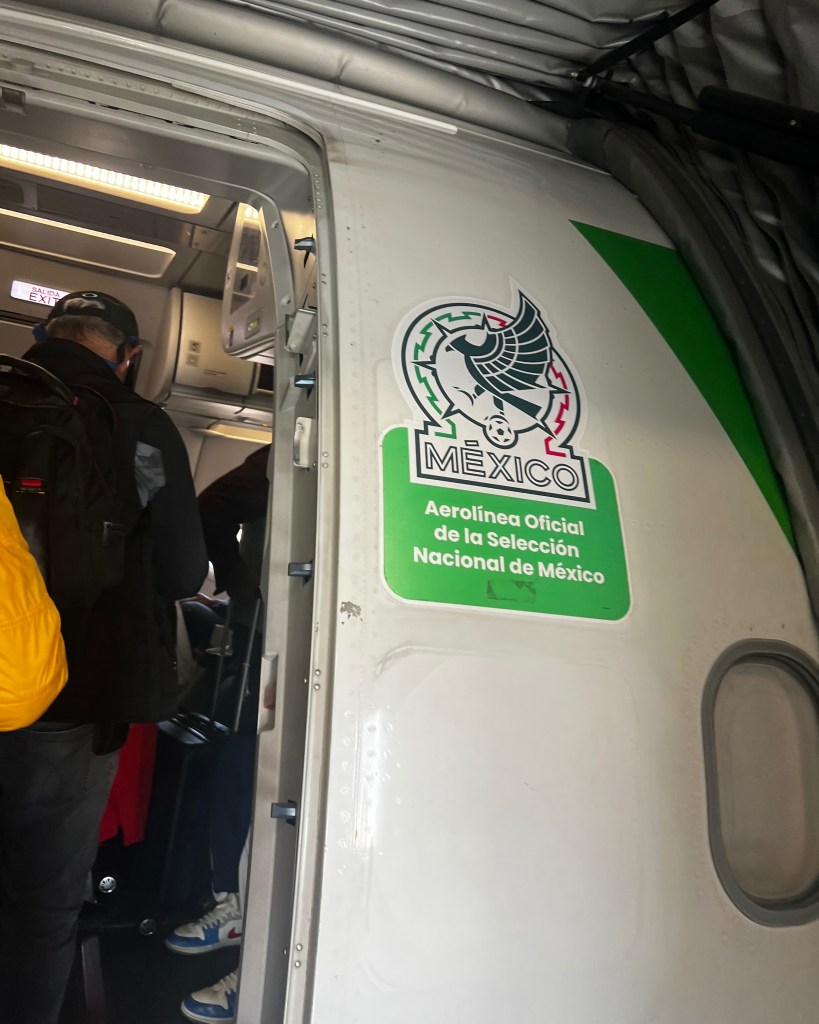
Castillo could not apply for asylum, because he had lived in the U.S. for 20 years, making it difficult to prove his life would be endangered by being deported to Mexico. His active DACA status meant that the federal government could not forcefully deport him, but he soon learned that the government would be able to hold him until his next renewal date, and he would be deported then.
So, he could stay in detention through February, when his DACA status ended, and be deported then. Or, he could sign his own self-deportation papers, agree to leave the country, and not enter again for at least two years.
Castillo spent the next three weeks weighing his options and speaking with his family and his attorney. He didn’t want to give up, but he no longer felt that he had a viable way to return back to Santa Barbara.
“For all my life, people have considered me an American,” Castillo said. “It was depressing. I kept hoping it was all a dream, that maybe I’d wake up and it would be over. It was just a horrible nightmare.”
He didn’t know how long he actually had before he would be deported. Nothing was guaranteed, and he did not want to make his family continue to spend thousands of dollars in a losing battle. When he saw another detainee who was also a DACA recipient suddenly deported after being told they would have a month to consider their options, Castillo decided he would agree to self-deport.
End of the Road
On October 9, Jupiter Lara Castillo was taken to a small room at Adelanto Detention Center along with three other detainees. In this impromptu courtroom, the four men sat across from a table with a laptop, where the judge and attorneys would appear via Zoom. The whole experience, Castillo says, was extremely impersonal.
“You can’t even see the judge’s face; you just hear the audio,” he said. “They can see you, but you can’t see them.”
Officially, Castillo was being held for “entering illegally without documents.” He and his attorney presented their arguments to the judge. “I told them I still had active DACA status, that I completed my bachelor’s degree, and that I work to help my community in the Santa Barbara area,” he said.
According to Castillo, the judge was apologetic after hearing about his case. The judge told Castillo that he believed he was a Good Samaritan, but that current federal immigration policy made it difficult to allow any exceptions.
With no more options, Castillo signed the self-deportation papers. The terms of the agreement also state that he cannot attempt to reenter the U.S. for at least another two years.
The morning after the court appearance, Castillo was loaded into another van, this time with about a dozen others who were being deported to Mexico that same morning. It was the last ride he took in the U.S., and the end of a long journey through the American immigration system.
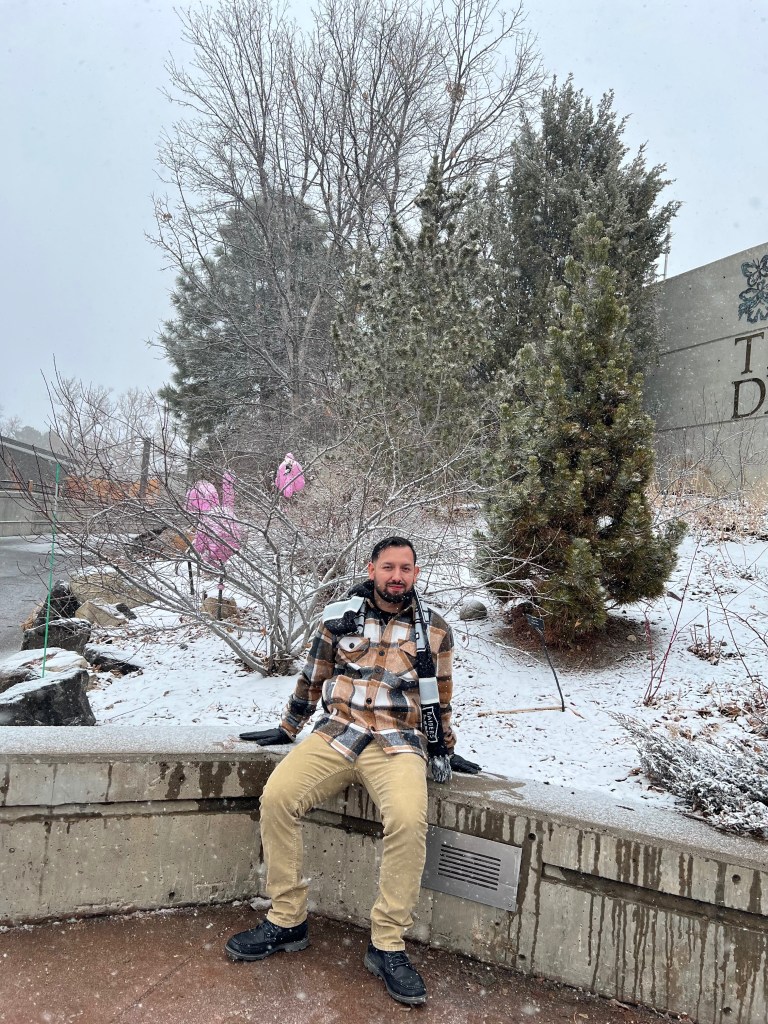
He arrived at the Mexican Immigration Center in Tijuana later that day, where he was processed and taken to a nearby government shelter. He stayed there for three days before he was able to get a plane ticket back to his grandparents’ hometown outside Mexico City.
For the past several months, Castillo has been adjusting to life in Mexico. He says it helps that he can speak Spanish, but it’s been difficult to process being in an entirely different culture and way of life.
“Yeah, I was born here in Mexico, but all I’ve known is my life in America,” he said.
He’s looking at it as a fresh start, but he still has trouble coming to terms with his experience of being treated like a criminal. “It’s all about politics,” he said.
Castillo is aware that he is just one of many that have been targeted for deportation, and he says that the recent focus on immigration has a widespread impact on Latinos in the U.S.
Legal representatives that have been working closely with deportation and immigration cases say that aggressive enforcement and dehumanizing rhetoric has changed the way immigrants are viewed in the country.
“They are seen as criminals even though they are not,” said Jordan Rabani-Jenkins, staff attorney with the Immigrant Legal Defense Center. “It’s so hard for our clients not to internalize this feeling when [the government] keeps saying they’re going after criminals, but they’re also making every legal process more difficult.”
Castillo’s family and friends created a GoFundMe (gofund.me/43a734674) to help pay for legal expenses accrued during his detention. He’s optimistic that he will return to California again legally, even if he won’t have the chance in the next few years.
“I’m hoping my story will promote awareness and serve as one example out of hundreds, of the ongoing injustices that ICE continues to torment our immigrant community within Santa Barbara County and throughout the nation,” Castillo said.





You must be logged in to post a comment.