
The Buzz in Santa Barbara Backyards
As Backyard Beekeeping Grows,
Melissa Cronshaw Is Making Sure It’s Done Right
By Tiana Molony | Photos by Ingrid Bostrom
April 9, 2026
Read more from Home & Garden 2026 here.
Before meeting Melissa Cronshaw, I always ran away from bees — jumping up, screeching in horror, even if one only buzzed by my ear or, God forbid, landed on me.
I have been stung a few times in my life, and though I never had any serious reaction, I recall every one with appalling clarity: once on the finger one summer day by the pool, once on my bum while tanning outside in a floral-print bikini, and once on my toe — I had stepped on it, and yet I blamed the bee.
But Melissa doesn’t blame the bees. Quite the opposite; she talks about them with a kind of veneration, as if, in the hierarchy of life, bees come first and she second.
Hooked on the Bees
Melissa — whose name literally translates to “honeybee” in Greek — was destined for a life of beekeeping, whether she knew it or not. Her dad, Paul Cronshaw, is one of Santa Barbara’s most famous beekeepers and cofounded the Santa Barbara Beekeepers Association in 2011. A graduate of Santa Barbara High School, he was first introduced to bees by science teacher Louis Torres, who kept an observation hive in his classroom.
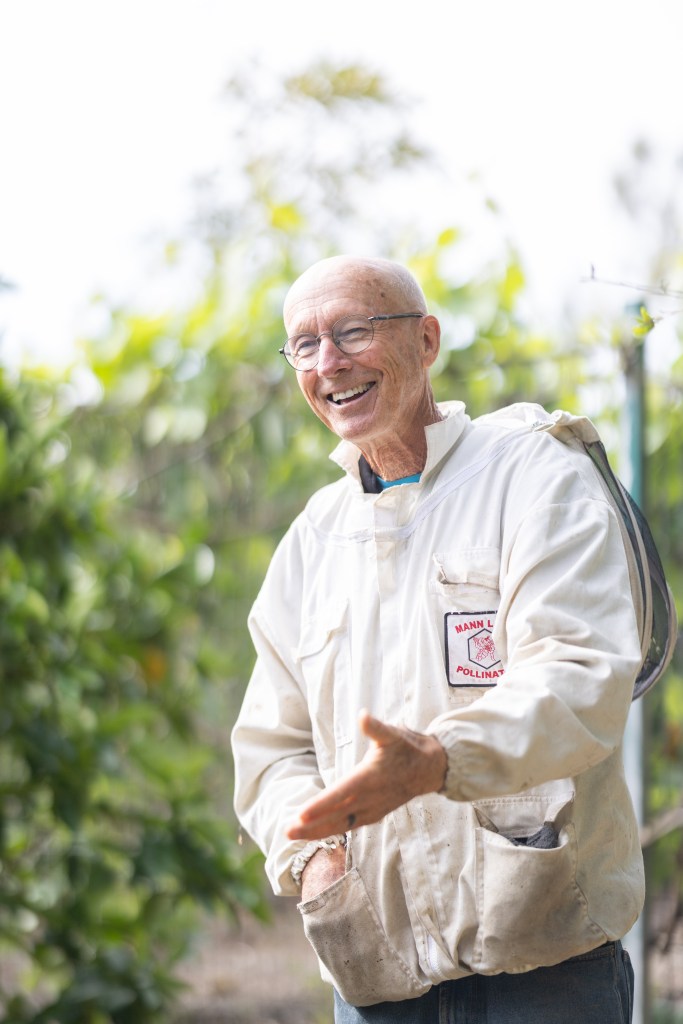
He became obsessed. “I would listen to the bees,” Paul joked, “but I wouldn’t listen to him.” Soon after, he convinced his parents to purchase a beehive from a Sears catalog, which, apparently, used to be a thing. “That day, the postman just threw the box at me. Says, ‘Get these out of my truck, because they’re buzzing.’ ”
“My dad got hooked on the bees,” Melissa said, as if they were a kind of drug.
Almost every day, her dad would pick her up from school and take her straight to the hives he needed to check.
She started focusing her school science projects on bees. “Mostly because it was easy, and my dad would do half the work for me,” she joked. But then something shifted. She started to grow fond of them.
Melissa began volunteering with him, bringing observation hives into classrooms and teaching kids. At the time, she was working as a kindergarten teacher, but she couldn’t keep away from the bees.
Eventually, she heeded the call.
Backyard Bees
She officially founded Melissa’s Bees in 2023, offering services across Santa Barbara: educational classes, removals and relocations, presentations, and mentoring. “I feel like my tentacles are in a little bit of everything, across the board,” she joked.
Between the moment Paul discovered bees in his classroom at Santa Barbara High School and Melissa founding Melissa’s Bees, interest in bees across Santa Barbara has surged, with more people than ever drawn to backyard beekeeping, supported by a growing network of beekeepers and community organizations.
As more people introduce bees into their backyards, Melissa’s focus has shifted to ensuring people know what they’re doing before bringing hives into their spaces. She works with around 35 apiaries from Hollister Ranch to Carpinteria, checking on the bees and offering guidance along the way.
“I think it’s really magical, people having this accessibility now; being able to put bees in their backyard,” she said.
But education is key.
“It’s more important to do the research first before jumping in,” she explained, noting that “everyone can buy and sell bees,” and there are few regulations — I remember the Sears catalog.
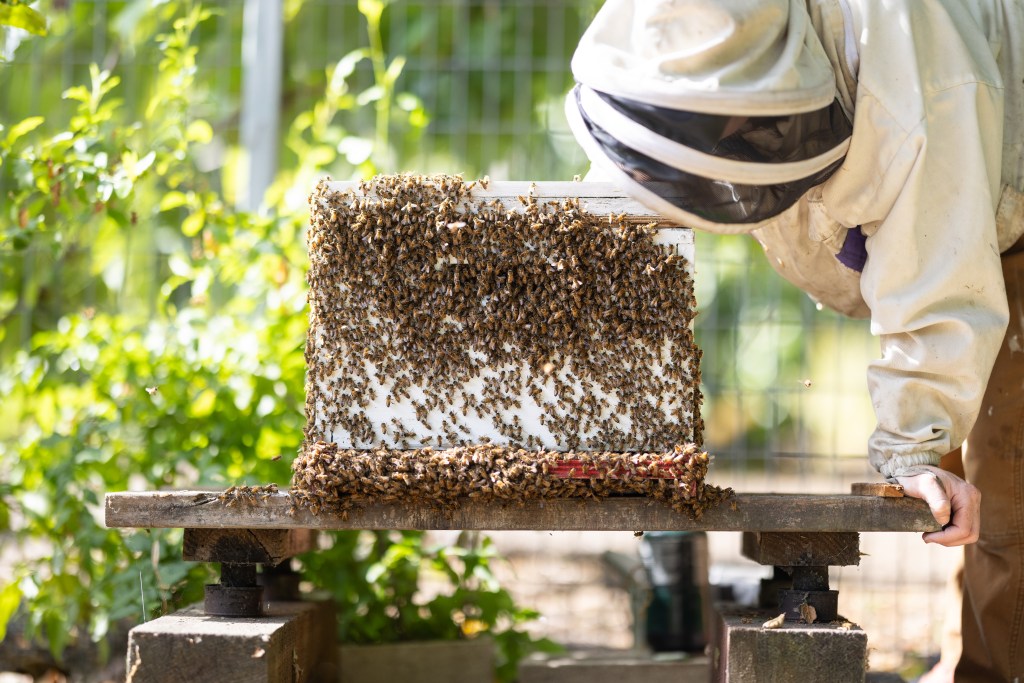
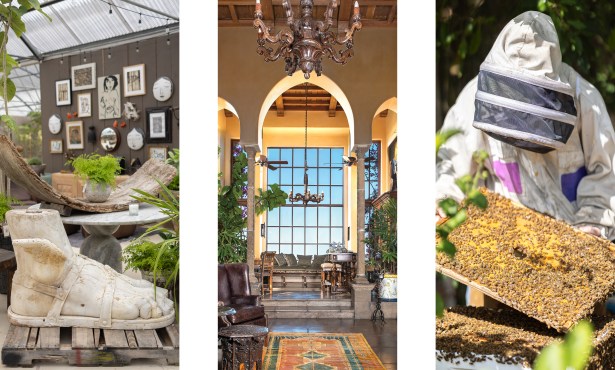
On a recent Thursday morning, Independent photographer Ingrid Bostrom and I met Melissa and Paul in a backyard in Carpinteria, where they were introducing a new hive after a previous one was attacked by a bear. We could clearly see how one of the frames has a slash through it in the shape of a bear claw. “My biggest reason for bee loss has been the bears,” Melissa said. She isn’t mad at the apex predators — it’s just “nature’s doing nature.” The old apiary was being cleaned by wax moths, making the abandoned hive ready for a new colony to move in.
This particular backyard in Carpinteria is a beekeeper’s paradise. There are native flowers and fruit trees, yes, but also thoughtful placement. The particular hive sits far from high-traffic areas and away from neighbors, and is positioned to create a “chimney effect,” encouraging bees to fly upward rather than toward people.
Believe it or not, there is such a thing as too many bees. “There are only so many flowers and so many resources,” Melissa said, noting that two hives are ideal for most backyards. “Two beehives [are] beautiful.”
When someone approaches her about starting a hive, Cronshaw usually asks why. If the answer is “because I want honey,” she said, “that’s not a great answer — that’s being more focused on, ‘how can we exploit them ’… but really, you know that’s not their main focus.”
Pollination is a better answer. The best one? A desire to connect with nature. “Bees,” she said, “are just a great way to dive back in.”
A New Home
After explaining the process, we headed back to the car, where Ingrid and I got suited up and asked Paul to take a picture of us in our white ensembles. Paul, however, opted for sandals and no head covering. He’s been doing this much longer than I’ve been alive.
The bees have been in the car for a while. Melissa said they have to pee.
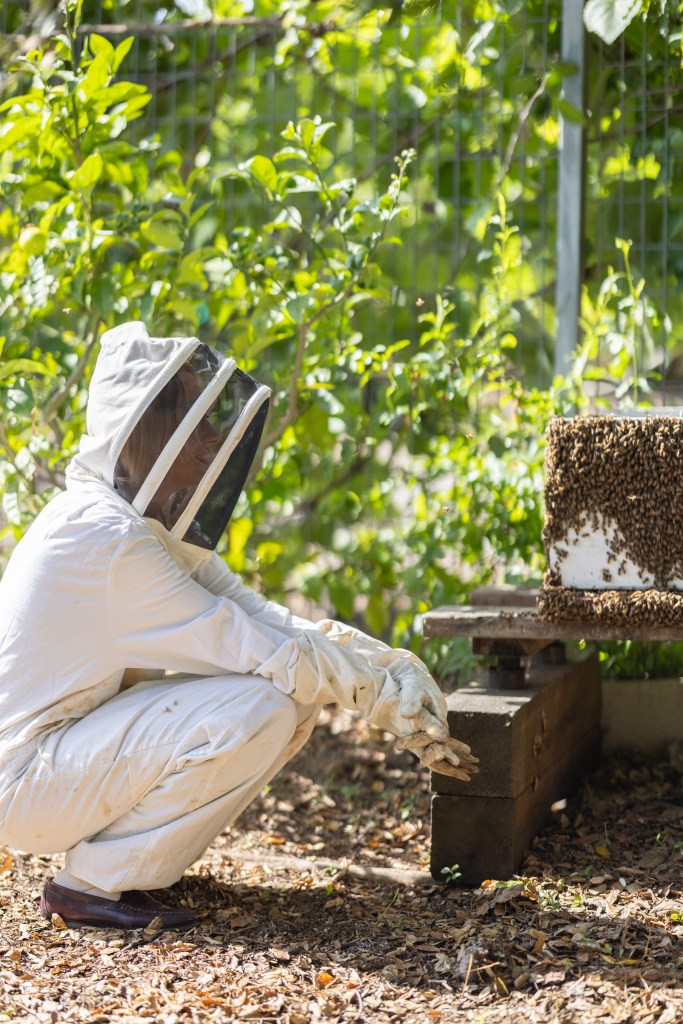
Bees don’t take leaks in their hives, so they’re holding it in, likely hoping Melissa will stop somewhere soon.
When Paul lifted the hive from the trunk, he greeted the bees like a rowdy bachelorette party: “Hey, ladies!” He and Melissa positioned themselves at opposite ends of the hive and carried the bees to their new home beside the sunset-orange California poppies.
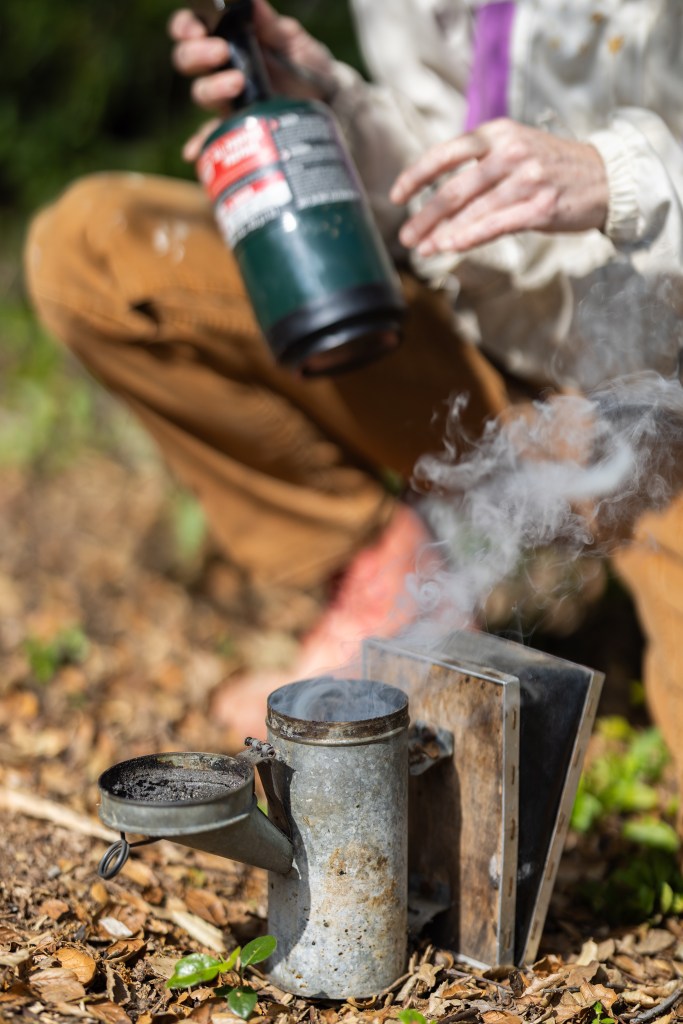
“I’m going to start breaking into their home,” Melissa announced as she lit the smoker, which led the bees to believe their house was on fire. When bees smell smoke, they assume danger and immediately begin gorging on honey in preparation to evacuate. The honey makes them calmer, acting as a kind of biological sedative.
The smoke also masks their alarm pheromones. If one bee signals “attack,” the others don’t receive it. But it’s a balancing act. Too much smoke, though, and they may abandon the hive entirely.
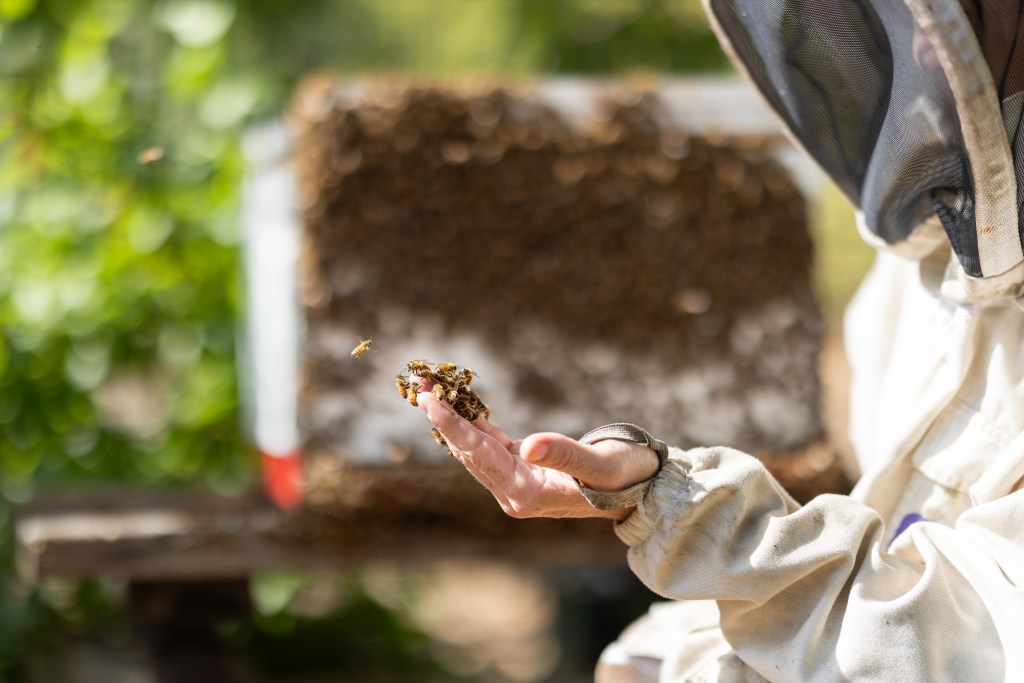
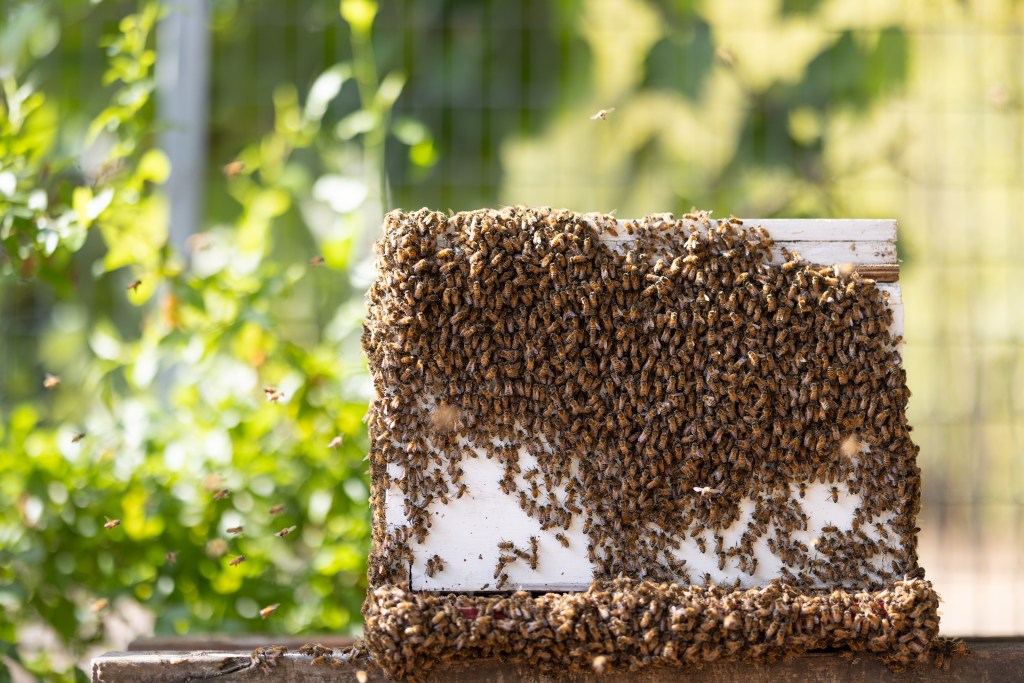
Gloveless, Melissa opened the box. The bees were all hanging from the frame, all stuck together. It’s called festooning. “They’re basically acting like their own measuring tape and scaffolding.” She scooped up a handful, letting them blanket her hand like a living glove. Paul followed suit, as casually as if he were serving ice cream.
Something about the way they gently held the bees in their bare hands without getting stung ignited something in me. At first, it was shock. Then it was curiosity. And, finally, respect.
Suddenly, bees weren’t so scary; they were exceptional.
I crouched beside the hive and listened to the buzzing, which sounded like a high-powered fan. I remembered Melissa calling the sound “therapeutic” and began to understand what she meant. Watching the bees work together to protect their hive, I couldn’t help wondering what would happen if all of us humans joined forces like that.
About the Bees
Melissa explained that a honeybee colony functions as a superorganism — thousands of individual “cells” working together as one.
There is only one queen, but she isn’t in charge. Her role is to lay fertilized eggs. The real decisions are made collectively by the worker bees — all female.
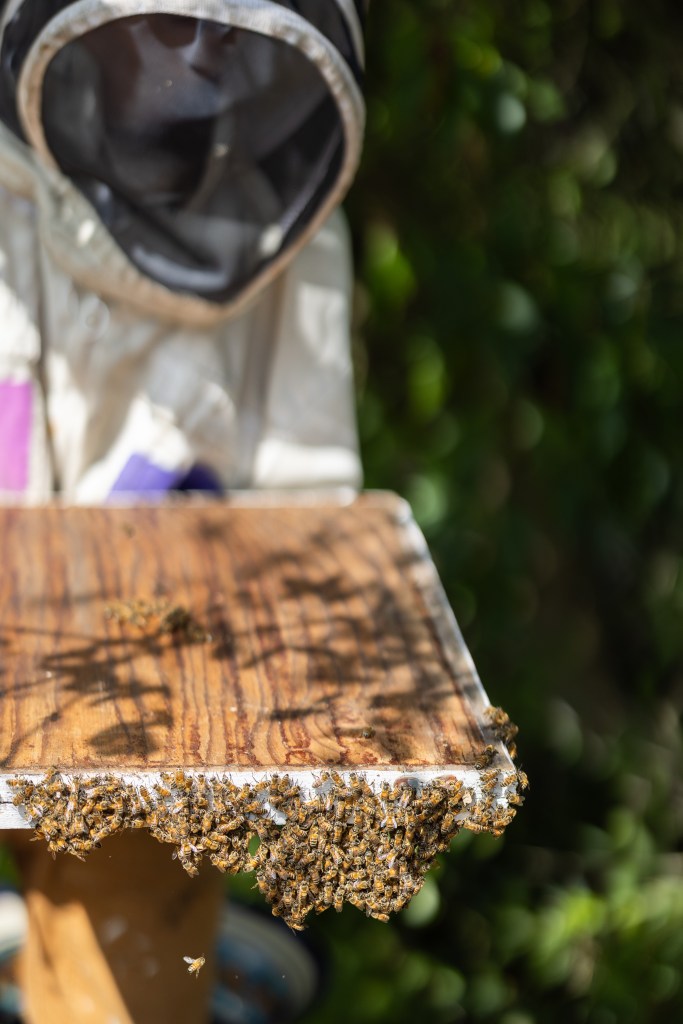
If the queen weakens, the workers replace her. Every bee has a role. The system depends on it.
“Everyone is making decisions for the collective good; there’s no selfishness of bees.”
We could learn from that, I think.
About 20,000 bees live inside this box, called a Langstroth deep, which typically has 10 frames, with 1,000 bees on each side. The hive is kept at about 95 degrees.
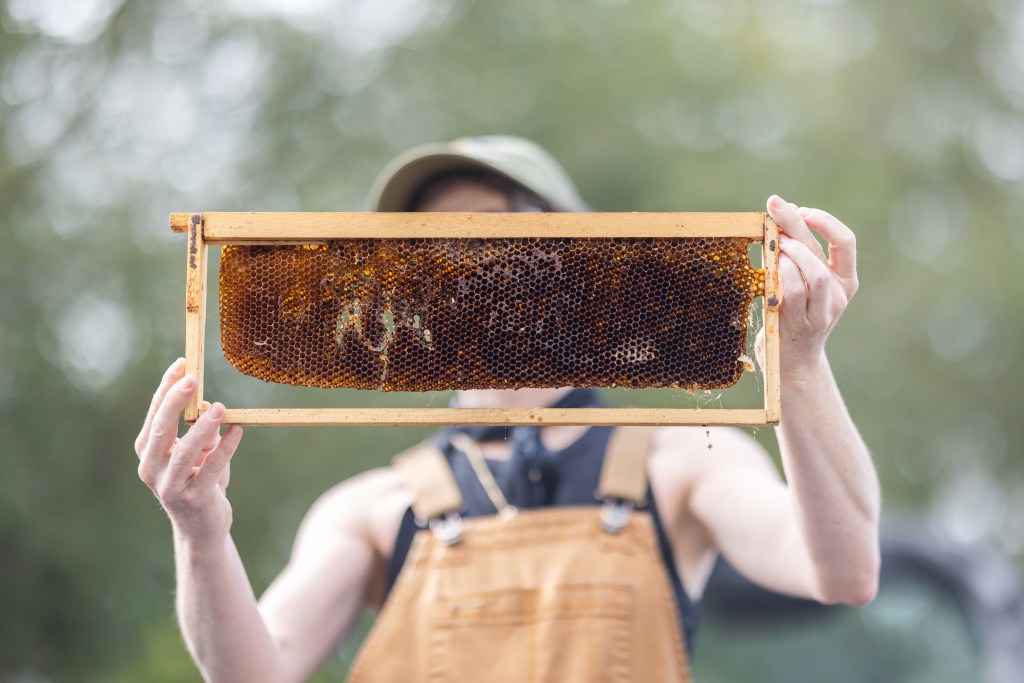
The queen is somewhere in the middle. Melissa held the frame to the sunlight, pointing out the white dots in the honeycomb — the larvae, which will hatch into baby bees. To protect the babies, the worker bees put honey around the top and the corners for extra insulation and protection — like a swaddle.
Somehow, we started talking about the animated film The Bee Movie, and how its main flaw, besides the fact that the bees speak English and wear shoes, is that there are male worker bees. In reality, nearly every bee in the hive is female. The males, called drones, don’t even have stingers.
Melissa searched for one in the mass of female bees, which looked somewhat like Coachella from above, and handed it to me.
I held a drone gently between my fingers. Drones don’t work. They don’t produce honey or forage for nectar. Instead, they mooch on honey and leave the hive to mate with the “Virgin Queen.” If successful at mating, the drone dies.
After about 30 minutes with the bees, the buzzing grew louder. Paul zipped up his hood, and I saw my worst nightmare. A bee had slipped inside. He calmly reached into his bonnet and removed it.
But by now the bees are agitated.
“We’ve overstayed our welcome,” he said.
Plant the Seeds
Back at the car, Melissa handed me a parting gift: a small bear-shaped container of honey and a packet of seeds. The label read: “The best way to save the bees is to plant the seeds!”
Inside: California poppies, lupines, baby blue eyes, and golden yarrow.
While reporting this story, I came across a New Yorker cartoon: three bees hover above flowers. One says, “I spent my entire life working, and look where we are now — on the brink of extinction.”
A few days later, I sat on my porch, trying to figure out how to end this piece. Then I remembered reading about the ancient practice of talking to bees — sharing life events and personal stories as a way to maintain harmony within the hive and with ourselves. On a whim, I decided to try it, letting my words spill out into the golden hum of their world.



You must be logged in to post a comment.