

A 1972 state-commissioned report from the Rand Corporation noted that California had 30,000 megawatts of available generation but would need 72,000 MW of new power on the grid to meet the needs for 1991 — requiring perhaps 40 more nuclear reactors. Thankfully for ratepayers, cooler heads prevailed. Charles Warren introduced legislation in 1974 (AB1575) to create the California Energy Commission in response to the energy crisis of that day. Under that mandate, California responded and was at the forefront of the renewable, conservation, and efficiency movement. Reflecting back later in his life, Warren said:
“It was the first to challenge the policies of energy inefficiency of the utilities and to point out that energy planning by the utilities was devoted more to maximizing profits than to the public’s interest in a rational and reasonable energy program. And all that was hoped has come to pass. Not too long ago, California utilities were planning to build as many as eighty nuclear power plants by the year 2000; today there are no plans for building nuclear power plants in California.”
Past is prologue. Thirty-five years after Rand’s prediction, California’s grid can support 61,000MW on a hot summer day where the peak has reached 55,000MW. Had the grid been overbuilt to 100,000MW or more with dozens of reactors — the power from which would have been unneeded and unused — one can scarcely imagine the economic burden to ratepayers and the state to pay off that costly blunder.
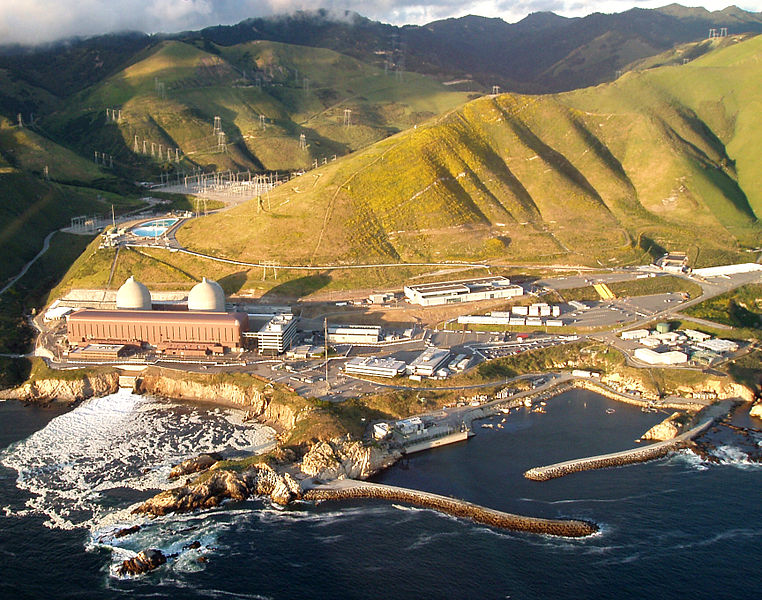
Recent media has profiled studies and potential legislation floating around the capitol touting the extended operation of Diablo Canyon nuclear plant beyond 2030 as a panacea for the state’s future energy needs, but they are fueled by outdated sources and wishful thinking.
More accurate and up-to-date analysis reveals Diablo Canyon to be that 1960s clunker best left up on blocks in the garage. Propping it up will only add to ratepayer woes and fatten PG&E’s already bloated pockets at a time when “affordability” is the mantra du jour.
The cost savings cited in a new MIT study referenced a California Public Utilities Commission (CPUC) Transmission Planning Process (TPP) study purportedly advocating for Diablo. It uses an opaque, proprietary software for modeling nuclear fuel costs. The MIT study assumes fixed costs will remain the same over time. Neither convey the truth that “The global price of uranium increased approximately 84.9% between the period of 5/2023 to1/2024″ according to PG&E, and that ongoing global conflicts and tension have increased volatility in uranium pricing and availability.
For all its bluster, the CPUC TPP Diablo study concludes, “Staff is not presenting this case as a sensitivity for the CAISO to study in its TPP process.” In other words, if they believed it merited implementation, they would be under a duty to do so.
The MIT report does concede that the economics of Diablo’s perceived overall future use is enhanced if its output is curtailed in the presence of less expensive renewable energy on the grid. Because of Diablo’s inflexible, constant output, that’s a technical hurdle that cannot be easily overcome. An earlier 2011 study by the MIT Energy Initiative found that:
- Expanding the ability of … nuclear plants physically to ramp and cycle to varying degrees will negatively impact their operations, maintenance schedules, and expected operational lifetimes.
- Flexible operation of nuclear power plants dramatically impacts their profitability. Nuclear plants need to run as baseload units at high output levels to recover their high capital costs
PG&E raised this possibility, was challenged by intervenors, and abandoned it in its 2017 CPUC General Rate Case.
And that matters, because since 2020, 27,000 megawatts of new nameplate renewable capacity — mostly solar and battery — has come online in California, including roughly 7,000MW added in 2024 alone. A further approximately 15,393MW Net Qualifying Capacity is contracted and in development through 2028.
According to a recent analysis, inroads made by solar-plus-battery-storage capacity are key because batteries are dispatchable — they can be called upon precisely when the grid is under stress, including during the evening ramp and overnight hours when solar generation has ceased. The March 2026 triple-digit off-season heat wave that scalded Californians from north to south proved the system functioned with no brownouts or power perturbations.
Less expensive renewable energy makes the above-market cost for Diablo’s power — averaging half a billion dollars per year — an unjustifiable weight on the backs of struggling ratepayers. California taxpayers are on the hook, too, as the Department of Water Resources most recent report indicates that nearly half, and possibly all, of the $1.4 billion California “loaned” PG&E from the state’s General Fund to jump start Diablo’s extension will never be repaid from a potential federal Department of Energy grant. As tabulated in a new UC Santa Barbara analysis, add to that billions more in perks and sweeteners over the next five years that are drained from ratepayer’s pockets into PG&E’s overflowing coffers.
Various proponents of nuclear power have cited prognostications from recent California Energy Commission (CEC) studies as proof that California’s energy demand could grow by 21 gigawatts by 2040. However, almost all that demand is driven by vehicle electrification and data centers. The problem: Future energy planning based on sci-fi growth scenarios has its pitfalls. With the Trump administration’s rollback of EV incentives, sales are plummeting. Giving credence to the growing concerns that AI could be a bubble, the Fermi America project in Texas that hoped to be the harbinger of massive nuclear powered data centers is now crashing as its stock nosedived by 81 percent since its initial offering. Even the CEC is finally re-evaluating its estimates downward.
California spent decades at the vanguard of renewable energy and efficiency, creating a role model for the world. Pouring more millions into Diablo based on speculation about the future is just the type of folly legislators like Charles Warren warned against.
David Weisman is a consultant to San Luis Obispo Mothers for Peace and long-time ratepayer advocate

