

Santa Barbara did not become important because of tourism.
It became important because of the Spanish military, the Mission, and the ranching economy: and horses were indispensable to all three.
Before California was American, or even Mexican, Santa Barbara was a Spanish military outpost. Spain established the Presidio, built the Mission, and introduced European ranching to the region. Families whose names still define Santa Barbara today — De la Guerra, Ortega, Carrillo — arrived from Spain and built a community where horses weren’t simply part of life. They made life possible.
Horses connected the missions, worked the ranches, moved cattle, hauled supplies, and powered the local economy long before automobiles.
Horses were not incidental to Santa Barbara’s history, they were essential to it.
That heritage is exactly what Old Spanish Days celebrates.
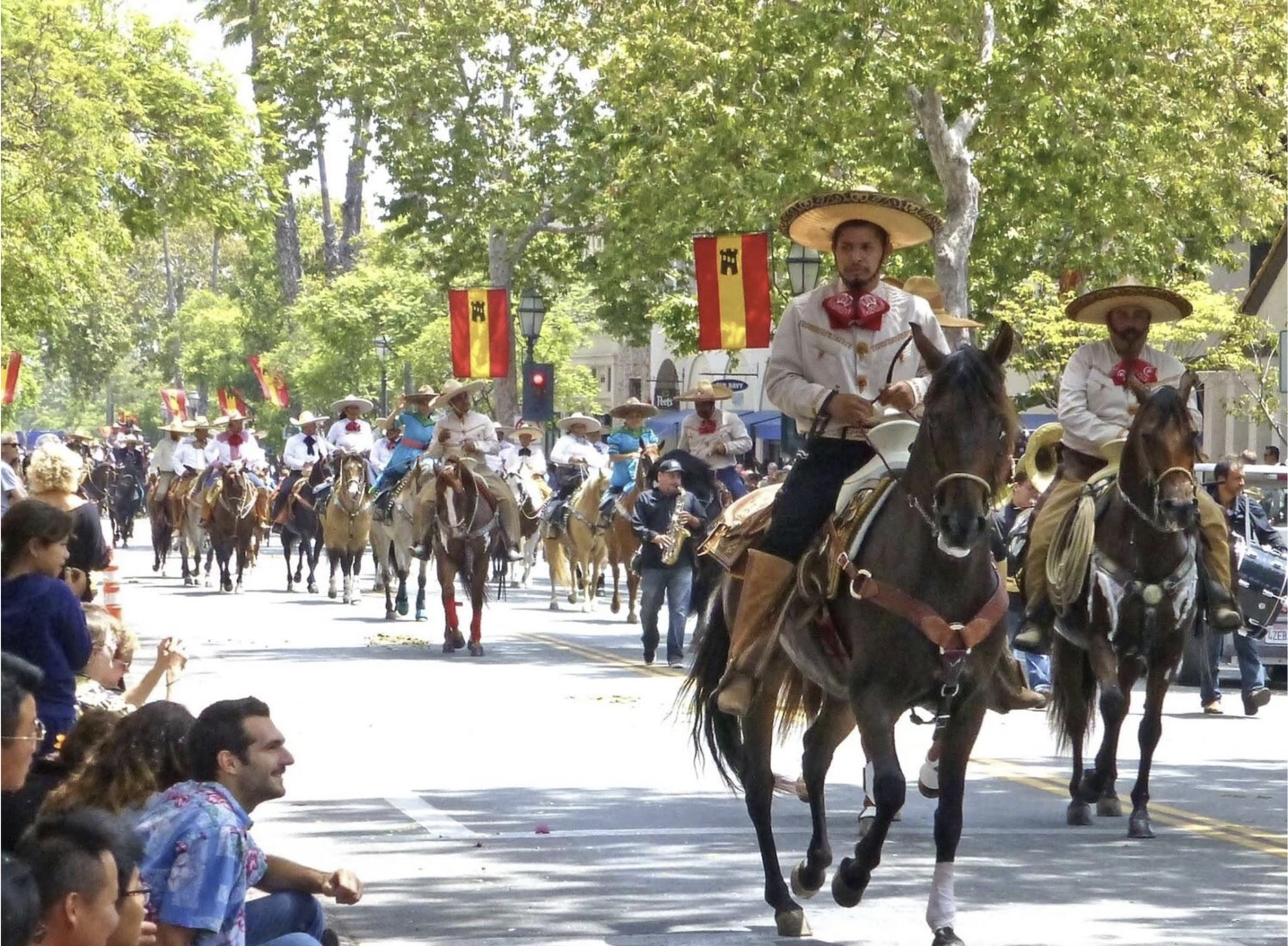
Every August, horses once again fill our streets. Riders honor generations of ranching families and California’s Spanish and Californio traditions. Old Spanish Days describes El Desfile Histórico as “one of the largest equestrian parades in the country.” Writer Camie Barnwell aptly called Fiesta “an ode to the Californio culture where horses were loved second only to family.”
Which raises a simple question: Shouldn’t the people who know horses best help plan one of America’s premier equestrian celebrations?
Many longtime horse owners, Rancheros Pobres, trainers, and riders believe their practical knowledge isn’t always given the weight it deserves when parade logistics are planned. They see decisions increasingly shaped by administrative processes rather than by what is best for the horses and the parade. The question is reasonable: when planning a major equestrian event, who should have a seat at the table?
Living History
Last year I was blessed to ride across one of California’s original Spanish land-grant ranches from the early 1800s. It reminded me that the traditions celebrated during Fiesta are not museum pieces. They are living history.
I also learned firsthand that horses are not machines.
During a mountain ride, a rider ahead of me was struck by a low branch and thrown from the saddle. The narrow trail became blocked. Horses stacked up behind us with nowhere to turn. As the delay stretched, the animals grew increasingly restless. The situation resolved safely only because the horses were exceptionally well-trained — credit to Los Padres Outfitters — and because experienced horsemen calmly managed the moment.
No committee meeting teaches that.
Experienced horsemen understand how horses respond to heat, noise, crowds, confined spaces, and unexpected stress. Those instincts come from years in the saddle, not from behind a desk. Fiesta’s Historical Parade proudly showcases Santa Barbara’s equestrian heritage. It also involves hundreds of horses moving through crowded city streets under challenging conditions.
Equestrian expertise isn’t merely welcome in that planning process. It’s essential.
A Puzzling Discussion
Old Spanish Days was created to preserve Santa Barbara’s heritage and attract visitors, a mission it continues to fulfill. Thousands come to Santa Barbara during Fiesta, benefiting hotels, restaurants, retailers, and businesses. The celebration likely generates hundreds of thousands, perhaps more than a million dollars, in city revenue.
Which makes a recent City Council discussion especially puzzling. Rather than exploring how to strengthen one of Santa Barbara’s most successful cultural and economic traditions, part of the conversation focused on redirecting Fiesta-related funding to another parade.
The better question is this: How can Santa Barbara better support the celebration that both preserves its history and generates significant economic benefit for the community?
That answer doesn’t require another layer of bureaucracy.
Communities reveal what they value not only by what they celebrate, but by whom they choose to listen to. If Santa Barbara is proud to host one of America’s largest equestrian parades, then the people who have devoted their lives to understanding horses deserve a meaningful voice in shaping it.
That would honor our history, strengthen the event, and help preserve one of Santa Barbara’s most cherished traditions for generations to come.
If you value Santa Barbara’s heritage, write the Mayor and City Council at clerk@santabarbaraca.gov. Ask them to place Rancheros Pobres, horse owners, trainers, and veterinarians at the center of Fiesta planning.

