

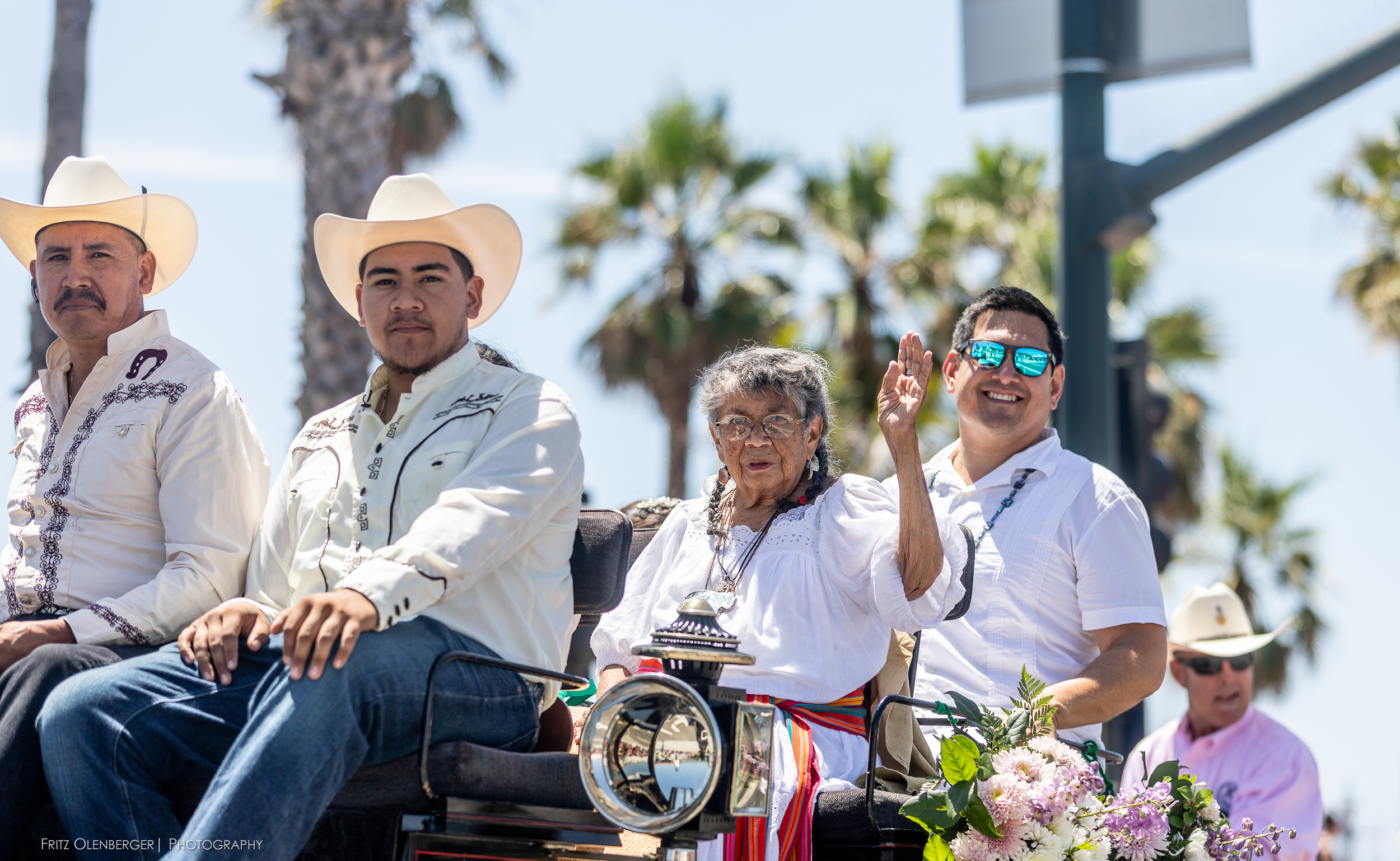
As a native son of Santa Barbara, it is disheartening to see Latino and Hispanic culture repeatedly used for commercial celebration while its deeper history and ongoing struggles receive relatively little recognition. Each year, Old Spanish Days Fiesta returns as one of the city’s signature events. Part of the annual ritual includes selecting a grand marshal for the Fiesta parade, an individual who is often drawn from Santa Barbara’s civic or economic elite. While the celebration offers some acknowledgment of the region’s cultural heritage, one has to ask: Is it enough?
I was raised on the Lower Eastside, just a few blocks from the historic Santa Barbara County Bowl. Anyone familiar with Santa Barbara knows that Milpas Street has long been considered the heart of the city’s Mexican community. During the day, however, it can be difficult to distinguish it from many other commercial districts. Luxury cars — Teslas, Mercedes-Benzes, BMWs, and other high-end vehicles — regularly drive through the neighborhood. At night, however, the character of the street changes. The taco trucks and sidewalk taco stands come alive, serving the workers and families who make Santa Barbara function every day. Interestingly, the luxury cars largely disappear.
What emerges at night is a glimpse of what sociologist William Julius Wilson described as the “underclass.” Wilson used this term to describe highly segregated African-American communities that suffered from the loss of stable manufacturing jobs during the nation’s transition to a service-based economy. While the historical circumstances differ, I use the concept here to draw attention to the largely Mexican and immigrant working-class population that remains largely invisible during the day. These are the people cleaning office buildings, caring for children, maintaining hotels, preparing food, landscaping properties, and constructing the newest homes and businesses throughout Santa Barbara.
Many undocumented immigrants remain on the margins of society, not because they lack work ethic or contributions, but because they continue to live under the weight of fear generated by decades of anti-immigrant rhetoric. More recently, false claims portraying undocumented immigrants as criminals have intensified that fear and further marginalized entire communities. And ICE raids promote racial profiling.
Ironically, Mexican Americans and Mexicans have a far deeper historical connection to this region than many people recognize. Their presence predates the arrival of Anglo Americans in California, Santa Barbara, and throughout much of the American Southwest. This land was once part of Mexico. Yet, following the Treaty of Guadalupe Hidalgo in 1848, the dominant narrative increasingly portrayed the U.S.-Mexico border as something that required constant vigilance against those who appeared “foreign,” despite the fact that many Mexican families had lived here long before the border itself existed.
This pattern of exclusion is not unique to Mexicans. Similar prejudices were directed toward Southern and Eastern European immigrants during the great waves of immigration in the late 19th and early 20th centuries.
My own family’s history reflects this contradiction. My paternal grandfather migrated north with his family; several of his children were born during their journey before the family settled in Longmont, Colorado. Yet during the Great Depression of the 1930s, the very Mexican workers who had been recruited to help build the American economy became convenient scapegoats during economic hardship. Mass deportation campaigns targeted not only immigrants but also many U.S.-born Mexican Americans, including members of my father’s generation.
This history raises an important question. Rather than spending one week each year celebrating a romanticized version of Santa Barbara’s past, why not embrace a fuller and more honest history of the people who shaped this region? Why not establish a new tradition by honoring the Indigenous people who were here first? For example, Fiesta could alternate its annual marshal by selecting a representative from the Chumash community every other year. Such a gesture would acknowledge that Santa Barbara’s history did not begin with Spanish colonization and certainly did not begin with American statehood.
We can celebrate our shared heritage without relying on sanitized or mythical narratives that erase conquest, displacement, and inequality. Doing so would not diminish Santa Barbara’s appeal to visitors. On the contrary, it would enrich the city’s story by presenting a more complete and authentic history.
It was especially disheartening to see photographs of young women performing at a private fiesta party near Canon Perdido Street wearing fake mustaches as costumes. The image reminded me of many college students who know little about the history of the land they occupy yet feel comfortable reducing Latino and Hispanic identity to entertainment or caricature. At a time when ICE raids continue to disproportionately target Latino communities and immigration remains highly politicized, such performances demonstrate how easily culture can be celebrated while the people themselves remain marginalized.
Santa Barbara can do better. Honoring Latino heritage should extend beyond a week of festivities and symbolic gestures. It should include an honest acknowledgment of history, recognition of the workers who sustain this community every day, and meaningful inclusion of the Indigenous and Mexican peoples whose roots in this region run deeper than most of the city’s official narratives acknowledge.
Enough is enough, please.

